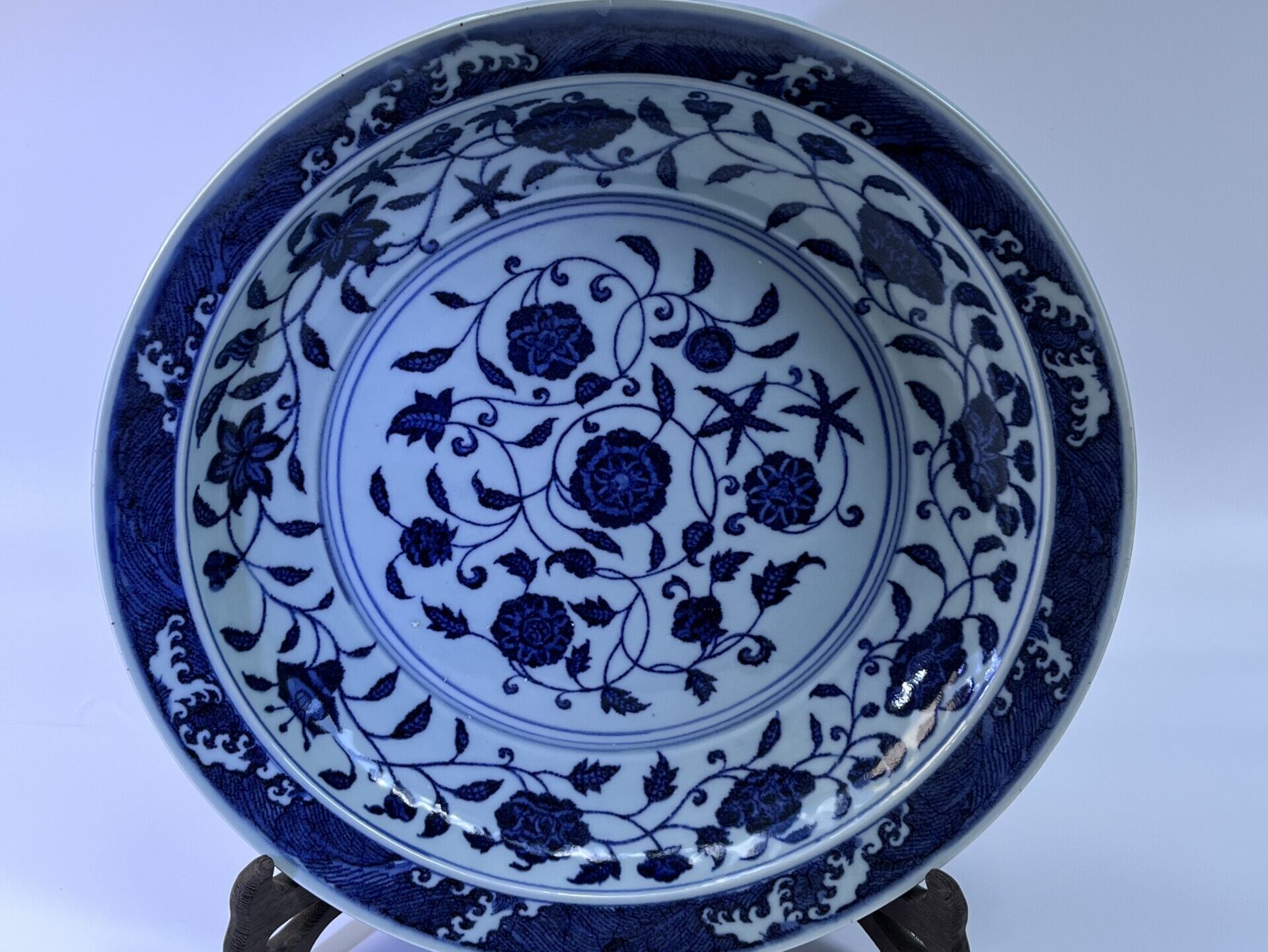
Imitation Ming Xuande Blue-and-White Interlocking Floral Pattern Folded Edge Large Plate, Handmade Antique-Style Porcelain
chinese antique-style porcelain, Imperial jingdezhen porcelain, reproduction porcelain, jingdezhen ceramic reproduction manufacturer china, chinese porcelain replica, jingdezhen antique porcelain replica, jingdezhen porcelain, jingdezhen ceramics, blue and white porcelain, magic cube ceramics,
Introduction
Name & Category
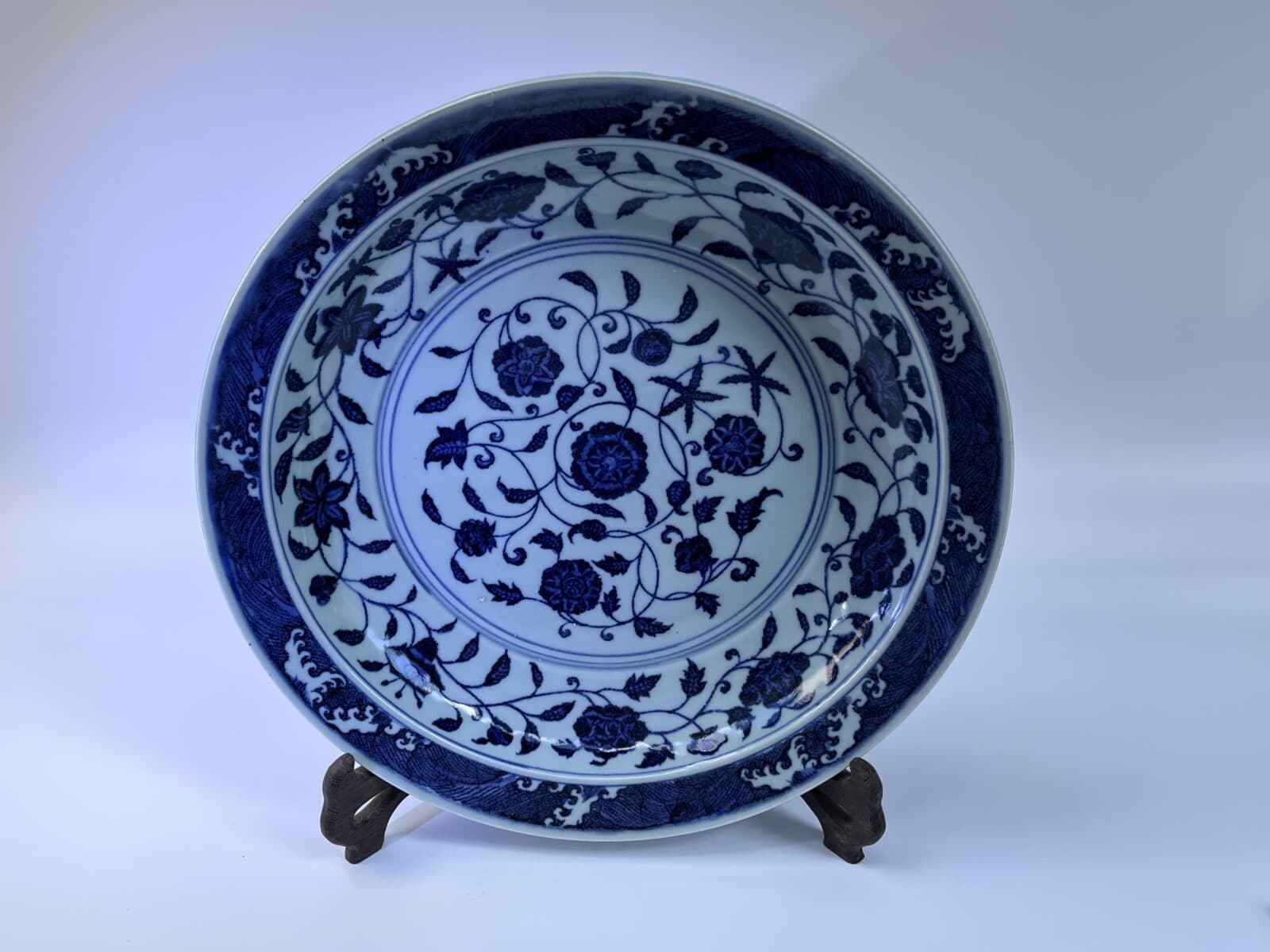
Name: Imitation Xuande Blue and White Folded Rim Large Plate with Interlocking Floral Patterns
Category: Handmade antique blue and white porcelain from Jingdezhen. Its prototype follows official kiln specifications of the Xuande reign in the Ming Dynasty, serving both ornamental and practical purposes as antique reproduction porcelain.
Core Craftsmanship
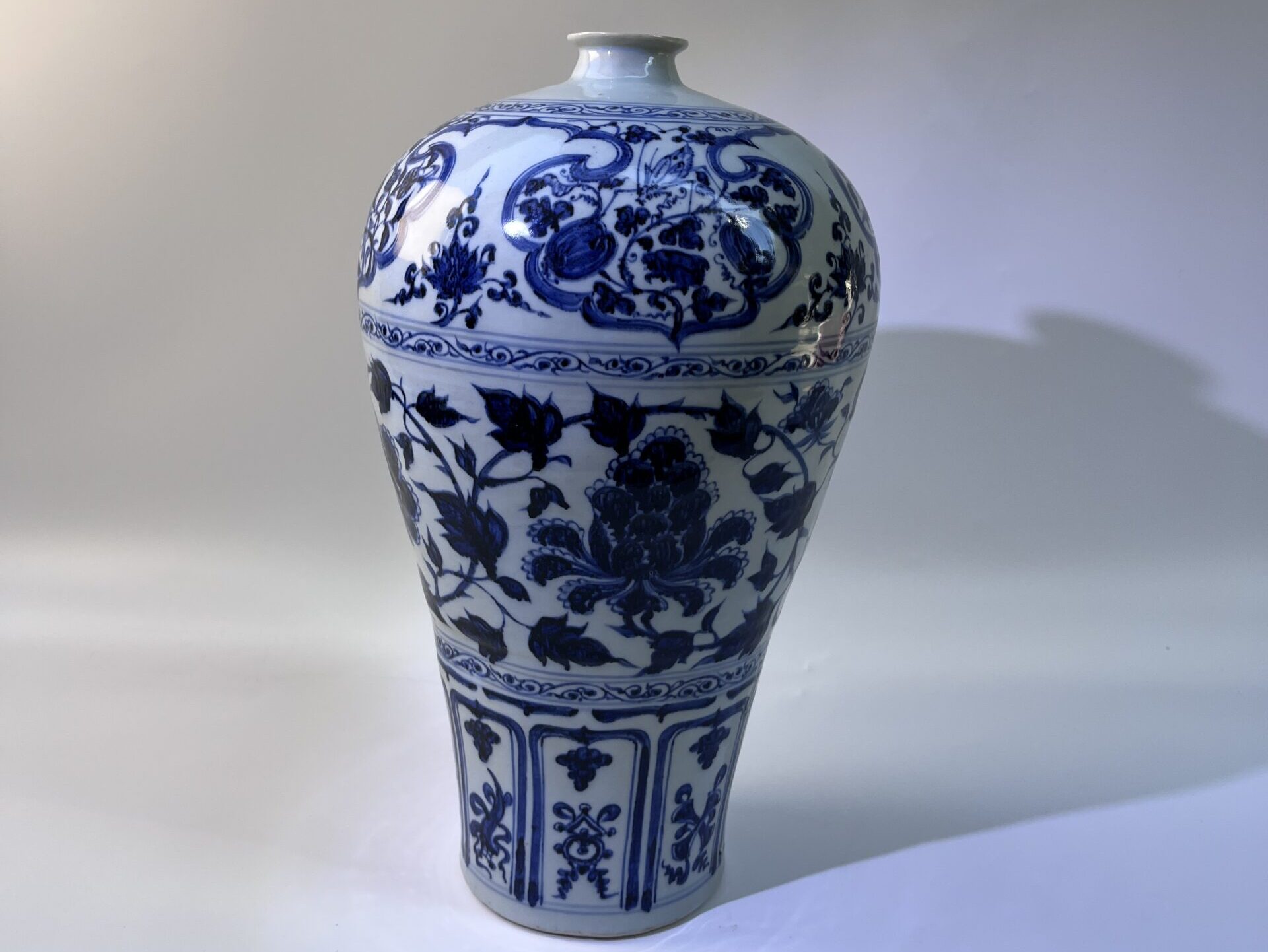
The body is hand-thrown and trimmed. The entire surface is hand-painted with blue and white decorations. Cobalt pigment is specially blended to replicate the color characteristics of imported ancient “Suma Li Qing” cobalt ore from the Ming Dynasty, forming natural rust spots and ink diffusion textures where the pigment is dense. The ground glaze imitates Ming bluish-white glaze and undergoes one-time high-temperature firing.
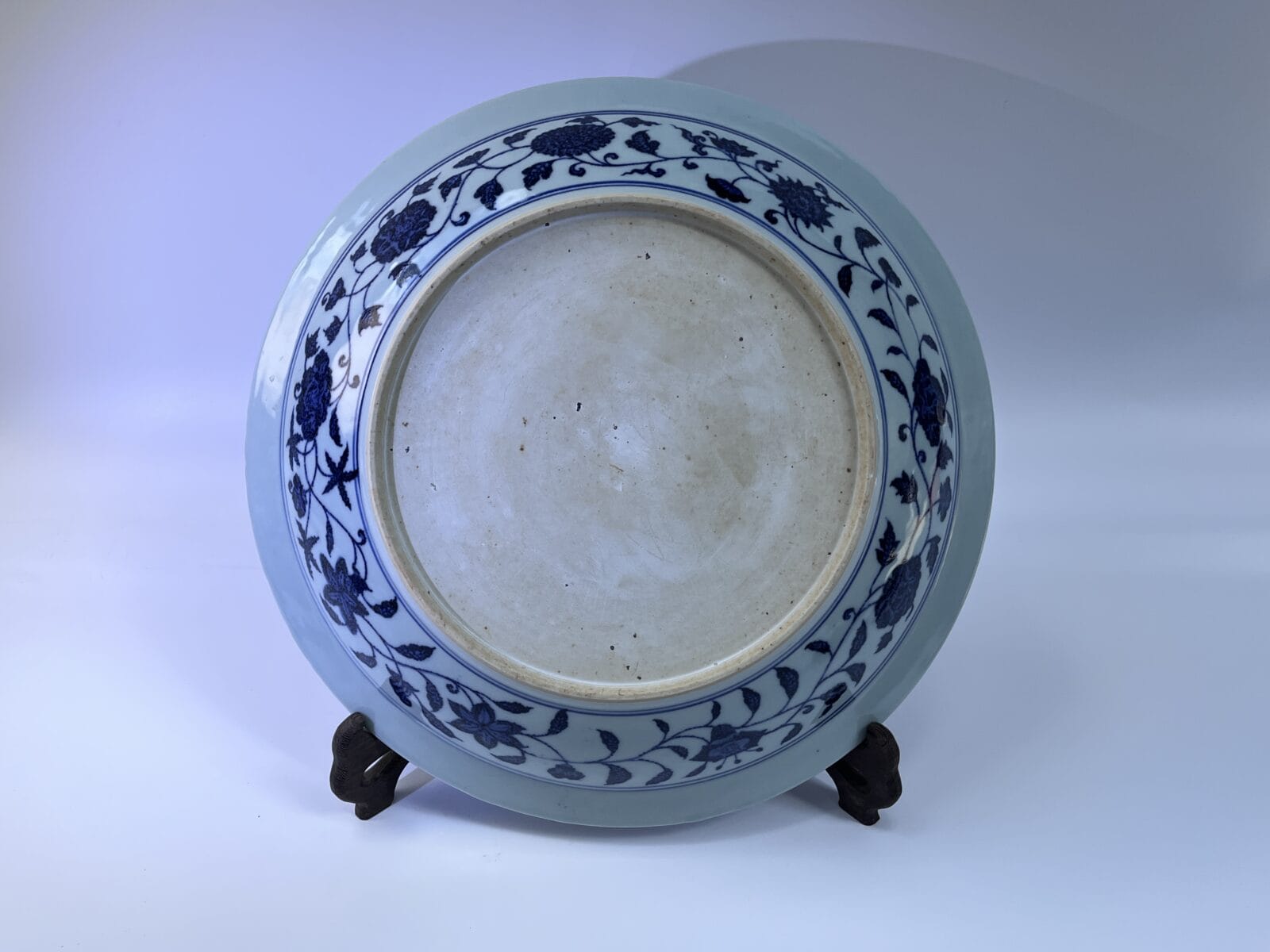
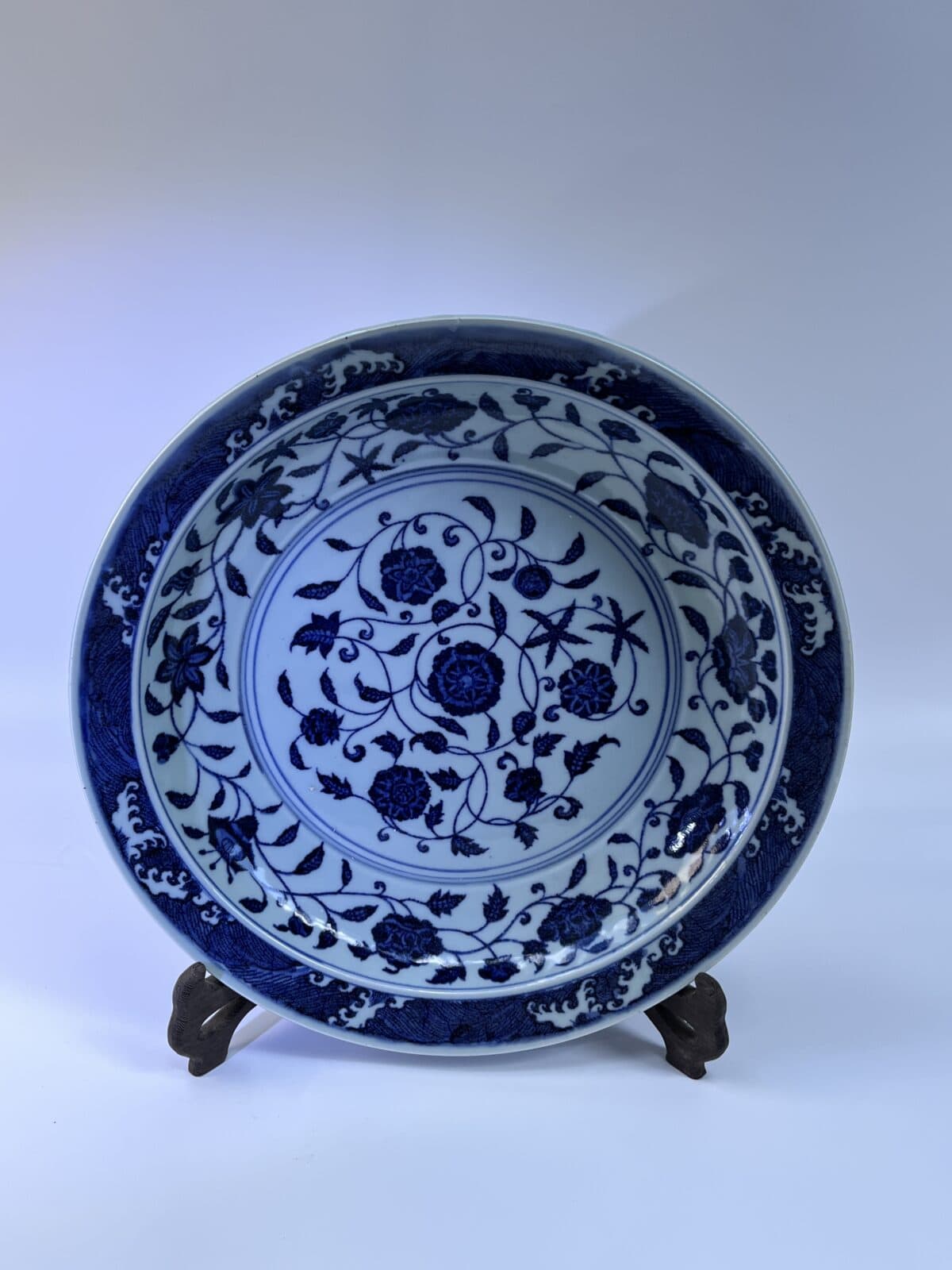
It adopts a classic shape with folded rim, shallow curved belly and ring foot, and features layered decorative layouts. The plate center is painted with interlocking flowers of four seasons; the inner wall is encircled by winding floral branches; the rim is decorated with wave patterns reserved against seawater motifs. This multi-layered decorative composition is an iconic feature of Yongle and Xuande blue and white porcelain.
Functions
In ancient times, such wares served as imperial banquet serving plates and sacrificial offering plates. In modern times, they are widely used as antique display ornaments for Chinese-style interiors, teapot trays for tea ceremonies, desk decorations for studies, and premium cultural gifts.
Standard Dimensions
Listed below are mainstream standard sizes for antique folded rim plates of equivalent craftsmanship in Jingdezhen, adopted by most elaborate reproductions available on the market:
- Mouth Diameter: 28–32 cm
- Overall Height: 4.5–5.5 cm
- Ring Foot Base Diameter: 17–19 cm
This classic medium-sized display plate boasts a graceful and dignified silhouette, fitting most display scenarios including tea tables, writing desks and antique shelves.
Logic of Market Value Composition
The pricing of this type of antique blue and white plate complies with universal value standards in the antique porcelain industry, supported by three core dimensions.
Value Anchor of Cultural Relic Prototypes
Folded rim plates painted with interlocking flowers represent landmark wares manufactured in imperial kilns during the Yongle and Xuande reigns. Almost all intact authentic official kiln specimens are collected by the Palace Museum, Shanghai Museum and top overseas cultural institutions, making genuine pieces extremely rare in circulation markets.
Comparable authentic Yongle and Xuande official blue and white plates often achieve transaction prices ranging from several million to tens of millions RMB at auctions. The historical status, scarcity and artistic excellence of genuine imperial wares form the core cultural foundation of these modern reproductions.
Cost Support for Production
- High forming difficulty: Featuring wide folded rims and thin porcelain bodies, hand-throwing and trimming demand precise control over flatness and curvature. Such plates are highly prone to rim collapse, edge warping and body deformation during firing, resulting in a far higher rejection rate than regular round porcelain wares. High loss costs directly push up product prices.
- High technical barriers: Painters must master authentic brushwork and compositional rules of Yongle and Xuande blue and white porcelain, matching the grace of flower and leaf outlines and the neatness of border decorations against ancient porcelain shards. To recreate the rust spots and diffusion effects of Suma Li Qing cobalt ore, craftsmen repeatedly adjust cobalt ratios and conduct trial firings at various kiln positions. Labor and trial error costs far exceed those for mass-produced decal porcelain.
Historical & Craft Stories Behind the Ware
The Legend of Blue and White Porcelain Along the Maritime Silk Road
The prototype of this folded rim plate was born during the golden age of Chinese blue and white porcelain, closely linked to the grand history of Zheng He’s maritime expeditions.
During the Yongle and Xuande reigns of the Ming Dynasty, Zheng He led seven voyages to the Western Seas. These journeys opened east-west maritime trade routes and brought back Suma Li Qing, the finest cobalt ore in the world at that time, from Persia. Rich in iron content, this cobalt pigment yields deep, rich blue tones after high-temperature firing, with sunken rust spots naturally forming on densely painted areas. Its powerful, time-worn texture secured the timeless reputation that “Yongle and Xuande blue and white porcelain stands unrivaled through the ages”.
Large plates of this design were byproducts of maritime trade. On one hand, they functioned as grand ritual and banquet wares for the Ming imperial court, their stately silhouette paired with interlocking floral patterns fully embodying royal prestige. On the other hand, they were top-selling export wares custom-made for West Asian markets. Arab communities maintained a tradition of communal dining, making large porcelain plates perfectly suited to local eating customs. Countless identical blue and white large plates were shipped to the Middle East along the Maritime Silk Road, valued more highly than gold, and became iconic emblems through which Western civilizations came to know the Orient.
Though the Xuande reign lasted merely a decade, it elevated blue and white craftsmanship to a pinnacle hard to replicate for hundreds of subsequent years. Imperial kilns enforced rigid standards: every finished piece underwent strict screening, and any flawed ware was smashed and buried on-site, forbidden to enter civilian circulation. Archaeological excavations at the Jingdezhen Imperial Kiln Ruins in modern times unearthed massive quantities of broken shards from these large plates, allowing contemporary people to witness the unparalleled craftsmanship of imperial porcelain six hundred years ago.
Contemporary Craftsmen’s Dedication to Authentic Reproduction
Modern reproductions of these blue and white plates in Jingdezhen are never simple copies of decorative patterns.
Master craftsmen specializing in high-fidelity antique replicas repeatedly study shards unearthed from imperial kiln sites, analyzing the brush force used for every leaf, the balanced layout of every flower, and even the grain of clay bodies and glossy richness of glaze surfaces. To recreate the unique rust spotting of Suma Li Qing cobalt pigment, they test countless cobalt formulas and conduct repeated firings at varying kiln temperatures and positions. Piles of discarded plates as tall as an adult are sacrificed before a few batches with ideal blue tones can be produced.
Forming folded rim plates demands extreme patience and skilled labor. Their wide rims and thin bodies deform or warp if the slightest misalignment occurs during clay kneading, throwing or trimming. Craftsmen repeatedly level the rim during trimming and fine-tune placement angles before firing; a flatness error of merely one millimeter renders the entire piece defective.
A well-crafted antique blue and white plate is never a fake antique. Instead, it revives the glory of the ancient Maritime Silk Road and the supreme aesthetic standards of imperial kilns for modern daily life. It can serve as an elegant teapot base on a tea table, a refined vessel for dried fruits on a writing desk, or a centerpiece display on an antique shelf. Within its calm shades of cobalt blue lies the enduring pursuit of beauty cherished by Chinese people for over a thousand years.