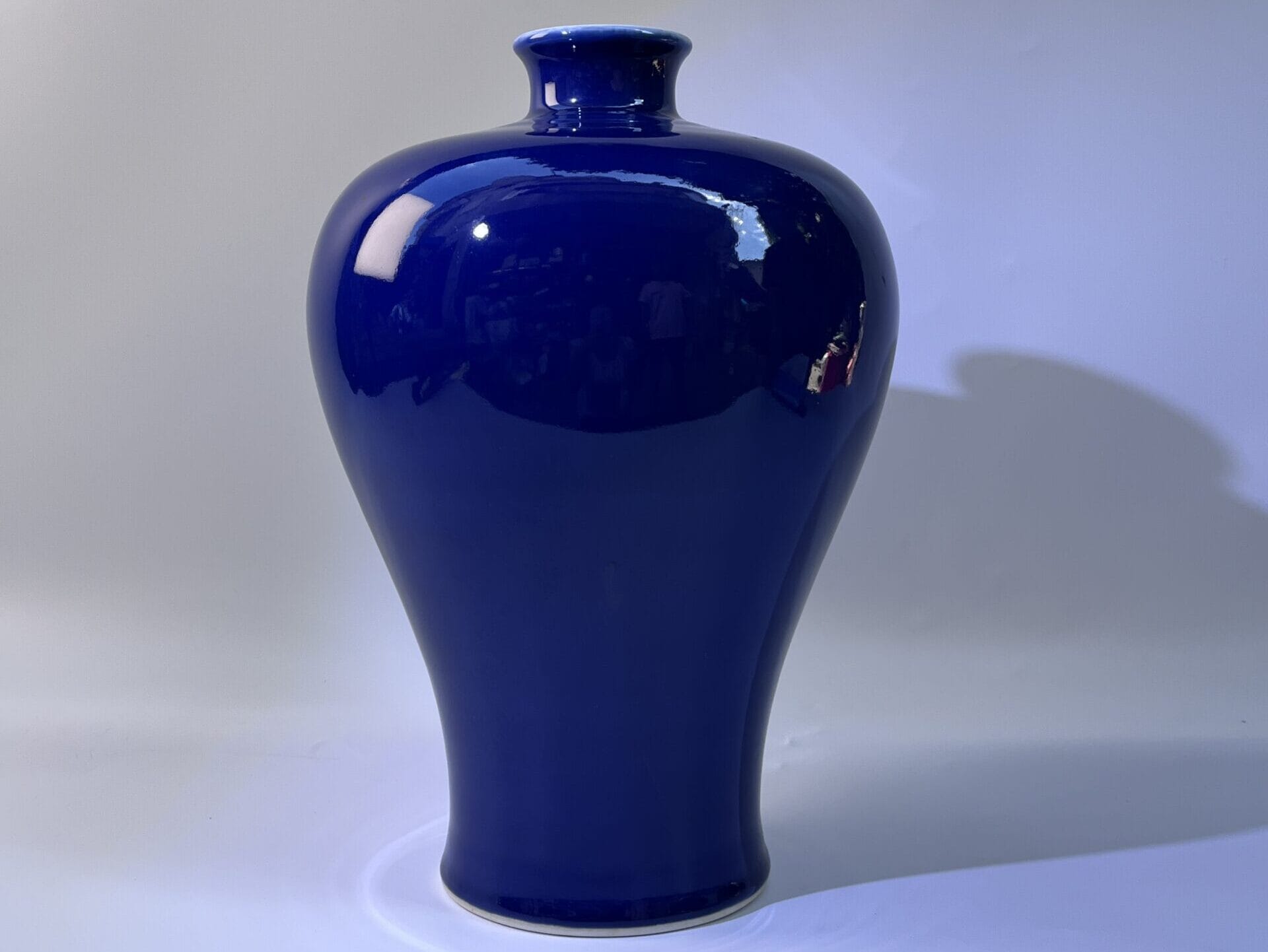
Imitation Qing Yongzheng-Style Sacrificial Blue Glaze Meiping Vase, Handmade Antique-style Porcelain
chinese antique-style porcelain, Imperial jingdezhen porcelain, reproduction porcelain, jingdezhen ceramic reproduction manufacturer china, chinese porcelain replica, jingdezhen antique porcelain replica, jingdezhen porcelain, jingdezhen ceramics, blue and white porcelain, magic cube ceramics,
Introduction
1. Name & Category
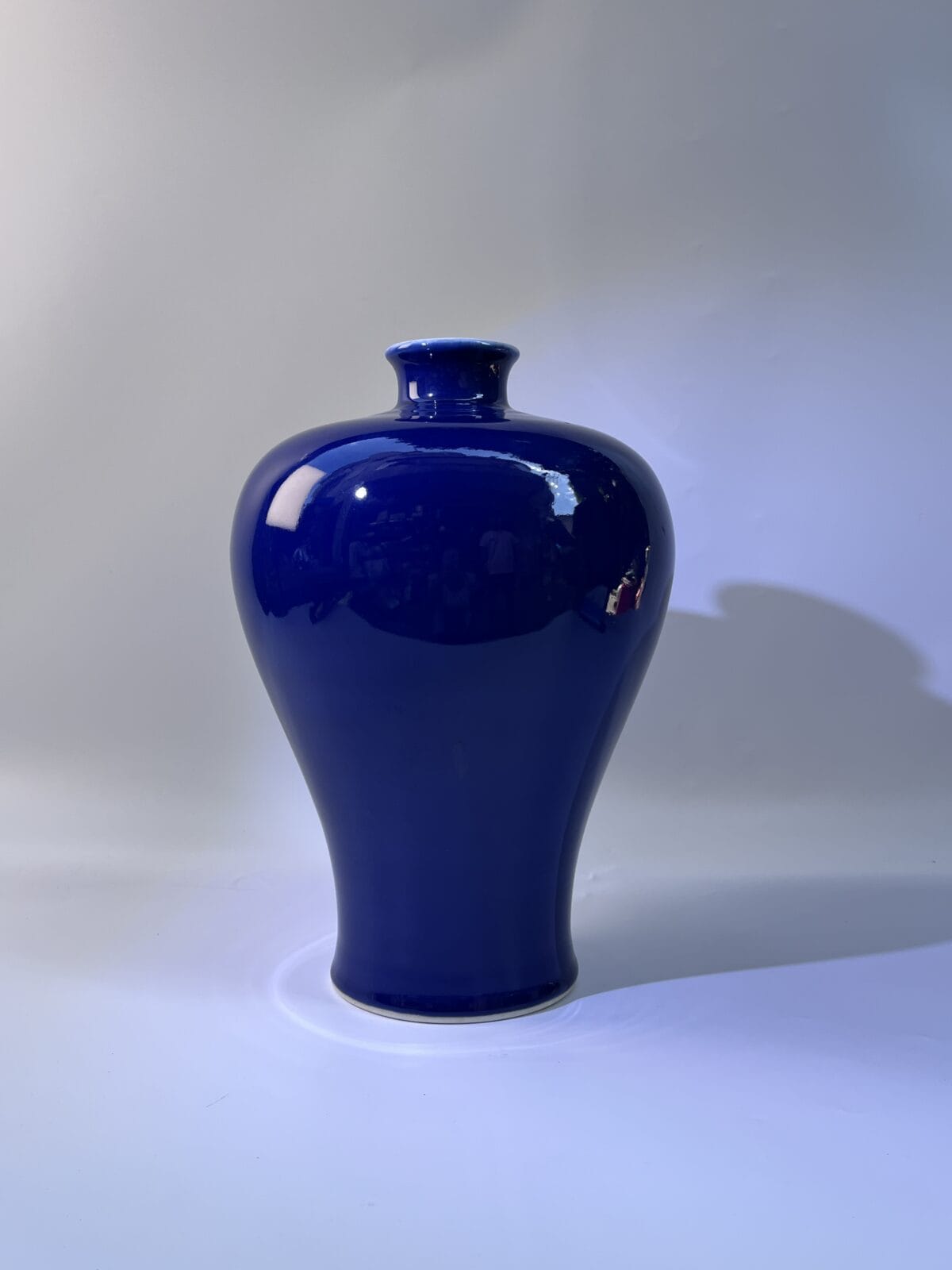
Name: Imitation Yongzheng-Style Sacrificial Blue (Ji Blue) Glaze Plum Vase
Category: Handmade antique high-temperature monochrome glaze ornamental porcelain from Jingdezhen. Its prototype is imperial porcelain produced by official kilns during the Yongzheng reign of the Qing Dynasty, representing a classic shape among antique colored glaze wares.
2. Core Craftsmanship
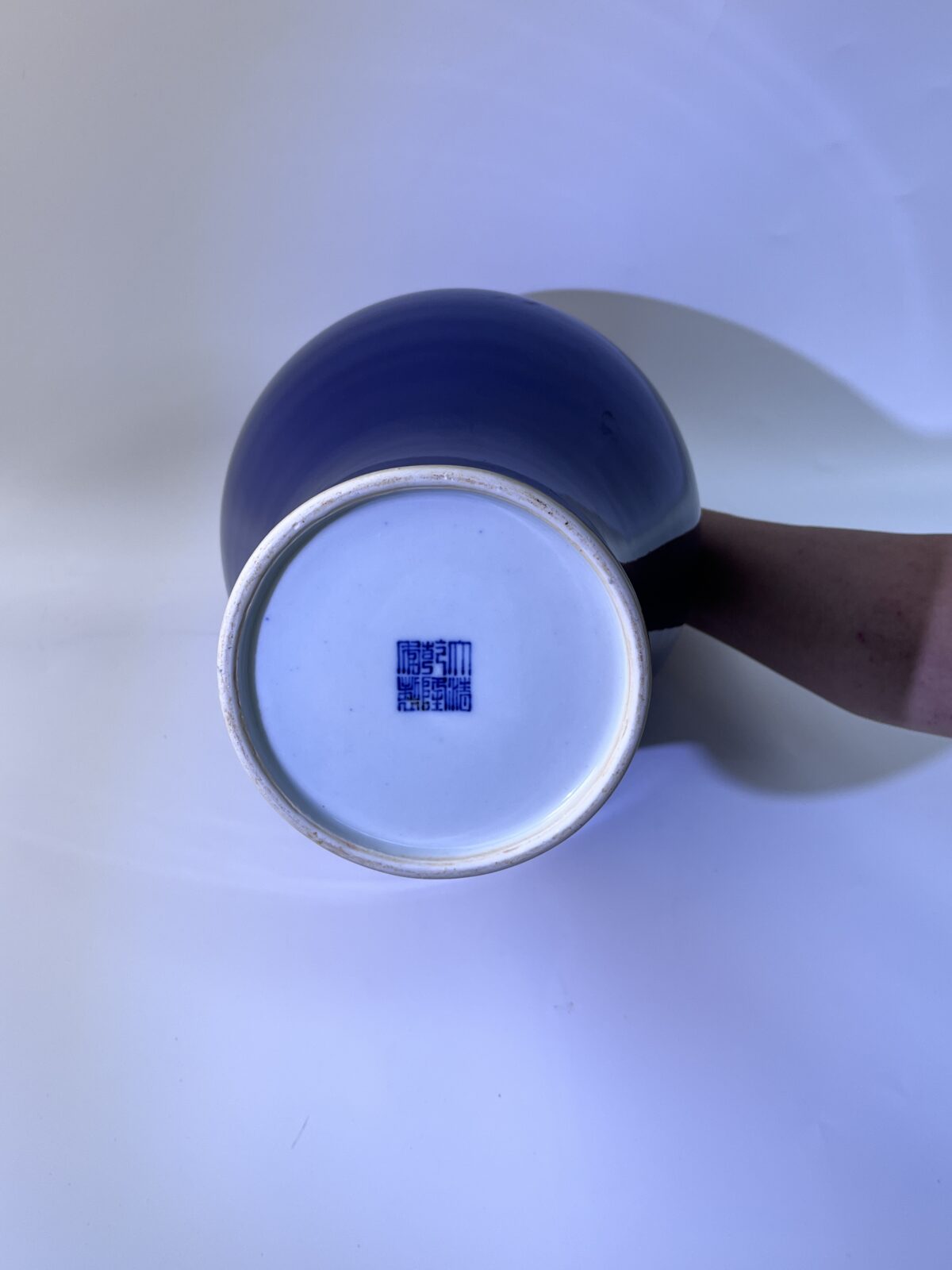
The body adopts a dual formula of porcelain stone and kaolin clay, fully coated with high-temperature cobalt blue glaze and fired once at 1280–1320°C. The glaze surface is even, lustrous and smooth with a deep, tranquil tone. Natural glaze flow forms a pale white “rush-straw rim” along the mouth edge, authentically recreating the distinctive vintage feature of classic sacrificial blue glaze. The ring foot is neatly trimmed, replicating the “loach-back” foot finishing technique exclusive to Qing official kilns.
3. Functions
Originally designed as a practical wine storage vessel, the plum vase gradually evolved into a core decorative treasure for halls and studies throughout the Ming and Qing dynasties. Today, it serves as high-end ornament for entryways, antique shelves and tea rooms in Chinese-style interiors. It can also be used as a flower vase for single sprigs, embodying the classical aesthetic tradition of desk flower offerings in Chinese culture.
4. Standard Dimensions
Below are mainstream universal sizes for antique sacrificial blue glaze plum vases of equivalent craftsmanship in Jingdezhen, covering over 90% of ornamental-grade reproductions on the market:
- Overall Height: 33–35 cm
- Mouth Diameter: 5.5–6.5 cm
- Maximum Belly Diameter: 20–22 cm
- Base Diameter: 11.5–12.5 cm
This classic medium ornamental plum vase features well-proportioned, dignified contours, meeting display demands for most Chinese-style residences and business clubs.
5. Logic of Market Value Composition
The pricing of such antique monochrome glaze porcelain follows a three-tier value framework widely adopted across Jingdezhen’s antique porcelain industry, rather than arbitrary valuation.
Value Anchor of Cultural Relic Prototypes
Sacrificial blue glaze stands as a core monochrome glaze category of Ming and Qing official kilns, reserved exclusively for imperial sacrificial rituals at the Temple of Heaven, granting it supreme hierarchical status. Yongzheng sacrificial blue glaze imperial wares mark the pinnacle of Qing colored glaze craftsmanship. Authentic surviving pieces are extremely rare, mostly collected in national-level museums including the Palace Museum. Intact genuine imperial wares achieve auction prices ranging from several million to ten million RMB. The scarcity and royal ritual identity of original imperial porcelain form the core cultural value foundation of modern reproductions.
Cost Support for Production
- Extremely demanding firing conditions: Sacrificial blue glaze is highly sensitive to kiln temperature and internal atmosphere. A mere 10°C temperature deviation leads to uneven coloring, greyish glaze or uncontrolled glaze dripping. A well-known industry adage states “one treasure emerges from a thousand kilns”, with the yield rate of fully hand-glazed wares only 40%–50%. Waste costs far exceed those of standard blue and white porcelain.
- High technical barriers: Premium antique reproductions require recreating Qing imperial glaze formulas with traditional pouring or blowing glazing techniques to guarantee consistent glaze thickness and uniform blue tones across the entire vessel. Clay body proportions and foot trimming details must match imperial kiln shard specimens, incurring far higher labor and raw material expenses than ordinary daily-use ceramics.
6. Historical & Craft Stories Behind the Ware
6.1 The Sacred Sacrificial Blue Treasure of Royal Rituals
Also known as Ji Blue or accumulated blue glaze, sacrificial blue glaze has remained an exclusive royal glaze since its initial creation in Yuan-dynasty Jingdezhen.
Rigid ritual codes governed imperial sacrifices across the Ming and Qing dynasties: blue for heaven worship, red for sun worship, yellow for earth worship and white for moon worship. Ritual vessels for heaven sacrifices must be fully covered in pure sacrificial blue glaze, hence its alternative title “original glaze of suburban altars”. Ranking among the highest-grade monochrome glazes, its private folk production was banned for centuries.
The plum vase also underwent an identity transformation: originating as a wine-storing “classic bottle”, it rose to become a premium display ornament. A functional wine container in the Song Dynasty, its slender, full silhouette and stately bearing made it an indispensable decorative piece in royal halls during the Ming and Qing. Plum blossoms arranged inside during cold winters create the most elegant scene of New Year floral offerings.
Emperor Yongzheng was renowned for his exacting aesthetic standards. The sacrificial blue glaze plum vases commissioned from imperial kilns during his reign feature a glaze hue akin to deep ocean or clear sky after rain — a calm, understated blue exuding innate imperial majesty. Later generations hailed them as “the peak of Qing monochrome glaze art”. During ancient kiln production, any ware with uneven glaze or minor shape irregularities would be smashed and buried, forbidden to leave the kiln compound.
6.2 Craftsman’s Dedication to Monochrome Glaze Mastery
Modern sacrificial blue glaze production in Jingdezhen may seem simple — just one bottle, one single color — yet it tests craftsmanship far more rigorously than elaborately patterned blue and white porcelain.
A flawed stroke can be corrected on blue and white wares, but a single firing error renders an entire sacrificial blue vase worthless. Veteran glaze mixers know that a 0.1-gram discrepancy in cobalt ratio yields greyish or purplish blue after firing; uneven glaze thickness creates unsightly glaze tears and thick accumulated patches. To recreate the serene blue tone characteristic of Yongzheng sacrificial glaze, many kilns conduct dozens of trial firings, with discarded defective wares piling up to fill half a courtyard.
A refined antique sacrificial blue plum vase captivates viewers through pure glaze texture alone, requiring no decorative patterns. Its reproduction revives a quintessentially Chinese monochrome aesthetic: simpler shades reveal greater mastery, and restrained vessels offer endless appreciation. It embodies the oriental beauty of blank space in Chinese interior design, carrying forward the pinnacle monochrome glaze craftsmanship of the millennium-old porcelain capital through generations.