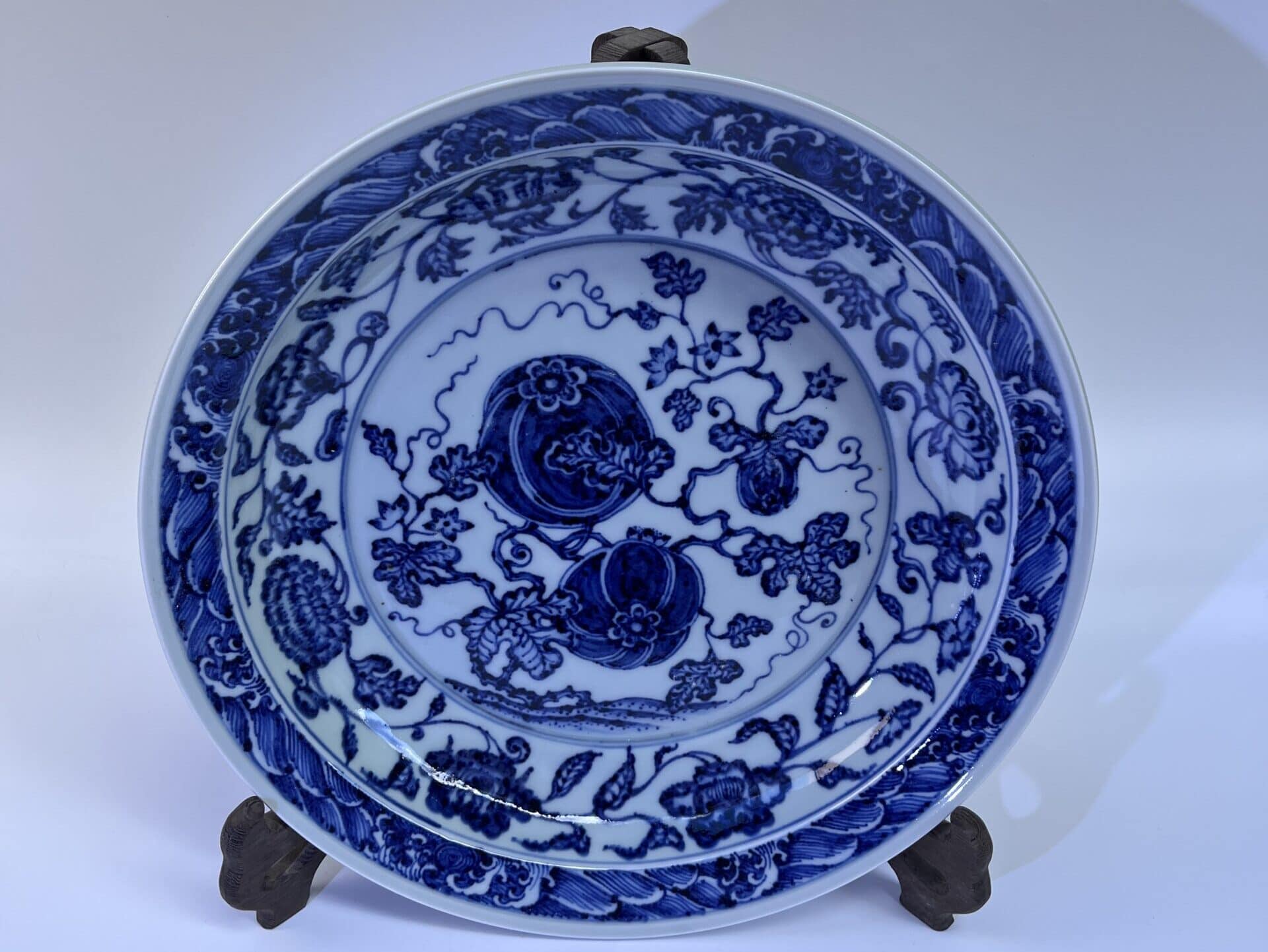
Imitation Ming Xuande Blue-and-White Folded Edge Large Plate with Detached Branch Melon (Watermelon) Pattern, Handmade Antique-style Porcelain
chinese antique-style porcelain, Imperial jingdezhen porcelain, reproduction porcelain, jingdezhen ceramic reproduction manufacturer china, chinese porcelain replica, jingdezhen antique porcelain replica, jingdezhen porcelain, jingdezhen ceramics, blue and white porcelain, magic cube ceramics,
Introduction
1. Name & Category
Name: Imitation Xuande Blue and White Folded Rim Large Plate with Scattered Melon and Fruit (Watermelon) Patterns.Antique-style Porcelain
Category: Handmade antique blue and white porcelain from Jingdezhen. Its prototype follows official kiln specifications of the Xuande reign of the Ming Dynasty, serving as dual-purpose antique tea ware and literary collectibles for display and practical use.
2.Antique-style Porcelain Core Craftsmanship
The ware is shaped by hand throwing and trimming, with hand-painted blue and white patterns covering the entire surface. The cobalt pigment is formulated to replicate the color effect of imported Ming Suma Li Qing ore, producing natural rust spots and ink diffusion where the pigment accumulates thickly, restoring the powerful and profound artistic characteristics of Yongle and Xuande blue and white porcelain.
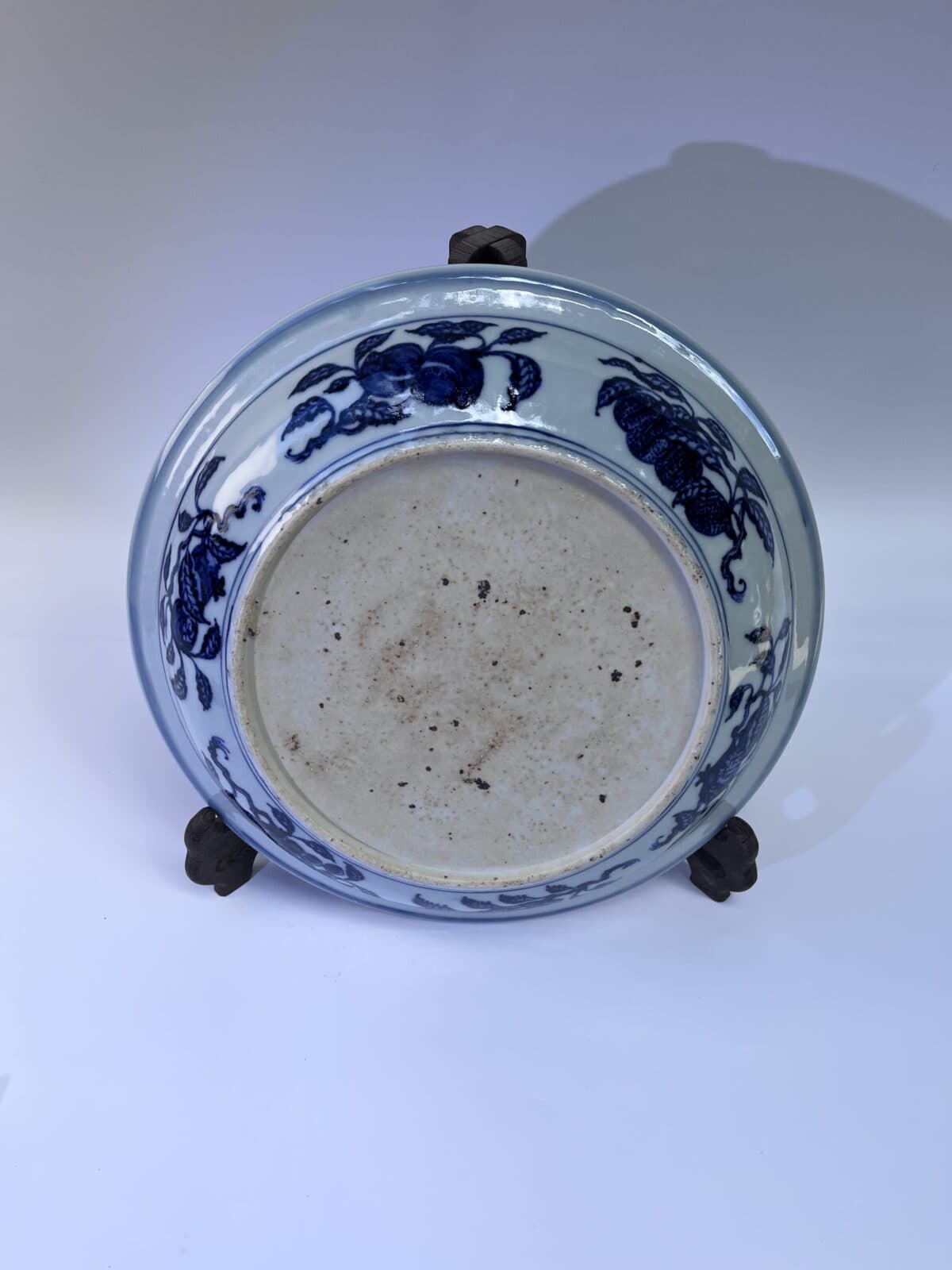
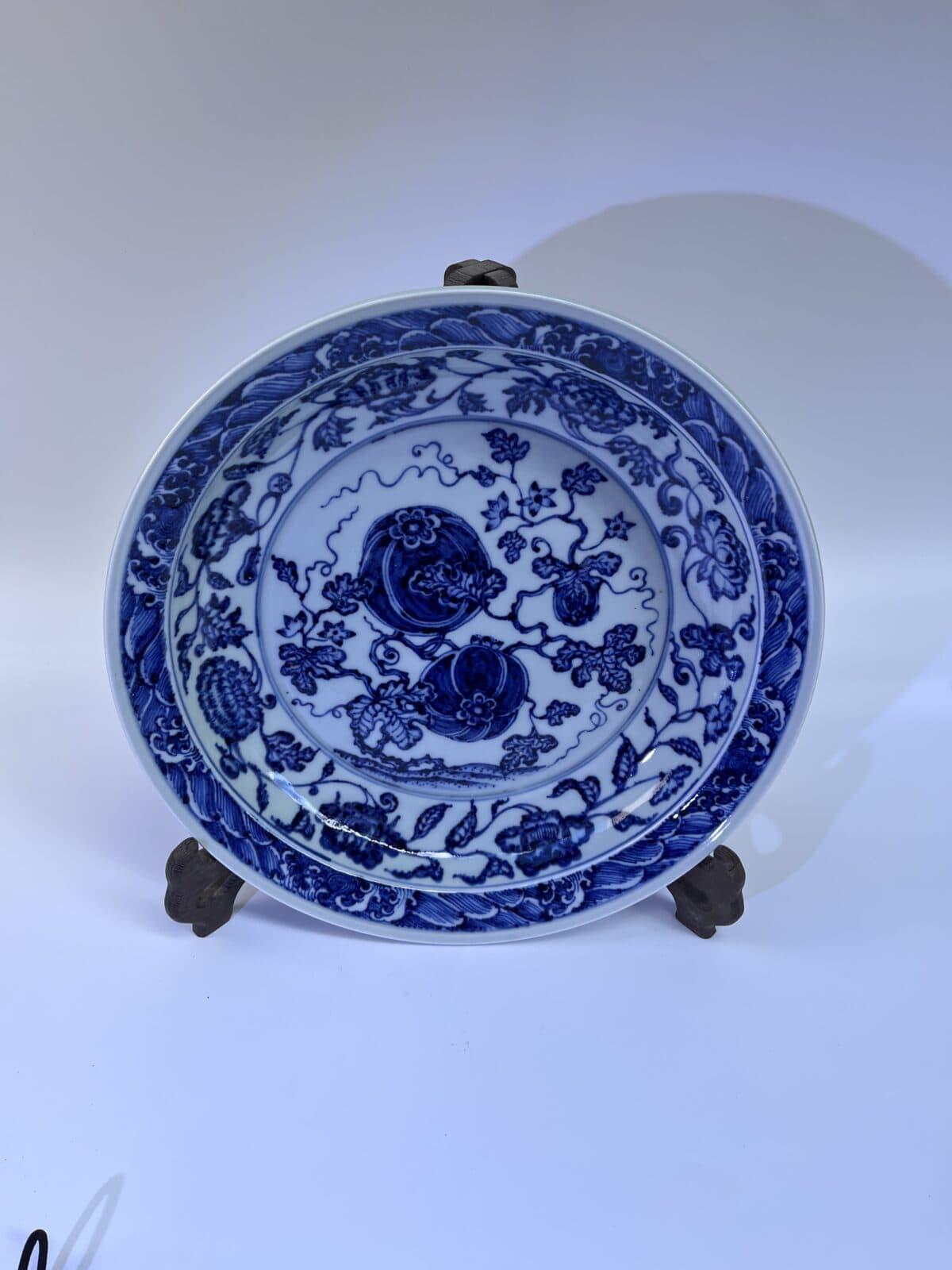
The decorations adopt a three-layer layout: the plate center features scattered watermelon and auspicious fruit patterns with twisting vines and stretched leaves; the inner wall is encircled by continuous interlocking flowers of four seasons; the rim is adorned with seawater wave patterns reserved in white, a classic border motif iconic of Yongle and Xuande blue and white porcelain. Coated with glaze imitating Ming bluish-white glaze, the plate is fired once at a temperature above 1280°C.
3. Functions
In ancient times, it served as a serving plate for imperial banquets and sacrificial offering plate. Today, it is widely used as a teapot tray for tea ceremonies, desk ornament, antique shelf display piece, and premium cultural gift.
4. Standard Dimensions
Below are mainstream standard sizes for elaborate antique folded rim plates of equivalent grade in Jingdezhen:
- Mouth Diameter: 28–32 cm
- Overall Height: 4.5–5.5 cm
- Ring Foot Base Diameter: 17–19 cm
This classic medium-sized display plate features a smooth and regular silhouette, suitable for most Chinese-style spaces including tea tables, antique shelves and entrance halls.
5.Antique-style Porcelain Logic of Market Value Composition
The value of such antique blue and white plates complies with the universal pricing system of the antique porcelain industry, supported by three core dimensions.
Value Anchor of Cultural Relic Prototypes
Folded rim plates decorated with scattered melon and fruit patterns are classic literary wares from the Xuande Imperial Kiln of the Ming Dynasty. Intact authentic imperial kiln specimens are extremely rare, mostly collected in the Palace Museum, National Palace Museum (Taipei) and top overseas museums, classified as Grade One National Cultural Relics. Comparable authentic Yongle and Xuande official plates with auspicious fruit patterns often sell for several million to tens of millions RMB at auctions. The scarcity, artistic achievement and historical status of genuine imperial porcelain lay the core cultural value foundation for modern reproductions.
Cost Support for Production
- High forming loss rate: The wide folded rim and shallow curved belly demand ultra-flat porcelain bodies. Tiny deviations in precision during hand throwing and trimming easily cause rim collapse, edge warping and deformation after firing, with a finished product rate of only around 50%, far lower than ordinary round wares. High wastage directly raises the base price.
- High technical threshold: The auspicious fruit patterns set strict standards for painters’ brushwork. The plumpness of fruits, suppleness of vines and curling postures of leaves must match ancient porcelain shards as reference. To recreate the rust spots and natural diffusion of Suma Li Qing cobalt ore, craftsmen repeatedly adjust cobalt proportions and test different kiln positions, incurring far higher labor trial-and-error costs than mass-produced decal porcelain.
6.Antique-style Porcelain Historical & Craft Stories Behind the Ware
6.1 Auspicious Symbolism of Imperial Porcelain
The prototype of this plate originated from Jingdezhen Imperial Kiln during the Xuande reign of the Ming Dynasty, embodying the Ming imperial aesthetic principle that “every pattern bears a meaningful blessing”.
The watermelon pattern painted at the plate center symbolizes endless offspring in ancient culture, representing prosperous clans, numerous descendants, and the royal wish for thriving heirs and enduring national fortune. Emperor Xuande was an art enthusiast who imposed extremely strict requirements on the patterns and shapes of imperial porcelain. These auspicious fruit plates functioned as both dining vessels for inner palace banquets and sacrificial wares, precious imperial kiln pieces integrating practicality and ritual significance.
Suma Li Qing cobalt ore brought back by Zheng He’s maritime expeditions was exclusive top-tier raw material reserved for imperial kilns. Porcelain painted with this pigment presents deep, vivid blue naturally dotted with sunken rust spots, boasting a unique powerful and weathered texture that earned Yongle and Xuande blue and white porcelain the reputation as the pinnacle of all blue and white wares.
Stringent rules governed ancient imperial kiln production. Any ware with uneven glaze, distorted patterns or slightly irregular shape would be smashed and buried on-site, forbidden to circulate among civilians. Only through modern archaeological excavations at the imperial kiln ruins, where massive fragments were unearthed, can people fully appreciate the authentic charm of Xuande blue and white porcelain.
6.2 Contemporary Craftsmen’s Persistence in Ancient Reproduction
Modern Jingdezhen craftsmen recreating these fruit-patterned plates reproduce far more than surface patterns — they restore the timeless artistic vitality of ancient porcelain.
Master artisans specializing in high-fidelity antique replicas repeatedly study museum shards to analyze the curvature of painted watermelons, twisting rules of vines, and vein layout of every single leaf, matching every detail to ancient relics. To replicate the distinctive ink diffusion and rust spotting of Suma Li Qing pigment, they adjust iron content in cobalt mixtures time and again, testing diverse kiln temperatures and positions. It is common for dozens of plates to be discarded in a single kiln batch.
Shaping the wide folded rim is an extremely labor-intensive process. From clay kneading to body trimming, craftsmen calibrate the flatness of the rim repeatedly; the slightest imperfection leads to warping and deformation after firing. A qualified antique plate undergoes more than twenty procedures, with most raw blanks discarded before a finished ware is achieved.
This is more than an ordinary plate. It brings six-hundred-year-old imperial aesthetics and auspicious blessings out of museum display cabinets into modern daily life. Whether holding a purple clay teapot on a tea table or adorning a writing desk as a quiet ornament, its calm cobalt blue carries the age-old auspicious wishes cherished by Chinese people, as well as Jingdezhen craftsmen’s dedication to inheriting traditional porcelain craftsmanship.