Introduction
Ceramic Vase
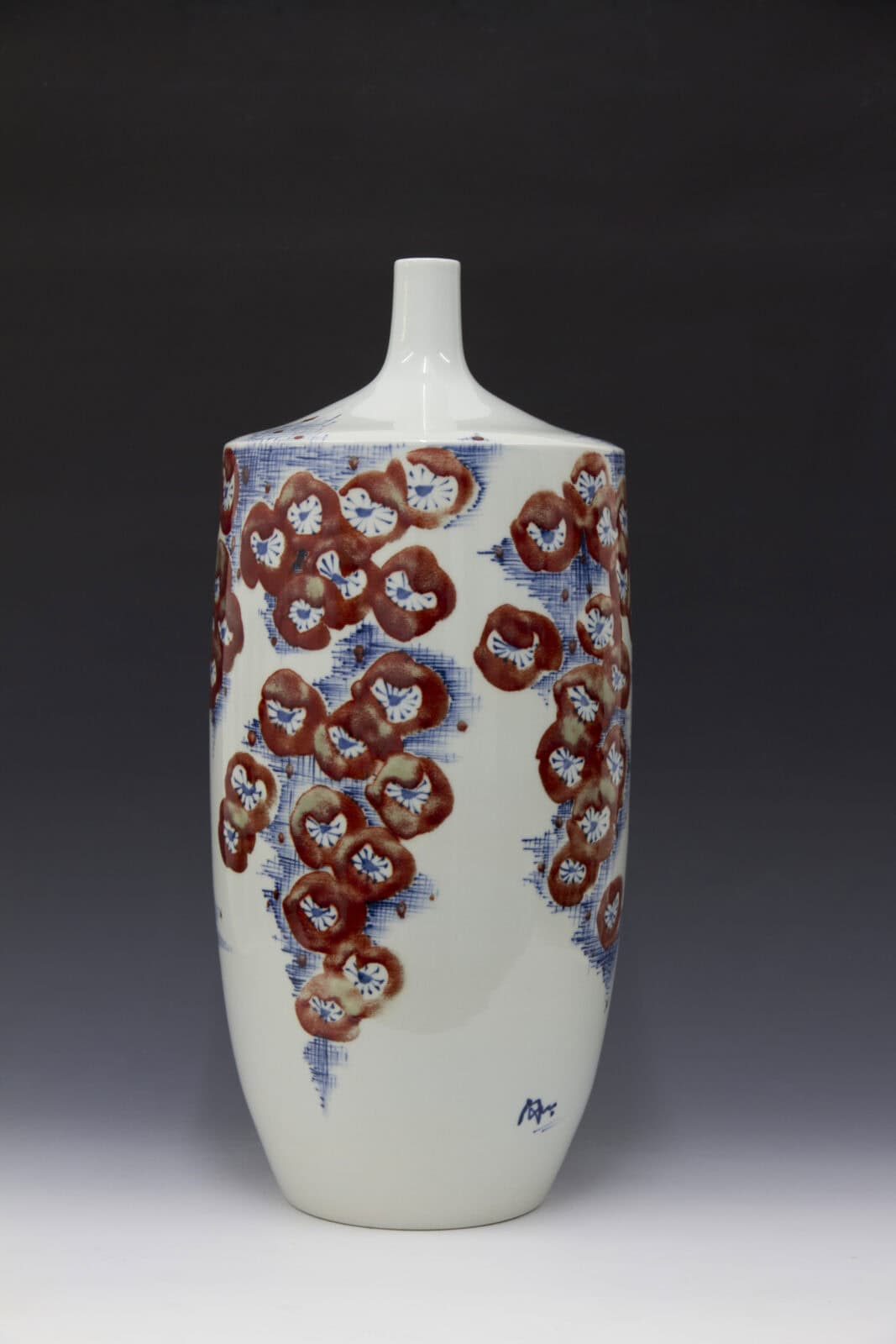
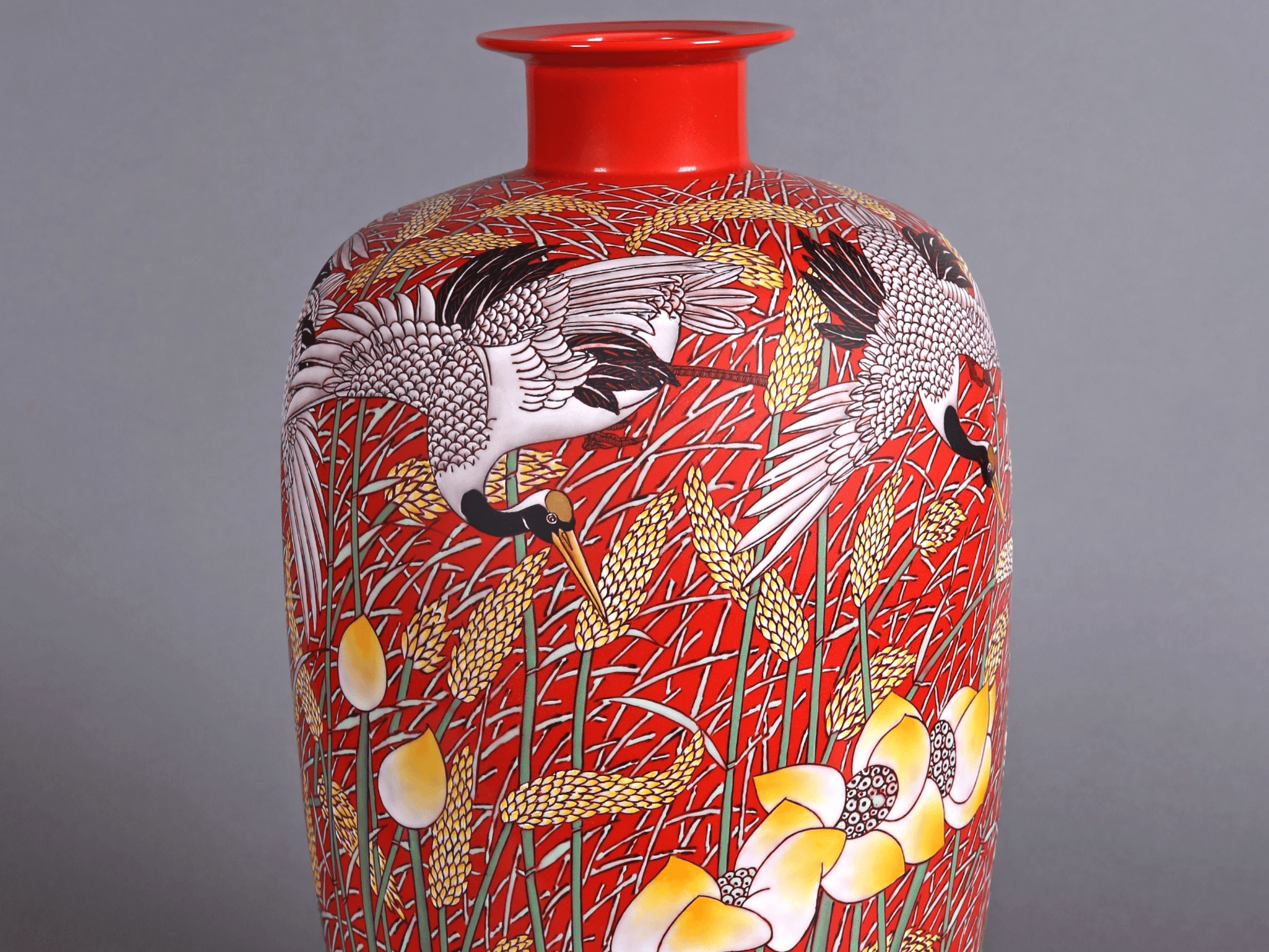
This artwork features a modernized straight-neck Ceramic Vase with a clean, elongated silhouette. Its narrow upright neck draws the eye toward the center, while the tall cylindrical body has a gently rounded fullness that tapers gradually toward the base. These carefully controlled proportions give the Ceramic Vase the stability of traditional Chinese porcelain while creating a lighter and more contemporary visual presence.
Instead of relying on complicated curves or heavily modeled details, the Ceramic Vase uses a restrained geometric form to support the painted composition. Its uninterrupted surface provides generous space for expressive porcelain painting and allows the imagery to flow naturally around the body. The simplicity of the vessel also makes its proportions, glaze quality, and brushwork more visible, turning the form itself into an essential part of the artwork.
Designed as a contemporary decorative piece, the Ceramic Vase is suitable for living rooms, studies, tea rooms, hotel lobbies, reception areas, galleries, and exhibition halls. It can be placed on a console table, pedestal, display cabinet, or freestanding plinth. Its tall proportions make it especially effective in modern minimalist and neo-Chinese interiors where a single artwork is expected to create a strong but uncluttered focal point.
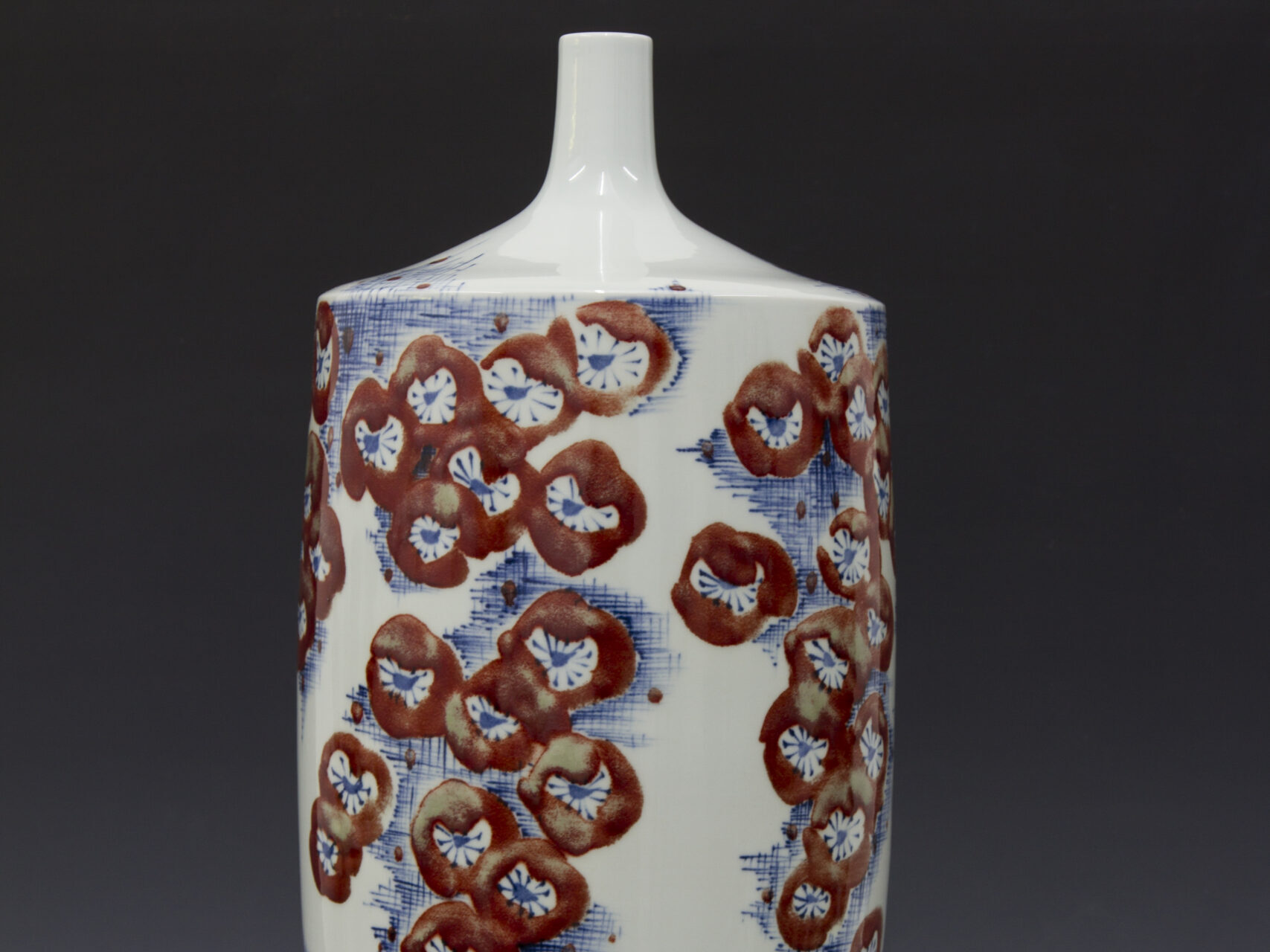
The painting centers on hanging clusters of ripe pomegranates arranged in a loose, freehand composition. Two groups of fruit and blossoms descend along the left and right sides of the Ceramic Vase, alternating between concentrated and open areas. Some elements are sharply defined, while others dissolve into softer pigment washes. This variation creates visual movement and encourages the viewer to explore the design from several angles.
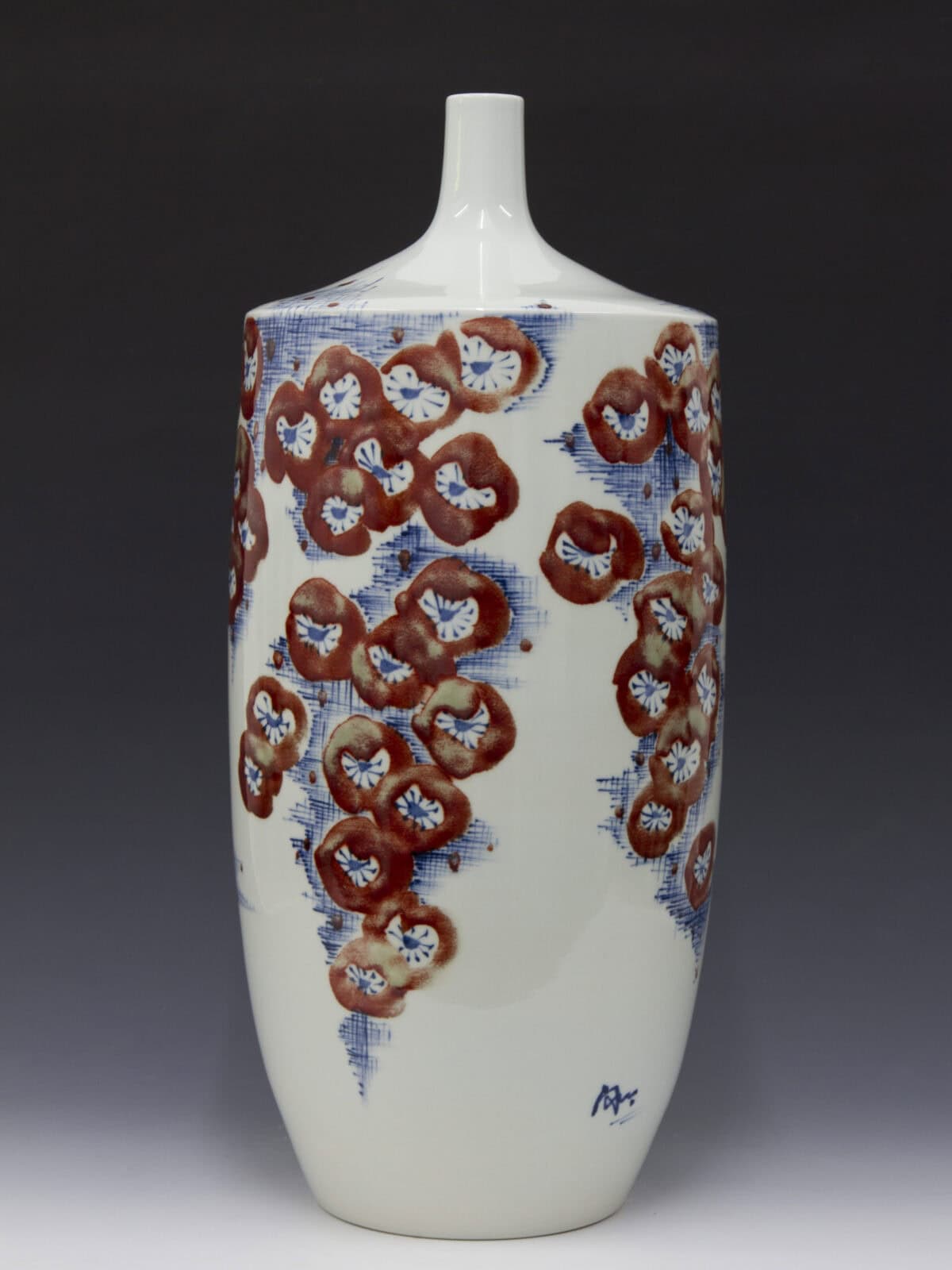
In traditional Chinese culture, the pomegranate is an auspicious symbol of abundance, prosperity, a successful harvest, family continuity, and completeness. Its round shape and numerous seeds make it a natural visual expression of fullness and flourishing life. On this Ceramic Vase, the familiar subject is simplified into contemporary symbolic forms, allowing its cultural meaning to remain recognizable without relying on dense or overly literal decoration.
Copper-red underglaze washes define the volume and outline of the fruit, while fine cobalt-blue lines describe the stamens, internal details, and abstract grid-like background. The interaction of warm red and cool blue creates a rich but carefully controlled color contrast. Small blue details also give the pomegranates greater structure, preventing the broad red areas from appearing visually flat or disconnected from the white porcelain body.
Inspired by traditional Chinese freehand flower-and-bird painting, the Ceramic Vase treats porcelain as paper and mineral pigments as ink. Red washes establish the major shapes, while blue lines add rhythm, definition, and movement. A handwritten artist’s signature on the vase brings painting and calligraphy together, reinforcing the connection between ceramic decoration and the broader tradition of Chinese literati art.
Large areas of exposed white porcelain embody the East Asian appreciation of negative space. Instead of filling the entire Ceramic Vase with decorative motifs, the composition allows each cluster of fruit and flowers to breathe. These open areas strengthen the contrast between the warm and cool pigments and highlight the vessel’s tall cylindrical silhouette. The result is a calm, balanced appearance suited to minimalist, contemporary, neo-Chinese, and modern luxury interiors.
Light also contributes to the changing visual character of the Ceramic Vase. As illumination moves across the glazed surface, the red fruit and blue lines shift in intensity around the curved body. From a distance, the vessel presents a strong vertical profile and clearly balanced composition. Viewed closely, it reveals diffused pigment edges, subtle tonal changes, fine brush lines, and individual traces of the artist’s hand.
Co-firing underglaze blue and copper red on a single Ceramic Vase requires advanced technical control. Cobalt and copper pigments react differently to pigment thickness, kiln temperature, firing duration, and oxygen levels. If the firing conditions are not carefully controlled, the red may darken, fade, spread excessively, or fail to develop, while the blue details may blur or lose clarity beneath the glaze.
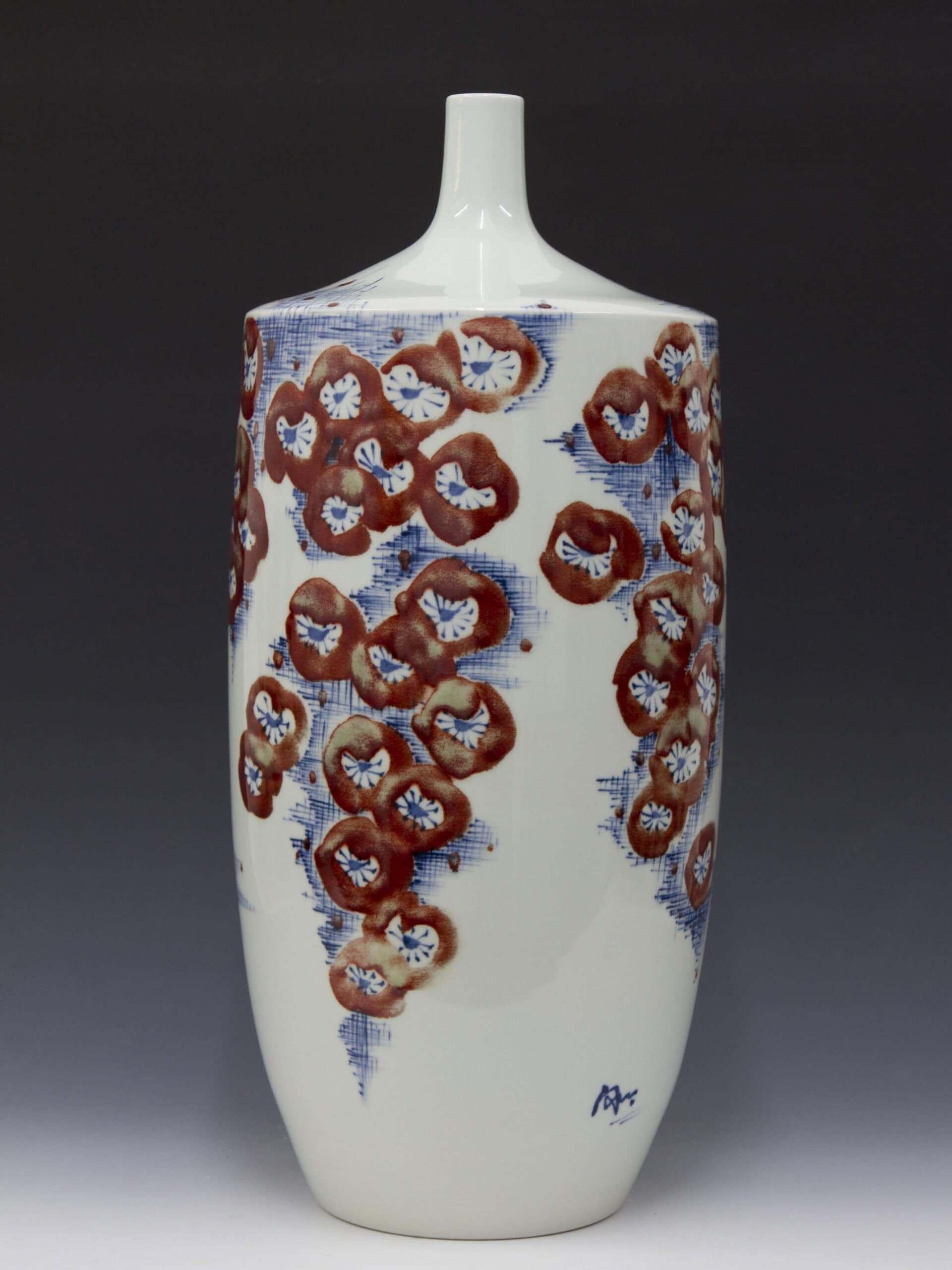
The relationship between the curved porcelain body and the painted decoration adds another level of difficulty. Pigment application must remain balanced around the entire Ceramic Vase, while the glaze must cover both broad color washes and delicate linework evenly. Small changes in kiln position or firing atmosphere can alter the final colors. As a result, the acceptance rate is limited, and every successful piece displays slightly different kiln-developed textures.
Breaking away from the rigid compositions often associated with antique-style porcelain, this Ceramic Vase removes complex foliage and reduces the pomegranates to expressive shapes, red masses, and delicate blue details. The modern vessel form and abstract freehand decoration reinterpret a traditional auspicious theme in a contemporary artistic language. This approach preserves the symbolism of the original subject while making the work suitable for modern international interiors.
Rooted in Jingdezhen’s long heritage of underglaze-blue and copper-red porcelain, the Ceramic Vase combines traditional firing knowledge with modern ink-painting aesthetics. Warm and cool colors, natural kiln variations, open white space, and a minimalist silhouette are brought together in one unified composition. Because the copper-red tones develop unpredictably during firing, each Ceramic Vase has its own distinctive color transitions and cannot be reproduced exactly.
Combining technical difficulty, expressive painting, cultural symbolism, and decorative versatility, this Ceramic Vase offers value for interior display and handmade ceramic collection. It is suitable for residential, hospitality, gallery, and cultural settings. The finished work represents a premium contemporary Jingdezhen porcelain piece that connects traditional auspicious imagery with the clean proportions and freehand aesthetics of modern ceramic art.