Introduction
Square Ceramic Plaque
This artwork is a flat Square Ceramic Plaque with a clean surface, straight symmetrical edges, and a carefully balanced profile. Its dense porcelain body maintains a consistent thickness, providing a stable foundation for relief carving, underglaze painting, framing, and long-term display. The square format is widely used in contemporary ceramic wall art because it fits naturally into architectural spaces and can be arranged individually or as part of a larger installation.
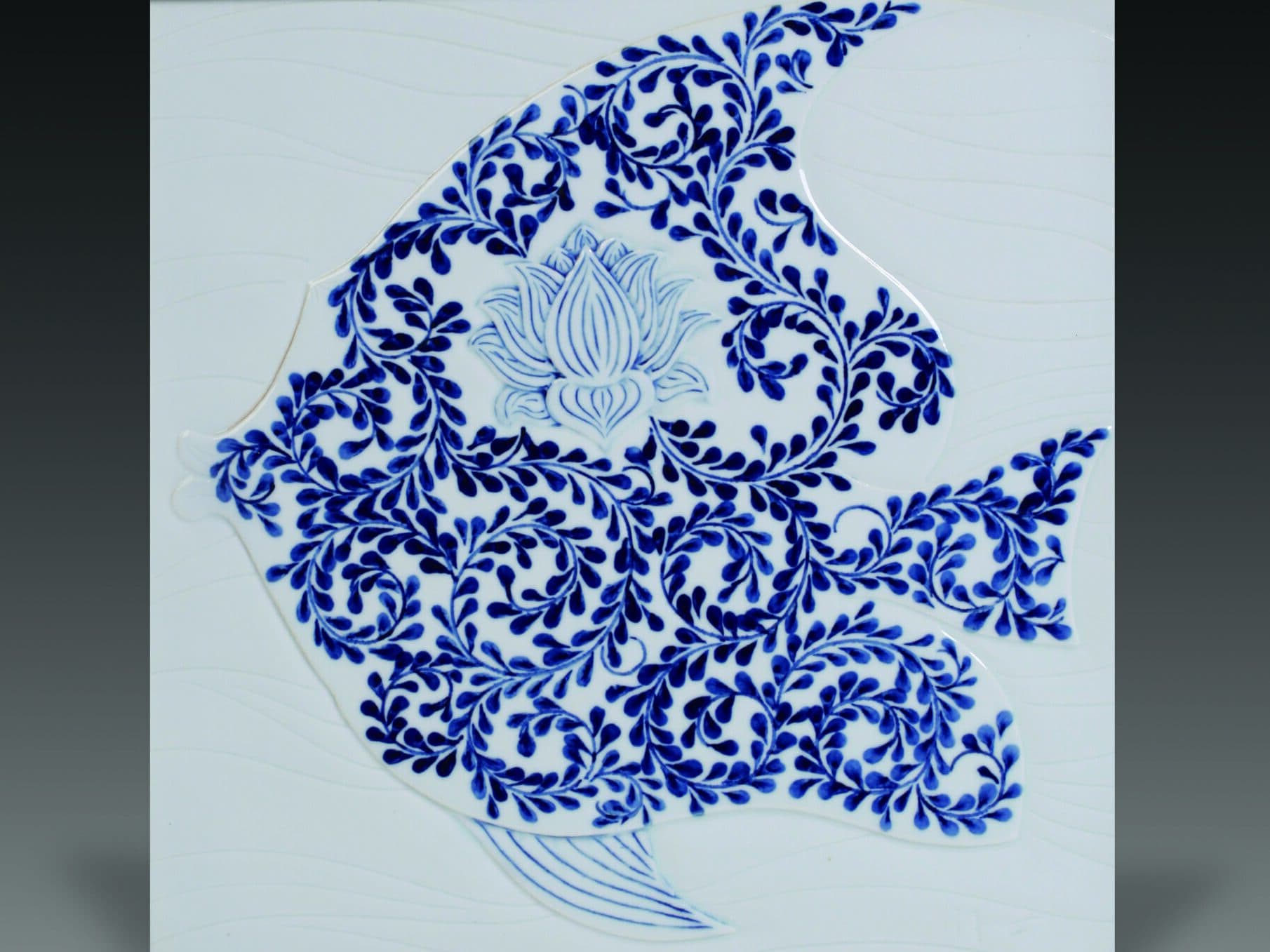
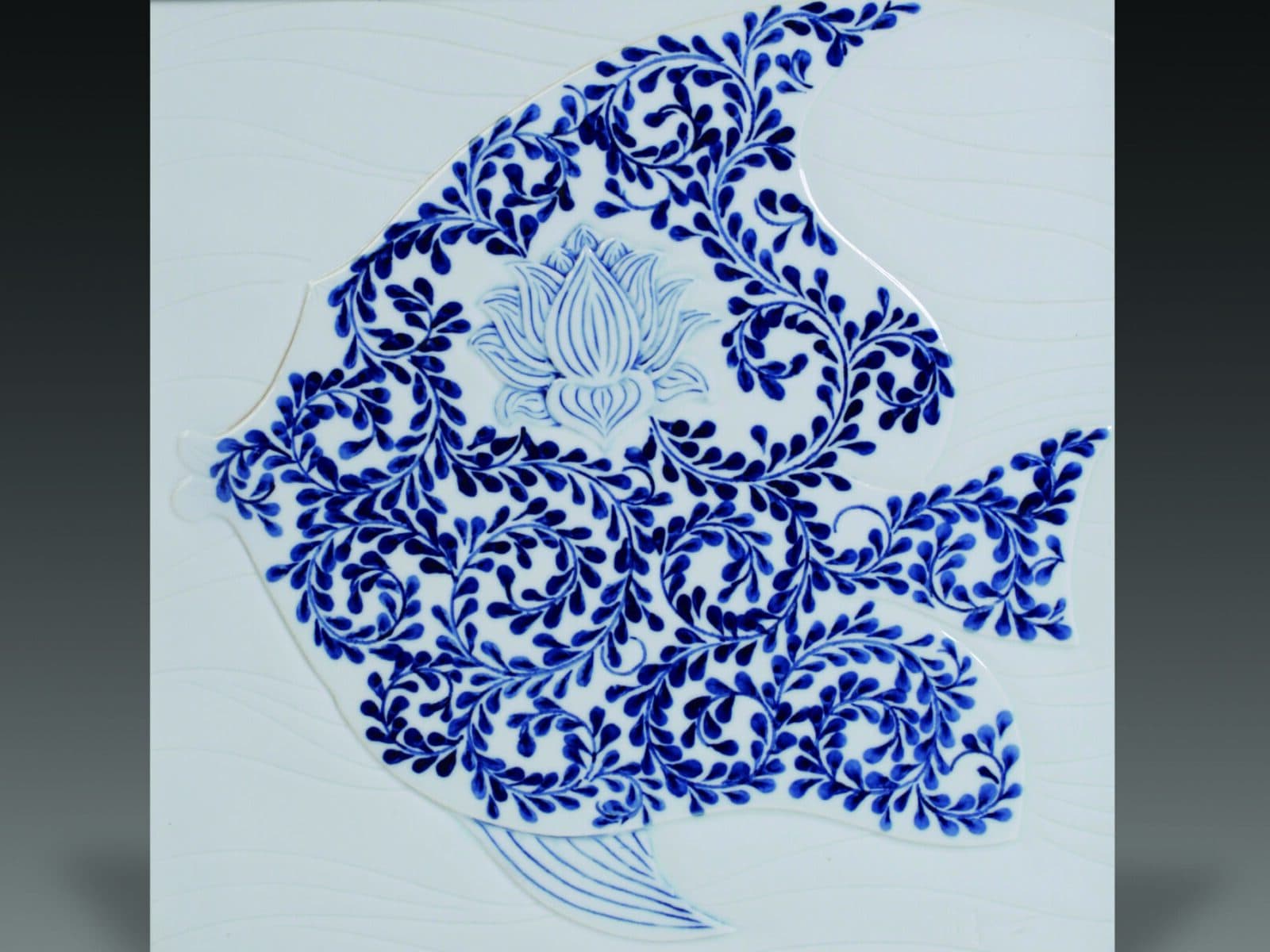
The Square Ceramic Plaque features a three-layer relief structure. Shallow-carved wave lines form the base and suggest the movement of water. Above them, a medium-relief silhouette defines the full shape of an angelfish. The uppermost layer consists of hand-built, underglaze-blue scrolling vines that fill the fish’s body. These raised decorative elements create visible changes in height and give the composition a strong sense of depth.
A pale blue lotus flower appears within the open center of the fish’s belly. This intentionally blank area prevents the densely patterned fish from looking heavy and provides a calm visual resting point. The lotus also connects the central fish with the surrounding water imagery. Viewed from different angles, the Square Ceramic Plaque reveals changing shadows along the waves, fish outline, raised vines, and lotus details.
The composition follows an innovative structure in which “water supports the fish, while a lotus is hidden within the fish.” The carved waves establish the aquatic setting, the central angelfish becomes the main visual subject, and the scrolling vines give its body a continuous sense of movement. The lotus inside the fish creates a second focal point, allowing the inner and outer layers of the Square Ceramic Plaque to respond to one another.
Each motif has an auspicious meaning in Chinese culture. Fish symbolize abundance because the Chinese word for “fish” sounds like the word for “surplus.” The image therefore expresses the traditional wish for abundance year after year. Lotus flowers represent purity, dignity, balance, and harmony. Continuous scrolling vines symbolize lasting vitality and enduring good fortune. Together, these three motifs communicate wishes for prosperity, elegance, harmony, and longevity.
The Square Ceramic Plaque moves beyond the limitations of conventional flat porcelain painting by combining shallow-relief sculpture with underglaze-blue, ink-inspired decoration. The pale wave background remains quiet and restrained, while the raised dark-blue fish forms the main visual focus. The light blue lotus acts as an anchor inside the fish. Contrasts between pale and dark, flat and raised, and open and detailed areas create a clear visual rhythm.
The flowing vine lines are painted in layered shades of cobalt blue. Darker sections emphasize the structure of the fish, while lighter washes soften the transitions between individual vines. During firing, the cobalt pigment develops subtle tonal diffusion similar to Chinese ink spreading across absorbent paper. This painterly effect gives the Square Ceramic Plaque a sense of movement even though the porcelain surface itself remains solid and permanent.
Large areas of exposed white porcelain are essential to the design. In traditional Eastern aesthetics, blank space is not simply empty; it allows the composition to breathe and leaves room for imagination. The undecorated white background highlights the fish silhouette, lotus flower, and water patterns. Its restrained blue-and-white palette allows the Square Ceramic Plaque to feel refined rather than crowded, making it suitable for both traditional and contemporary interiors.
Rooted in Jingdezhen’s long heritage of underglaze-blue painting and embossed porcelain plaques, this work uses a three-layer composite decoration technique. It reconstructs three classic motifs—water waves, a scrolling-vine fish, and a lotus flower—through modern abstract lines. Rather than directly reproducing a historical pattern, the Square Ceramic Plaque translates traditional symbolism into a contemporary artwork designed for present-day homes, tea rooms, galleries, hotels, and commercial spaces.
Producing the Square Ceramic Plaque requires precise control during clay preparation, forming, drying, relief building, glazing, and firing. A square porcelain body must remain flat while shrinking in the kiln. Uneven thickness or moisture can cause warping or cracking. The raised vines introduce additional risk because high temperatures may soften their edges or cause glaze to collect around the relief, reducing the clarity of the pattern.
The firing window is therefore very narrow. Craftsmen must carefully control the height of the relief, the amount of cobalt pigment, glaze thickness, kiln temperature, and firing atmosphere. The blue decoration must remain clearly layered after firing without becoming blurred or excessively dark. At the same time, the wave lines, fish outline, and lotus details must retain enough definition to preserve the three-dimensional structure of the Square Ceramic Plaque.
Natural interactions among porcelain clay, cobalt pigment, glaze, heat, and kiln atmosphere create slight differences in every finished piece. One Square Ceramic Plaque may display softer blue transitions, while another may develop deeper cobalt tones or more pronounced relief shadows. These variations are part of the handmade and high-temperature firing process, giving every plaque an individual character rather than the uniform appearance of mass-printed decoration.
The balanced square silhouette works well with neo-Chinese, Zen-inspired, minimalist, contemporary, and light-luxury interiors. The Square Ceramic Plaque can be framed and hung as a single wall artwork or displayed on an antique shelf, tea table, console, or exhibition cabinet. Focused lighting can strengthen the relief effect by casting gentle shadows across the waves and raised scrolling vines.
It may also be paired with coordinating plaques from the same series to form a larger ceramic installation. Multiple pieces can be arranged horizontally, vertically, or in a symmetrical grid. Interior designers can combine different fish directions, lotus placements, and wave patterns to create a customized wall composition while maintaining a consistent visual language. This modular quality gives the Square Ceramic Plaque greater flexibility for residential and commercial projects.
Combining sculpture, underglaze painting, cultural symbolism, and interior functionality, the Square Ceramic Plaque offers value as wall decoration, a handmade ceramic collectible, and a reference piece for porcelain-relief craftsmanship. Its clean geometry and restrained palette make it easy to display, while its layered surface rewards closer viewing. The result is a premium contemporary Jingdezhen art porcelain plaque that unites craftsmanship, painting, cultural meaning, and decorative appeal.