How to Prevent Cracking in Large Custom Ceramic Planters
News 2026-09-17 25
Large Custom Ceramic Planters
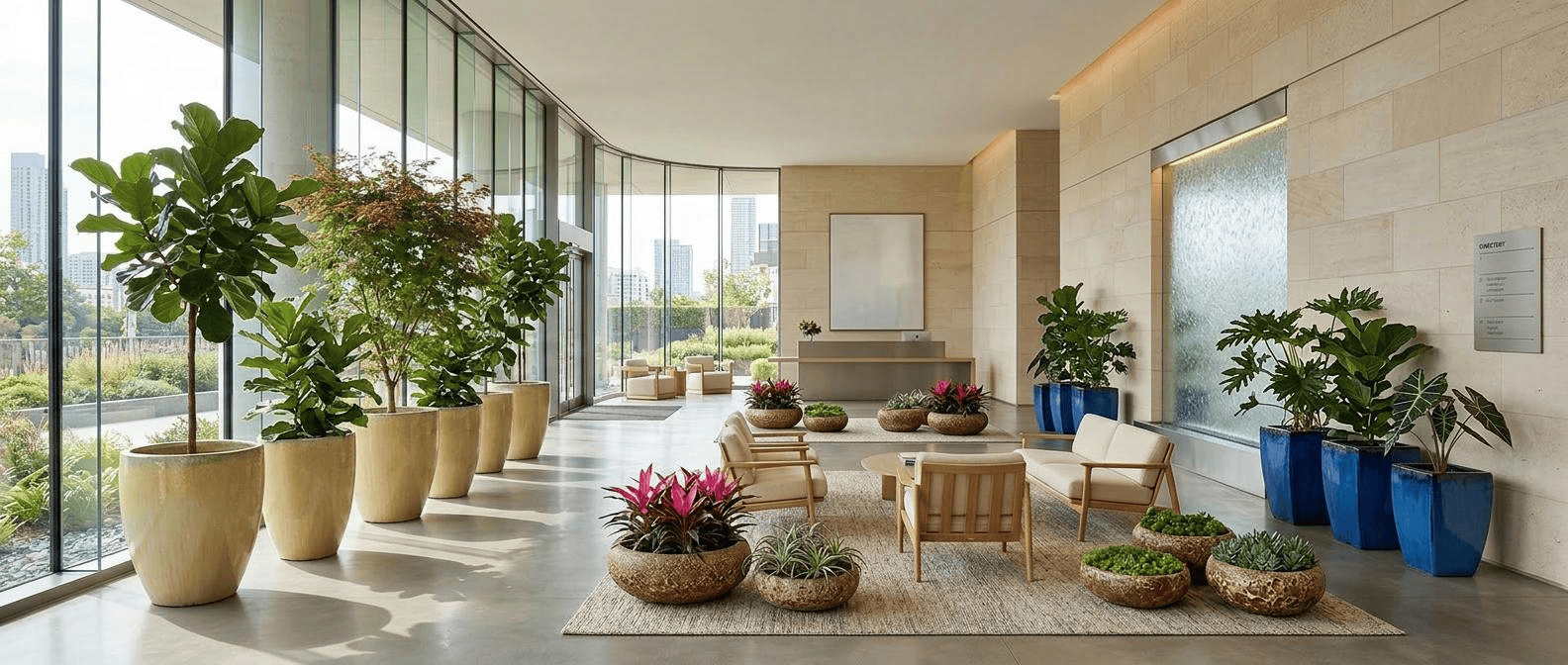
Large Custom Ceramic Planters can become impressive focal points in hotels, gardens, commercial buildings, restaurants, villas, and public spaces. Their size offers designers more freedom in shape, glaze, color, texture, and decoration. However, producing large ceramic planters is considerably more difficult than making ordinary flowerpots. The larger the ceramic body becomes, the more carefully manufacturers must control forming, drying, firing, drainage, packaging, and installation.
Cracking can occur during production, transportation, installation, or daily use. Understanding the causes of these problems helps architects, landscape designers, distributors, and project buyers select more reliable Custom Ceramic Planters.
Start With a Suitable Ceramic Body
The clay body is the foundation of every large planter. It must have sufficient plasticity for forming while maintaining dimensional stability during drying and firing. A body that shrinks excessively may develop cracks, deformation, or separation around the base.
For large Custom Ceramic Planters, ceramic manufacturers may adjust the clay formula according to the planter’s dimensions, wall thickness, forming method, firing temperature, and intended environment. Some bodies include controlled amounts of grog or other non-plastic materials to help reduce shrinkage and improve structural stability.
The final formula should be tested before mass production. A material that performs well in a small flowerpot may behave very differently when used for a planter with a diameter of one meter or more.
Keep the Wall Thickness Consistent
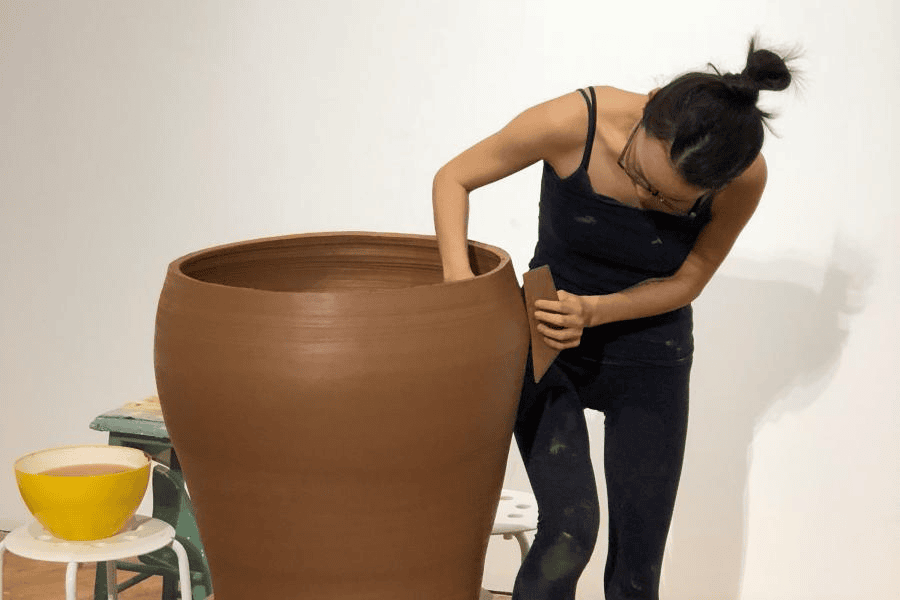
Uneven wall thickness is one of the most common causes of cracking. Thin sections dry and heat more quickly, while thick sections retain moisture and respond more slowly. This creates internal stress within the ceramic body.
The rim, shoulder, body, base, and decorative attachments should be carefully designed so that changes in thickness are gradual. A very thick base connected directly to a thin wall creates a weak transition area. Sharp corners and sudden changes in profile can also concentrate stress.
Experienced Jingdezhen ceramic manufacturers inspect large pieces during forming to confirm that the wall thickness remains within an acceptable range. For complicated art ceramics, structural strength must be considered together with appearance. Decorative reliefs, handles, sculptural elements, and raised patterns should not create unnecessary heavy sections.
Control the Drying Process Slowly
Drying is one of the most critical stages in producing Custom Ceramic Planters. When the outer surface dries much faster than the inner body, the difference in shrinkage may cause visible cracks or hidden structural weaknesses.
Large planters should be dried gradually in a controlled environment. Strong wind, direct sunlight, heaters, or sudden changes in humidity should be avoided. The rim and thinner sections may need to be covered or protected so that they do not dry too quickly.
The planter should also receive sufficient support during drying. If a large soft body rests unevenly on the floor or drying board, its weight may distort the base. Manufacturers may rotate the piece, adjust its support, and inspect the rim, base, joints, and decorative areas throughout the drying period.
Production schedules should allow enough time for moisture to leave the ceramic body naturally. Trying to shorten the drying period can increase the risk of cracking and deformation.
Use a Suitable Firing Schedule
Large Custom Ceramic Planters do not heat and cool as quickly as ordinary tableware. A kiln schedule that works for small products may be too aggressive for a large, thick ceramic body.
During the early stage of firing, residual moisture must escape safely. Later, the kiln must pass through important temperature changes at a controlled rate. Rapid heating can create a temperature difference between the outside and inside of the planter. Rapid cooling may also produce thermal stress.
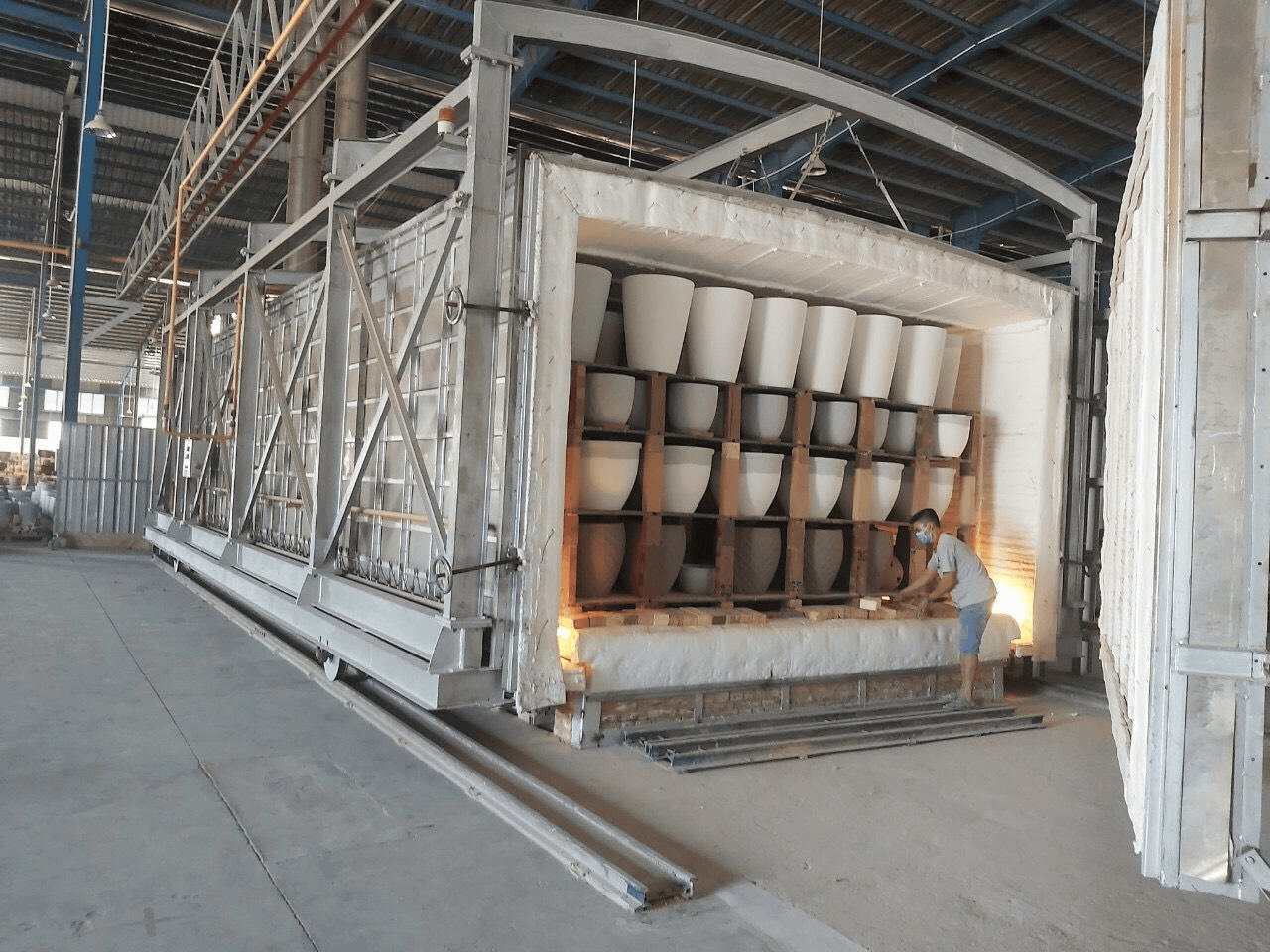
Kiln loading is equally important. Large planters need stable support and sufficient space for heat circulation. They should not be positioned where direct flame or uneven airflow creates significant temperature differences.
Manufacturers should develop firing curves based on the clay body, glaze, dimensions, wall thickness, kiln type, and production experience. Trial firing is especially important for new shapes and unusually large sizes.
Make Sure the Glaze Fits the Ceramic Body
Cracking is not limited to the clay body. A mismatch between the thermal expansion of the glaze and the ceramic body can cause glaze crazing, peeling, or surface tension that reduces the durability of the planter.
Before producing a full order, the selected glaze should be tested on the actual ceramic body. Testing should consider glaze thickness, firing temperature, cooling process, color stability, and outdoor performance.
For Custom Ceramic Planters with special colors, layered glazes, relief decoration, or artistic surfaces, sample approval should include both appearance and technical evaluation. A beautiful glaze is only successful when it remains stable on the finished product.
This is particularly important when Jingdezhen ceramics are developed for architectural decoration or high-end landscape projects. The artistic effect must be balanced with durability, drainage, maintenance, and the intended environment.
Design Effective Drainage
Even a perfectly fired planter can crack after installation if water accumulates inside it. Drainage holes must be large enough and positioned correctly so that excess water can escape.
Blocked drainage may allow water to collect at the bottom. In cold climates, trapped water can freeze, expand, and place pressure on the ceramic body. Buyers planning outdoor installations should discuss local temperatures, rainfall, irrigation, and freeze–thaw conditions with the supplier before confirming the design.
Large Custom Ceramic Planters may also benefit from an internal raised platform, removable liner, lightweight filling system, or drainage layer. These measures can reduce the amount of wet soil pressing against the ceramic walls.
The planter should be installed on a flat, stable surface. Small supports or feet may be used when appropriate to prevent the drainage hole from being blocked.
Avoid Overloading and Improper Movement
Large planters become extremely heavy after being filled with soil and plants. Moving a filled planter by pulling the rim can create stress and cause cracking. Whenever possible, the planter should be placed in its final position before filling.
Project teams should use suitable lifting equipment and protect the rim, base, and glazed surface during handling. The load should be distributed evenly rather than concentrated at one point.
When producing Custom Ceramic Planters for commercial projects, the manufacturer and buyer should confirm the planter dimensions, estimated weight, lifting method, entrance dimensions, installation route, and final location in advance.
Packaging and Transportation Matter
Transportation damage is another major concern. Large ceramic products need customized protective packaging rather than standard cartons alone.
Depending on size and destination, packaging may include foam protection, reinforced wooden crates, internal supports, corner guards, moisture protection, and clear handling marks. The planter must be secured so that it cannot move or collide with the crate during transportation.
Before shipment, each piece should be inspected for cracks, glaze damage, deformation, drainage problems, and unstable bases. Photographs and packaging records can also help both suppliers and buyers manage project quality.
Conclusion
Preventing cracks in large Custom Ceramic Planters requires cooperation between design, material selection, forming, drying, glazing, firing, packaging, and installation. Buyers should not evaluate a planter only by its color or appearance. Wall thickness, drainage, structural transitions, intended environment, transportation, and installation are equally important.
Based in Jingdezhen, China, Magic Cube combines the resources of Jingdezhen ceramics with experience in customized ceramic production and art ceramics. We work with designers, landscape companies, importers, and project buyers to develop Custom Ceramic Planters according to specific dimensions, visual requirements, installation conditions, and commercial applications.