Lightweight vs Heavy Ceramic Tableware: Which Is Better for Hotels and Restaurants?
News 2026-09-12 46
Choosing tableware for a hotel or restaurant is not only about color, shape, or price. Weight also affects the dining experience, staff efficiency, storage, transportation, breakage rates, and long-term operating costs. Some buyers prefer Lightweight Ceramic Tableware because it is easier to carry and handle, while others choose Heavy Ceramic Tableware for its solid feel and stable performance.
Neither option is suitable for every hospitality business. The better choice depends on the restaurant concept, service style, menu, expected usage frequency, and the quality of the ceramic body.
What Is Lightweight Ceramic Tableware?
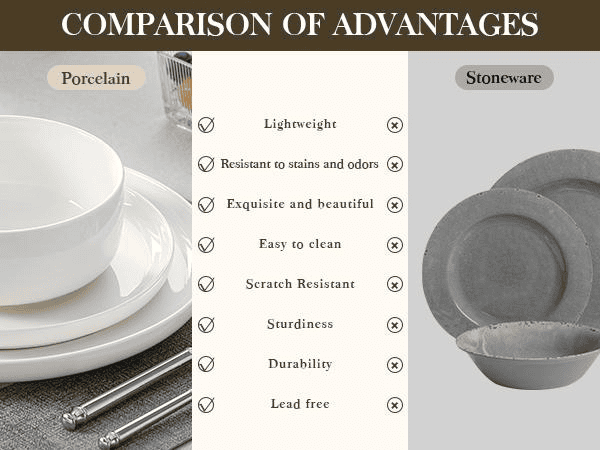
Lightweight Ceramic Tableware is made with a relatively thin body and carefully controlled dimensions. It may include plates, bowls, mugs, cups, saucers, and serving pieces designed to reduce unnecessary weight while maintaining sufficient strength for normal use.
Good lightweight tableware is not simply made by reducing the amount of clay. If the body becomes too thin or the firing process is poorly controlled, the product may be more vulnerable to chipping, deformation, or cracking. A reliable manufacturer must balance body thickness, clay formulation, firing temperature, rim design, and glaze quality.
High-quality Lightweight Ceramic Tableware feels comfortable in the hand and is especially useful in busy hospitality environments where staff repeatedly lift, carry, wash, stack, and store large quantities of tableware.
Advantages of Lightweight Ceramic Tableware
One of the main advantages of Lightweight Ceramic Tableware is easier handling. A single plate may not feel particularly heavy, but the difference becomes obvious when a server carries ten plates or when kitchen staff move several loaded dish racks during a shift.
Lower weight can help reduce physical strain on servers, cleaning staff, and kitchen employees. It may also make table service smoother, particularly in cafés, breakfast restaurants, buffets, and large banquet operations.
Another advantage is transportation efficiency. Lighter products can reduce the total shipping weight of a large order. For importers, distributors, and hospitality suppliers purchasing thousands of pieces, even a small reduction in the weight of each item can influence freight costs, warehouse handling, and delivery efficiency.
Lightweight Ceramic Tableware also takes up less vertical space when it has a thin, stackable profile. Hotels and restaurants with limited storage areas may benefit from plates and bowls that stack neatly without becoming excessively heavy.
However, buyers should not assume that every lightweight product is durable. Samples should be evaluated for rim strength, base stability, glaze quality, stacking performance, and resistance to normal commercial handling.

What Is Heavy Ceramic Tableware?
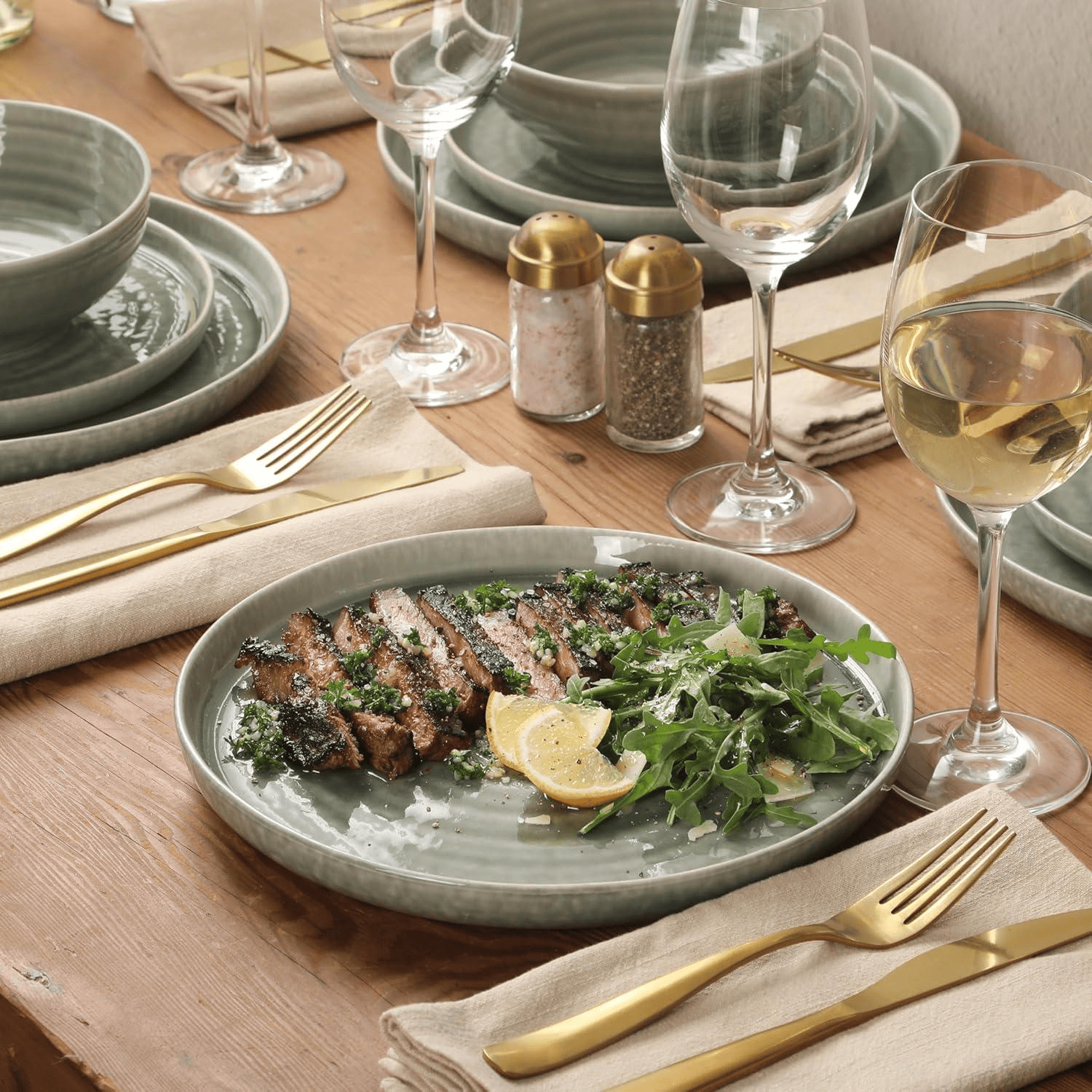
Heavy Ceramic Tableware generally has a thicker body, a stronger visual presence, and a more substantial feeling in the hand. It is often used in casual restaurants, steakhouses, rustic dining spaces, buffet stations, and other environments where stability and a solid presentation are important.
A heavier plate can remain stable on the table when cutting steak or serving dense foods. Thick bowls and serving dishes may also retain heat longer, although actual heat retention depends on the material, shape, thickness, and serving conditions.
Some customers associate Heavy Ceramic Tableware with strength and durability. A thicker body can provide additional resistance in certain areas, but weight alone does not guarantee quality. Poor firing, internal stress, weak rims, uneven thickness, or unsuitable glaze can still cause heavy ceramic pieces to chip or crack.
Advantages of Heavy Ceramic Tableware
The most noticeable benefit of Heavy Ceramic Tableware is stability. Plates are less likely to move during dining, while bowls and serving dishes can feel secure when placed on tables or buffet counters.
Heavy pieces can also support a particular brand image. A thick, substantial plate may complement grilled food, regional cuisine, rustic interiors, or casual dining concepts. It can create a relaxed and generous atmosphere that may not be achieved with very thin tableware.
For certain serving applications, Heavy Ceramic Tableware can withstand frequent contact and rough handling better than poorly made lightweight products. However, hotels and restaurants should still examine the rim, foot ring, handle joints, glaze surface, and stacking contact points.
The disadvantages are equally important. Heavy tableware requires more effort to carry, wash, and store. A full stack can become difficult for employees to move safely. It may also increase shipping weight and place greater pressure on shelves, carts, and dishwashing equipment.
Which Type Is Better for Hotels?
Hotels usually operate several dining environments at the same time. Breakfast areas, banquet halls, room service, cafés, restaurants, and VIP dining spaces may each require different tableware.
For breakfast service and large buffets, Lightweight Ceramic Tableware is often the more practical choice. Guests can carry it comfortably, employees can clear tables efficiently, and large quantities can be moved without excessive weight.
Banquet operations may also benefit from lightweight plates because staff frequently carry multiple servings at once. A well-designed lightweight plate can improve operational efficiency without sacrificing an elegant appearance.
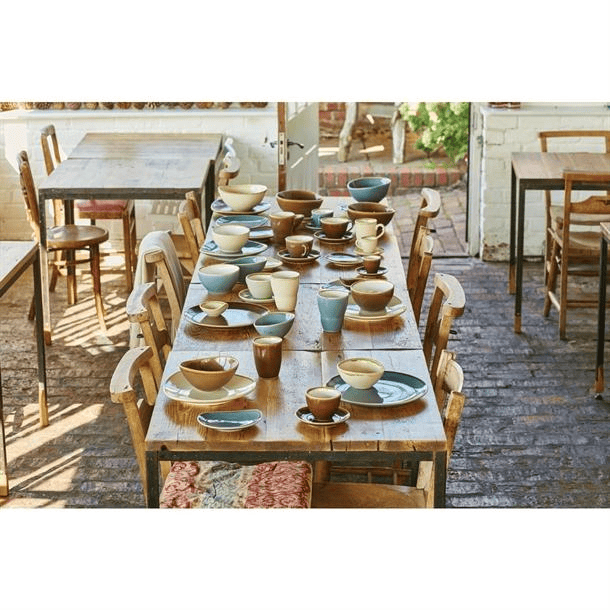
For signature restaurants, room service, or special dining concepts, Heavy Ceramic Tableware may be appropriate when stability and visual presence are more important. Hotels do not necessarily need to select only one weight. A mixed tableware program can match different pieces to different service areas.
Which Type Is Better for Restaurants?
The best option depends on the restaurant’s service model.
Fast-casual restaurants, cafés, bakeries, and high-volume dining spaces may prefer Lightweight Ceramic Tableware because it is easier to handle and supports faster table turnover. Fine-dining restaurants may also use refined lightweight porcelain because its thin profile can create a clean and elegant presentation.
Steakhouses, barbecue restaurants, rustic restaurants, and family-style dining businesses may choose Heavy Ceramic Tableware for its stability and substantial appearance. Heavy plates can visually support large portions and bold food presentation.
Buyers should also consider the menu. A wide lightweight plate may work well for salads and desserts, while a heavier plate may be more suitable for steak or shared dishes. Handles on mugs, soup cups, and serving pieces should be tested carefully because uncomfortable shapes can make even a lightweight product difficult to use.
Weight Is Not the Same as Quality
A common purchasing mistake is judging tableware quality only by weight. A heavy plate is not automatically stronger, and a lightweight plate is not automatically fragile.
Ceramic performance depends on several connected factors:
- Clay and porcelain body formulation
- Firing temperature and firing stability
- Uniformity of the body thickness
- Rim and foot-ring design
- Glaze fit and surface quality
- Resistance to thermal and mechanical stress
- Stacking and handling methods
- Packaging used during transportation
This is where the manufacturing experience behind Jingdezhen ceramics becomes valuable. Jingdezhen has a long ceramic tradition and a broad production network covering clay preparation, forming, glazing, decoration, firing, quality inspection, and packaging.
An experienced Jingdezhen ceramic manufacturer can help buyers compare different body thicknesses, shapes, glazes, and firing methods instead of recommending products based only on appearance. The same production knowledge can also be applied to art porcelain, decorative pieces, customized hotel tableware, and ceramic installations.
What Should Buyers Test Before Ordering?
Before placing a bulk order, hotels, restaurants, importers, and distributors should request samples and conduct practical tests.
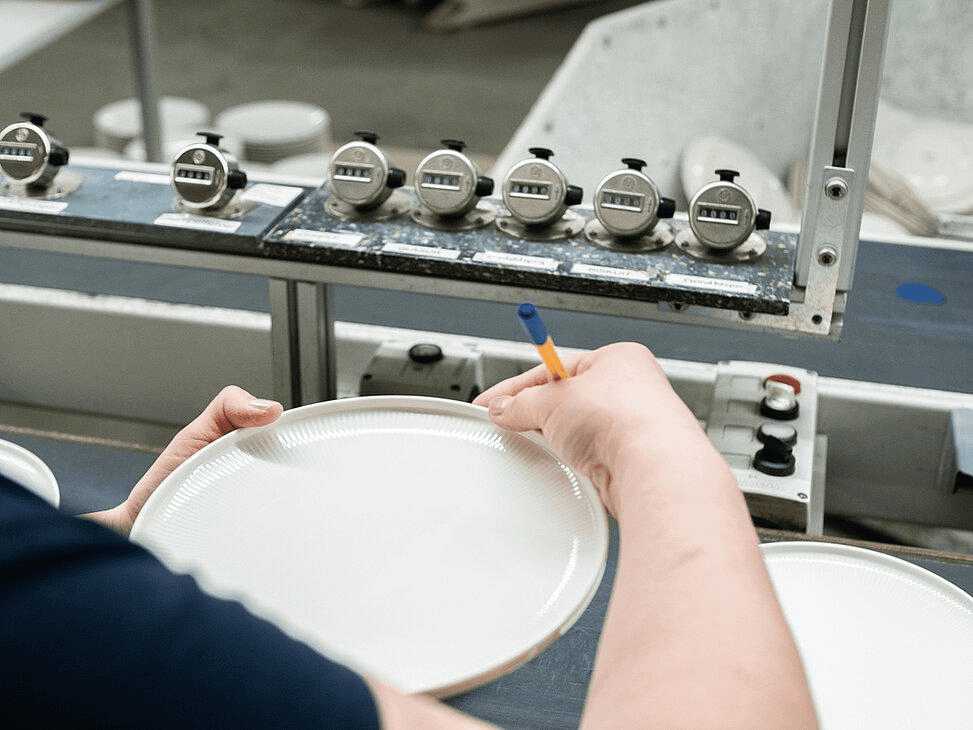
Lift and carry several pieces together rather than testing only one plate. Stack the products to check stability and contact points. Examine whether plate rims touch each other during stacking, as repeated rim contact can lead to chipping.
Buyers should also check whether cups are comfortable to hold, whether handles provide enough space, and whether bowls remain stable on flat surfaces. If the products will be used in commercial dishwashers or microwaves, compatibility should be confirmed according to the specific glaze, decoration, and testing documentation.
Packaging is another important consideration. Both Lightweight Ceramic Tableware and Heavy Ceramic Tableware require suitable inner protection, dividers, cartons, and drop-test planning. A strong product can still arrive damaged if the packaging is poorly designed.
Conclusion: Choose According to the Dining Environment
There is no universal winner between Lightweight Ceramic Tableware and Heavy Ceramic Tableware. Lightweight products can improve handling, storage, service efficiency, and transportation, while heavy products provide stability and a substantial dining presentation.
Hotels with multiple service areas may benefit from using both types. Restaurants should select weight according to their menu, table presentation, staff workflow, storage capacity, and expected frequency of use. Most importantly, weight should be evaluated together with ceramic body quality, rim design, firing, glazing, and packaging.
Based in Jingdezhen, Magic Cube works with hospitality buyers, importers, distributors, and project customers to develop practical Jingdezhen ceramics for different commercial environments. By combining manufacturing coordination, customization, quality control, and export packaging, we help buyers select ceramic tableware that balances appearance, usability, durability, and operational needs.