How Large Ceramic Installations Are Packed and Shipped?
News 2026-08-26 60
Large Ceramic Installations can transform hotel lobbies, restaurants, shopping centers, museums, public buildings, and private interiors. Unlike standard porcelain products, these projects may contain dozens or even hundreds of ceramic components in different shapes, sizes, colors, and weights. Packing and shipping them safely therefore requires more than placing the pieces in ordinary cartons.
A professional packing plan for Ceramic Installations begins during the design stage. The manufacturer must consider how the artwork will be divided, how each component will be protected, how the packages will be loaded into a container, and how the installation team will identify every piece after delivery.
For international buyers, understanding this process can reduce damage, control shipping costs, and make on-site installation more efficient.
Packing Begins with a Modular Design
Many large Ceramic Installations cannot be transported as a single finished object. Their overall dimensions may exceed the available space inside a truck, shipping container, elevator, or building entrance. Large one-piece ceramic structures are also more vulnerable to cracking during handling and transportation.
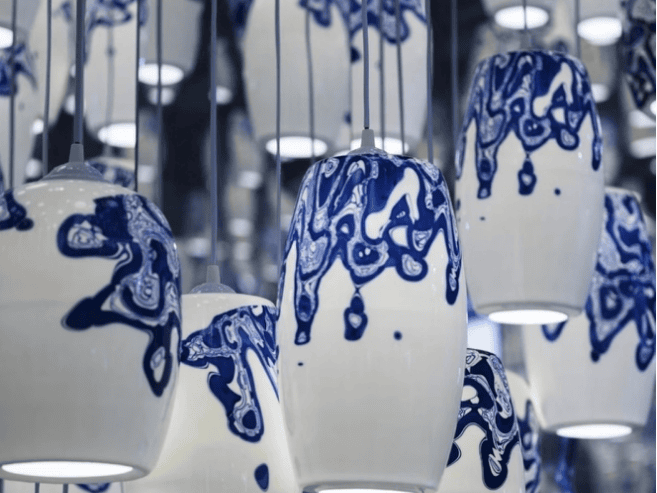
For these reasons, Ceramic Installations are commonly designed as modular systems. A large artwork may be divided into individual tiles, suspended ceramic pieces, sculptural sections, porcelain vessels, supporting components, or numbered decorative units.
The division must be planned carefully. If a component is too large, it may be difficult to lift and protect. If the artwork is divided into too many small pieces, packing and installation become more complicated. The design team and Jingdezhen porcelain manufacturer should therefore balance visual continuity, structural safety, production limitations, shipping conditions, and installation requirements.
Before production begins, buyers should confirm whether the ceramic installation can pass through the destination’s doors, elevators, corridors, and loading areas.
Final Inspection Before Packing
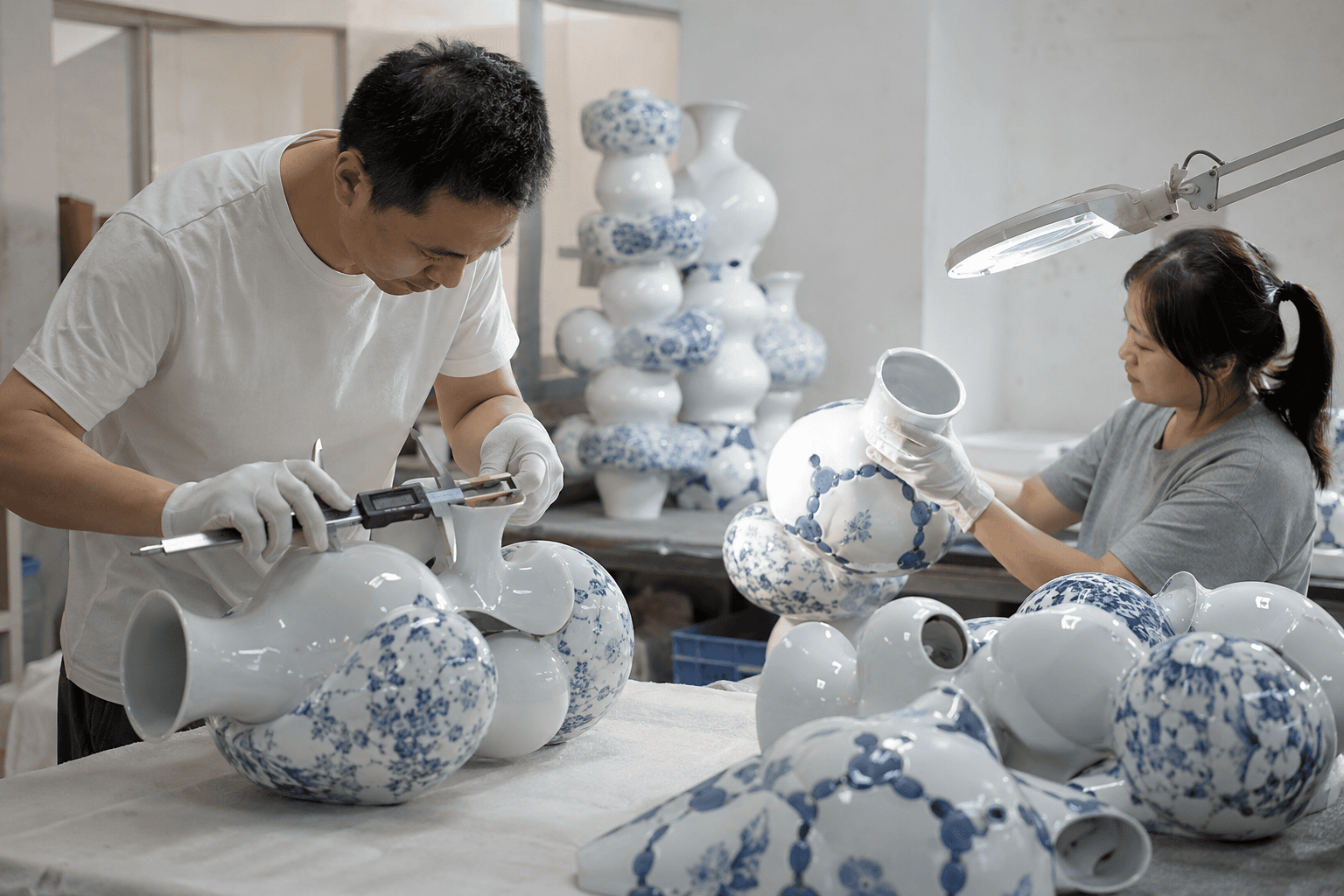
Before any component is packed, the completed Ceramic Installations should undergo a final inspection. The manufacturer should check the dimensions, glaze surface, color, pattern position, attachment points, and overall condition of each ceramic piece.
For large art porcelain and handmade Jingdezhen ceramics, slight variations in color, glaze, texture, and dimensions may occur during high-temperature firing. These characteristics should be evaluated against the approved sample and the agreed project standards.
The manufacturer should photograph the completed installation or arrange all components according to the design before packing. These photographs provide a visual record and can later help the installation team understand the correct position of every part.
Any metal brackets, frames, suspension wires, lighting components, or connectors should also be tested before shipment. Ceramic pieces and metal structures are normally packed separately to prevent hard metal surfaces from striking the porcelain during transport.
Individual Protection for Every Ceramic Component
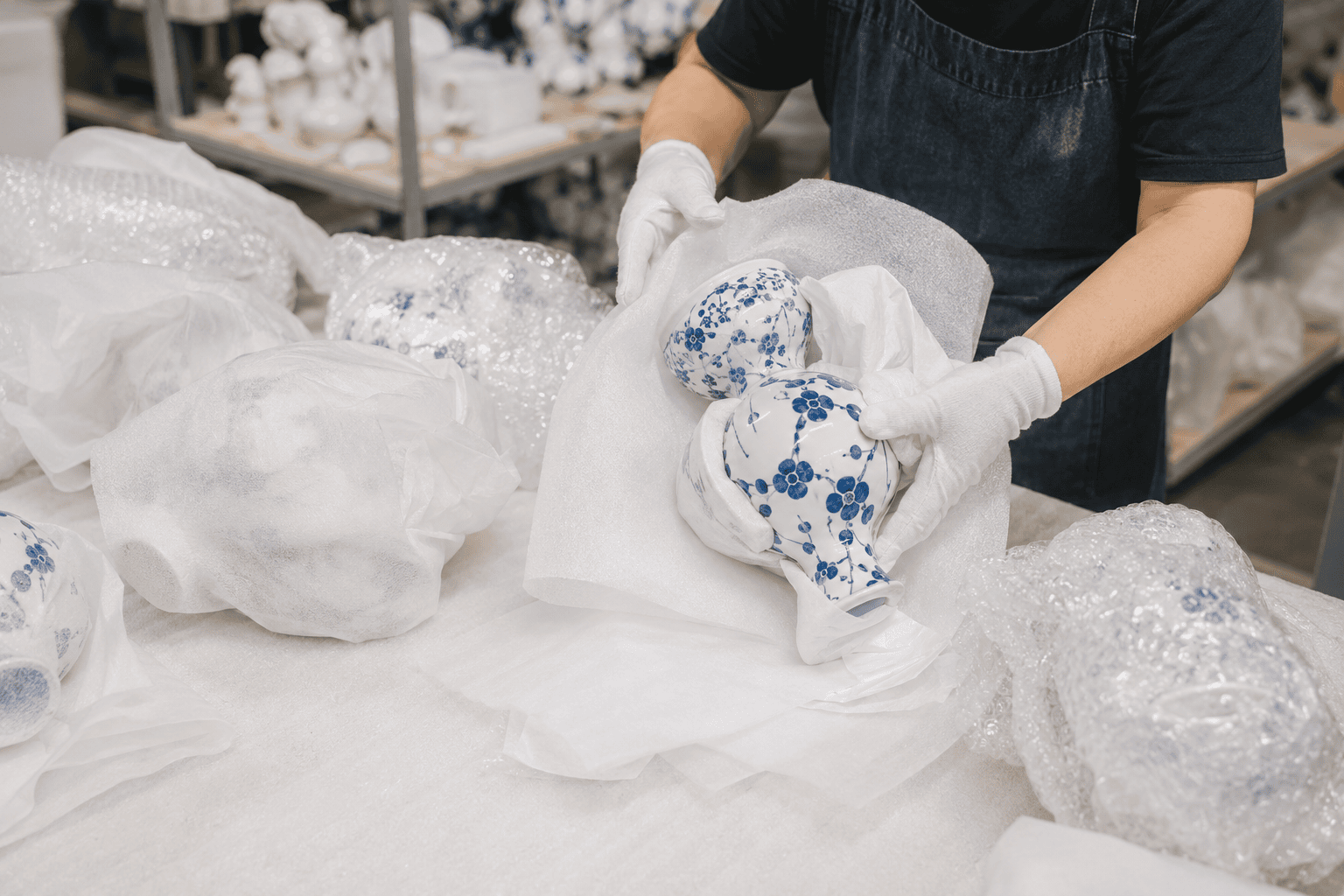
The first protective layer should prevent scratches and direct contact. Each ceramic component can be wrapped in soft material before thicker cushioning is added. Materials may include protective tissue, foam sheet, EPE foam, bubble wrap, or customized foam sleeves.
Fragile areas require additional attention. These may include:
- Thin edges and projecting decorations
- Handles, branches, petals, and sculptural details
- Pierced or translucent sections
- Narrow necks and small attachment points
- Glazed corners and polished surfaces
- Connection holes used during installation
The wrapping should be firm enough to remain in position but should not apply excessive pressure to delicate parts. Two ceramic surfaces should never touch each other directly inside the same package.
For irregularly shaped Ceramic Installations, customized foam cavities may be produced according to the form of each component. This method limits movement inside the carton and provides more consistent protection than loose filling materials.
Inner Cartons and Protective Compartments
After individual wrapping, ceramic components are placed into inner cartons or divided compartments. Smaller pieces may be packed in separate cells, while larger components may require one carton per piece.
The carton size should closely match the protected product. If the carton is too large, the ceramic piece may move during transport. If it is too tight, outside pressure may be transferred directly to the porcelain.
Double-wall or reinforced export cartons are often used for heavier components. Foam pads can be placed around the top, bottom, and sides to absorb vibration and impact.
For Ceramic Installations containing many similar parts, the quantity inside each carton should remain manageable. Overloaded cartons are difficult to lift and are more likely to be dropped. The packing team should consider both the weight of the ceramic pieces and the ability of workers to handle the package safely.
Numbering, Labels and Installation Drawings
Clear identification is essential for large Ceramic Installations. Every ceramic component, inner carton, and outer case should have a matching code.
For example, a wall installation may be divided into sections A, B, C, and D. Individual pieces can then be labeled A01, A02, A03, B01, B02, and so on. The same numbers should appear on the packing list and installation drawing.
Labels should indicate important information such as:
- Project name
- Component number
- Carton or crate number
- Quantity
- Gross and net weight
- Package dimensions
- Orientation
- Fragile handling instructions
- Installation area or floor
- Sequence for unpacking
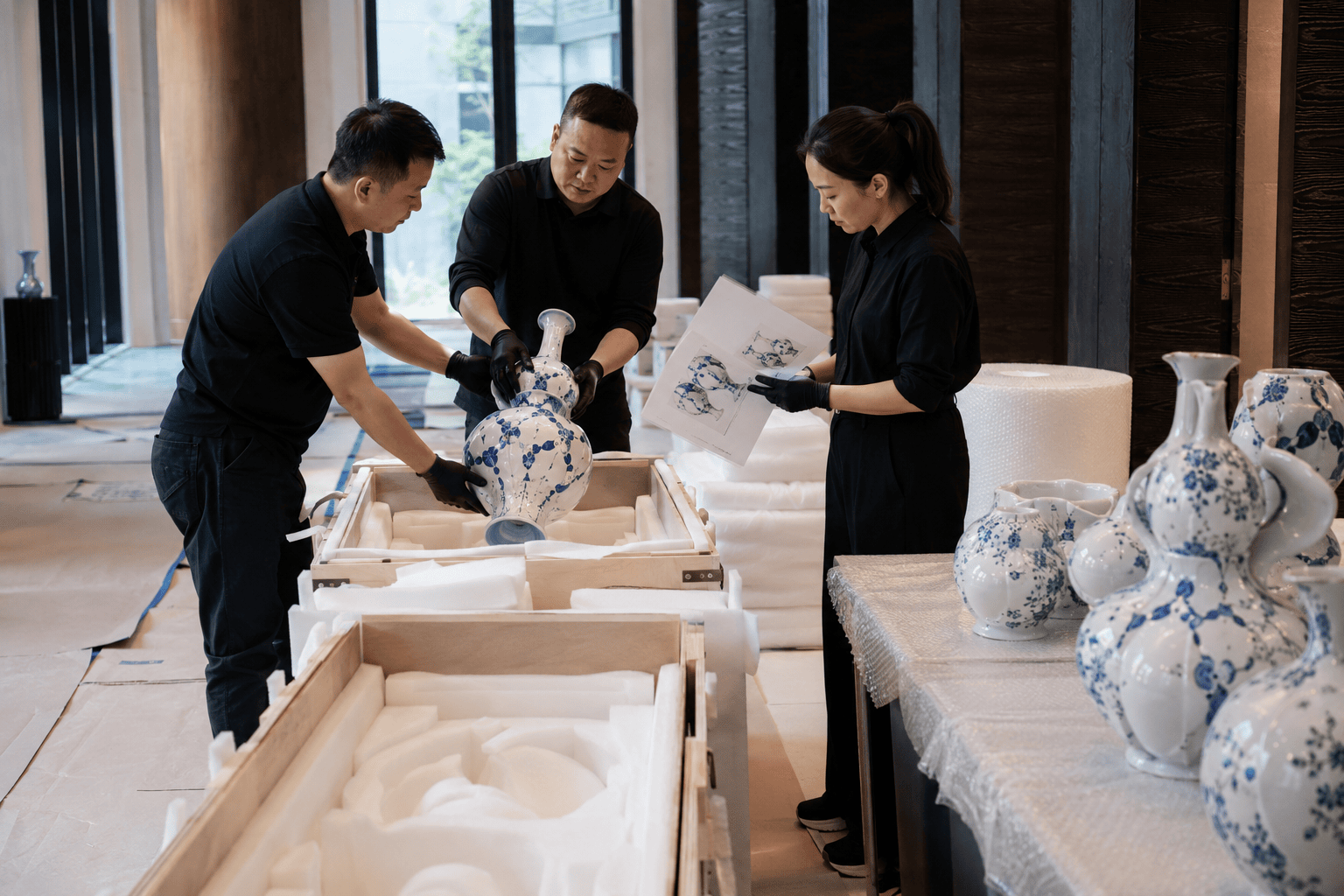
A detailed installation map helps the destination team place each component correctly. For complex ceramic installations, the supplier may also provide photographs, assembly drawings, a component list, and an installation video.
Wooden Crates for International Shipping
Cartons alone may not provide enough protection for large, heavy, or high-value Ceramic Installations. In these cases, cartons can be secured inside wooden crates or plywood cases.
The wooden structure protects the products from compression, accidental impact, and movement during container handling. Internal supports and foam barriers should prevent the cartons from touching the sides of the crate directly.
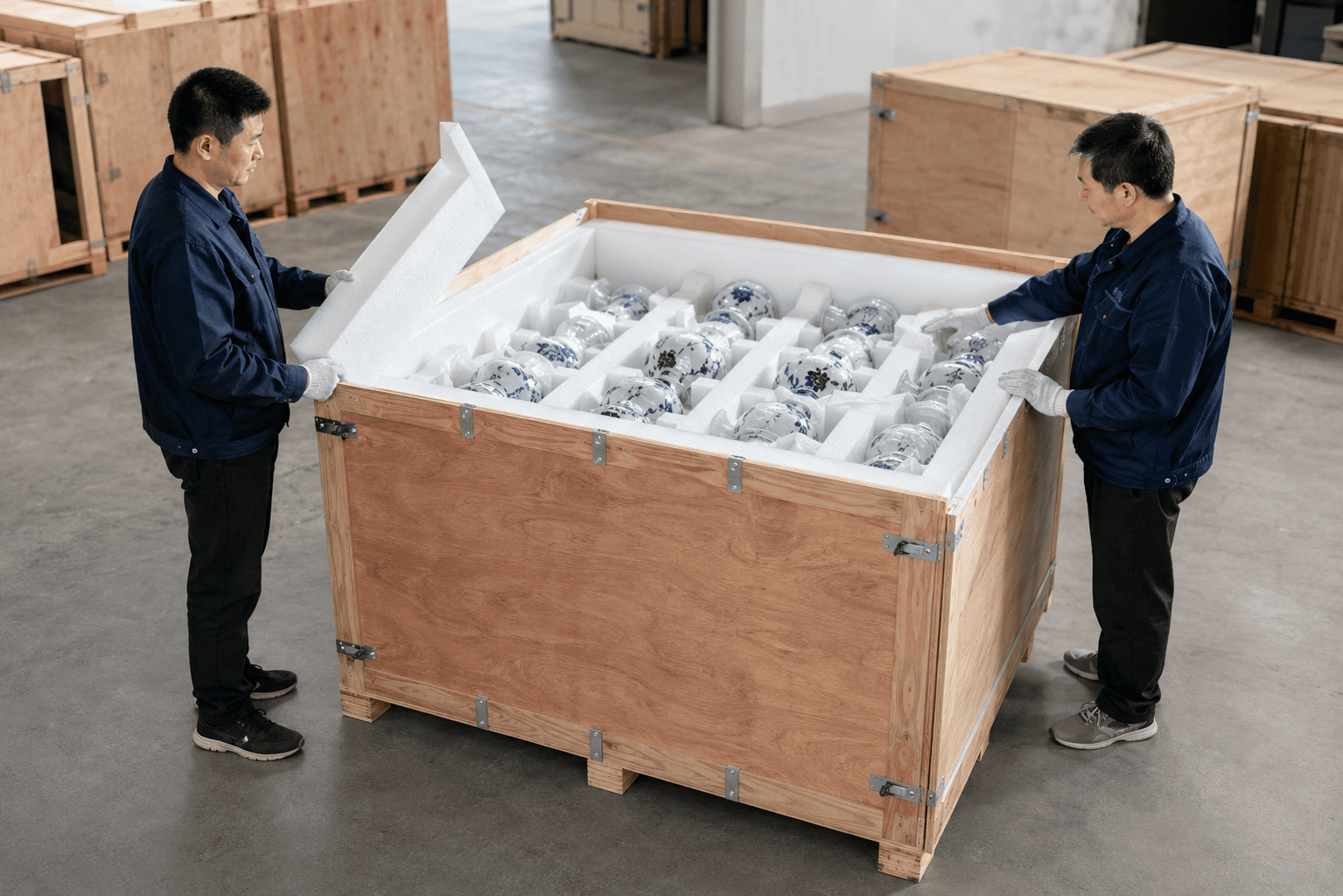
When solid wood packaging is used for international export, the wood may need to comply with the applicable treatment and marking requirements of the destination country. Buyers and suppliers should confirm these requirements with the freight forwarder before shipment.
Crate design also affects shipping costs. Extremely large or heavy crates may require forklifts, lifting equipment, or special handling. A Jingdezhen porcelain manufacturer should provide the estimated package dimensions, weight, and number of crates before the buyer confirms transportation.
Container Loading and Movement Control
Most large Ceramic Installations are shipped by sea because ocean freight is generally more practical for heavy and high-volume projects. Air freight may be used for small installations, replacement pieces, samples, or urgent components, but the cost is normally much higher.
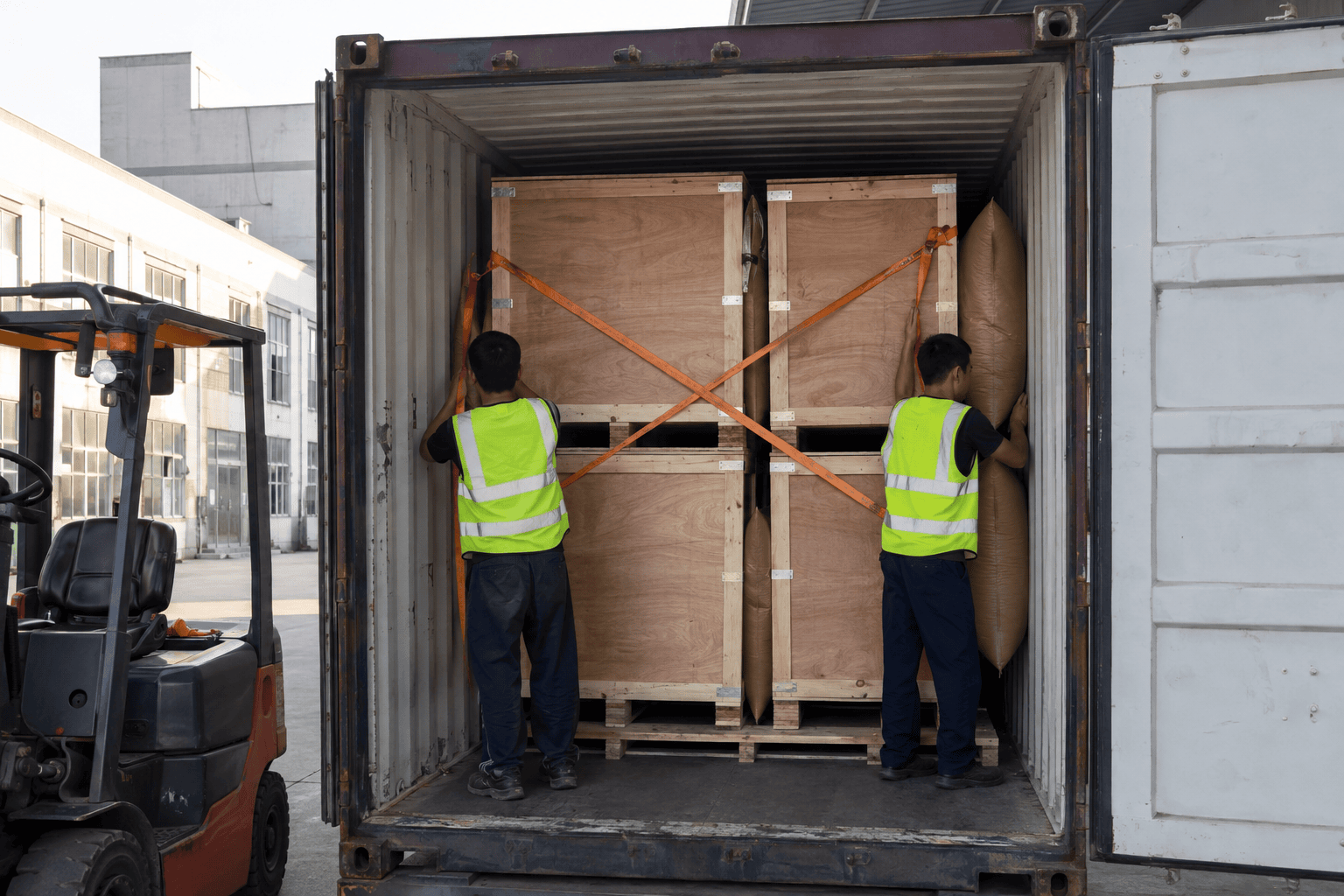
During container loading, the crates should be arranged to distribute weight safely. Heavy crates are generally positioned at the bottom, while lighter packages are placed above them when appropriate. Empty spaces should be controlled so that the crates cannot slide, tip, or collide during transportation.
Straps, wooden blocks, airbags, anti-slip materials, or other securing methods may be used depending on the cargo and loading plan. For long-distance sea transport, moisture protection may also be considered, especially when cartons, wood, metal frames, electrical parts, or sensitive surface materials are included.
The buyer should request loading photographs showing the condition of the crates, their position inside the container, and the method used to secure them.
Shipping Documents and Insurance
Ceramic Installations usually require more detailed shipping documents than ordinary tableware orders. Documents may include a commercial invoice, packing list, bill of lading or air waybill, product descriptions, crate dimensions, weights, and country-of-origin information.
The packing list should clearly show which components are inside each crate. This is particularly important when the installation is shipped in several containers or delivered to different areas of a project site.
Cargo insurance should also be discussed before shipment. Ceramic products are fragile, and international transportation may involve multiple loading, unloading, storage, and customs-handling stages. Buyers should understand the selected trade term, the point at which risk transfers, and which party is responsible for arranging insurance.
Inspection After Arrival
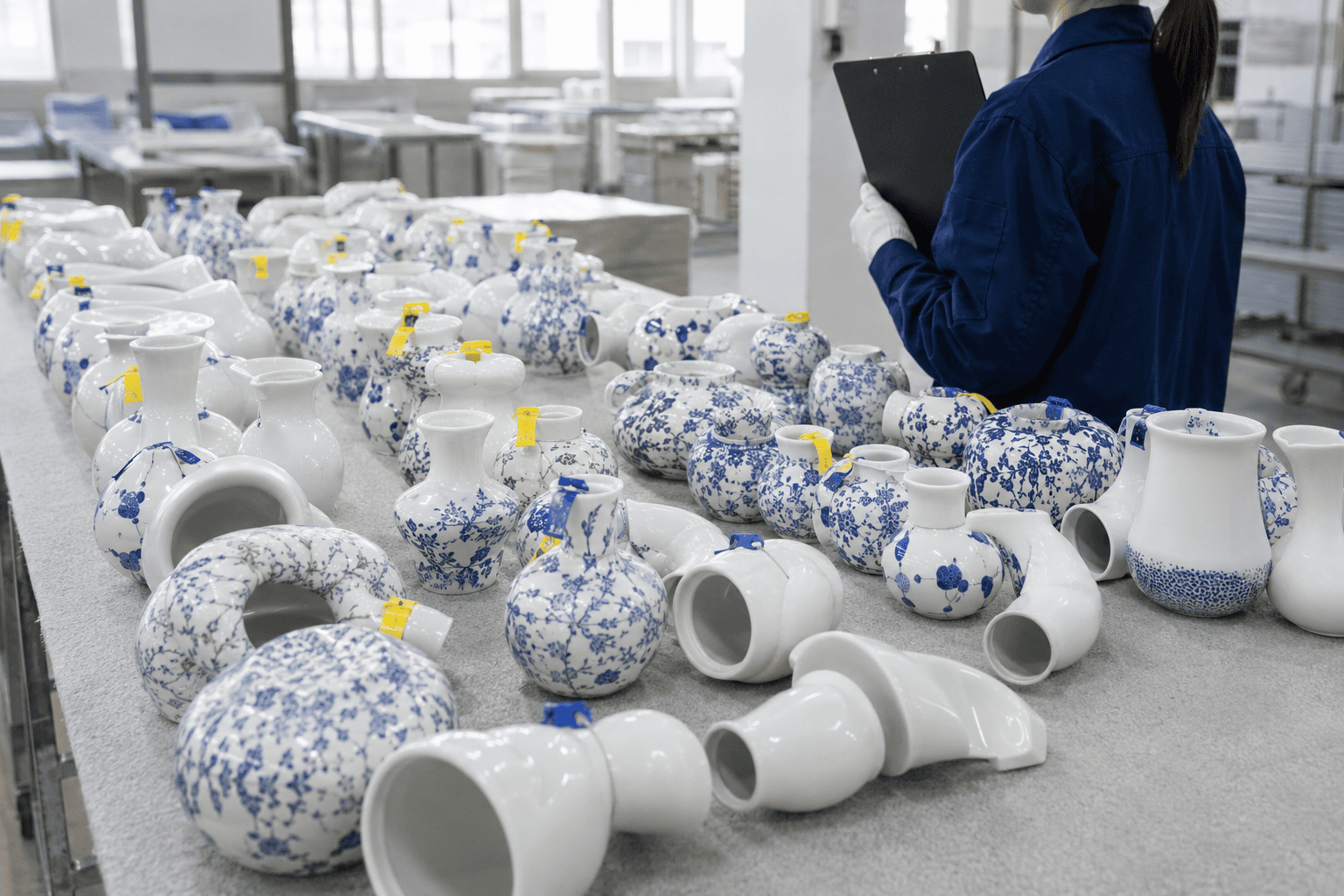
When the shipment arrives, the buyer should inspect the outside of each crate before opening it. Crushed corners, broken boards, water marks, punctures, or tilted packages should be photographed immediately.
The crates should be opened in the sequence shown on the installation documents. Workers should avoid using long blades or heavy tools near the ceramic surfaces. Each component should be checked against the packing list as it is removed.
If damage is discovered, the buyer should keep the original packaging and record clear photographs and videos of the crate, carton, protective material, damaged component, and shipping label. This evidence may be required for communication with the supplier, carrier, or insurance company.
For complex Ceramic Installations, it is also advisable to prepare several spare components during production. Reproducing one piece after the main firing may result in slight differences in color or glaze, while matching spare pieces produced in the same batch can simplify replacement.
Information Buyers Should Provide Before Shipping
To prepare an appropriate packing and delivery plan, buyers should provide the supplier with:
- Installation address and destination port
- Required delivery date
- Access conditions at the project site
- Door, corridor and elevator dimensions
- Availability of forklifts or lifting equipment
- Maximum acceptable package dimensions
- Preferred shipping method
- Local customs and wooden-packaging requirements
- Details of the installation team
- Special labeling or documentation requirements
This information allows the supplier to design packages around the actual transportation and installation conditions rather than treating packaging as the final step after production.
Conclusion
Safe shipment of large Ceramic Installations depends on coordinated planning from design to final installation. Modular construction, detailed inspection, individual cushioning, reinforced cartons, wooden crates, clear numbering, careful container loading, complete documentation, and arrival inspection all contribute to reducing risk.
For buyers, packaging should be discussed before the order is finalized. The lowest-cost packing method is not always suitable for fragile art porcelain or complex ceramic installations. A damaged component can delay an entire hotel, restaurant, gallery, or commercial interior project.
Based in Jingdezhen, China, Magic Cube works with Jingdezhen ceramics, customized art porcelain, and large Ceramic Installations for international commercial and cultural projects. By coordinating design, production, packing, shipping documentation, and installation guidance, Magic Cube aims to help buyers transport ceramic artworks more safely and complete their projects more efficiently.