How to choose porcelain and avoid pitfalls: A step-by-step guide to distinguishing high-quality porcelain from low-quality one
News 2022-06-14 46
How to choose porcelain and avoid pitfalls: A step-by-step guide to distinguishing high-quality porcelain from low-quality one
Porcelain is not only a necessary daily utensil for home use, but also a highly ornamental craft. Faced with a wide variety of porcelain products on the market, the prices of the same type of utensils can differ by several times or even dozens of times. Many consumers only look at the appearance and patterns when purchasing, and it is easy to buy inferior porcelain that is rough in workmanship and has potential health hazards. To distinguish the quality of porcelain, you don’t need to rely on professional knowledge. You can easily distinguish high-quality porcelain from inferior porcelain by carefully checking from six aspects: the body, glaze, shape, painting, sound, and safety performance.
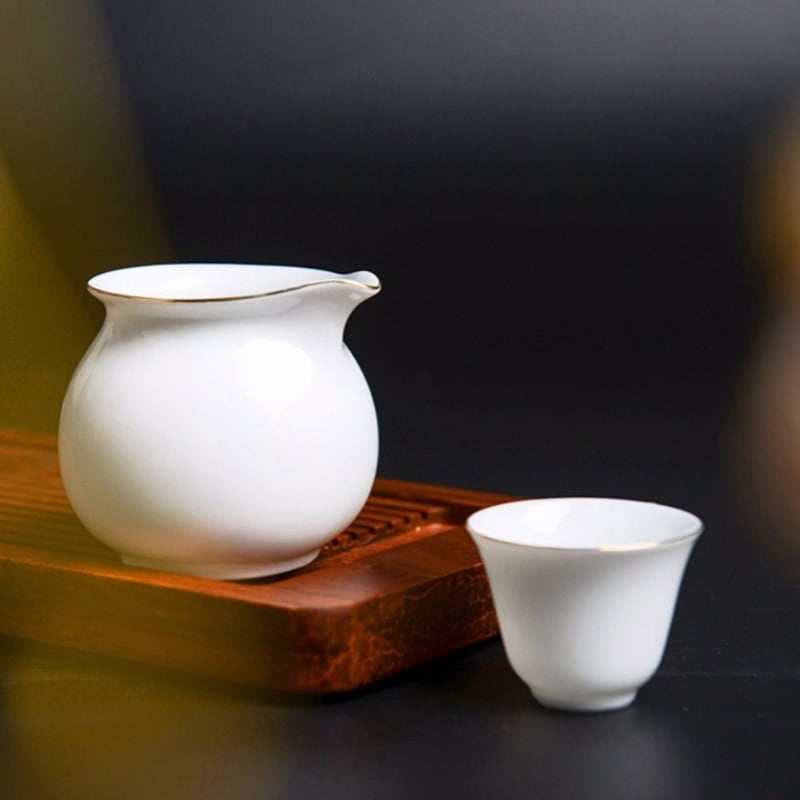
I. Inspect the body: Good porcelain has a dense and hard body, while inferior porcelain is loose and impure
The body is the foundation of porcelain, and the raw materials and firing temperature directly determine the quality of the body. High-quality porcelain uses high-purity kaolin, and the raw materials are repeatedly washed with very few impurities. Most inferior porcelains use cheap mixed clay, which contains a lot of sediment, black spots and impurities, and the firing temperature is insufficient.
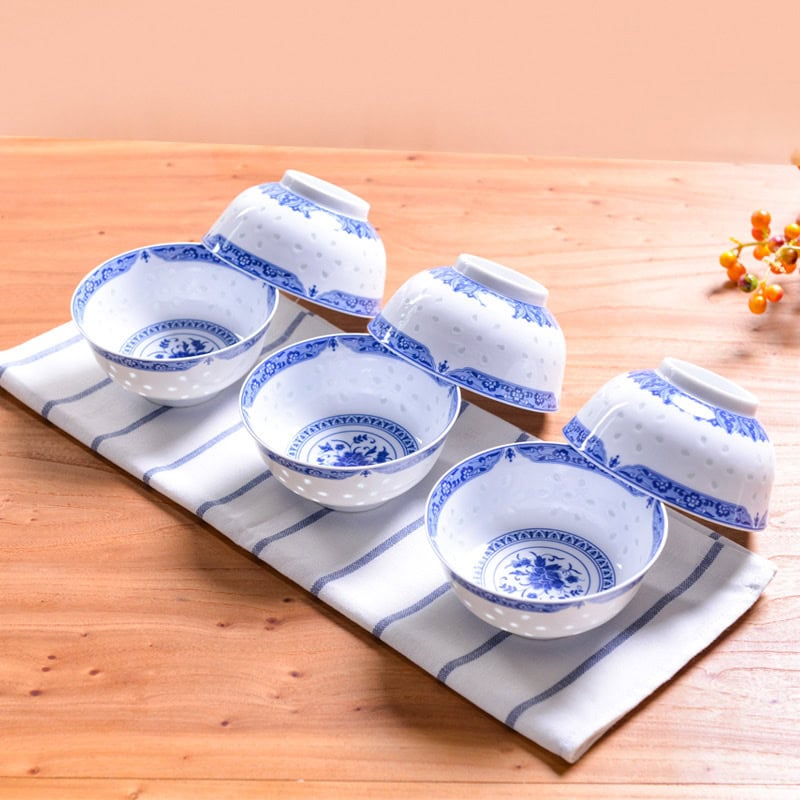
First, observe the exposed body part. Turn the porcelain over and look at the unglazed part at the bottom. High-quality porcelain has a fine body, white or light grayish-white in color, compact in texture, and almost no sand holes, air bubbles, or black impurities. Inferior porcelain has a yellowish-gray body, rough cross-section, full of small holes and black sand spots, and feels obviously grainy to the touch.
Second, weigh the weight with your hand. For two pieces of porcelain of the same size, the body of high-quality porcelain is tightly sintered and feels heavy in the hand; the body of inferior porcelain is loose, feels light and flimsy, and the inside is empty.
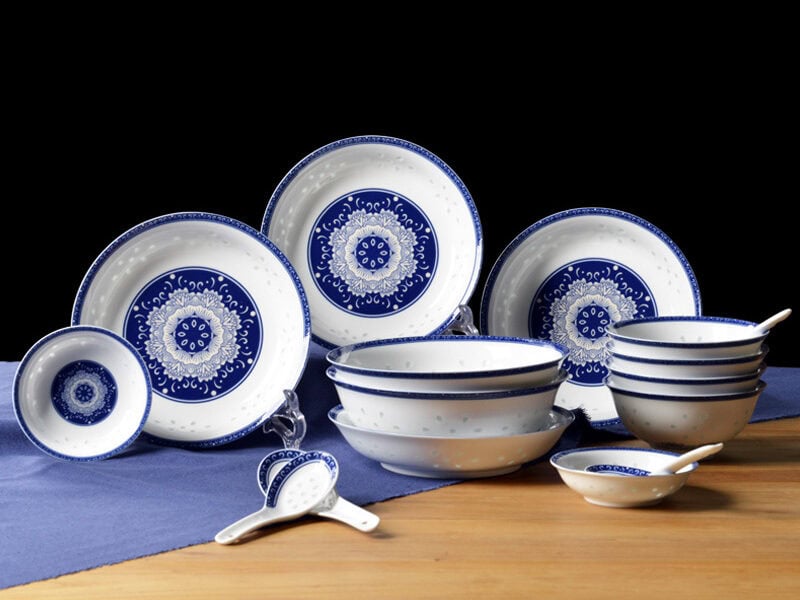
You can also make an auxiliary judgment by tapping the sound. Flick the wall of the utensil with your finger. High-quality porcelain that is fully fired at high temperature will produce a crisp and loud metallic sound with a long aftertone. If the sound is dull, hoarse, short and weak, it is a “raw-fired porcelain” that is not fully fired. This type of porcelain has high water absorption, is easy to seep water and get moldy, and has a short service life. If the tapping sound has a cracking noise, it means that there is a hidden crack in the body, and it will break with a little bump.
II. Observe the glaze: High-quality glaze is warm and smooth, while inferior glaze is full of defects
The glaze layer is like the coat of porcelain, which plays a role in waterproofing, antifouling, and protecting the body. It is also the most intuitive dividing line between high-quality and inferior porcelain.
First, check the flatness of the glaze. Place the porcelain in natural light and rotate it slowly to observe the reflection. High-quality porcelain has a smooth and flat glaze with uniform and smooth reflection, without unevenness. Inferior porcelain has uneven glaze application, with waves, orange peel-like pits on the surface, and the light and shadow are flickering.
Second, check for various firing defects. High-quality porcelain has a clean glaze, and rarely has problems such as bubbles, pinholes, glaze shrinkage, and glaze peeling. Dense small holes and bubble pits on the glaze layer are typical defects of inferior porcelain.
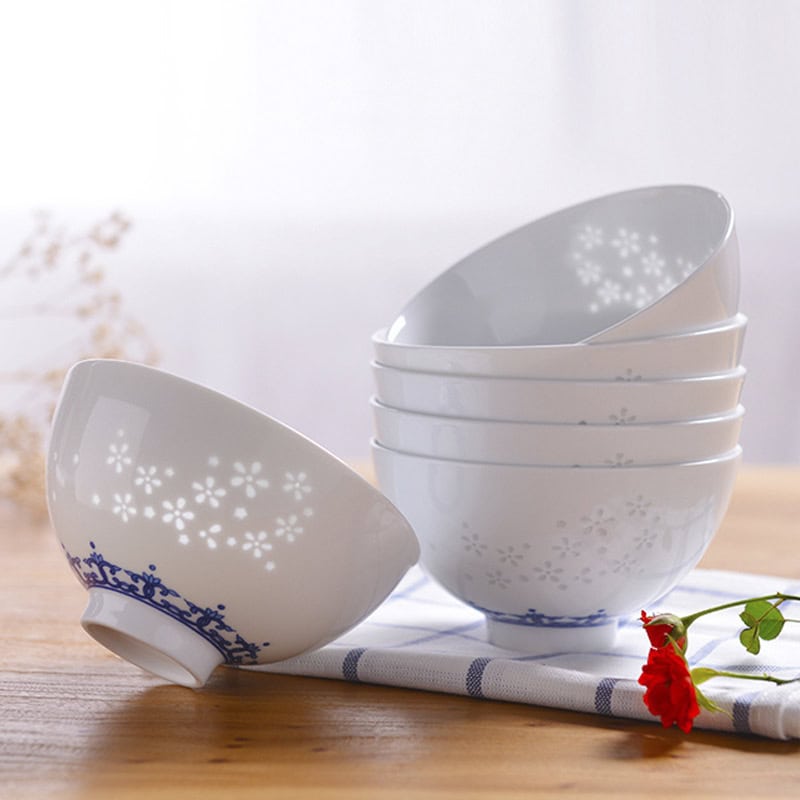
Here, we need to distinguish between technological crackles and damaged cracks: deliberately designed crackle patterns are uniform and natural, which belong to decorative techniques; while messy and fragmented lines are defective. Sewage will seep into the body along the gaps, and it is easy to breed bacteria when holding food for a long time, so it is not suitable as tableware.
Touch the glaze with your hand. High-quality glaze is fine and smooth, feels warm like jade, and the mouth edge is smooth and round, which will not scratch your hands. The glaze of inferior porcelain is roughly ground, with raised particles and burrs on the surface, and the edges are roughly polished, which can easily scratch your hands.
III. Compare the shapes: High-quality porcelains are regular and well-proportioned, while rough porcelains are deformed and skewed
Well-made porcelains have regular and symmetrical shapes. Place bowls and plates flat on a smooth tabletop and rotate them slowly. High-quality porcelains are placed stably, rotate smoothly, and will not shake left and right or have warped edges. If the utensil shakes back and forth when rotating, and the mouth edge is uneven, it means that the body is deformed during forming, which is a defective product in terms of craftsmanship.
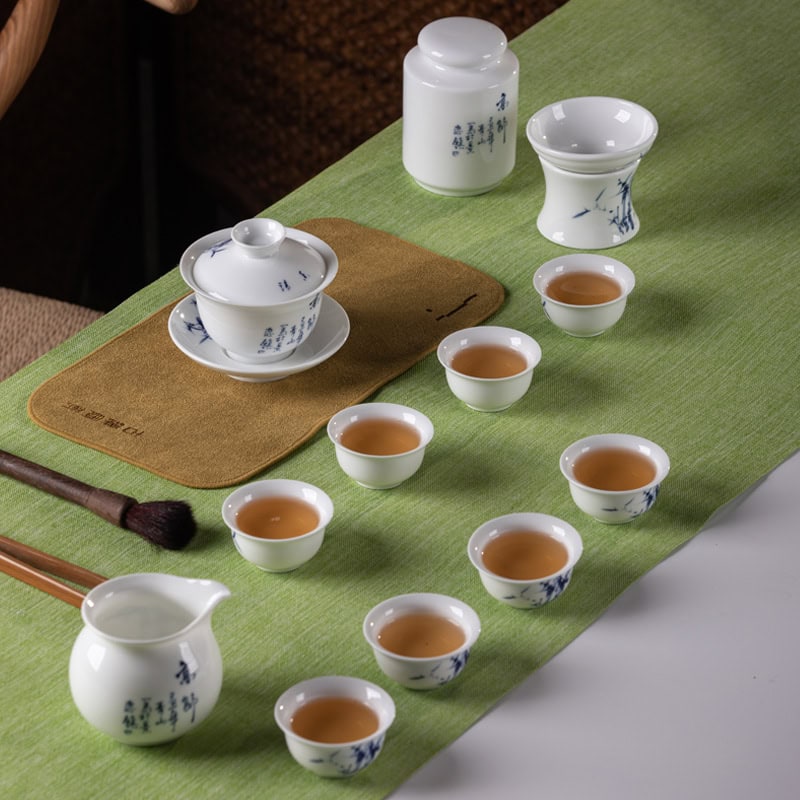
Then look at the foot ring and edges. High-quality porcelain has a uniform thickness of the mouth edge, and the bottom foot ring is carefully trimmed and polished smoothly, so it is placed stably. The foot ring of cheap and rough porcelain is rough and sharp, which not only cannot be placed stably, but also scratches the tabletop, which is enough to show that the production process is shoddy.
IV. Identify the painting: Authentic products have pure colors, while inferior products have easily peeling pigments
For porcelain with patterns, the painting process is the key to quality and safety, which is divided into two categories: underglaze color and overglaze color.
The pigment of underglaze color is sealed under the glaze layer, the surface is smooth, and the pigment will not be exposed. It is also the first choice for tableware. High-quality underglaze color patterns have clear lines, natural color transitions, clean and soft colors, and no large-scale blurring or mottled color blocks. Inferior underglaze color pigments have many impurities, the colors are dark and turbid, and the patterns are blurred and diffused.
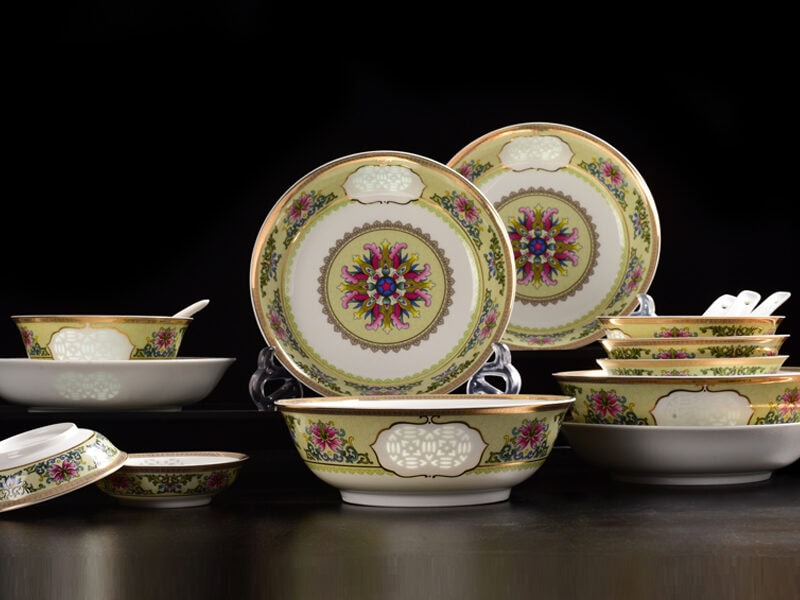
Overglaze color is painted on the surface of the glaze layer and baked at low temperature. High-quality overglaze color patterns have neat boundaries, firm colors, and will not fade when wiped with a damp cloth. Inferior and cheap colorants contain heavy metals such as lead and cadmium. Especially for tableware with large areas of bright paintings on the inner wall, when exposed to acidic foods such as vinegar and hot soup, heavy metals will be released in large quantities, endangering health. When purchasing, you can repeatedly wipe the pattern area with a wet tissue. If the tissue is stained with color, do not buy it.
Pure white porcelain also has differences in quality: good porcelain has a soft and warm whiteness, while inferior porcelain relies on chemical brighteners, which is dazzling and stiff white, and has potential safety hazards.
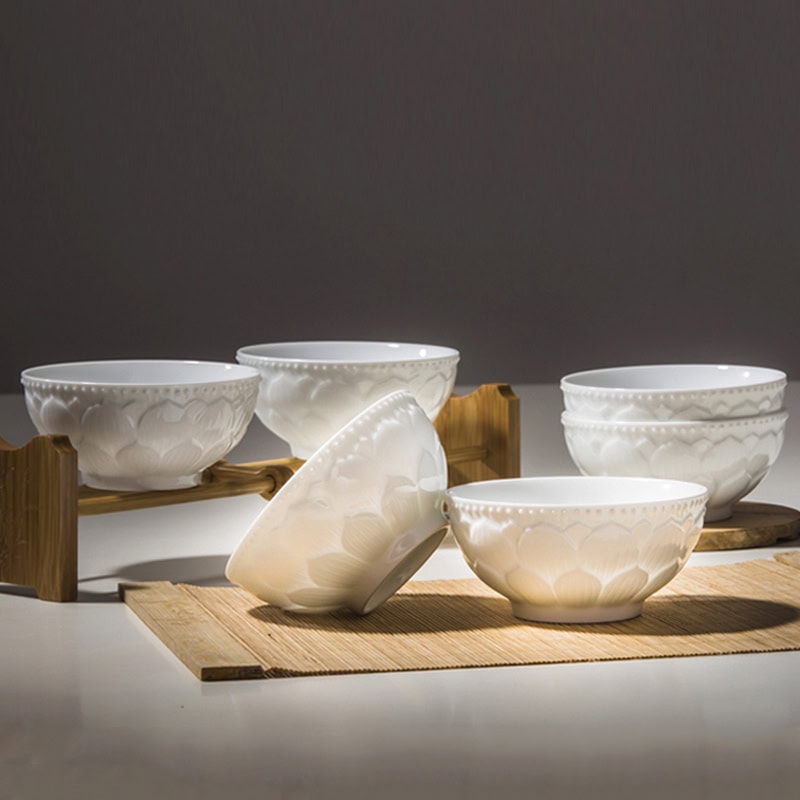
At the same time, we also need to distinguish between decal and hand-painted: when magnifying the pattern, decal porcelain can see printed grid lines, which are all the same; hand-painted porcelain has different strokes, and each work has slight differences, which has higher craft value. A large number of cheap decorative porcelains on the market are mass-produced decal products, and their quality is generally low.
V. Test practicality: Inspect water absorption and airtightness
For daily-use porcelains such as bowls, plates, and storage jars, you can also do a simple water seepage test. Fill the inside of the porcelain with clear water and let it stand for several hours. High-quality porcelain has a tight glaze layer, and the outer wall is dry without signs of moisture regain. If the outer wall slowly seeps water and regains moisture, it means that the body has large pores, which is easy to accumulate dirt and breed mold.
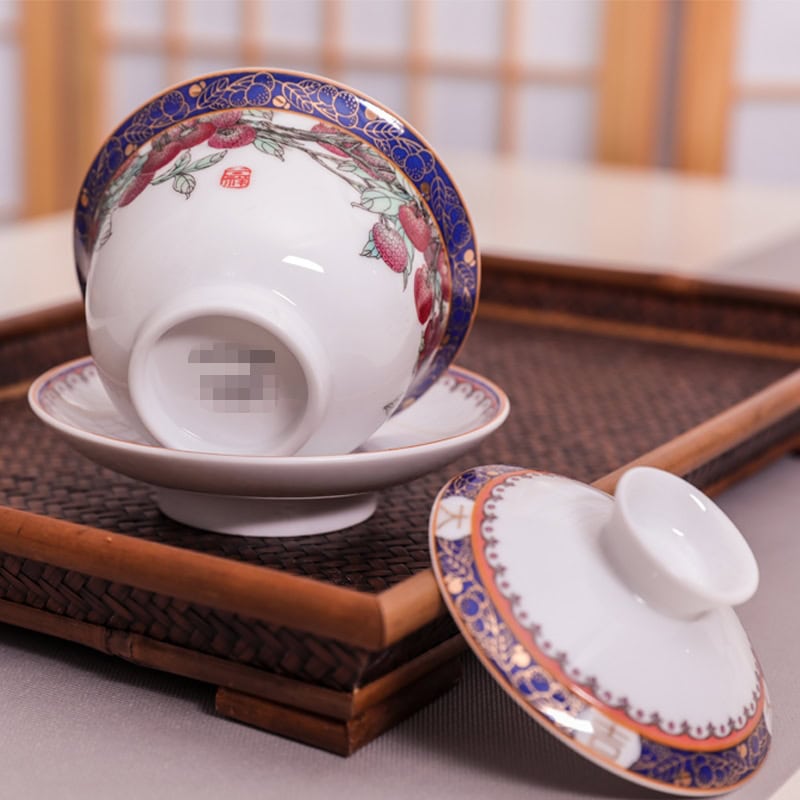
When purchasing teapots and sealed porcelain jars, close the lid and rotate it back and forth. The lid of high-quality porcelain fits tightly with the mouth of the jar, and the gap is uniform; if the gap is uneven, it means that the shape is deformed, and it cannot be used to store food in an airtight manner.
VI. Summarize the purchasing principles
Overall, high-quality porcelain meets the following conditions: the body is dense and pure, and it produces a crisp sound when tapped; the glaze is flat and smooth, without pinholes, bubbles, or cracks; the shape is regular and stable, and the edges and corners are polished smoothly; the painted colors are stable and do not fade when wiped; the glaze layer is airtight and does not seep water.
Inferior porcelains often have impure bodies, rough glazes, deformed shapes, and poor colors. Not only are they poor in craftsmanship, but daily-use porcelains may also have excessive heavy metal problems. When choosing tableware, priority should be given to underglaze color porcelains with pure white inner walls and no large-area paintings, which are beautiful, durable, and safe for food.
The quality of porcelain is condensed in every step of clay washing, body trimming, glaze application, and fire control. As long as you patiently observe the details and avoid shoddy cheap products, you can select high-quality porcelain that is durable and of superior texture.