Imitation Ming Xuande Sacrificial Blue Glaze Floral Rim Folded Edge Plate, Reserved White Bird Flower Divine Beast Patterns, Handmade Antique-Style Porcelain Collectible Decor
chinese antique-style porcelain, Imperial jingdezhen porcelain, reproduction porcelain, jingdezhen ceramic reproduction manufacturer china, chinese porcelain replica, jingdezhen antique porcelain replica, jingdezhen porcelain, jingdezhen ceramics, blue and white porcelain, magic cube ceramics,
Introduction
1. Name & Category
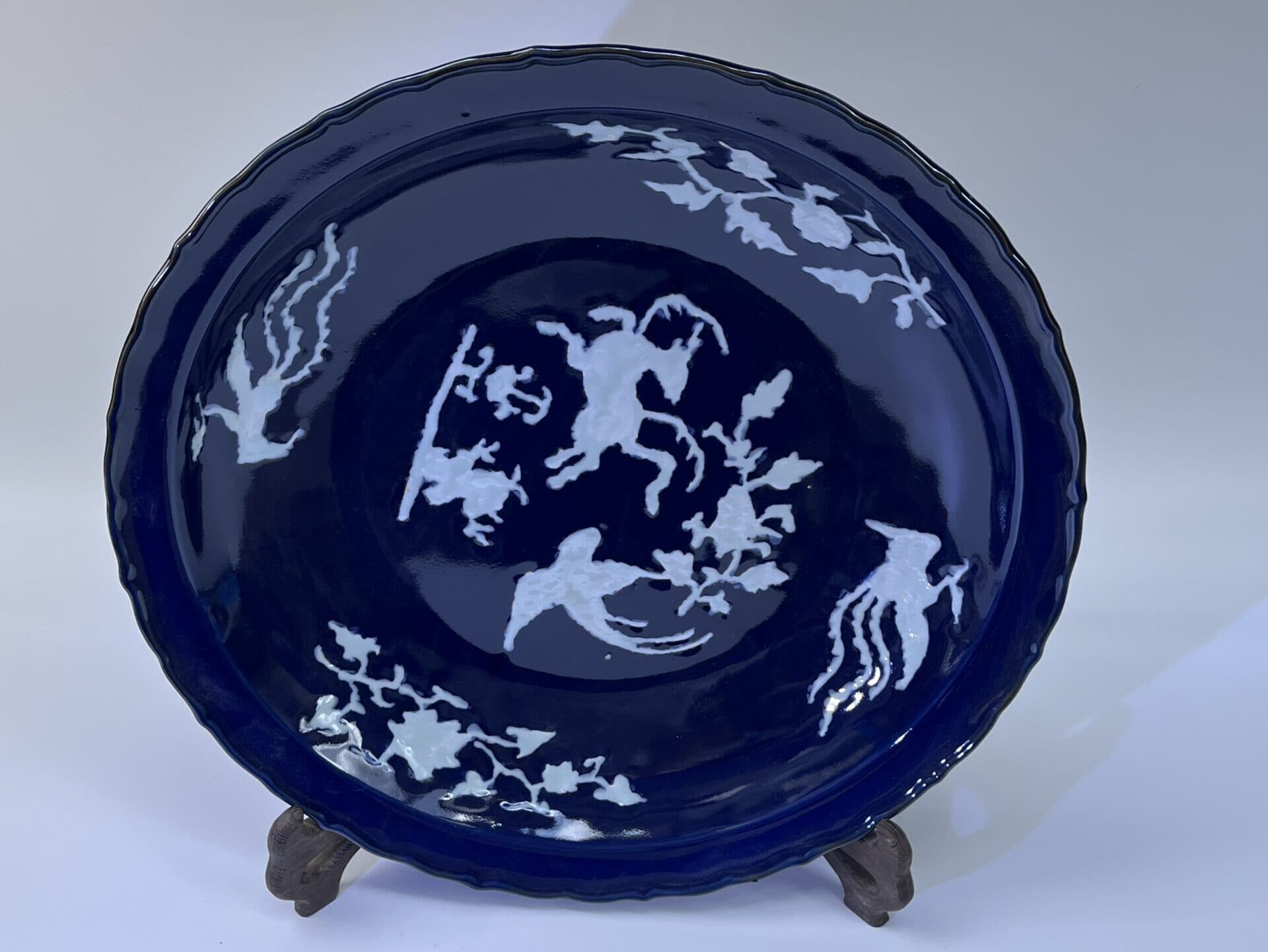
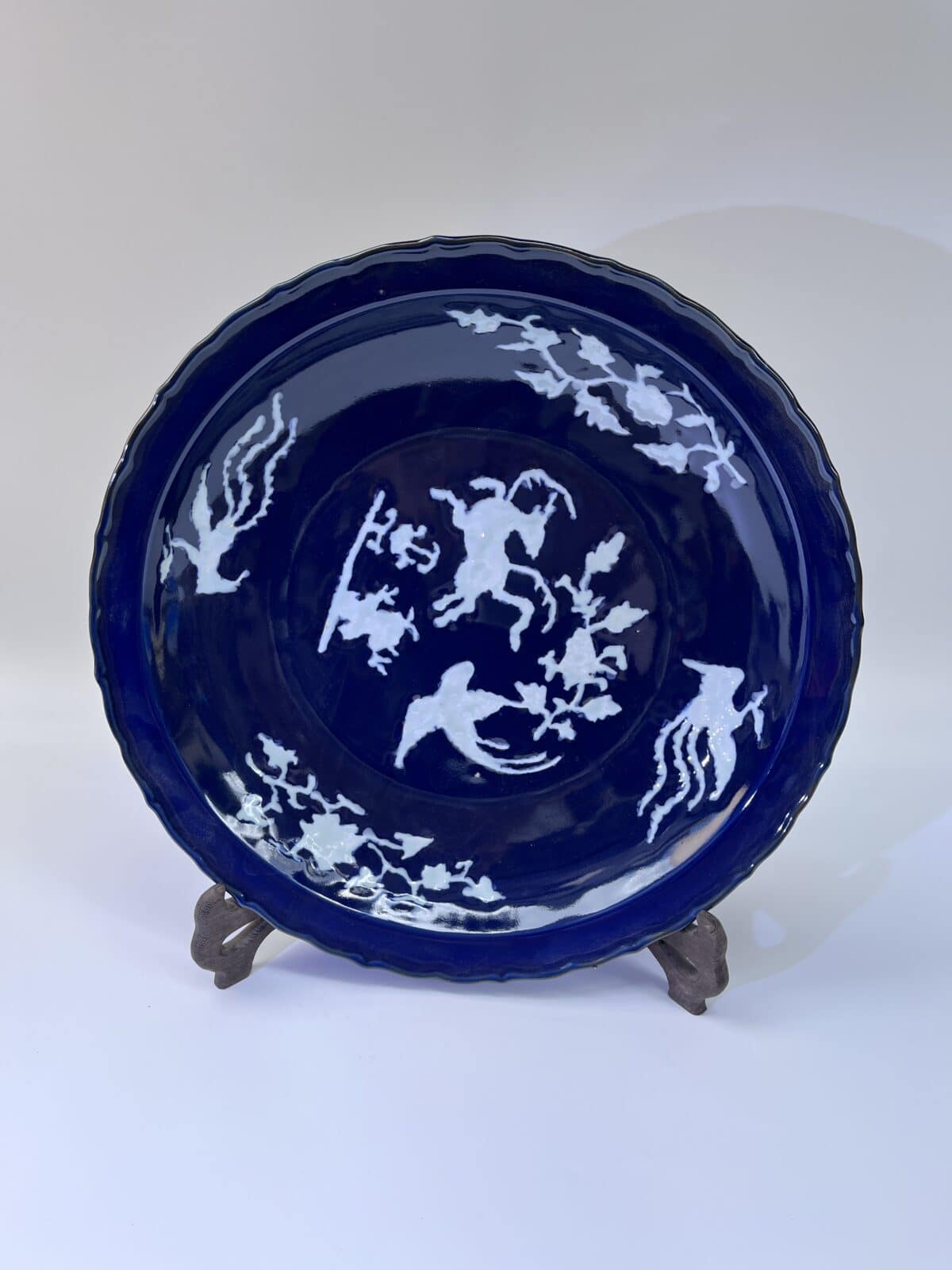
Name: Imitation Xuande Period Sacrificial Blue Glaze Floral Rim Folded Edge Plate with Reserved White Bird, Flower and Divine Beast Patterns
Category: Handmade antique high-temperature colored glaze ornamental porcelain from Jingdezhen. Its prototype derives from official imperial kiln porcelain of the Xuande reign of the Ming Dynasty, and it is a high-end antique collectible crafted with sophisticated reserved white technology under sacrificial blue glaze.
2. Core Craftsmanship
The porcelain body adopts a dual formula of porcelain stone and kaolin clay, and applies the traditional blue-ground reserved white technique (glaze carving and white embossing). Craftsmen first accurately outline and emboss decorative patterns on the unglazed raw body. After covering the entire ware with high-temperature sacrificial blue glaze, the blue glaze on patterned areas is chiseled off to expose the white glazed body, followed by one-time firing at 1280 to 1320 degrees Celsius.
The sacrificial blue glaze develops a deep and tranquil hue akin to the deep ocean, while the reserved white patterns are pure, smooth and mild. The sharp contrast between blue and white forms an elegant style, which perfectly restores the premium texture of colored glaze wares from Ming imperial kilns.
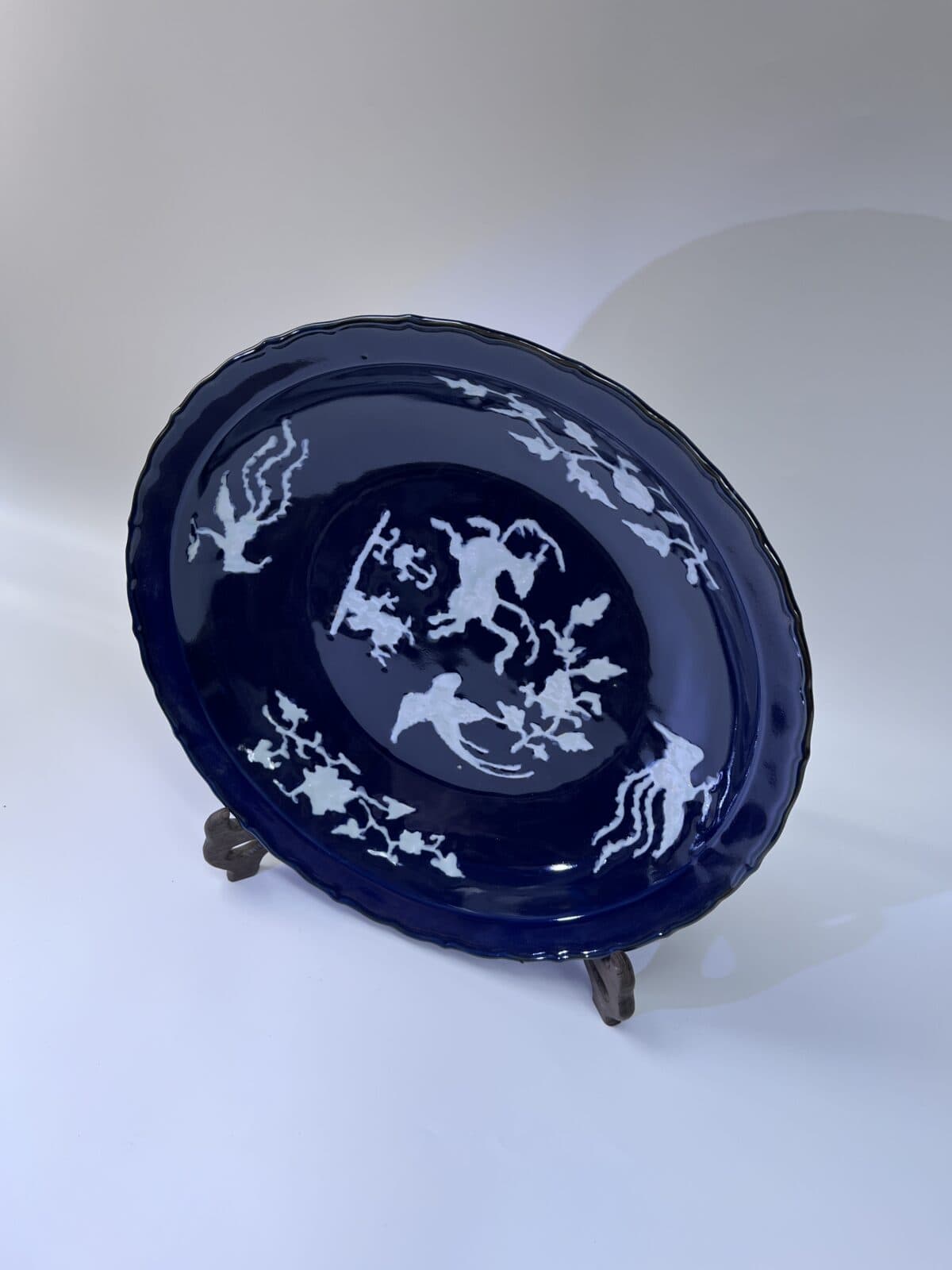
It adopts the classic floral rim shape popular in Yongle and Xuande periods: the rim is designed with rhombic petal edges, paired with folded rim, shallow curved belly and neat ring foot. Its smooth and graceful lines make the irregular floral rim far more difficult to produce than ordinary round plates.
The decorative patterns are arranged in layers. The center of the plate is decorated with reserved white heavenly steed divine beasts, human figures and landscapes, brimming with vivid vitality. The inner wall is encircled by reserved white patterns of flying birds and twisting flower branches scattered in natural layers.
Divine beasts symbolize soaring success and promising careers, while birds and flowers stand for wealth, nobility and good fortune. This combination is a typical set of auspicious patterns seen on Ming official porcelain.
3. Function
Its original prototype served as sacrificial ritual vessels and interior banquet display wares in the Ming imperial palace, ranking as exclusive royal porcelain. Today, it is widely used for antique shelf display in Chinese-style spaces, high-end teapot trays for tea ceremonies and desk ornaments. It is a top-tier antique colored glaze porcelain integrating outstanding craft value and aesthetic value.
4. Standard Dimensions
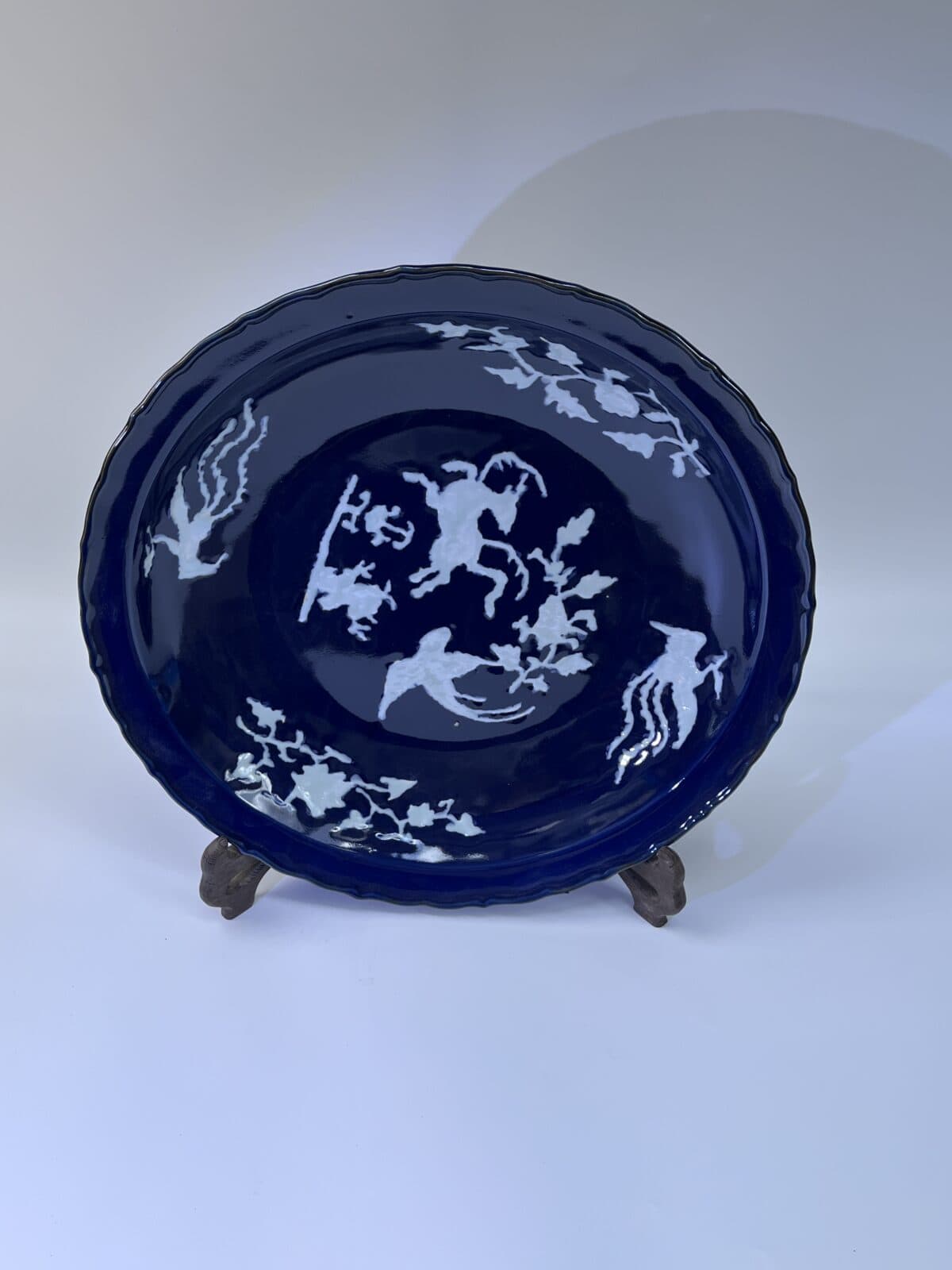
Below are mainstream universal specifications for antique sacrificial blue reserved white plates of equivalent grade in Jingdezhen, adopted by most elaborate reproductions on the market:
- Mouth Diameter: 28–32 cm
- Overall Height: 4–5.5 cm
- Ring Foot Base Diameter: 17–19 cm
This classic medium-sized display plate features a dignified and unique shape, suitable for display in most Chinese-style spaces such as tea tables, antique shelves and entrance halls.
5. Historical & Craft Stories Behind the Ware
5.1 Elegance of Reserved White on Royal Heavenly Sacrifice Glaze
The sacrificial blue glaze forming the background of this plate has carried strict royal hierarchical attributes since its creation.
The Ming and Qing dynasties implemented rigorous ritual systems, assigning exclusive colored glazes to sacrifices for heaven, sun, earth and moon: blue for heaven, red for sun, yellow for earth and white for moon. Ritual wares for worshipping heaven must be covered with pure sacrificial blue glaze as deep as ocean, also known as Ji Blue. It is one of the highest-grade monochrome glazes, and private folk firing of such glaze was prohibited for a long time.
The Xuande reign represented the peak of colored glaze craftsmanship in the Ming Dynasty. Unsatisfied with the solemn plain single-color glaze, craftsmen in imperial kilns pioneered the blue-ground reserved white craft. Deep blue glaze serves as the base matched with cream-like white glaze patterns. The interplay of blue and white retains the solemnity of sacrificial wares while adding delicate literati charm.
Patterns of heavenly steeds, flying birds and twisting flower branches on this floral-rimmed plate all contain auspicious meanings: heavenly steeds symbolize prosperous national fortune and brilliant careers, and birds and flowers represent wealth, peace and nobility, embodying the royal expectation for a prosperous age.
In ancient times, imperial kilns imposed extremely strict standards for firing such wares. Any defects including discolored sacrificial blue glaze, smudged and distorted reserved white patterns, or uneven floral rim edges would lead to immediate smashing and burial of the flawed wares, which were never allowed to flow out of the kiln compound.
For this reason, intact surviving Xuande sacrificial blue glaze wares with reserved white patterns are extremely rare, and each surviving piece counts as a museum-level treasure.
5.2 Modern Reproduction: Every Glaze Tone and Pattern Reflects Mastery
Reproducing this sacrificial blue reserved white plate in modern Jingdezhen involves two major technical hurdles: firing authentic pure blue glaze, and carving neat and crisp reserved white patterns.
First, regarding glaze color. To restore the unique calm, non-flashy deep ocean blue of Xuande sacrificial glaze, veteran craftsmen repeatedly adjust the proportion of cobalt pigment. A deviation of merely 0.1 gram of raw material will result in greyish or purplish glaze after firing.
Kiln firing relies heavily on experience. Tiny differences in kiln position, temperature and firing atmosphere will create vastly different glaze effects. Many craftsmen conduct over a dozen trial firings to obtain a satisfying glaze tone.
Next is the reserved white craft. Crisp and clean pattern edges free of glaze overflow or blurring completely depend on precise hand control during glazing and glaze carving. A tiny millimetric error will fray and distort pattern outlines, ruining the delicate texture of the whole ware.
Shaping the floral rim is extremely laborious. Every petal edge must maintain consistent radian and depth through repeated trimming and calibration. Wares face risks of deformation and edge curling inside the kiln. Only three to four out of ten raw bodies can survive complete firing, which is proof of superb craftsmanship.
A fine sacrificial blue reserved white plate does not need complicated decorative patterns to impress viewers; the collision of blue and white alone delivers striking charm.
This reproduction is far more than an ordinary plate. It revives the refined aesthetic of royal rituals dating back six hundred years, and showcases the boundless artistic conception created by Chinese craftsmen through simple monochrome glazes.
Within its serene deep blue lies the thousand-year-old porcelain capital’s persistent pursuit of colored glaze craftsmanship, as well as the unique restrained and sophisticated texture exclusive to Chinese aesthetics.