How to Prevent Chipping and Edge Damage in Ceramic Tableware
News 2026-09-11 54
Chipping is one of the most common problems associated with ceramic tableware. A plate may still be usable, but once a small piece breaks away from the rim, its appearance, hygiene, and safety are all affected. For hotels, restaurants, catering companies, importers, and distributors, frequent edge damage also increases replacement costs and makes it difficult to maintain a consistent table setting.
Although ceramic tableware is naturally more fragile than metal or plastic, chipping is not always unavoidable. The strength of a plate, bowl, or cup depends on its raw materials, body thickness, rim design, firing process, glazing quality, packaging, transportation, and daily handling. Understanding these factors helps buyers choose more durable products and reduce unnecessary losses.
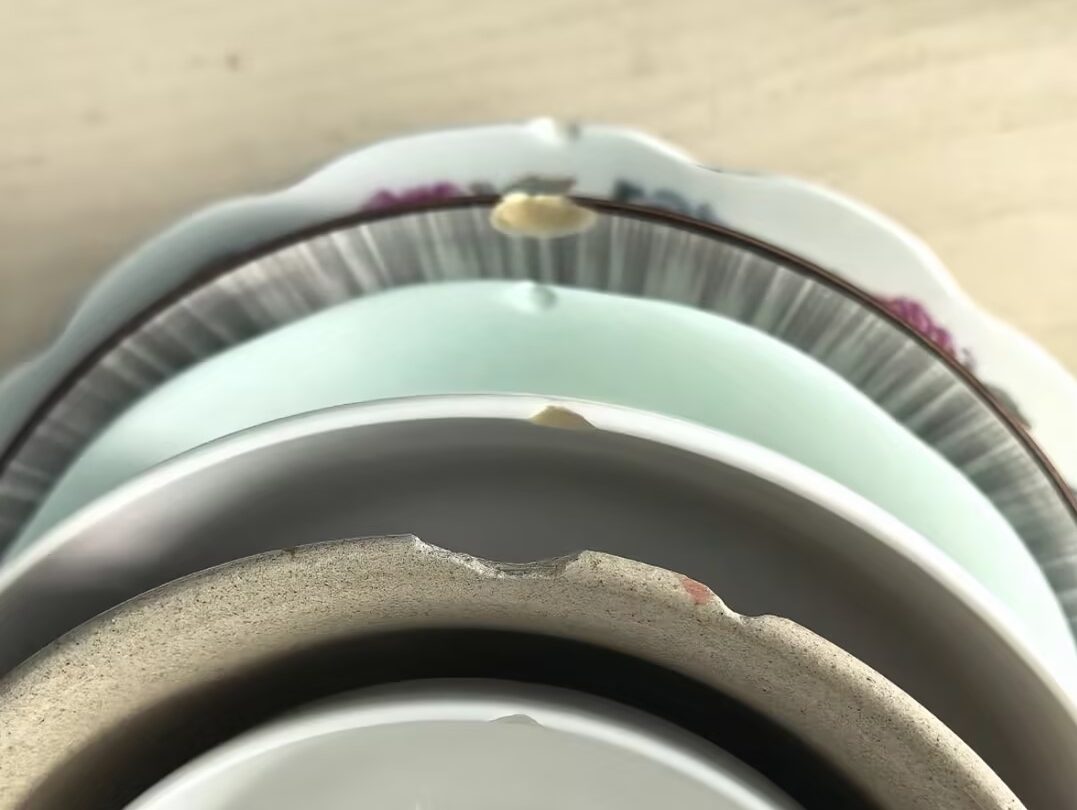
Why Does Ceramic Tableware Chip?
The rim is usually the most exposed part of ceramic tableware. Plates strike one another when they are stacked, bowls collide during washing, and cups may hit nearby equipment while being moved. Even a small impact can concentrate pressure on a narrow area and create a chip.
Common causes include:
- Rims that are too thin or sharply shaped
- Uneven thickness in the ceramic body
- Internal stress caused by improper forming or firing
- Small cracks that developed before delivery
- Rough stacking and handling
- Contact with metal sinks, racks, or countertops
- Inadequate protection during transportation
- Sudden changes in temperature
Chipping is rarely caused by only one factor. In many cases, a product with a weak rim is combined with unsuitable packaging or careless use, making damage more likely.
Choose a Practical Rim Design
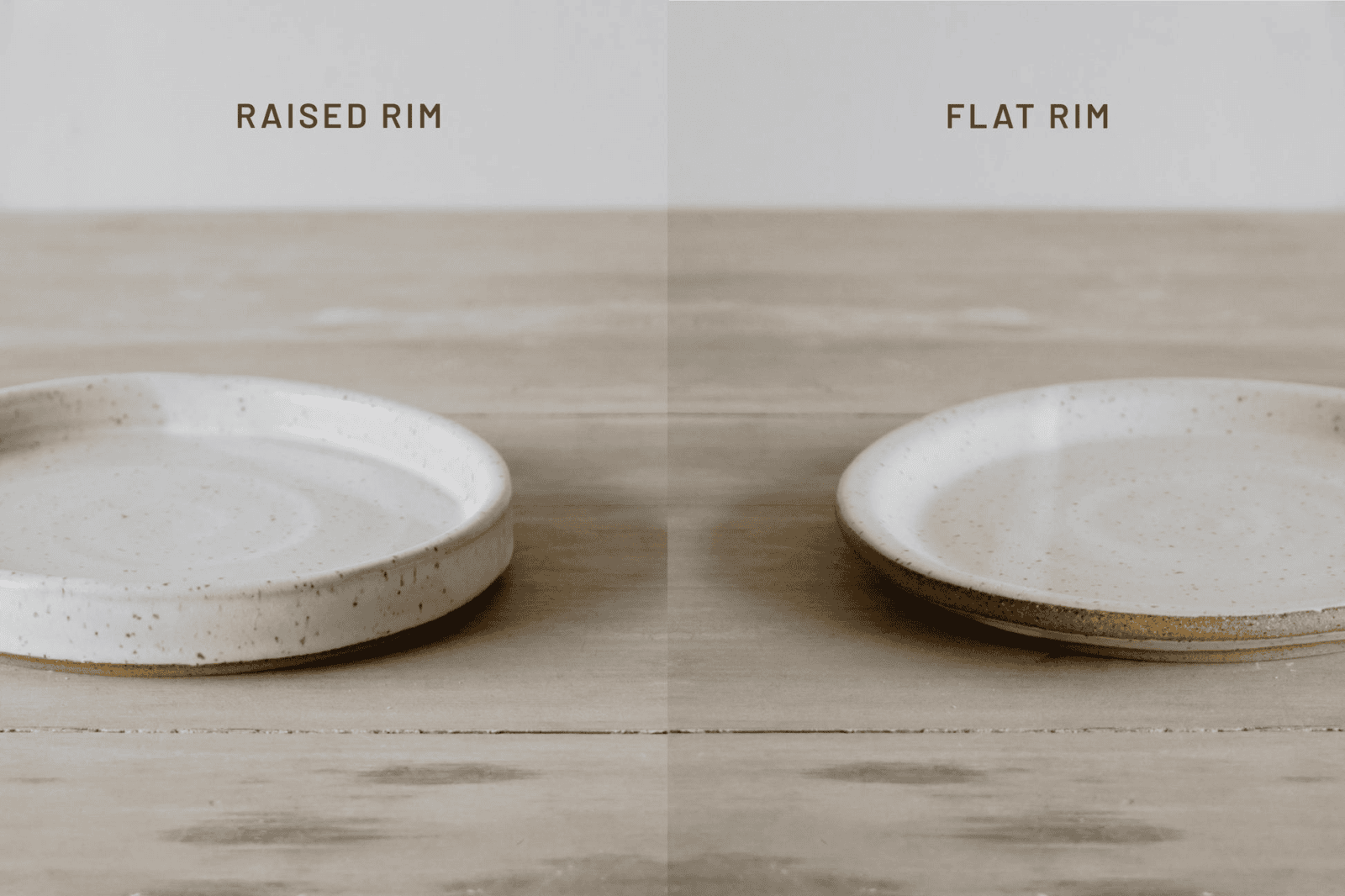
Rim design has a direct influence on durability. Very thin edges can look elegant, but they may not be suitable for high-frequency commercial use. Hotels and restaurants usually need a balance between refined appearance and impact resistance.
Rounded or slightly reinforced rims distribute impact more effectively than extremely sharp edges. Rolled-edge and reinforced-edge designs can provide additional protection for frequently used plates and bowls. However, the rim should not be made excessively thick, as this can make the product look heavy and uncomfortable.
A reliable Jingdezhen porcelain manufacturer should consider how the tableware will be used before recommending the shape. Tableware for fine dining, buffet service, banquets, and casual restaurants may require different combinations of thickness, weight, and rim strength.
Control the Thickness of the Ceramic Body
Ceramic tableware does not need to be extremely heavy to be durable. What matters more is whether the thickness is appropriate and evenly distributed.
If one side of a plate is noticeably thinner than the other, stress may become concentrated in the weaker area. Uneven forming can also cause deformation or internal tension during firing. These problems may not always be visible immediately, but they can make the product more vulnerable to damage during use.
During production, the manufacturer should control the forming pressure, trimming accuracy, drying speed, and body thickness. Consistent dimensions are particularly important for large orders because the pieces must stack securely without placing too much pressure on their rims.
Pay Attention to Raw Materials and Firing
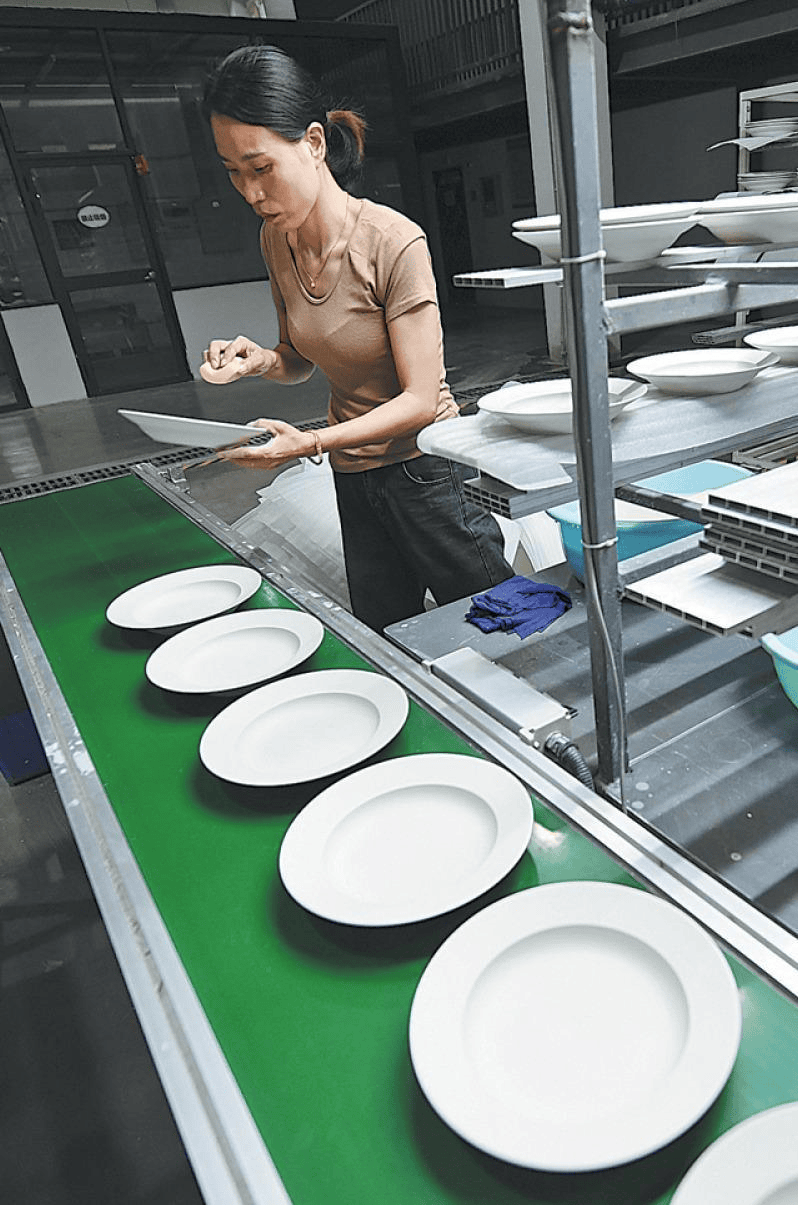
The quality of the porcelain body plays an important role in resistance to chipping. Raw materials must be properly refined and mixed to create a dense and stable ceramic body. Poorly prepared clay may contain impurities, air pockets, or uneven particles that weaken the finished product.
Firing temperature and kiln control are equally important. When porcelain is fired correctly, the body becomes dense and strong. Underfiring may leave it insufficiently vitrified, while unsuitable firing schedules can create deformation, stress, or glaze defects.
Jingdezhen porcelain is known for its long ceramic tradition and diverse production techniques. However, the place of origin alone does not guarantee durability. Buyers should still evaluate the manufacturer’s material control, firing consistency, inspection standards, and experience with commercial tableware.
Check the Fit Between the Glaze and the Porcelain Body
Glaze gives ceramic tableware its smooth surface, color, and resistance to staining. It must also fit the porcelain body correctly.
When the glaze and body expand or contract at different rates, fine cracks or stress may develop. These problems can weaken the rim and increase the risk of chipping. Excess glaze accumulation around the edge can also create an uneven or brittle area.
A well-controlled glaze should cover the surface evenly without pinholes, crawling, excessive thickness, or obvious bare spots. The rim should be smooth to the touch, with no sharp points or hidden cracks.
These requirements apply not only to daily-use tableware but also to artistic porcelain. Decorative shapes may include narrow openings, sculpted edges, handles, or raised details, all of which require careful consideration during forming, glazing, firing, and packing.
Improve Stacking and Daily Handling
Even strong ceramic tableware can be damaged through improper handling. One of the most common mistakes is stacking too many plates or bowls together. The weight of the upper pieces creates pressure on those at the bottom, while sliding pieces against each other can damage the glazed rims.
For commercial use, staff should:
- Avoid throwing plates into stacks
- Keep different sizes and shapes separate
- Use racks or dividers where possible
- Do not overload storage shelves
- Leave enough space between stacks
- Avoid knocking ceramic rims against metal surfaces
- Remove chipped pieces from service immediately
Tableware should also be arranged so that staff can lift it comfortably. If a stack is too high or heavy, the risk of dropping or striking the pieces increases.
Reduce Damage During Washing
Commercial dishwashing areas are another major source of edge damage. Plates may collide in crowded racks, cups may fall over, and bowls may strike the metal sides of a sink.
Choose dishwashing racks that match the dimensions of the tableware. Plates should stand securely without rubbing against one another. Cups should be placed in appropriate compartments, and unusual shapes should be tested before large-scale purchasing.
Avoid sudden temperature changes as well. For example, cold ceramic tableware should not be placed directly into extremely hot water. Rapid thermal change can create stress in the ceramic body and increase the possibility of cracking.
Use Better Packaging for Transportation
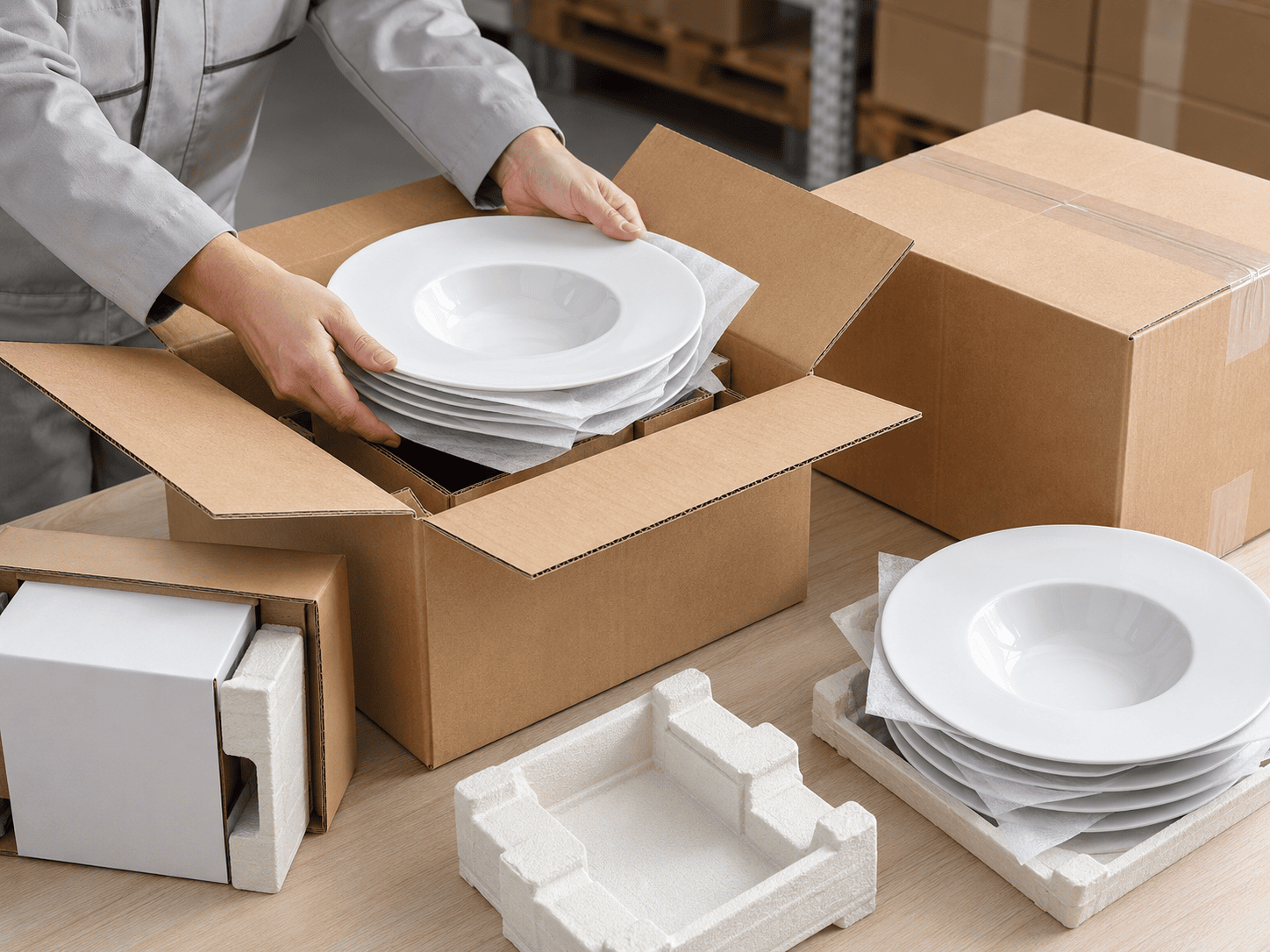
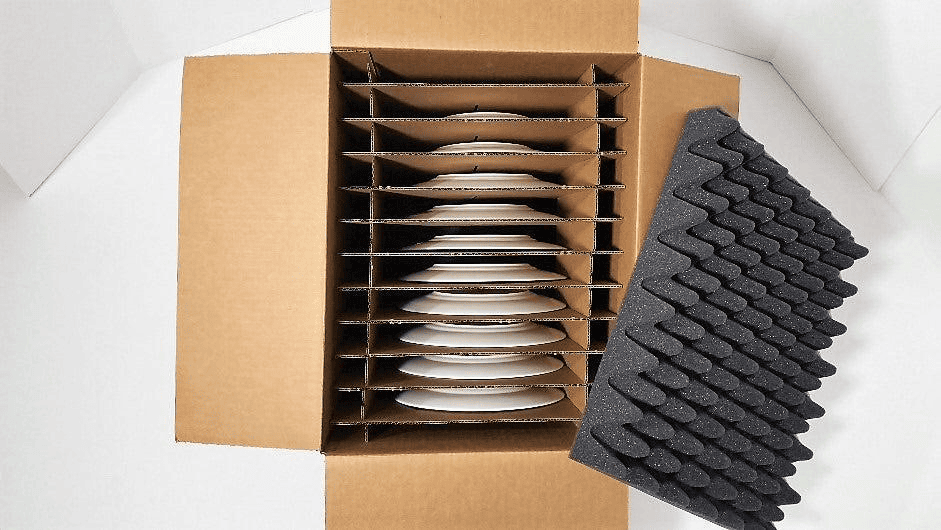
Good packaging must protect the rim, not simply wrap the whole product. Plates and bowls should be separated with suitable paper, foam, or cushioning material so that their edges do not collide during transportation.
The inner box should hold the pieces firmly without applying excessive pressure. Empty space inside the carton allows products to move, while over-tight packaging may transfer external force directly to the ceramic body.
For export orders, packaging should be designed according to the product’s shape, weight, stacking method, and transportation route. Drop testing and trial packing can help identify weak points before mass shipment.
What Buyers Should Check Before Placing an Order
Before confirming a bulk order, buyers should request samples and examine the following points:
- Is the rim smooth and evenly shaped?
- Is the body thickness consistent?
- Do plates and bowls stack steadily?
- Are there hairline cracks, sharp points, or glaze defects?
- Is the weight suitable for daily handling?
- Can the packaging protect the edges during transportation?
- Has the product been tested under conditions similar to its intended use?
A sample should not only be inspected visually. Buyers can also test stacking, washing, handling, and normal table service to understand how the product performs in practice.
Conclusion
Preventing chipping and edge damage in ceramic tableware begins long before the product reaches a restaurant table. It requires suitable materials, balanced body thickness, practical rim design, controlled firing, compatible glaze, careful inspection, secure packaging, and correct daily handling.
For commercial buyers, choosing the right product is not simply about selecting an attractive pattern. Durability, weight, stackability, cleaning convenience, and replacement costs should all be considered together.
Based in Jingdezhen, Magic Cube works with buyers to develop Jingdezhen porcelain for hotels, restaurants, importers, distributors, and customized projects. As an experienced Jingdezhen porcelain manufacturer, we focus on balancing appearance, craftsmanship, and practical performance across ceramic tableware and artistic porcelain.