Introduction
Ceramic Vase
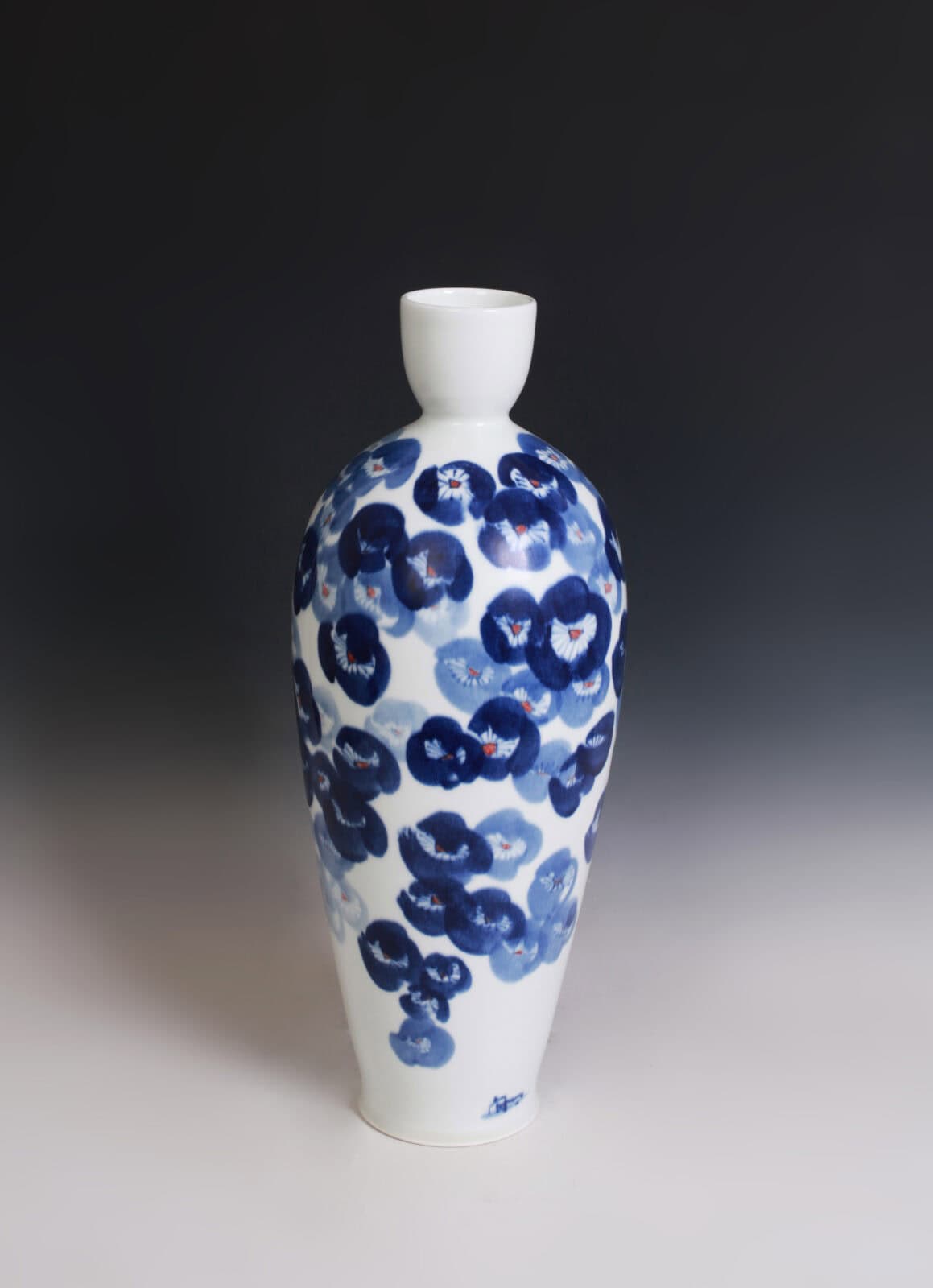
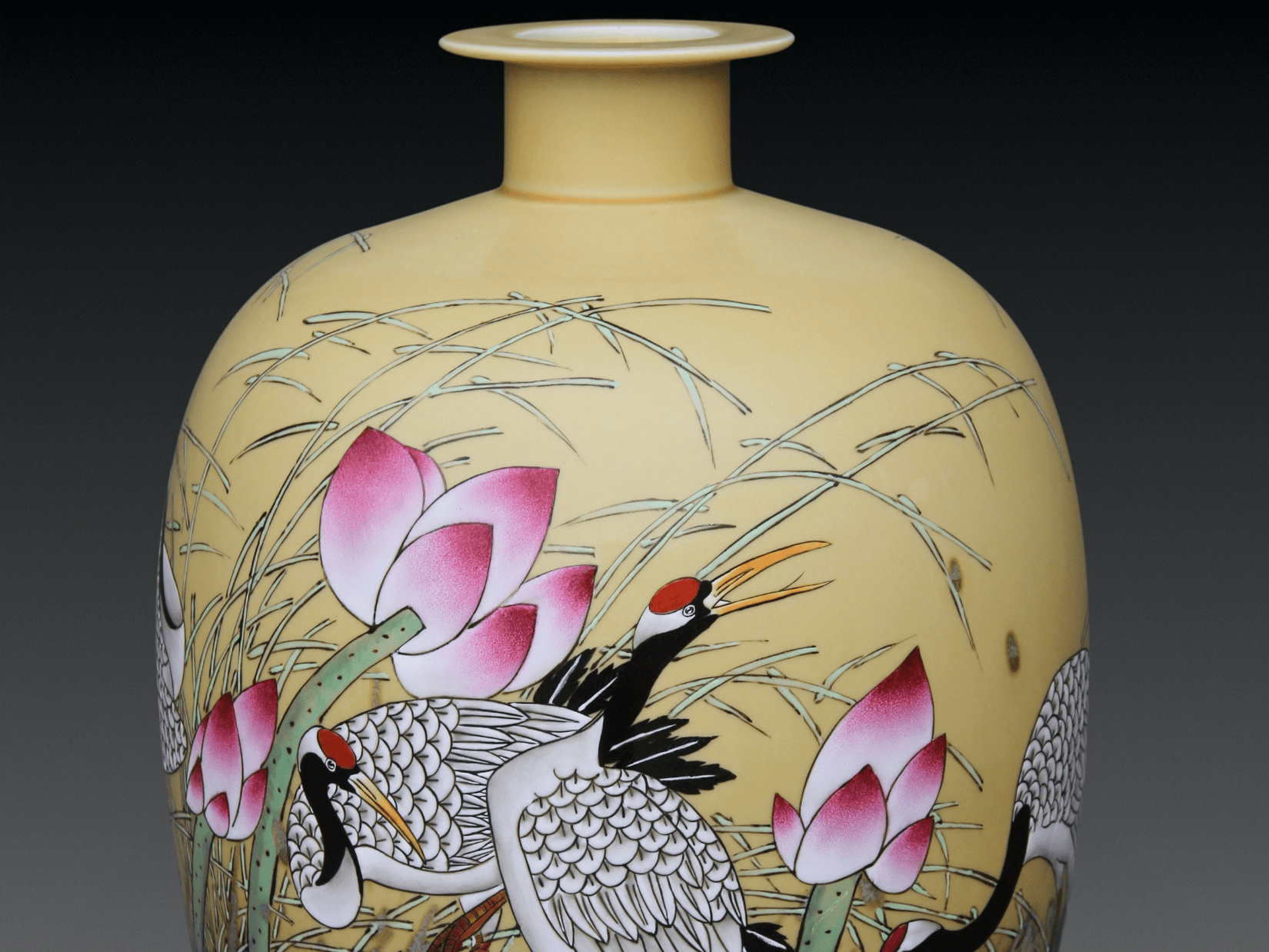
This artwork features a newly reinterpreted meiping form that moves away from the broad, heavy proportions of traditional plum vases. The Ceramic Vase has a slender profile with smooth, continuous lines, a small upright mouth with a gently rounded edge, and a short neck that transitions softly into the shoulders. Its carefully adjusted proportions preserve the refined character of the classical meiping while giving the vessel a lighter, more contemporary appearance.
The tall body of the Ceramic Vase narrows gradually toward the foot, creating an elegant vertical silhouette with a stable visual center. The shoulders retain a subtle fullness without appearing bulky, while the extended lower body emphasizes height and grace. This balance allows the Ceramic Vase to complement modern minimalist interiors while maintaining a recognizable connection to traditional Chinese porcelain forms.
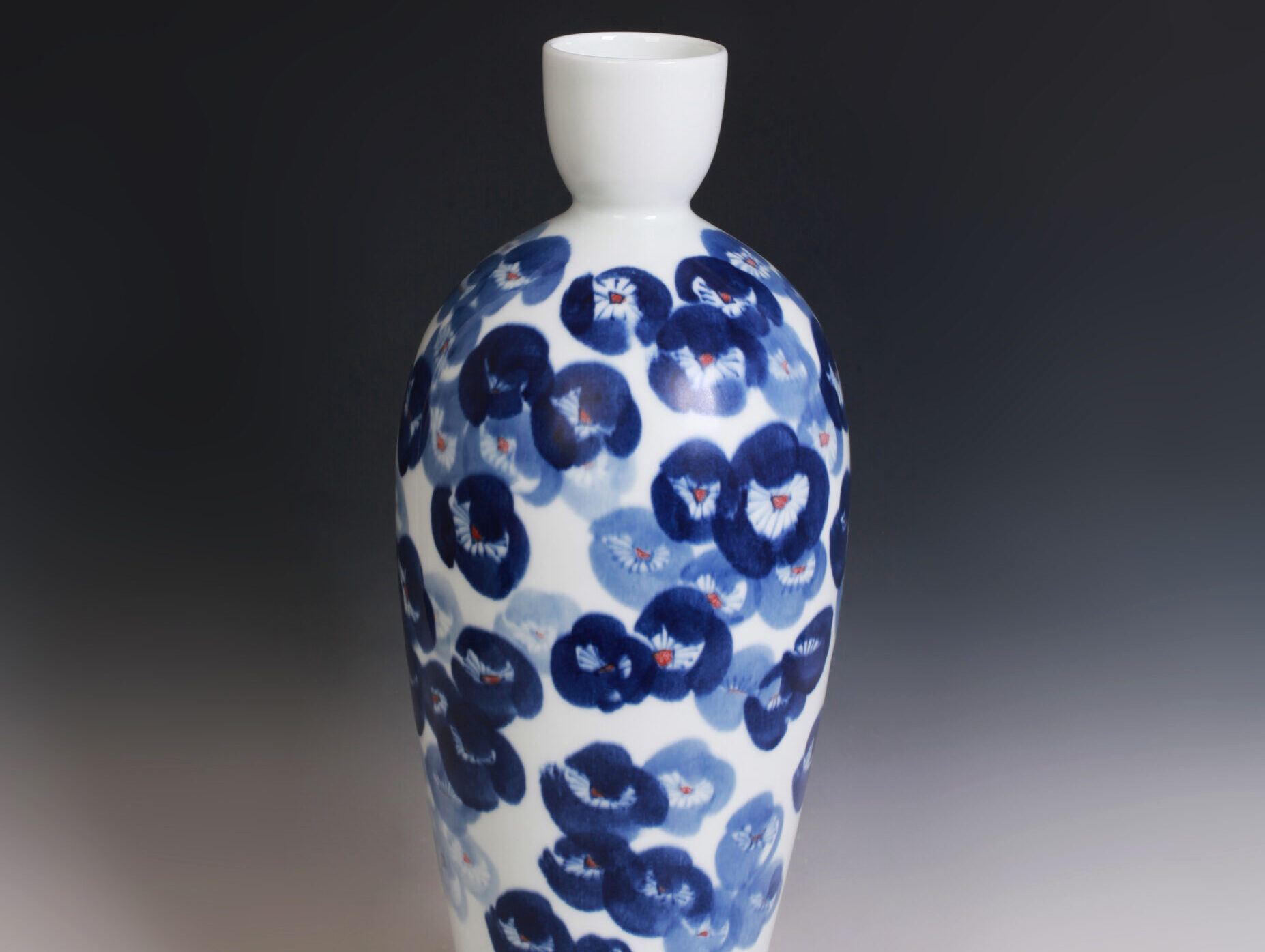
The uninterrupted curved surface leaves generous areas of exposed white porcelain, providing an ideal canvas for expressive floral painting. Instead of dividing the vessel into rigid decorative panels, the design allows the flowers to move freely across the form. As viewers walk around the Ceramic Vase, the composition unfolds gradually, revealing different relationships between painted blossoms, open space, and the vessel’s flowing contours.
Designed as a contemporary decorative porcelain artwork, the Ceramic Vase is suitable for living rooms, studies, tea rooms, reception areas, boutique hotels, exhibition halls, and gallery displays. It may be placed on a console table, pedestal, antique-style stand, or inside a tall display cabinet. The Ceramic Vase can serve as an individual focal point or be paired with coordinating porcelain pieces to create a balanced interior arrangement.
The painting centers on freehand clusters of poppies arranged in a flowing, top-to-bottom composition. Blossoms cascade naturally from the shoulder toward the base of the Ceramic Vase, alternating between concentrated groups and open areas. This variation in density creates an airy sense of movement, as though the flowers were drifting gently downward across the porcelain surface rather than remaining fixed within a formal pattern.
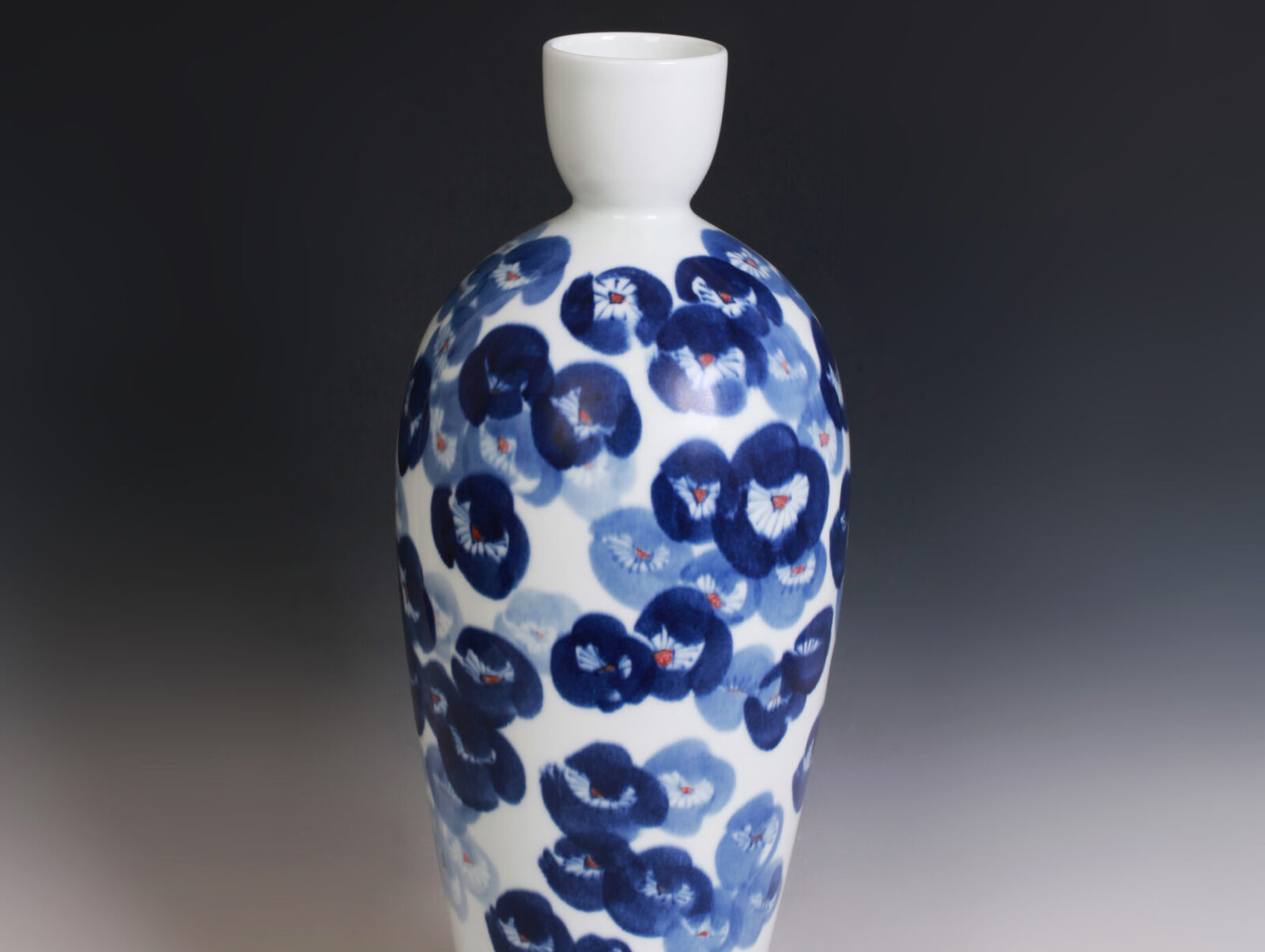
Within the composition, the blooming poppies express vitality, prosperity, and the continuous renewal of life. Their soft circular forms also introduce a graceful poetic quality associated with traditional East Asian flower painting. Complex foliage has been intentionally removed, allowing the flowers to become simplified visual symbols. This approach gives the Ceramic Vase a cleaner appearance and directs attention toward the rhythm, color, and movement of the blossoms.
Broad washes of diffused cobalt blue shape the petals, while small red dots mark the center of each flower. The limited use of red adds warmth and creates a clear focal detail without disrupting the restrained blue-and-white palette. Inspired by modern Chinese freehand ink painting, the Ceramic Vase treats porcelain as paper and mineral pigment as ink, using variations in blue concentration to reproduce the softness and spontaneity of ink spreading across an absorbent surface.
A handwritten artist’s signature near the base reinforces the connection between porcelain decoration and traditional literati painting. It also gives the Ceramic Vase a more personal, handcrafted identity. The signature remains visually discreet, allowing it to complete the composition without competing with the floral imagery. Subtle brush variations, overlapping blue washes, and softened petal edges preserve evidence of the artist’s individual creative process.
Large areas of unpainted white porcelain embody the East Asian appreciation of negative space. These open sections allow the floral clusters to breathe and prevent the surface from becoming visually crowded. The relationship between decorated and undecorated areas enhances the curved silhouette of the Ceramic Vase. The result is a calm, refined composition that works naturally with neo-Chinese, minimalist, contemporary, and modern luxury interiors.
Light also plays an important role in the visual experience of the Ceramic Vase. Highlights move gradually across the smooth glazed body, while the painted flowers change in intensity as they curve away from the viewer. From a distance, the vessel presents a clear and elegant profile. Viewed closely, it reveals delicate cobalt gradations, subtle brush marks, and small variations created during high-temperature firing.
Rooted in Jingdezhen’s thousand-year heritage of underglaze-blue porcelain painting, this Ceramic Vase simplifies the densely decorated compositions often found on traditional floral ware. Rather than reproducing historical patterns directly, it reinterprets floral themes through modern abstraction, expressive brushwork, and open composition. The revised meiping silhouette also responds to contemporary preferences for lighter proportions, softer curves, and visually uncluttered spaces.
Achieving the graduated cobalt-blue effects requires careful control of pigment concentration, brush moisture, glaze thickness, kiln temperature, and firing atmosphere. During high-temperature firing, the pigment develops naturally beneath the glaze, producing subtle tonal transitions and diffused edges. Because kiln conditions cannot be duplicated perfectly, every Ceramic Vase displays slightly different shades, petal contours, and ink-wash textures. These natural variations make each finished piece unique.
The restrained palette is dominated by blue, white, and minimal red accents. This avoids the excessive color and dense ornamentation sometimes associated with traditional polychrome porcelain. Instead, the Ceramic Vase achieves visual richness through proportion, negative space, tonal variation, and expressive brushwork. Its elegant simplicity allows it to complement a wide range of architectural materials, furniture finishes, and interior color schemes.
Combining traditional porcelain painting, freehand ink-wash aesthetics, contemporary ceramic design, and the refined proportions of the meiping, this Ceramic Vase offers value for interior display and handmade ceramic collection. It is suitable for residential, hospitality, gallery, and cultural spaces. The finished work represents a premium contemporary Jingdezhen porcelain piece that brings together craftsmanship, painting, cultural heritage, and lasting decorative appeal.