Blue-and-White Linglong vs Colorful Linglong Porcelain
News 2026-08-25 107
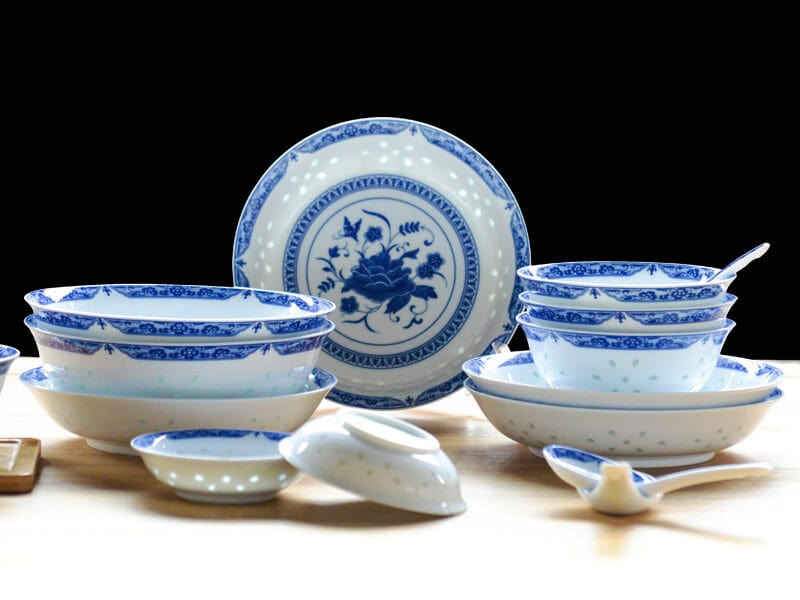
Linglong Porcelain is one of the most recognizable forms of traditional Jingdezhen ceramics. It is valued for its delicate translucent patterns, refined porcelain body, and the way light passes through selected areas of the surface. When placed near a window or under table lighting, the translucent sections create a jewel-like effect that distinguishes Linglong Porcelain from ordinary ceramic tableware.
For international buyers, the two main categories are blue-and-white Linglong and colorful Linglong Porcelain. Although they share similar production principles, they offer different visual styles, customization possibilities, and commercial applications. Understanding these differences can help importers, distributors, hotels, restaurants, and gift buyers select the most appropriate collection.
What Is Linglong Porcelain?
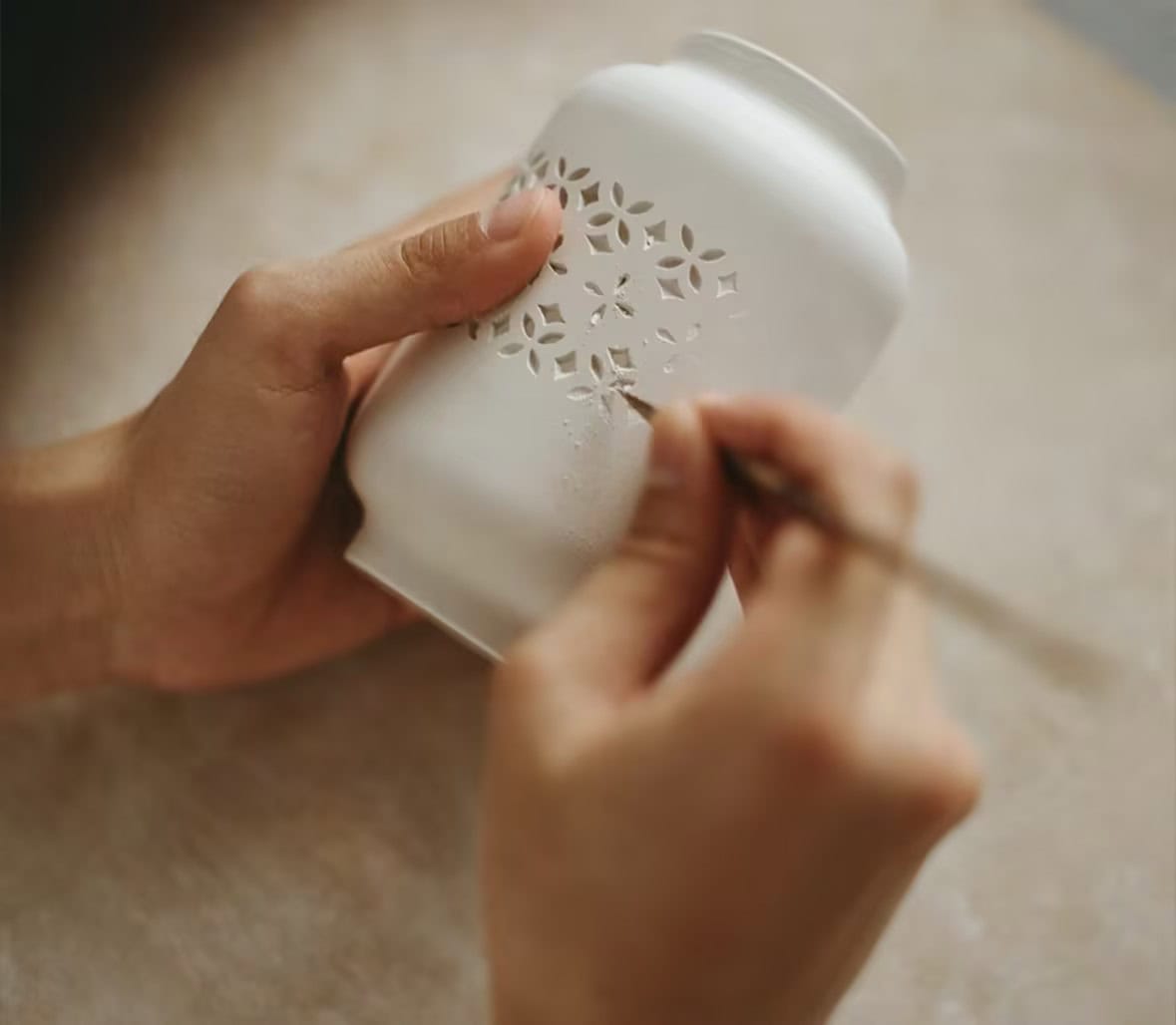
Linglong Porcelain is produced by creating small pierced or carved patterns in an unfired porcelain body. These openings are then filled or covered with translucent glaze before firing. After firing, the decorated sections transmit light while remaining sealed and suitable for normal use.
The finished surface may look like tiny grains of rice, flowers, geometric shapes, leaves, stars, or customized motifs. For this reason, Linglong Porcelain is sometimes called “rice-grain porcelain” in international markets, although modern patterns are no longer limited to traditional rice-shaped openings.
Producing Linglong Porcelain requires careful control of the porcelain body, carving depth, glaze fluidity, firing temperature, and deformation. If the openings are uneven or the glaze is improperly applied, the translucent areas may become blocked, cracked, or inconsistent. This technical difficulty is one reason Jingdezhen ceramics (景德镇陶瓷) remain strongly associated with high-quality Linglong production.
Blue-and-White Linglong Porcelain
Blue-and-white Linglong combines translucent carved patterns with traditional cobalt decoration. Blue motifs are painted or transferred onto the porcelain body before glazing and firing. The result is a classic blue-and-white appearance enhanced by light-transmitting details.
Common decorations include lotus flowers, scrolling vines, geometric borders, landscapes, traditional Chinese symbols, and simple blue lines around the rim. The contrast between cobalt blue, white porcelain, and translucent openings gives the tableware a clean and elegant appearance.
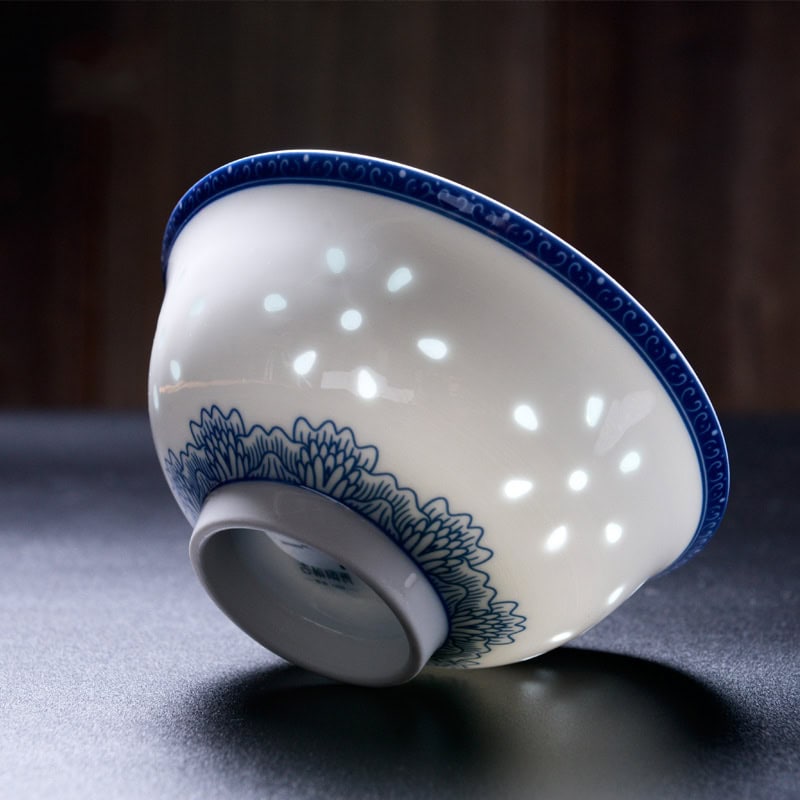
Blue-and-white Linglong Porcelain is especially suitable for:
- Chinese restaurants and Asian dining concepts
- Hotels seeking recognizable Chinese tableware
- Traditional tea and coffee sets
- Cultural gifts and souvenir collections
- Importers selling classic Jingdezhen porcelain
- Buyers who prefer timeless designs over seasonal colors
From a commercial perspective, blue-and-white Linglong is relatively easy to coordinate with different restaurant interiors. Its limited color palette also helps create a consistent table presentation across plates, bowls, cups, spoons, teapots, and serving pieces.
Buyers should still confirm the shade of cobalt, density of the pattern, placement of the translucent openings, and overall whiteness of the porcelain body. Different batches may show small variations because of firing temperature and raw-material conditions.
Colorful Linglong Porcelain
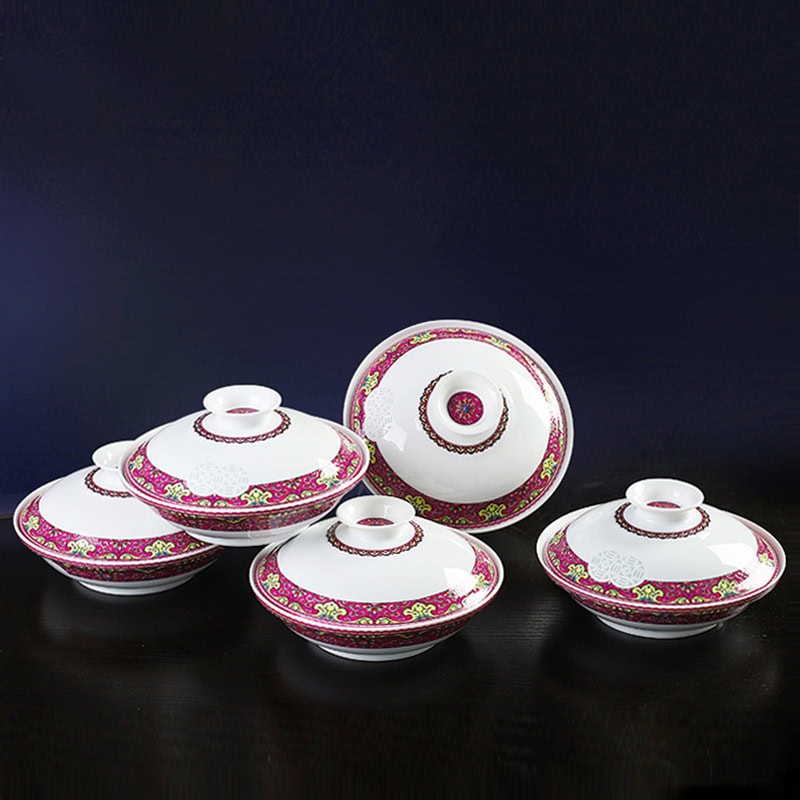
Colorful Linglong Porcelain introduces additional colors into the translucent or decorative areas. Depending on the design and production technique, the collection may include blue, green, yellow, pink, red, orange, or purple details. Some products use several colors within one piece, while others focus on a single colored Linglong pattern.
Compared with traditional blue-and-white Linglong, colorful Linglong Porcelain feels brighter and more contemporary. It is suitable for buyers who want tableware with stronger visual impact or collections designed around a particular brand identity.
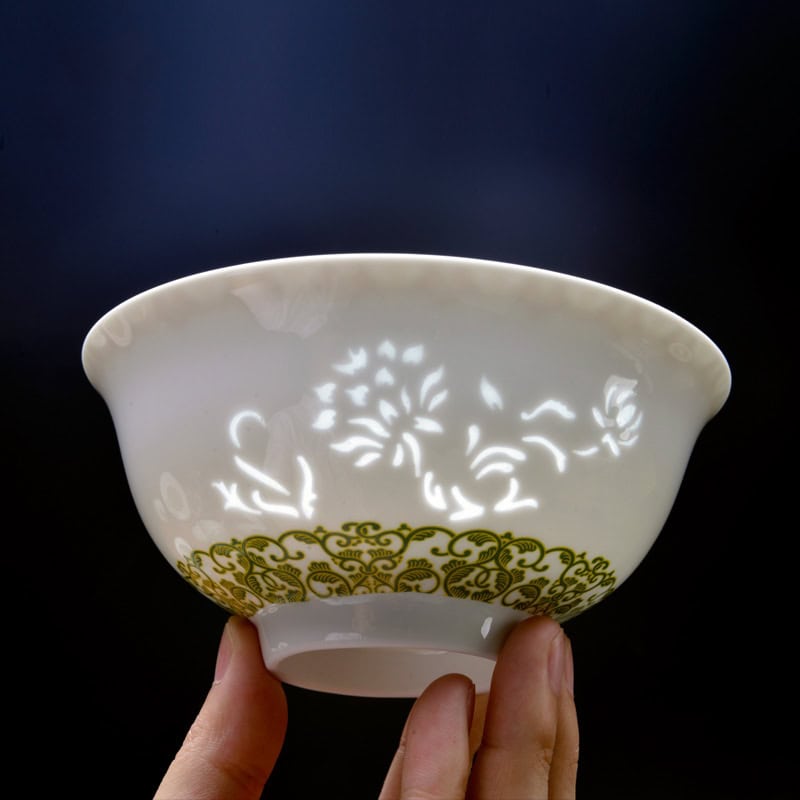
Colorful Linglong Porcelain is commonly selected for:
- Boutique hotels and themed restaurants
- Cafés, bakeries, and dessert shops
- Wedding and anniversary gifts
- Seasonal tableware collections
- Retail gift sets
- Customized hospitality projects
- Contemporary art porcelain
A buyer can select coordinated colors for an entire dinnerware set or use different colors to distinguish product sizes and functions. For example, dinner plates may use blue translucent patterns, dessert plates may use pink, and bowls may use green. This approach creates a collection that feels coordinated without making every item identical.
However, colorful designs require more careful sample approval. Buyers should inspect color accuracy under both natural and artificial light. They should also confirm whether the colors are underglaze, in-glaze, overglaze, or created through colored translucent glaze, because these techniques can produce different appearances and levels of durability.
Main Differences Between the Two Styles
The most obvious difference is color. Blue-and-white Linglong Porcelain presents a restrained and traditional appearance, while colorful Linglong Porcelain offers more decorative flexibility.
Blue-and-white collections are often easier to match with existing hotel and restaurant tableware. They communicate a clear connection to Chinese ceramic culture and remain visually relevant over long periods. Colorful collections are more expressive and can be developed around a hotel, restaurant, retail brand, festival, or special event.
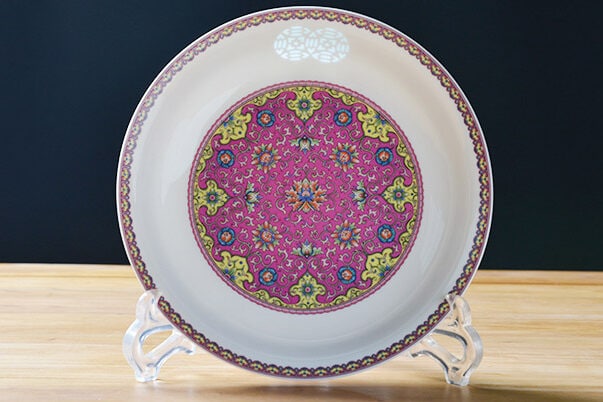
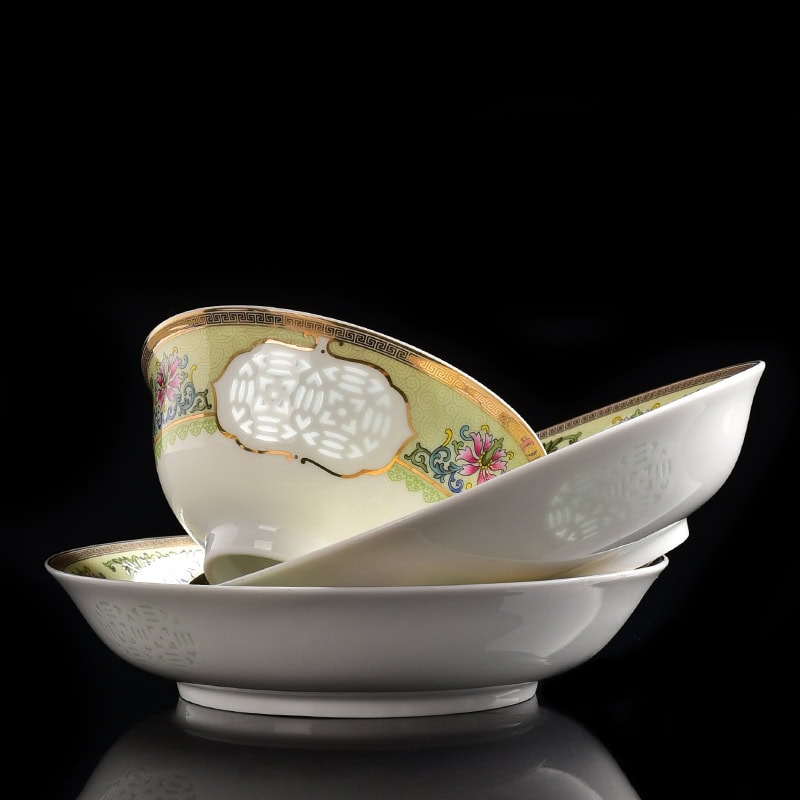
Another difference is the sample confirmation process. A blue-and-white design normally requires confirmation of the cobalt tone, pattern position, line quality, and translucent effect. A colorful collection requires these checks as well as approval of each additional color.
For large orders, buyers should not approve colors only through computer screens. Digital displays can change the appearance of blue, green, pink, and other tones. A physical sample or approved color reference is more reliable.
Which Linglong Porcelain Is Better for Commercial Tableware?
There is no single option that is best for every project. Buyers should choose according to the intended market, interior style, menu, brand positioning, and expected order quantity.
Blue-and-white Linglong is often the safer choice for traditional restaurants, cultural gift shops, Chinese dining projects, and buyers introducing Linglong Porcelain to a new market. Its classic appearance is easy to understand and has broad decorative compatibility.
Colorful Linglong Porcelain may be more suitable for lifestyle retailers, boutique hospitality projects, cafés, younger consumer markets, and customized gift programs. It provides more opportunities for brand colors and seasonal product development.
Commercial buyers should also consider practicality. Plates and bowls must have stable bases, consistent dimensions, smooth rims, and sufficient strength for repeated use. The translucent areas should be evenly filled without open holes, sharp edges, obvious cracks, or excessive glaze accumulation.
What Should Buyers Confirm Before Ordering?
Before placing a bulk order with a Jingdezhen porcelain manufacturer , buyers should provide clear purchasing requirements. Important information includes:
- Product type and quantity
- Required plate, bowl, cup, and serving-piece sizes
- Preferred blue-and-white or colorful design
- Logo and customized pattern files
- Food-contact requirements for the destination market
- Dishwasher and microwave requirements
- Packaging method
- Target delivery date
- Shipping destination
- Acceptable color and size tolerances
Buyers should request samples before mass production, particularly for customized designs. The approved sample should become the reference standard for body shape, color, translucency, logo position, pattern size, glaze quality, and packaging.
Because ceramics are fired products, small variations between batches may occur. A professional supplier should explain acceptable tolerances before production and establish inspection standards for cracks, deformation, pinholes, glaze defects, color differences, and unstable bases.
From Tableware to Art Porcelain and Ceramic Installations
Although Linglong Porcelain is frequently used for tableware, its translucent technique also offers possibilities beyond plates, bowls, and cups. Designers can apply Linglong patterns to lamps, decorative vessels, wall features, screens, and art porcelain (艺术瓷).
When combined with internal or architectural lighting, enlarged Linglong elements can become part of ceramic installations . The light passing through the porcelain creates patterns on surrounding walls and surfaces, allowing the material to function as both ceramic art and spatial decoration.
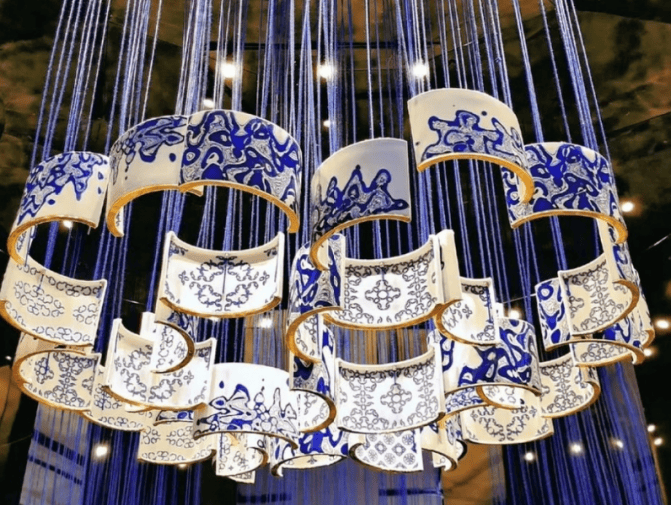
This connection between traditional craftsmanship and contemporary design gives Linglong Porcelain broader value for hotels, galleries, restaurants, cultural venues, and commercial interiors.
Conclusion
Blue-and-white Linglong and colorful Linglong Porcelain share the same distinctive relationship between porcelain, pattern, glaze, and light. Blue-and-white designs offer a classic and restrained expression of Jingdezhen ceramics, while colorful designs provide greater flexibility for modern hospitality, retail, gift, and branding projects.
The right choice depends on the buyer’s market, visual identity, intended use, durability requirements, and customization plan. Regardless of style, buyers should carefully confirm physical samples, translucent pattern quality, glaze condition, color standards, dimensions, packaging, and production tolerances before bulk ordering.
Based in Jingdezhen, Magic Cube works with traditional ceramic craftsmanship and contemporary production resources to develop Linglong Porcelain, customized tableware, art porcelain, and ceramic installations for international buyers. By combining the technical heritage of Jingdezhen with practical project support, Magic Cube aims to help importers, distributors, hotels, restaurants, and designers select Linglong products suited to their markets and commercial applications.