Producing “Beast of Burden”: Behind a Monumental Ceramic Art Installation in Jingdezhen
News 2026-11-23 35
Jingdezhen, China — November 23, 2026
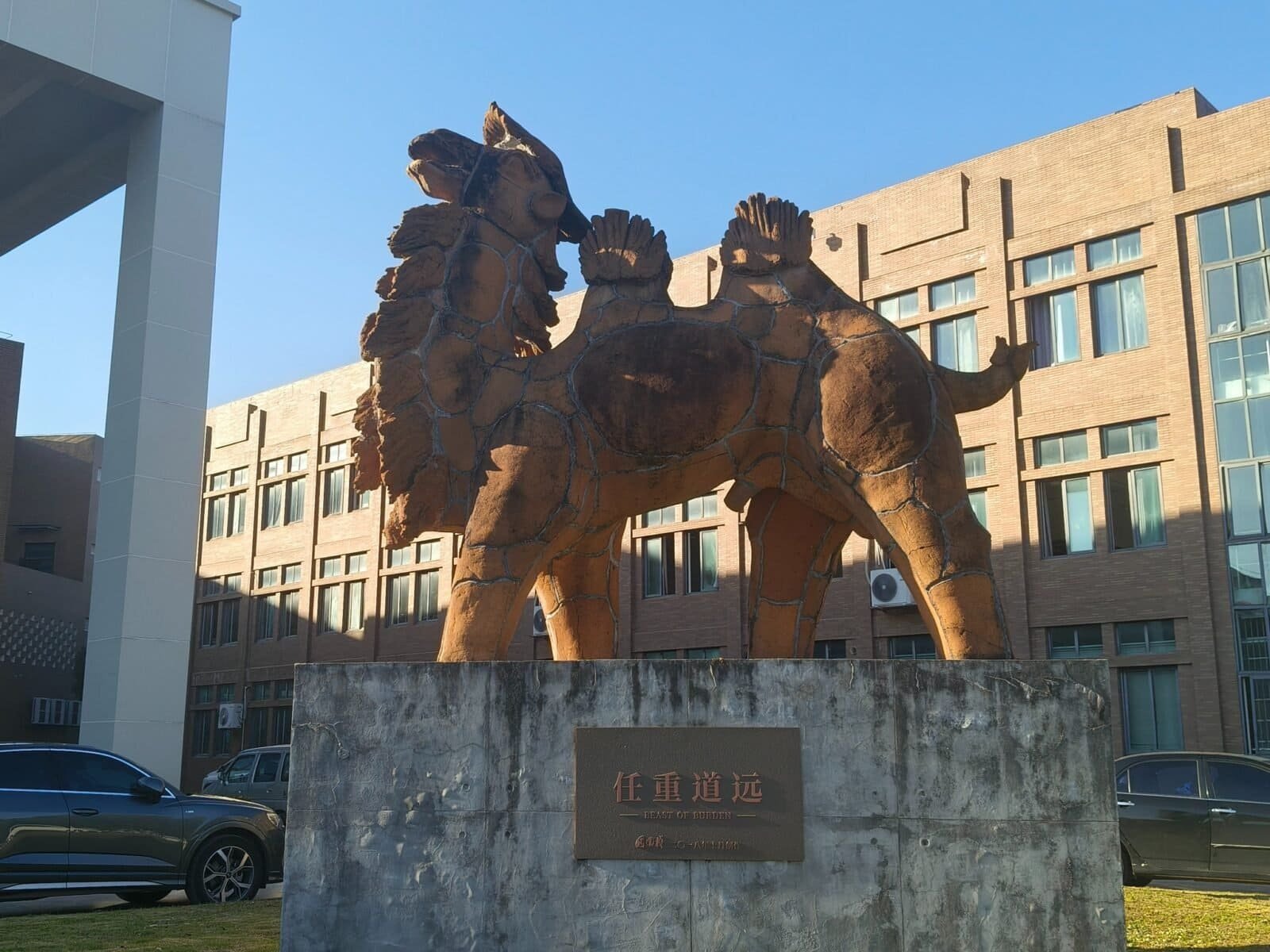
A ceramic camel standing nearly two meters high is difficult to ignore. It does not sit politely on a shelf, fit inside a gift box, or wait patiently beside a teacup. Beast of Burden, known in Chinese as 《任重道远》, is a monumental Ceramic Art Installation that turns ceramic material into an architectural-scale presence.
The artistic authorship of Beast of Burden belongs to renowned ceramic artist Zhou Guozhen. The production work discussed here is a different part of the story: translating an established artistic vision into a large, stable and buildable ceramic structure. MC Ceramic participated in the production and realization of the work rather than its original design.
That distinction matters. An artist creates the visual language and artistic concept; the production team determines how that vision can survive forming, firing, assembly and long-term display. In other words, one side asks, “What should the camel express?” The other asks, “How do we stop a nearly two-meter ceramic camel from developing stage fright?”
A Ceramic Art Installation at Monumental Scale
According to the project specifications, Beast of Burden measures 1,890 mm in height and 2,450 mm in length, with a compatible base depth of 1,300 mm. These figures place it far beyond the scale of ordinary decorative ceramics.
The sculpture represents a Bactrian camel with two humps, an upright neck and a strongly modeled silhouette. Its surface retains the coarse, earthy character of clay rather than attempting to look perfectly smooth or mechanically polished. That choice gives the sculpture its visual weight: it looks as if it has travelled a very long road—and has several opinions about the journey.
For MC Ceramic, producing a Ceramic Art Installation of this scale required more than enlarging a smaller ceramic object. Ceramic materials shrink, deform and respond to heat during firing. A shape that behaves nicely at 30 centimetres may become far less cooperative at 2 metres. Large-scale ceramic production is therefore a conversation between artistic intention, material behaviour and structural engineering. Occasionally, the clay gets the loudest voice.
From Artistic Vision to Ceramic Production
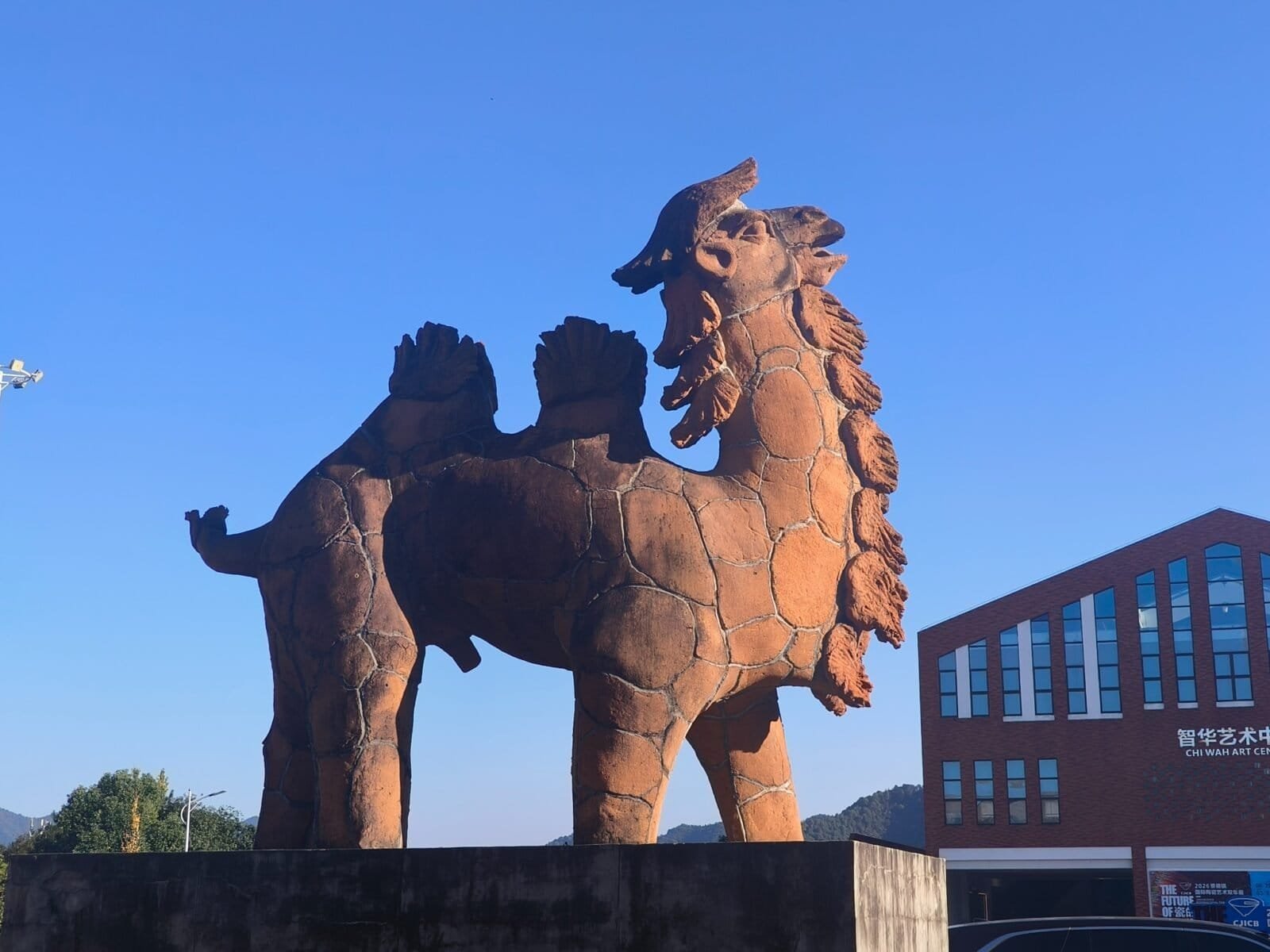
The production process for Beast of Burden began with preliminary clay modeling based on the artist’s work. The large form was then divided so that ceramic components could be formed and fired separately. The outer shell was made from coarse, high-temperature ceramic slabs, assembled by hand to preserve the work’s rugged surface language.
This segmented approach is essential in a monumental Ceramic Art Installation. A complete camel of this size cannot simply be placed into an ordinary kiln with a hopeful smile. The form must be divided into manageable ceramic sections while preserving the proportions, movement and expression of the original artwork.
After forming, the ceramic sections were fired at high temperature. Firing is one of the most demanding stages because every section must remain compatible with the overall structure. Differences in shrinkage or deformation can affect how neighbouring pieces meet during assembly.
The visible joints are therefore not accidental cracks. They reveal the sectional construction of the sculpture and become part of its surface character. Antique-style grout finishing was used between the ceramic sections, visually unifying the individual pieces while allowing the work to retain its hand-built appearance.
Ceramic Outside, Engineering Inside
Although visitors mainly see ceramic, the internal structure is equally important. Beast of Burden uses a reinforced, rust-resistant steel-bar framework to support the ceramic shell. The ceramic components provide the visible artistic surface, while the internal framework carries structural loads and stabilizes the large form.
The base was made from monolithically cast, high-strength reinforced concrete and includes a matching metal nameplate. Together, the ceramic shell, steel framework and concrete base transform the work from a large sculpture into a permanent Ceramic Art Installation suitable for an outdoor architectural environment.
This combination also illustrates an important lesson for international art projects: “ceramic installation” rarely means ceramic alone. Successful production may involve ceramic technicians, structural specialists, metal fabrication, foundation work, segmented installation and careful on-site coordination. Ceramics may be the star of the show, but steel and concrete are the crew members quietly preventing the star from falling off the stage.
Why Jingdezhen Matters
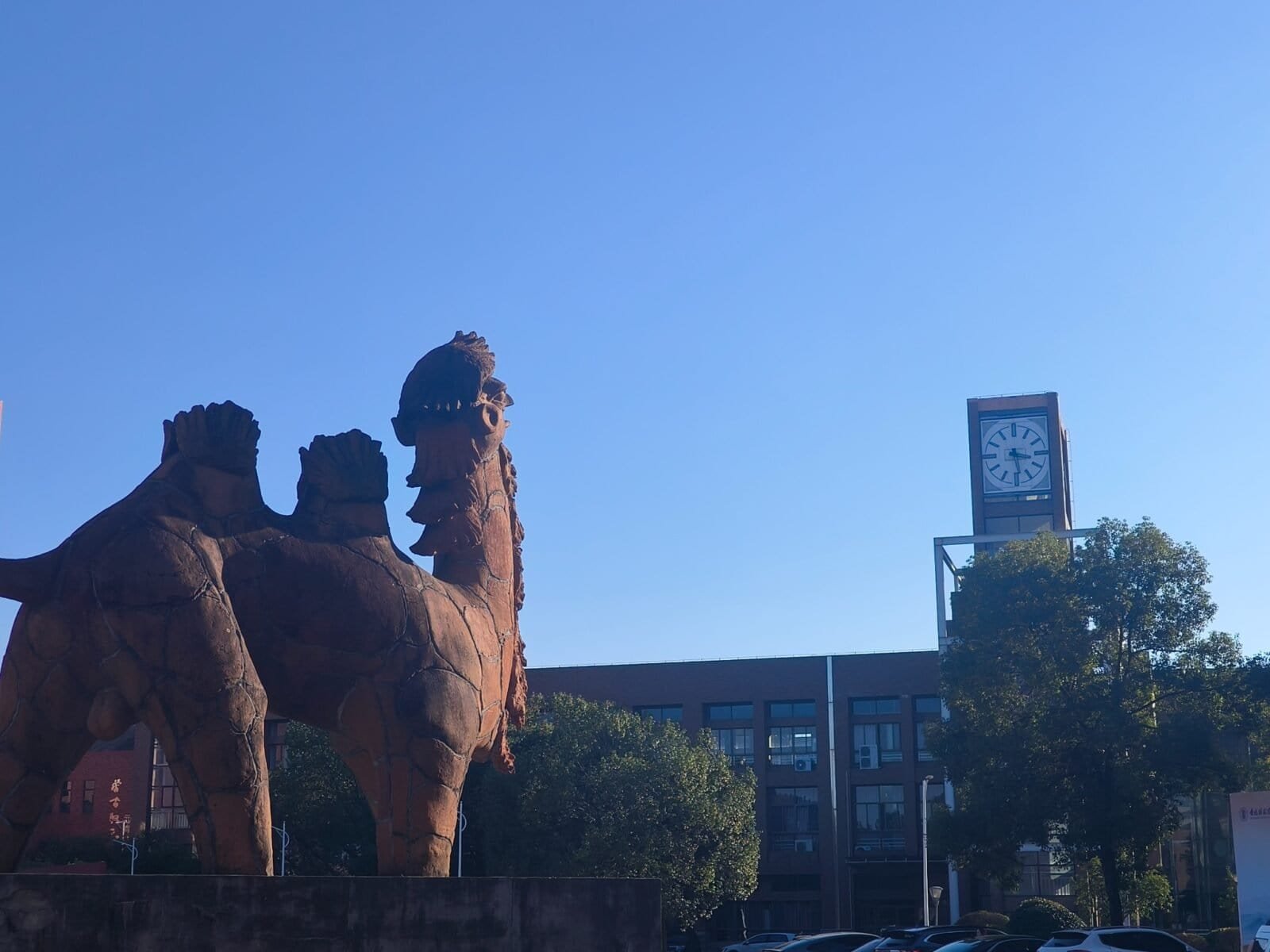
Jingdezhen is widely known for porcelain, but projects such as Beast of Burden show that the city’s ceramic capabilities extend well beyond bowls, cups and vases. Its production network also supports architectural ceramics, ceramic murals, public sculptures and customized art installations.
A project of this scale depends on understanding both the expressive qualities and the practical limitations of ceramic materials. The rough clay texture, segmented surface and visible assembly rhythm are not weaknesses disguised as decoration. They are part of the way the work was produced and part of the visual identity of Beast of Burden.
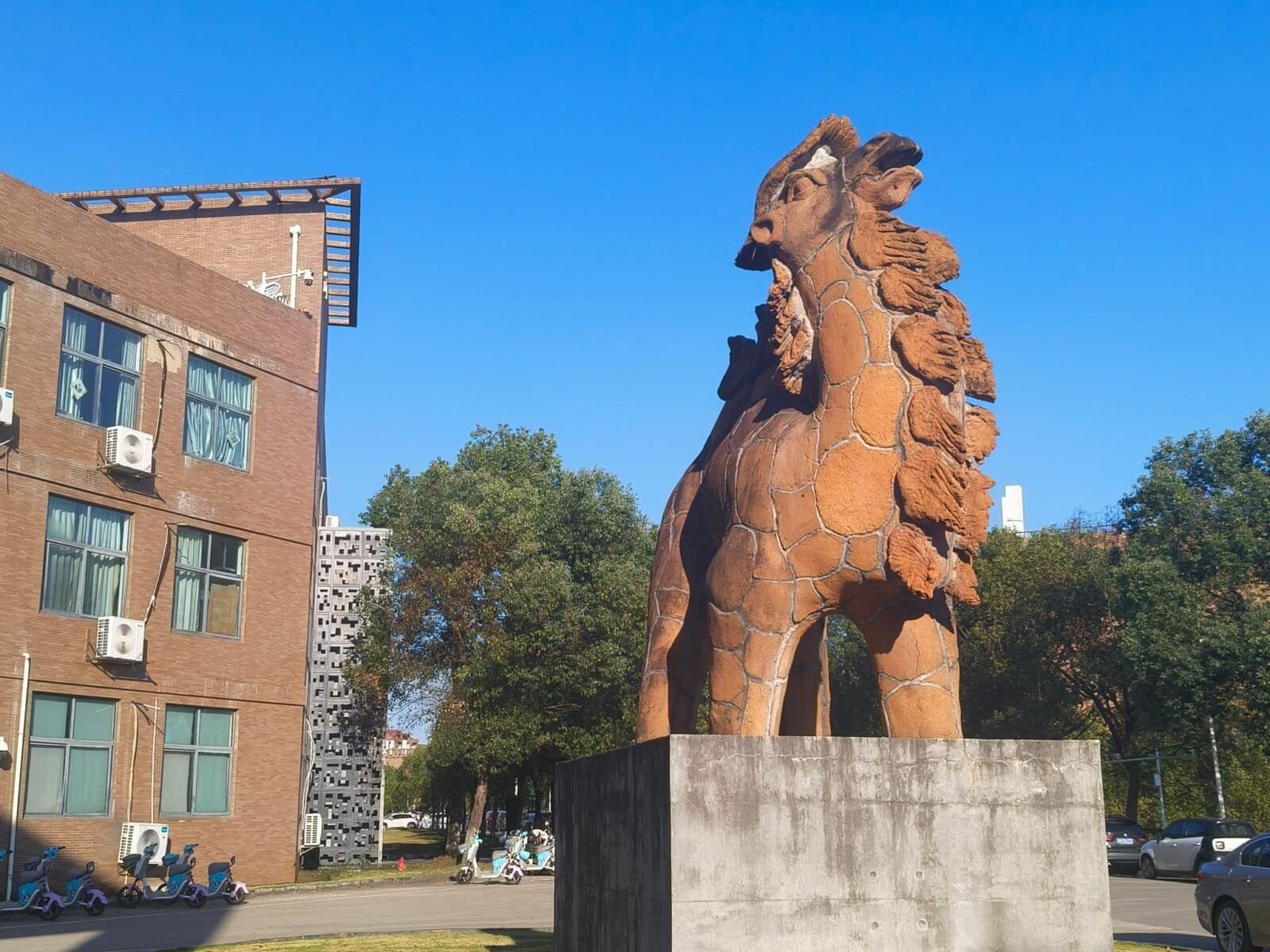
The result is a work that feels appropriately heavy, weathered and determined. The Chinese title 《任重道远》 literally suggests carrying a heavy responsibility over a long journey. That meaning fits the camel, the material and—quite conveniently—the production process.
What Beast of Burden Demonstrates
For architects, artists, universities and project buyers considering a custom Ceramic Art Installation, Beast of Burden demonstrates several practical points:
- Monumental ceramic forms normally require sectional production and assembly.
- The ceramic surface and internal load-bearing structure must be planned together.
- High-temperature ceramic slabs can retain a handmade, expressive texture.
- Steel reinforcement and a suitable concrete base are essential parts of outdoor installation.
- Production must respect the artist’s authorship while translating the design into a buildable structure.
Most importantly, the project demonstrates that ceramic production is not limited to repeating standardized objects. With appropriate forming, firing, structural support and installation planning, ceramic can become part of architecture and public space.
Conclusion
Beast of Burden is both a ceramic sculpture and a production case study. Its artistic concept and design belong to Zhou Guozhen, while its monumental realization required ceramic fabrication, structural coordination, segmented assembly and site installation.
Based in Jingdezhen, Jiangxi Mofang Culture Development Co., Ltd., through its brand MC Ceramic, supports the production and coordination of customized ceramic projects, including large ceramic sculptures, ceramic murals and other forms of Ceramic Art Installation.
MC Ceramic does not claim authorship of Beast of Burden. Our role was production: helping transform an artist’s vision into a physical ceramic installation capable of standing at monumental scale. After all, carrying a heavy responsibility over a long road is not only the title of the artwork—it is also a fairly accurate description of large-scale ceramic production.