Why Are Some Ceramic Cups Difficult to Hold?
News 2026-09-15 44
A ceramic cup may look beautiful but still feel uncomfortable in the hand. Some handles are too small, while others are thin, slippery, poorly positioned, or unable to balance the weight of a full cup. For hotels, restaurants, cafés, wholesalers, and tableware brands, these problems can affect customer experience, serving efficiency, and product durability.
A good ceramic cup handle should provide enough finger space, protect the hand from heat, and help the user lift the cup securely. Its design must be coordinated with the cup’s capacity, weight, shape, and intended use.
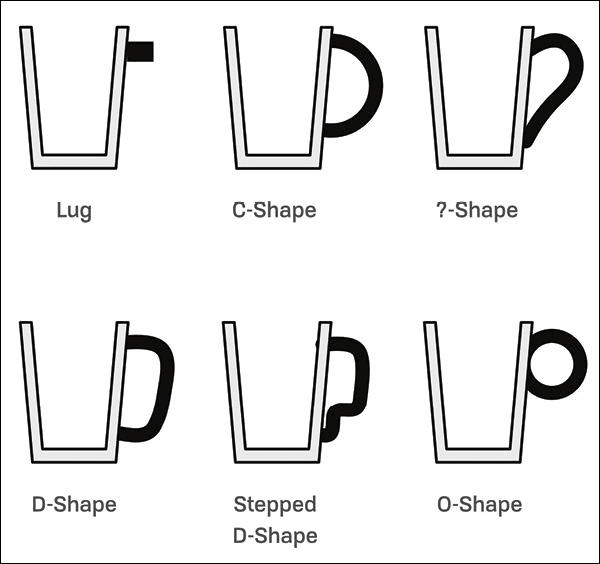
Why Is the Handle Opening Important?
One of the most common problems is an opening that is too small. A small espresso cup may only need a one-finger handle, but a larger coffee mug or breakfast cup usually requires more support.
If users can only hold the cup with their fingertips, the weight becomes concentrated in a small area. This makes the cup feel heavier and less stable. The fingers may also touch the hot ceramic body.
Hand sizes vary between users, so buyers should not judge a handle only from photographs or technical drawings. Before confirming a large order, it is better to test physical samples with several people.
Handle Thickness and Comfort
A thin handle can make a ceramic cup look delicate and elegant, but it may press uncomfortably against the fingers when the cup is full. Sharp inner edges and rough surfaces can create the same problem.
A practical handle should have smooth curves and rounded contact areas. The manufacturer must also consider how the handle changes during drying and firing. Ceramic materials shrink, and the final opening may be smaller than it appeared before firing.
Experienced Jingdezhen ceramic manufacturers evaluate handle thickness, firing shrinkage, glaze coverage, and finger comfort during sample development. These details are important for both daily-use tableware and decorative art porcelain.
Balance Between the Cup and Handle
The handle’s position affects the cup’s center of gravity. If it is attached too high, too low, or too far from the body, the cup may tilt when lifted.
An empty cup may appear comfortable, but its balance changes after it is filled with coffee or tea. A large-capacity mug therefore requires a stronger and better-positioned handle than a small tea cup.
The cup should always be tested at its normal serving capacity. If users must squeeze the handle tightly to keep the cup level, the design probably needs improvement.
Cup Weight and Heat Protection
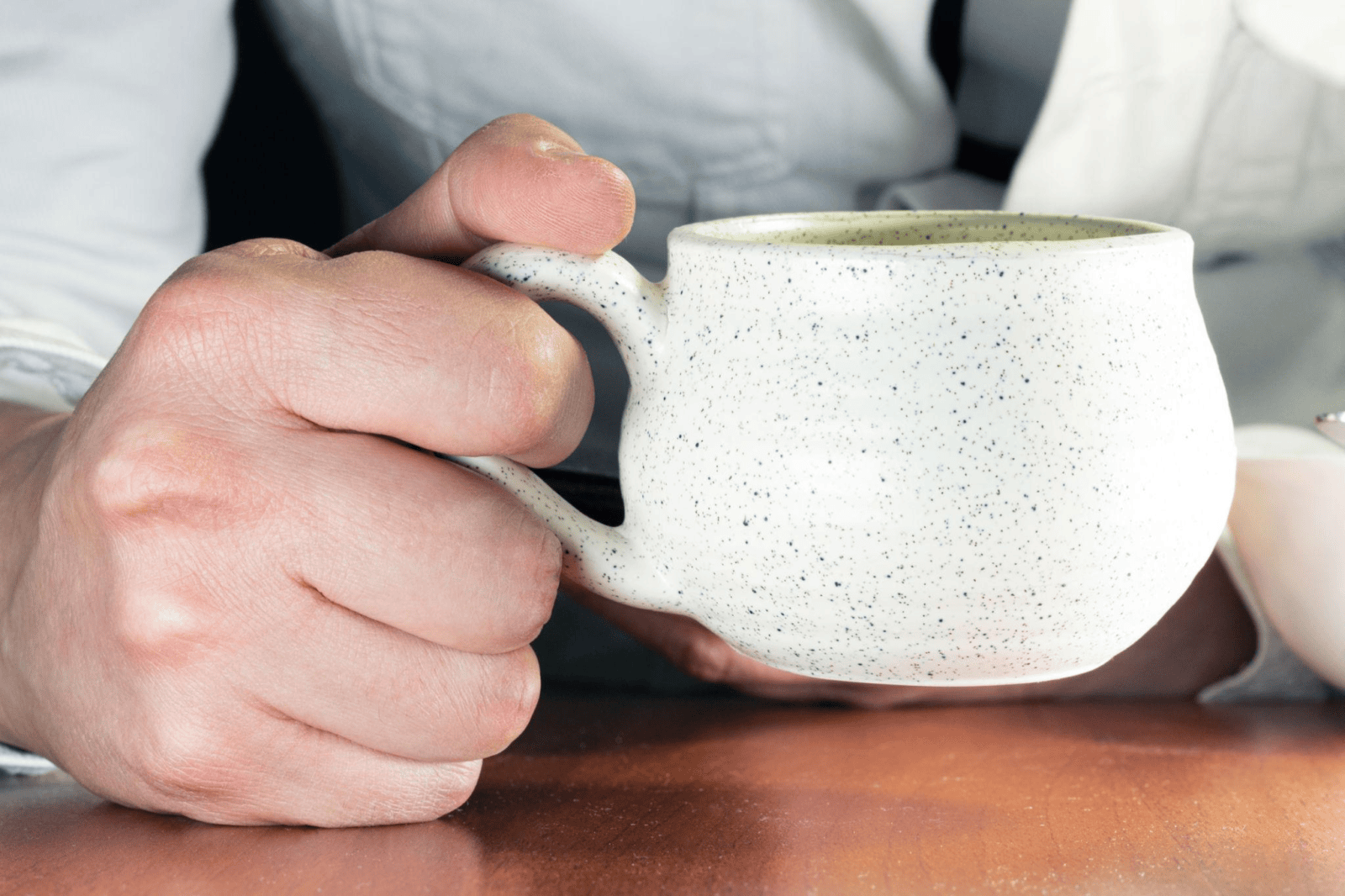
A thick ceramic body may feel strong and retain heat well, but excessive weight makes the cup harder to carry. This is especially important in hotels and restaurants, where employees handle many cups every day.
However, making the cup extremely thin is not always the solution. The body still needs enough strength for transportation, washing, stacking, and repeated commercial use. Good design balances weight, durability, capacity, and comfort.
Jingdezhen ceramics include delicate porcelain cups, durable hospitality tableware, and artistic handmade pieces. The appropriate body thickness and handle structure should be selected according to the product’s actual purpose.
The distance between the handle and the cup body also matters. If the handle is too close, the user’s fingers may touch the hot surface. If it projects too far, it requires more storage space and becomes more vulnerable to impact.
Decorative Handles Versus Practical Handles
Animal shapes, branches, geometric loops, and sculptural handles can give a ceramic cup a distinctive appearance. These features are suitable for gift collections and art porcelain, but they may not be ideal for high-frequency restaurant service.
Raised decorations can press against the fingers, while deep grooves may collect residue and become difficult to clean. Complex handles are also more likely to break during transportation or daily use.
The intended application should therefore be decided before the handle is designed. A collectible cup can prioritize artistic expression, while a hotel or café cup should emphasize comfort, strength, cleaning efficiency, and storage.
Handle Strength and Quality Inspection
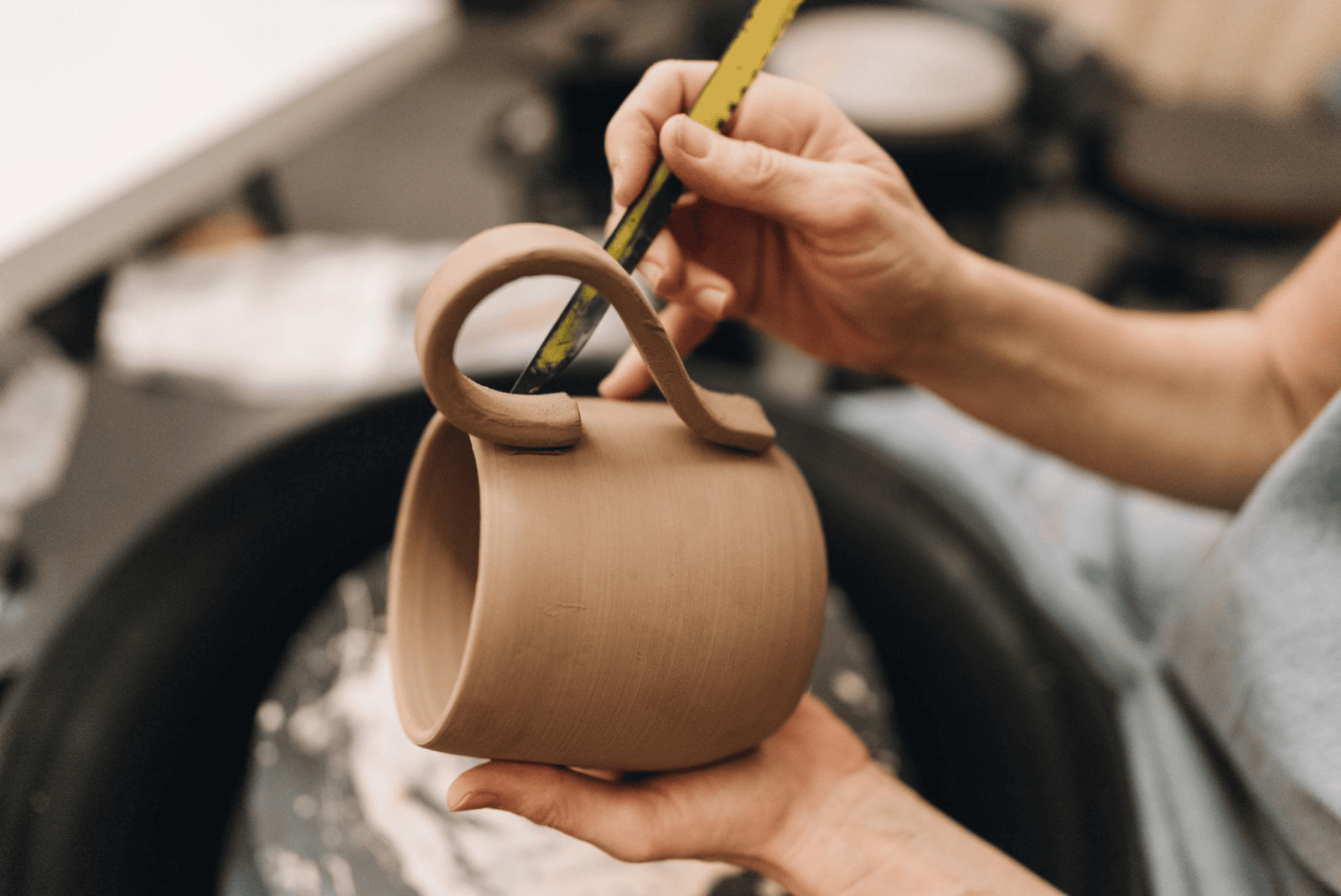
Ceramic handles are commonly formed separately and attached to the cup body before firing. Weak attachment points may develop cracks during drying, firing, transportation, or use.
A reliable Jingdezhen ceramic manufacturer should inspect handle alignment, joint strength, deformation, glaze coverage, and visible cracks. Hospitality buyers can also request random handle-strength tests during quality control.
Before approving a cup, buyers should fill it with water, hold it for at least 20 seconds, test it with different hand sizes, and check whether the fingers touch the body. It is also helpful to test the cup with wet hands and confirm that it fits storage racks and dishwasher baskets.
Conclusion: Better Handles Create Better Ceramic Cups
Ceramic cups are often difficult to hold because their handles are too small, thin, sharp, slippery, poorly positioned, or unsuitable for the cup’s weight. Decorative details and weak attachment points can create additional problems.
Good handle design must combine appearance, comfort, balance, heat protection, durability, and manufacturing feasibility. Working with experienced Jingdezhen ceramic manufacturers and testing physical samples can help buyers identify problems before mass production.
Based in Jingdezhen, China, Magic Cube supports the development of customized ceramic cups, hospitality tableware, branded collections, and art porcelain. Through design refinement, sampling, production follow-up, and quality inspection, we help international buyers create ceramic cups that are attractive, comfortable, and practical for everyday use.