Ceramic Tableware Packaging: How to Protect Products During Export Shipping
News 2026-08-27 71
Ceramic tableware is fragile, heavy, and frequently transported over long distances. During international shipping, cartons may be stacked, moved by forklifts, exposed to vibration, transferred between warehouses, and inspected by customs. For this reason, professional ceramic tableware packaging must do more than make a product look attractive. It must protect plates, bowls, cups, saucers, serving dishes, and other items throughout storage, loading, transportation, and final delivery.
An appropriate packaging solution depends on the product shape, order quantity, shipping method, destination, and buyer’s sales channel. Packaging designed for a retail gift set may be very different from packaging used for a hotel, restaurant, or wholesale order.
For international buyers of Jingdezhen ceramic tableware, understanding the main packaging options can help reduce damage, control costs, and select a solution suitable for the final market.
Why Is Ceramic Tableware Packaging Important?
Ceramic products can withstand normal dining use, but they are vulnerable to concentrated impact. A plate may be strong across its center while remaining more fragile around the rim. Cup handles, bowl edges, spouts, lids, and raised decorative details may also break when they strike another hard surface.
Damage does not always result from a carton being dropped. Continuous vibration can gradually cause ceramic pieces to move, rub, or collide during transportation. Excessive stacking pressure may deform a carton and transfer force to the products inside.
A successful ceramic tableware packaging system should perform several functions:
- Prevent direct contact between ceramic surfaces
- Protect rims, handles, lids, and projecting parts
- Restrict movement inside the carton
- Distribute external pressure
- Make cartons easier to stack and handle
- Protect decorated surfaces from scratches
- Reduce the effects of vibration and impact
- Allow products to be counted and inspected efficiently
Packaging cannot guarantee that breakage will never occur, but a well-designed system can significantly reduce avoidable risk.
Individual Protection for Plates and Bowls
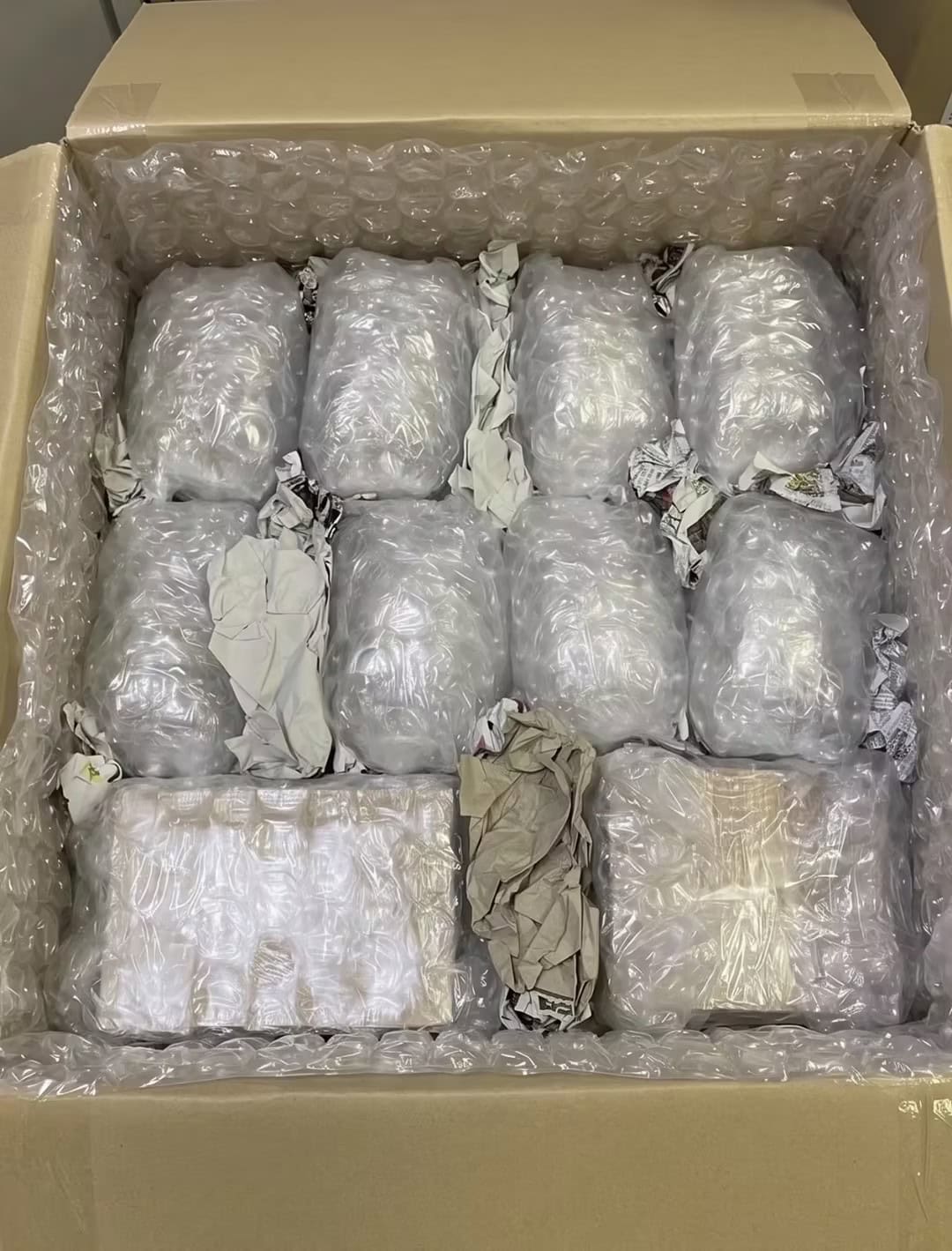
Plates and bowls are often stacked because this method uses space efficiently. However, each item needs a protective layer to prevent direct ceramic-to-ceramic contact.
Paper sheets, foam sheets, bubble material, EPE foam, or molded separators can be placed between individual pieces. Additional padding may be added around the top, bottom, and sides of each stack.
The stack should fit securely without being forced into the package. If it is too loose, the products may move during transportation. If the packaging is too tight, outside pressure can be transferred directly to the rims.
Deep bowls, irregular plates, and relief-decorated tableware may require shaped foam inserts rather than simple flat separators. A Jingdezhen ceramic manufacturer should evaluate the actual product dimensions and structure before confirming the final ceramic tableware packaging design.
Protecting Cups, Handles, Lids and Spouts
Cups, mugs, teapots, coffee pots, and lidded bowls require special attention because they contain projecting or separately fitted components.
Cup handles should not carry the weight of another product. Each cup can be placed in an individual compartment so that the body and handle do not touch nearby pieces. Teapot lids should be secured or packed separately, depending on the product design. Spouts may require additional foam protection to prevent impact.

When several cups are packed in one carton, cardboard dividers or molded foam inserts can keep them in fixed positions. The divider strength should match the weight of the products. Thin cardboard compartments may be suitable for lightweight cups but may not provide sufficient support for heavier ceramic items.
Hand-painted Jingdezhen ceramic tableware and art porcelain may also require a soft, non-abrasive surface layer to avoid scratching delicate decoration, gilding, decals, or polished glaze.
Inner Boxes and Export Cartons
Ceramic tableware packaging usually includes several protective levels. Individual products or sets may first be placed into inner boxes. These boxes are then arranged inside a larger export carton.
Inner boxes make products easier to organize, count, distribute, and sell. They can also separate different components of a dinnerware set. For example, one inner box may contain dinner plates, another may contain bowls, and another may contain cups and saucers.
The outer carton provides the main structural protection during storage and shipping. Depending on the product weight and transportation conditions, suppliers may use reinforced corrugated cartons or double-wall export cartons.
The carton should not contain large uncontrolled empty spaces. Gaps can be filled with suitable cushioning materials, but loose filling should not replace proper structural support. The carton should retain its shape when stacked and should be manageable for warehouse and delivery workers.
Overloading a carton can increase the risk of dropping, crushing, and worker injury. The supplier should therefore consider the gross weight of each carton, not only the number of products it can hold.
Foam Packaging and Molded Inserts
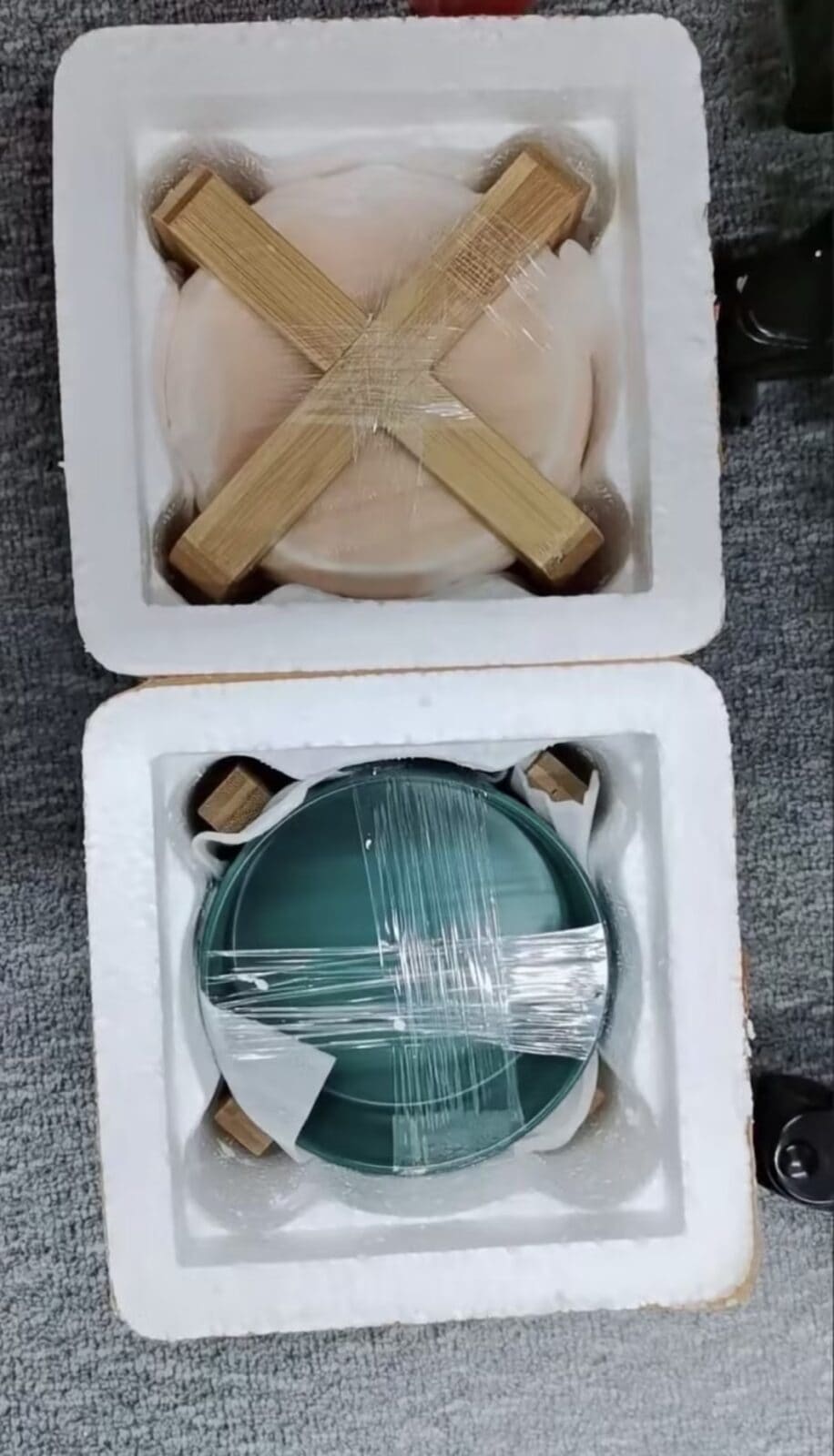
Foam is commonly used in ceramic tableware packaging because it can absorb impact and limit product movement. Common solutions include foam sheets, EPE foam, foam corner protectors, and customized molded inserts.
Customized inserts are particularly helpful for products with unusual shapes. The insert can be designed to follow the contours of a cup, teapot, serving plate, or decorative piece. This prevents the product from shifting inside the box.
However, customized foam normally requires additional design, tooling, or production costs. It may be more suitable for high-value products, gift sets, branded retail packaging, art porcelain, or repeat orders with stable specifications.
For standard hotel and restaurant orders, layered foam sheets and reinforced cartons may offer a practical balance between protection and cost.
Retail Packaging and Bulk Packaging
Not every buyer needs the same ceramic tableware packaging.
Retail packaging is designed for products that will be sold as individual items or complete sets. It may include printed color boxes, branded sleeves, product information, barcodes, instruction cards, and display windows. The package must protect the product while also supporting marketing and shelf presentation.
Bulk packaging is generally used for importers, distributors, hotels, restaurants, and catering companies. Its main purpose is safe and efficient transportation. Products may be separated into plain inner cartons and reinforced export cartons without elaborate printed packaging.
Buyers should tell the manufacturer how the products will be sold or distributed. A hotel project may prioritize protection, easy counting, and efficient unpacking, while a retailer may require attractive boxes that can be placed directly on store shelves.
Pallets, Wooden Crates and Container Loading
For large orders, cartons may be placed on pallets to improve handling and reduce direct contact with warehouse floors. Pallets can make loading and unloading more efficient, but they also use additional container space and may increase freight costs.
Stretch film, corner protectors, straps, and anti-slip materials can be used to stabilize palletized cartons. The cartons should not extend beyond the edges of the pallet because overhanging packages are more vulnerable to impact.
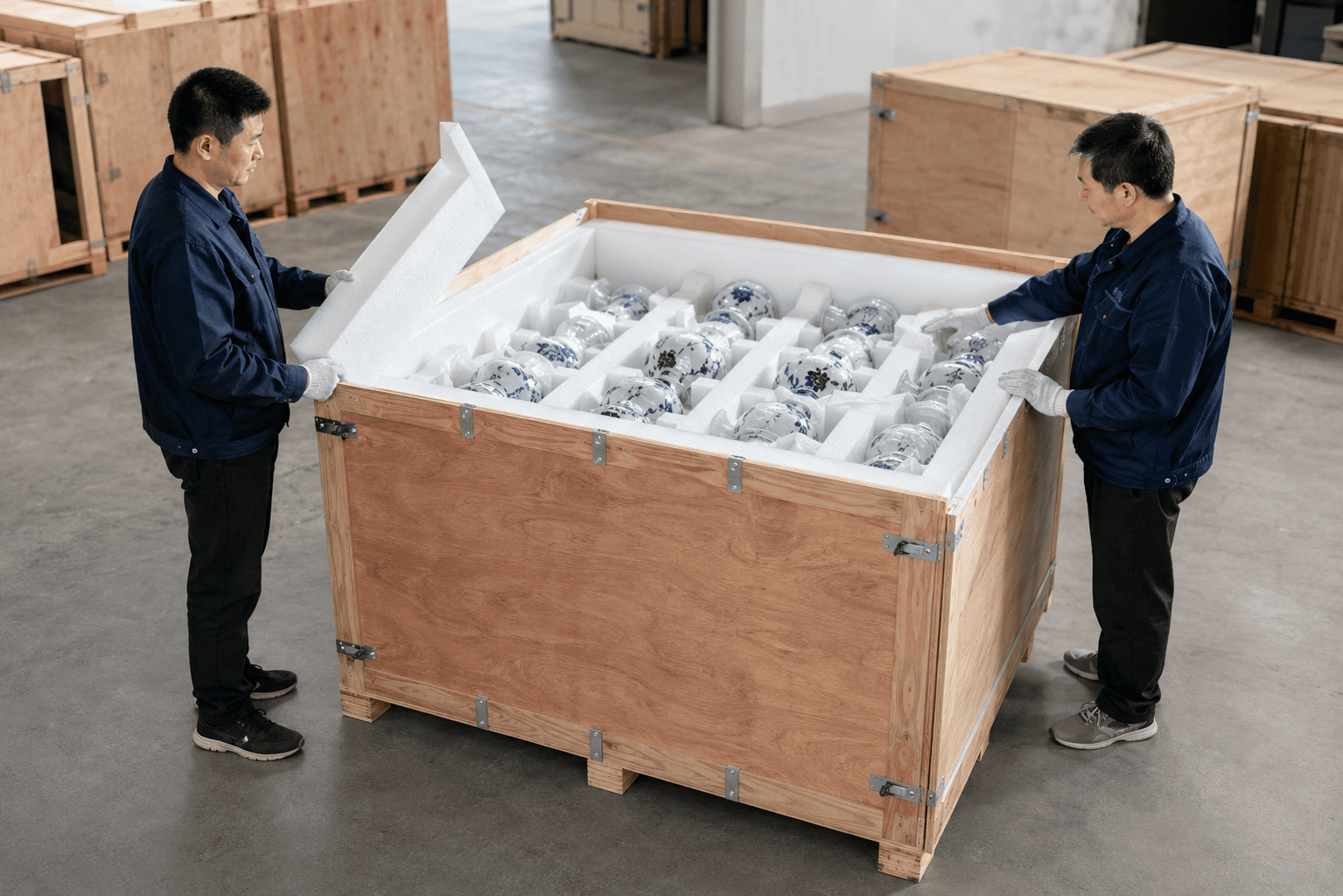
Wooden crates or plywood cases may be used for high-value, oversized, irregular, or particularly fragile products. Art porcelain and customized decorative pieces often need stronger outer protection than standard restaurant tableware.
[Insert Image 6: Palletized ceramic cartons secured with corner protectors, straps and stretch film]
During container loading, the weight and position of the cartons must be carefully planned. Heavy cartons should not crush lighter packages. Empty spaces should be controlled so that the cargo cannot slide, tilt, or collide during sea transportation.
The supplier should also consider humidity. Long-distance ocean shipping can expose paper cartons, wooden materials, metal accessories, and printed boxes to moisture. Depending on the route and season, dry bags, desiccants, plastic protection, or other moisture-control measures may be considered.
Labels and Shipping Marks
Clear labels are an essential part of ceramic tableware packaging. Each carton should allow the buyer and logistics team to identify its contents without opening it.
Common carton information may include:
- Product name or item number
- Purchase order number
- Quantity
- Carton number
- Net weight and gross weight
- Carton dimensions
- Country of origin
- Destination
- Handling direction
- Fragile symbol
- Buyer’s shipping mark
If a dinnerware set is divided among several cartons, the numbering should clearly explain which components are contained in each box. Accurate labels also make receiving, warehouse counting, and damage reporting more efficient.
Buyers should confirm all required shipping marks and barcode formats before mass packaging begins. Changes requested after cartons have been printed may create additional costs and production delays.
Packaging Tests and Pre-Shipment Inspection
Before mass production, buyers may request a packaging sample or packed-set sample. This allows both parties to evaluate the product arrangement, carton dimensions, gross weight, protective materials, and unpacking process.
Depending on the order and buyer requirements, packaging may also be evaluated through controlled drop, vibration, compression, or stacking tests. The test method and acceptance criteria should be agreed upon in advance because different markets, retailers, and logistics systems may have different standards.
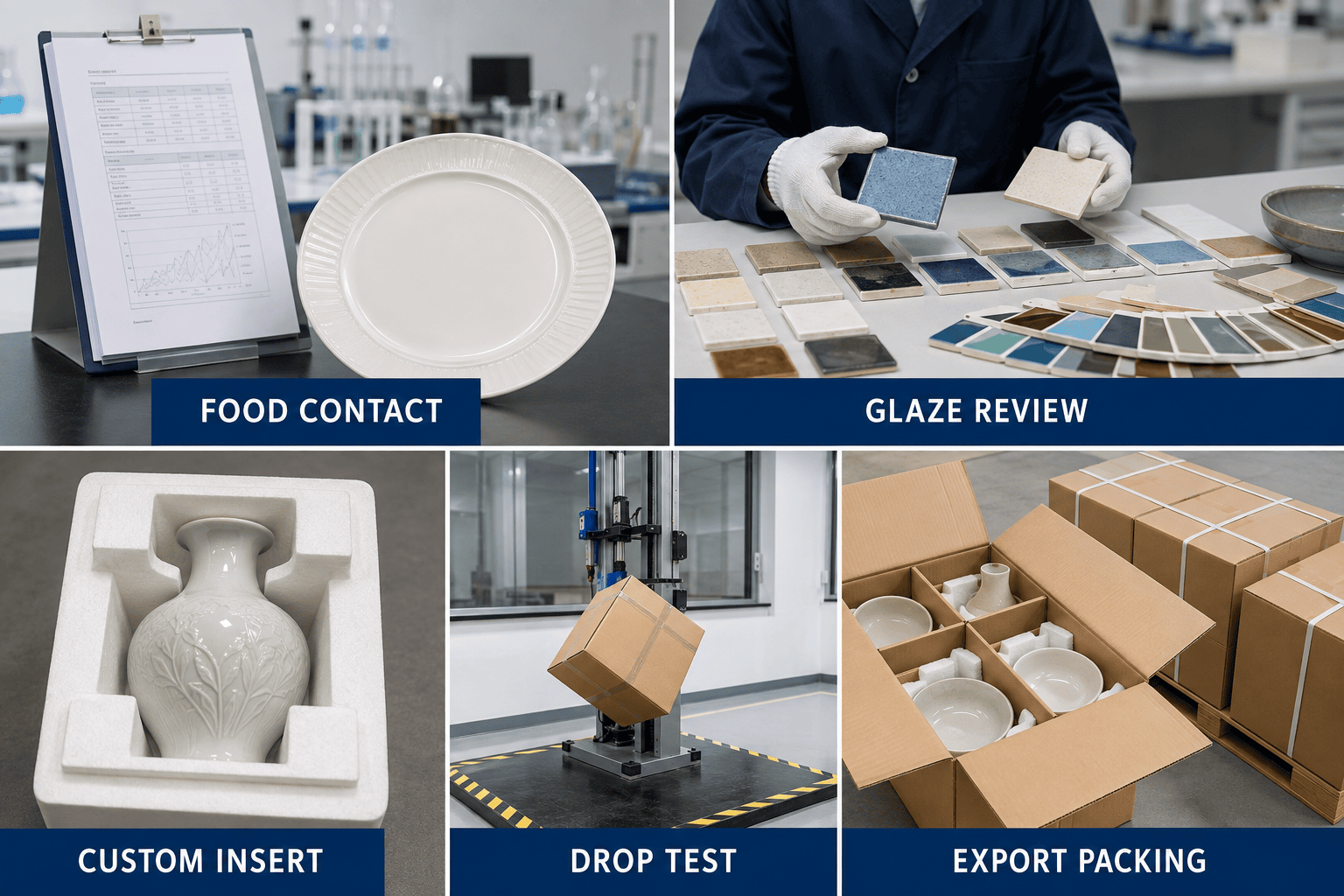
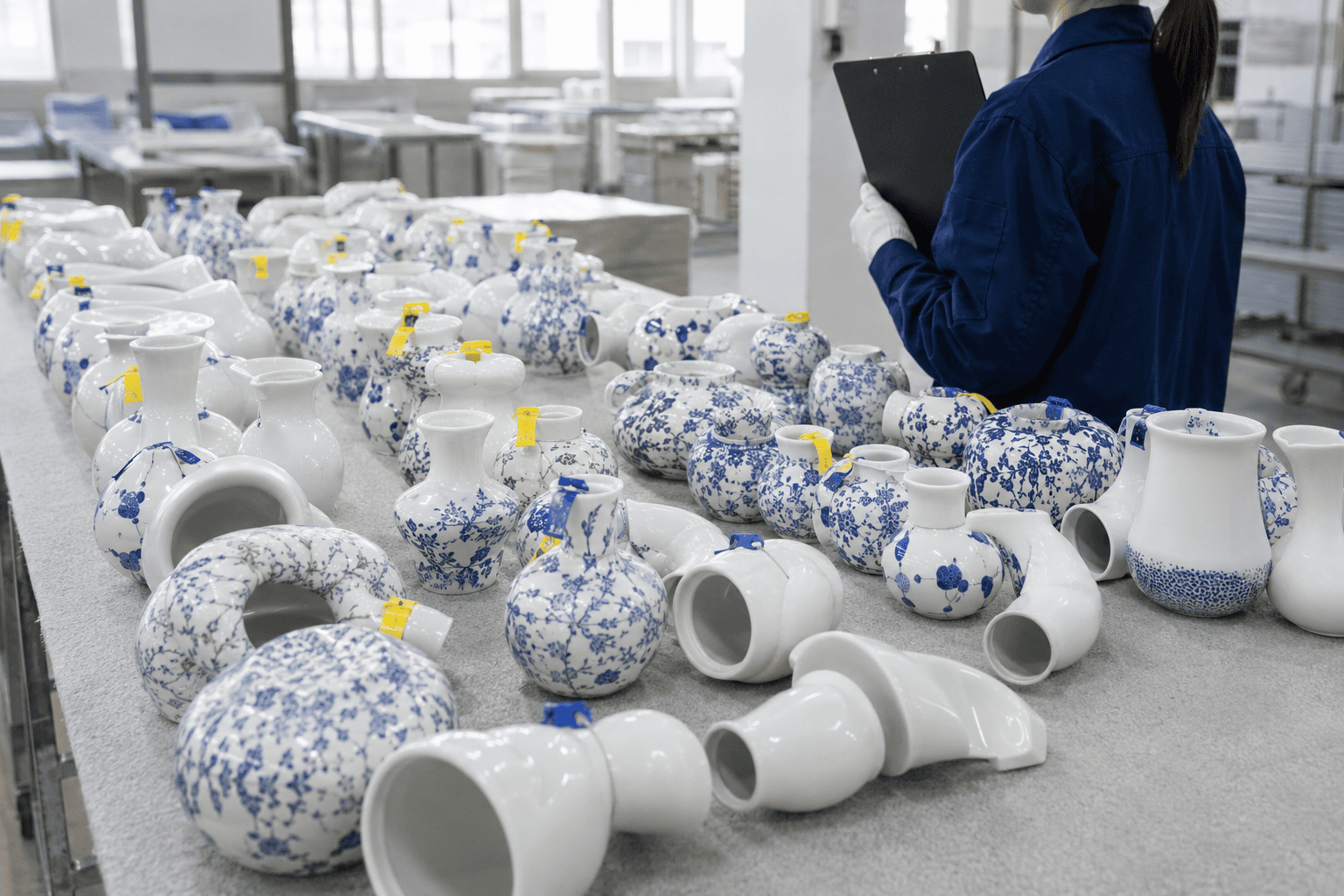
A pre-shipment inspection can verify product quantity, appearance, packaging method, labels, carton condition, and shipping marks. Inspectors may open selected cartons according to the agreed sampling plan and compare the contents with the approved packaging sample.
Before confirming an order, buyers should discuss:
- Product arrangement inside each carton
- Number of pieces per inner box and outer carton
- Protective material type and thickness
- Maximum acceptable carton weight
- Retail or bulk packaging requirements
- Printed box artwork
- Shipping marks and barcodes
- Pallet or wooden-crate requirements
- Inspection sampling level
- Acceptable damage standard
- Spare-product quantity
What Affects Ceramic Tableware Packaging Costs?
Packaging cost is influenced by more than the price of the carton. Important factors include product size, weight, shape, number of components, packing quantity, printing, protective materials, foam customization, pallet requirements, and order volume.
A simple round plate is generally easier to pack than a large irregular serving dish. A cup with a thin handle requires more protection than a handleless bowl. A printed retail gift box normally costs more than a plain inner carton, while customized molded foam is more expensive than standard foam sheets.
Reducing packaging too aggressively can result in higher breakage costs. At the same time, unnecessary packaging increases material usage, carton volume, freight charges, and disposal requirements.
The most suitable ceramic tableware packaging should balance product protection, cost, environmental considerations, container utilization, and the buyer’s final sales channel.
Conclusion
Professional ceramic tableware packaging is an important part of international ceramic purchasing. Individual separators, foam cushioning, divided compartments, inner boxes, reinforced export cartons, accurate labels, moisture control, pallet stabilization, and careful container loading all help reduce transportation risk.
Buyers should discuss packaging before confirming a bulk order rather than waiting until production is complete. Product shape, destination, shipping method, warehouse handling, retail requirements, and acceptable carton weight can all affect the final solution.
Based in Jingdezhen, China, Magic Cube supplies Jingdezhen ceramic tableware, customized restaurant and hotel porcelain, and art porcelain for international buyers. By coordinating product design, quality inspection, ceramic tableware packaging, export cartons, and shipping preparation, Magic Cube aims to help importers, distributors, hotels, and restaurants receive their ceramic products more safely and efficiently.