The Meaning of Rice-Grain Patterns in Linglong Porcelain
News 2026-08-26 145
Linglong Porcelain is one of the most recognizable categories of traditional Jingdezhen ceramics. Its most distinctive feature is the arrangement of small translucent patterns across the porcelain surface. When light passes through these sections, the hard porcelain appears lighter, warmer, and more delicate.
Among the many patterns used in Linglong Porcelain, the rice-grain shape is the most traditional and widely recognized. For this reason, Linglong Porcelain is also commonly called “rice-grain porcelain” in international markets. However, these small shapes are not simply holes drilled into a finished product. They are created through a demanding process involving forming, carving, glaze filling, glazing, and high-temperature firing.
Rice-grain patterns are more than decorative details. They can also reflect traditional Chinese ideas related to food, harvest, abundance, order, and daily life.
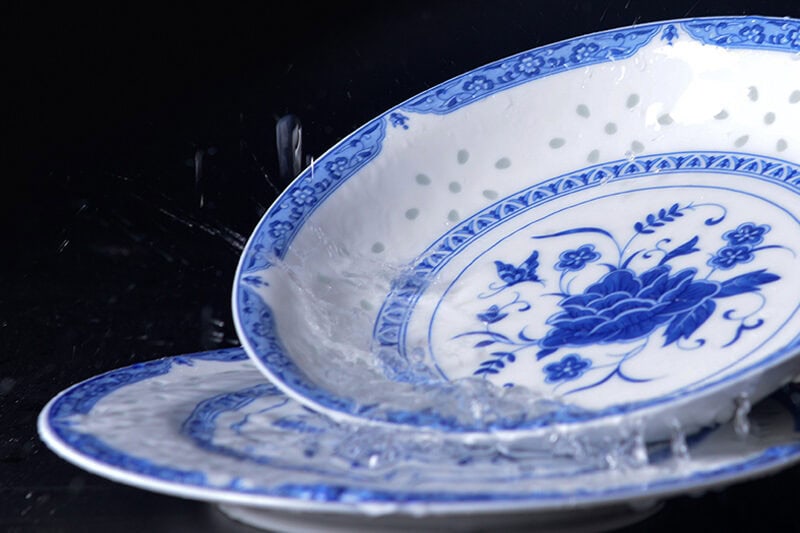
What Are Rice-Grain Patterns in Linglong Porcelain?
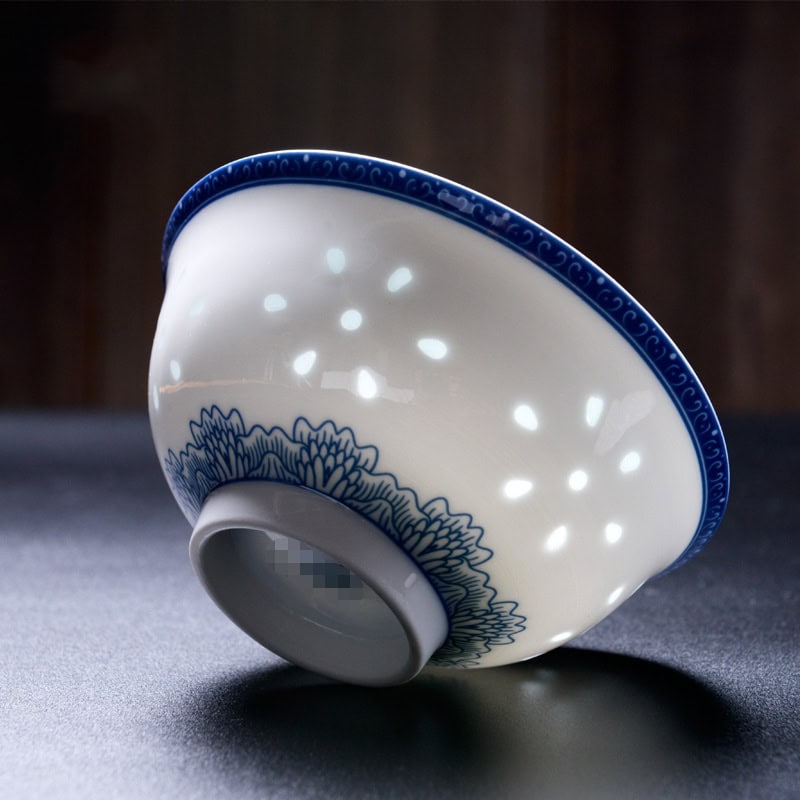
Traditional rice-grain patterns usually appear as small elongated ovals or teardrop-shaped openings resembling individual grains of rice. Before the porcelain body is fired, craftspeople arrange these patterns according to the design and carefully carve the required sections from the body.
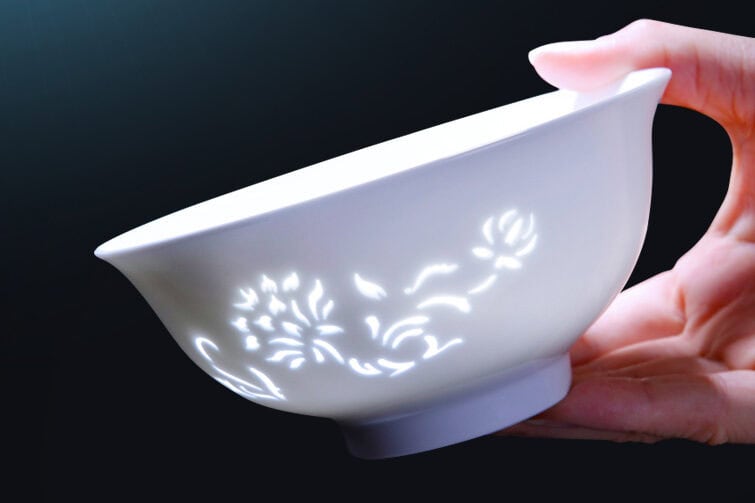
The carved areas are then filled or covered with translucent glaze. During firing, the glaze becomes integrated with the porcelain body, producing sealed decorative sections that allow light to pass through. Although the Linglong areas may look like open holes, properly manufactured Linglong Porcelain remains sealed and can be used to serve food and beverages.
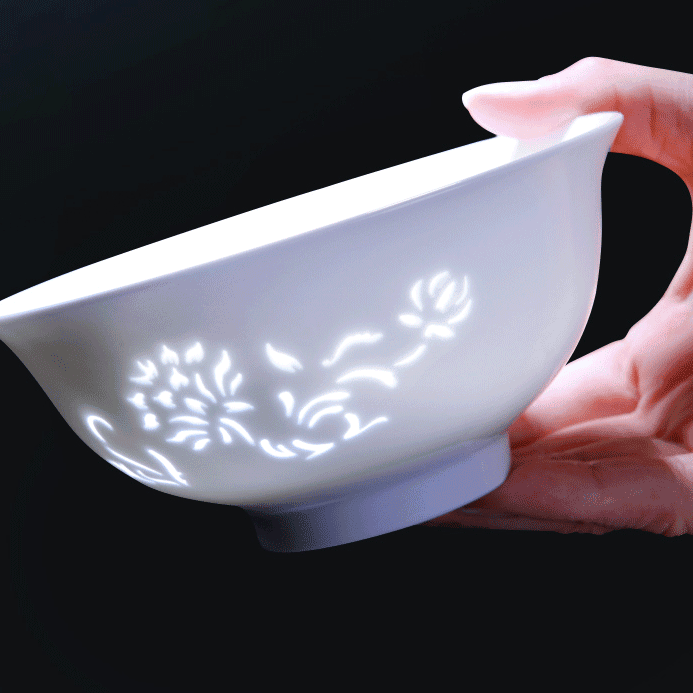
Rice-grain patterns may be arranged independently or combined with flowers, geometric borders, blue-and-white painting, and traditional auspicious motifs. They can form continuous bands around the rims of plates or be distributed across bowls, cups, teapots, and decorative vessels.
Rice-Grain Patterns and the Idea of Abundance
Rice has held an important place in traditional Chinese agricultural society. It is not only a basic food but is also closely connected with harvest, family life, stability, and prosperity. As a result, rice-grain shapes can naturally suggest an abundant harvest, sufficient food, and a secure household.
Applying rice-grain patterns to tableware creates a direct relationship between their cultural associations and the objects’ practical function. Plates, bowls, and cups are part of everyday dining, while the rice-grain patterns introduce a visual connection to food and agricultural life.
However, buyers should avoid assuming that every rice-grain pattern has one fixed symbolic meaning. Different periods, manufacturers, and product collections may use the pattern for different reasons. In modern Linglong Porcelain, the rice-grain design may represent traditional culture, but it may also be selected simply for its attractive translucent effect and orderly visual rhythm.
Repetition, Order, and Continuity
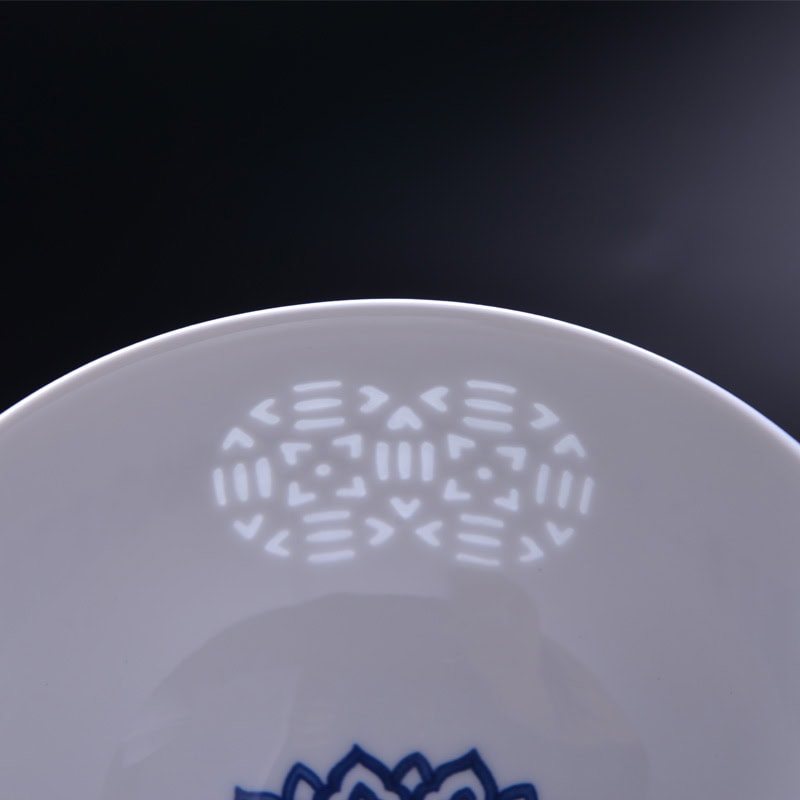
Rice-grain patterns on traditional Linglong Porcelain rarely appear alone. They are usually organized in continuous, symmetrical, or circular arrangements. This repetition produces a clear visual rhythm and makes the porcelain look balanced and carefully structured.
Continuous patterns may also suggest continuity, circulation, and renewal. On circular plates, bowls, and cups, the rice-grain decoration often travels around the entire vessel without an obvious beginning or end.
This arrangement reflects the importance of proportion, order, and overall harmony in traditional Jingdezhen ceramics. Although each rice-grain opening is small, its size, direction, spacing, and position can influence the entire composition.
If the patterns are too close together, the surface may look crowded. If they are too widely spaced, the distinctive translucent character of Linglong Porcelain may become less visible. Successful production therefore requires both technical control and careful visual planning.
How Light Changes the Meaning of the Pattern
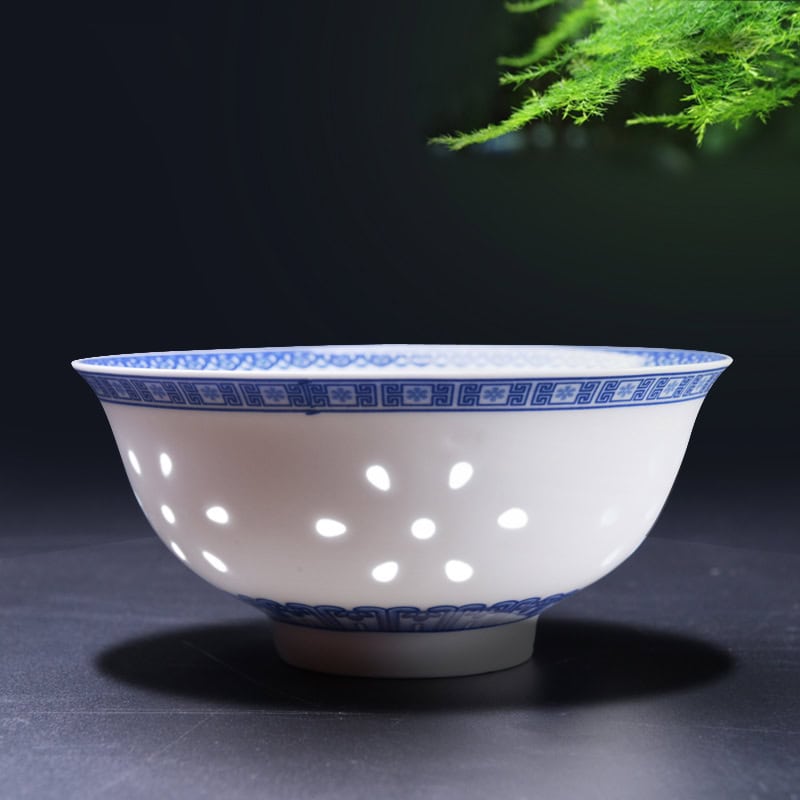
One of the most interesting qualities of Linglong Porcelain is that it looks different under normal lighting and backlighting.
In an ordinary environment, the rice-grain patterns appear as small translucent decorations embedded in the porcelain body. When light passes through the back of the vessel, the patterns become brighter and may resemble windows, jewels, or small points of light.
The visual meaning of rice-grain decoration therefore comes not only from the shape itself but also from the interaction between porcelain and light. The porcelain body provides a solid surface, while the translucent Linglong sections introduce light and visual openness. Together, they create a balance between solidity and transparency.
For hotels, restaurants, and interior design projects, lighting can significantly affect how Linglong Porcelain is presented. Natural daylight, warm interior lighting, and cool display lighting may produce different colors and levels of transparency.
Why Has the Rice-Grain Pattern Remained Popular?
The rice-grain shape is simple and adaptable. It can be applied to plates, bowls, cups, teapots, vases, and many other ceramic forms. It creates visible translucency without overwhelming painted or colored decoration.
Compared with larger and more complicated pierced patterns, traditional rice-grain shapes can also be arranged more easily into continuous decorative bands. This makes them suitable for complete dinnerware collections in which plates, bowls, cups, and serving pieces need to maintain a consistent style.
In blue-and-white Linglong Porcelain, the translucent rice-grain patterns soften the strong visual effect of cobalt decoration. Blue, white, and translucent elements form a classic combination that preserves the traditional appearance of Jingdezhen ceramics while remaining suitable for contemporary dining spaces.
Modern colorful Linglong Porcelain may add green, yellow, pink, red, purple, or other colors to the traditional pattern. These brighter designs are often suitable for gift collections, cafés, retailers, and themed restaurants.
Combining Traditional Rice-Grain Patterns with Modern Design
Modern Jingdezhen porcelain manufacturers are no longer limited to the traditional rice-grain shape. Designers can develop Linglong patterns based on petals, leaves, stars, circles, geometric forms, and customized brand motifs.
Nevertheless, the rice-grain pattern remains an important foundation of Linglong Porcelain. It can be combined with simple vessel shapes to produce contemporary hotel and restaurant tableware. It can also be paired with hand-painted blue-and-white decoration, colored glazes, and elaborate borders to create collectible art porcelain.
For buyers, customizing Linglong patterns involves more than changing the artwork. The manufacturer must consider the size and spacing of the openings, the thickness of the porcelain body, the fluidity of the translucent glaze, and the stability of the product during firing.
More complicated designs generally require greater technical control, a more detailed sample process, and stricter quality inspection.
How Should Buyers Inspect Rice-Grain Linglong Porcelain?
When purchasing Linglong Porcelain in bulk, buyers should check whether the translucent sections are relatively consistent in size and arranged neatly. They should also examine whether the glaze has completely filled and sealed each carved area.
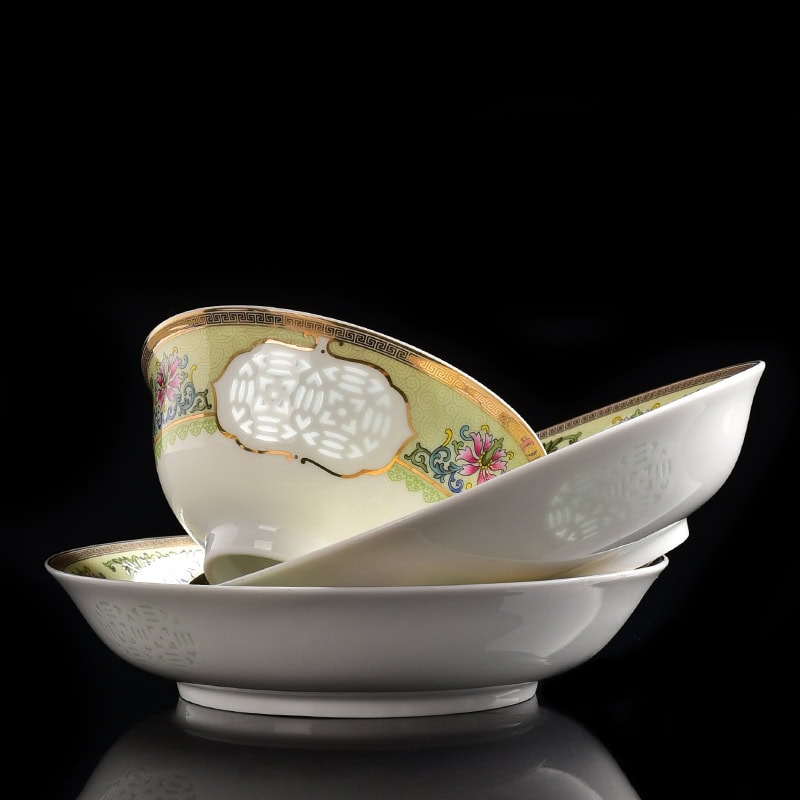
A properly finished Linglong section should have a smooth surface and a natural translucent effect. It should not contain open holes, sharp edges, large cracks, severe glaze accumulation, or extensive cloudy areas. The porcelain body should also be checked for deformation, instability, glaze defects, and damage.
Holding the product in front of a light source is an effective inspection method. Backlighting makes it easier to evaluate the completeness, arrangement, and transparency of the Linglong patterns.
For a complete tableware collection, buyers should compare the pattern placement across different plates, bowls, and cups. The individual items do not need to be perfectly identical, but the overall appearance should remain coordinated.
Because ceramics are produced through high-temperature firing, slight variations in color, glaze, pattern position, and dimensions may occur. Buyers should confirm acceptable tolerances, inspection standards, packaging requirements, and approved samples with their Jingdezhen porcelain manufacturer before mass production.
From Tableware to Art Porcelain and Ceramic Installations
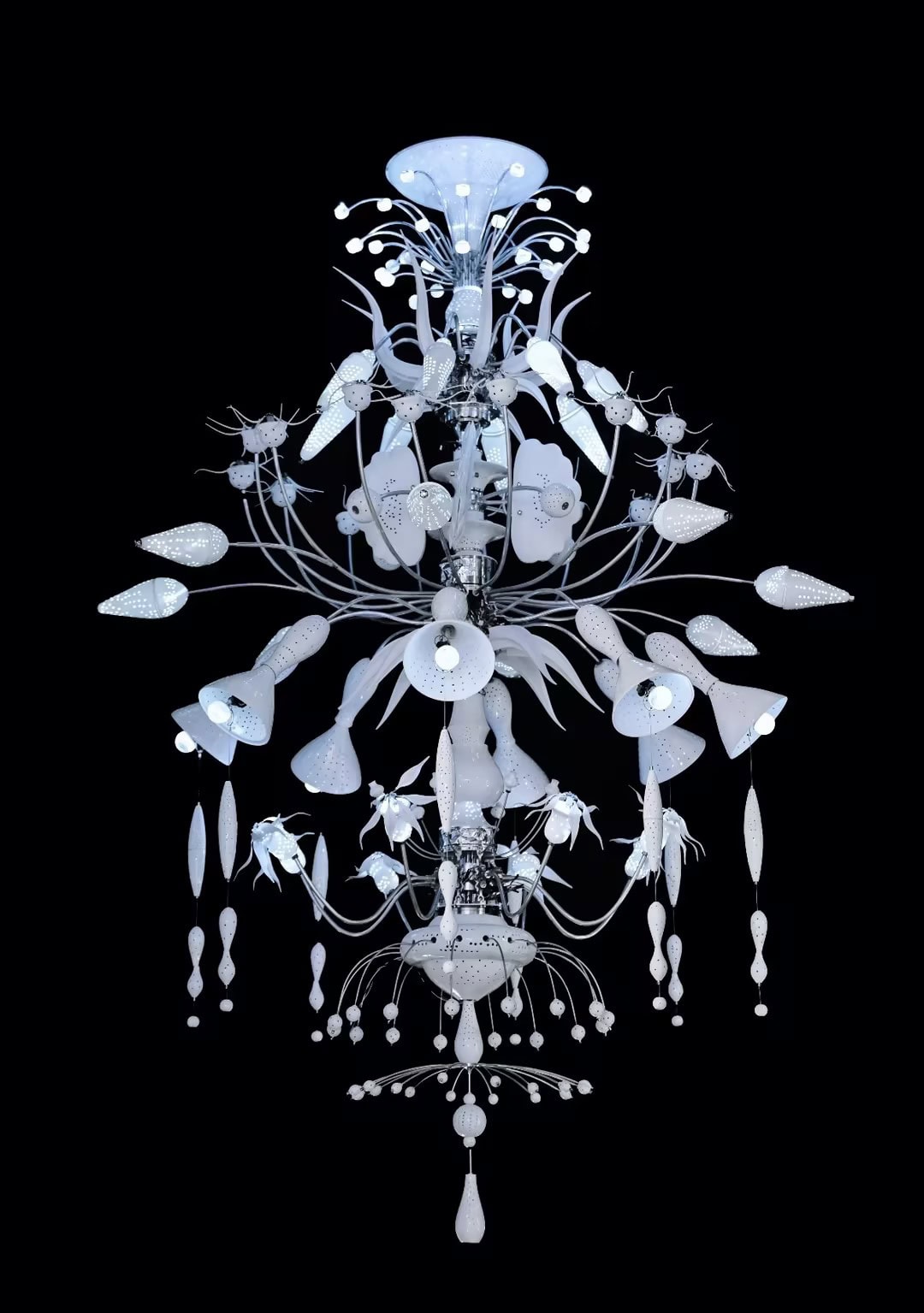
The translucent character of rice-grain patterns allows Linglong Porcelain to be used for more than tableware. The technique can be applied to lamps, decorative vessels, screens, wall artworks, and other forms of art porcelain.
When enlarged Linglong structures are combined with internal or architectural lighting, light can pass through the ceramic surface and create delicate shadows on nearby walls and floors. This makes the technique suitable for ceramic installations in hotel lobbies, restaurants, galleries, cultural venues, and commercial interiors.
In these projects, the rice-grain pattern is no longer simply a small decorative detail on a plate or bowl. It becomes a connection between ceramic material, light, architecture, and spatial experience. This is one way in which traditional Jingdezhen ceramics can enter contemporary design environments.
Conclusion
Rice-grain patterns in Linglong Porcelain offer an orderly and delicate visual appearance while also suggesting associations with food, harvest, abundance, and the continuity of everyday life. Through repeated arrangements and translucent glaze filling, these small patterns create a distinctive play of light that gives porcelain both solidity and visual lightness.
As contemporary design continues to develop, Linglong Porcelain has expanded from traditional blue-and-white tableware into colorful dinnerware, gift porcelain, art porcelain, lighting, and ceramic installations. The rice-grain pattern remains its most recognizable visual language while continuing to inspire new designs and applications.
Based in Jingdezhen, China, Magic Cube focuses on Linglong Porcelain, Jingdezhen ceramics, customized tableware, art porcelain, and ceramic installations. By connecting traditional craftsmanship with modern production and design, we aim to provide international importers, distributors, hotels, restaurants, and design projects with Linglong Porcelain products that offer both cultural character and commercial value.