Underglaze vs Decal Logo: Which Is Better for Custom Ceramic Mugs?
News 2026-08-24 78
When developing custom Ceramic Mugs, choosing the right logo application method is just as important as selecting the mug shape, capacity, glaze color, and packaging. A logo may look attractive in a digital rendering but perform differently after firing, washing, and repeated daily use.
Underglaze decoration and decal application are two common methods used for branded Ceramic Mugs. Each method has its own advantages, production requirements, visual effects, and limitations. The better option depends on the complexity of the artwork, number of colors, order quantity, target price, and how the mugs will be used.
For importers, hotel suppliers, promotional product companies, retailers, and private-label brands, understanding these differences can reduce sampling problems and improve the consistency of bulk orders.
An Important Clarification About Decals
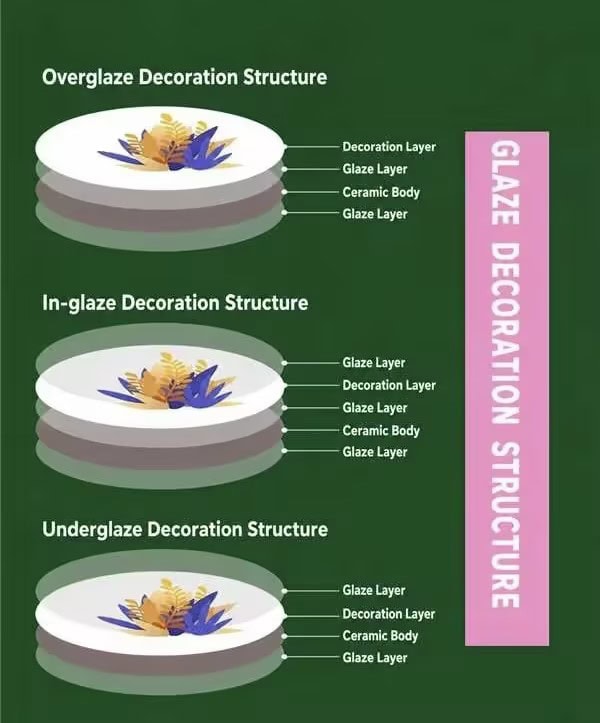
Underglaze and decal are not completely opposite technical terms. “Underglaze” describes the position of the decoration beneath the glaze, while “decal” describes how a printed design is transferred to the ceramic surface.
Ceramic decals can technically be applied under, within, or over the glaze. However, in international mug sourcing, “decal logo” usually refers to an overglaze transfer applied to an already glazed mug and fixed through an additional, lower-temperature firing.
This article therefore compares traditional underglaze logo decoration with the overglaze decal process commonly used for Ceramic Mugs.
What Is an Underglaze Logo?
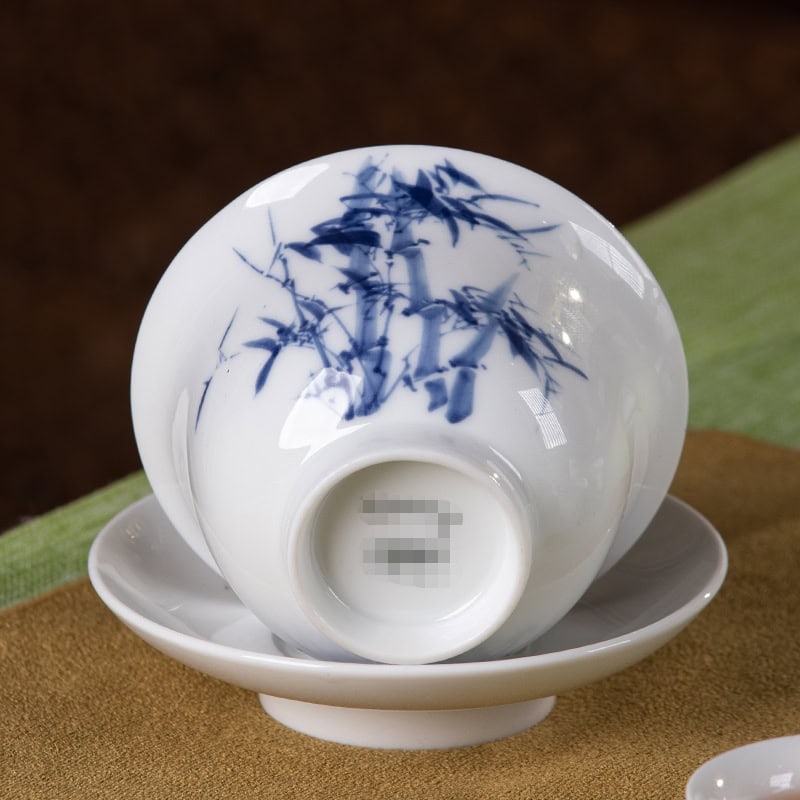
An underglaze logo is applied directly to the porcelain body or biscuit-fired surface before the final transparent glaze. The mug is then glazed and fired, sealing the logo beneath the smooth surface.
After firing, the decoration becomes integrated with the mug rather than sitting on top of the glaze. When touched, a properly produced underglaze logo should generally feel smooth, without an obvious raised edge.
Underglaze decoration can be applied through:
- Hand painting
- Stamping
- Screen printing
- Underglaze transfer printing
- Pad printing
- Specialized digital ceramic printing
The specific method depends on the logo, product shape, order quantity, and manufacturing equipment.
Advantages of Underglaze Logos
The main advantage of underglaze decoration is durability. Because the logo is protected beneath the glaze, it is less exposed to scratching, washing, and direct contact during daily use.
Underglaze logos are suitable for:
- Hotel coffee mugs
- Restaurant cups
- Café drinkware
- Office mugs
- Frequently washed Ceramic Mugs
- Long-term branded dinnerware programs
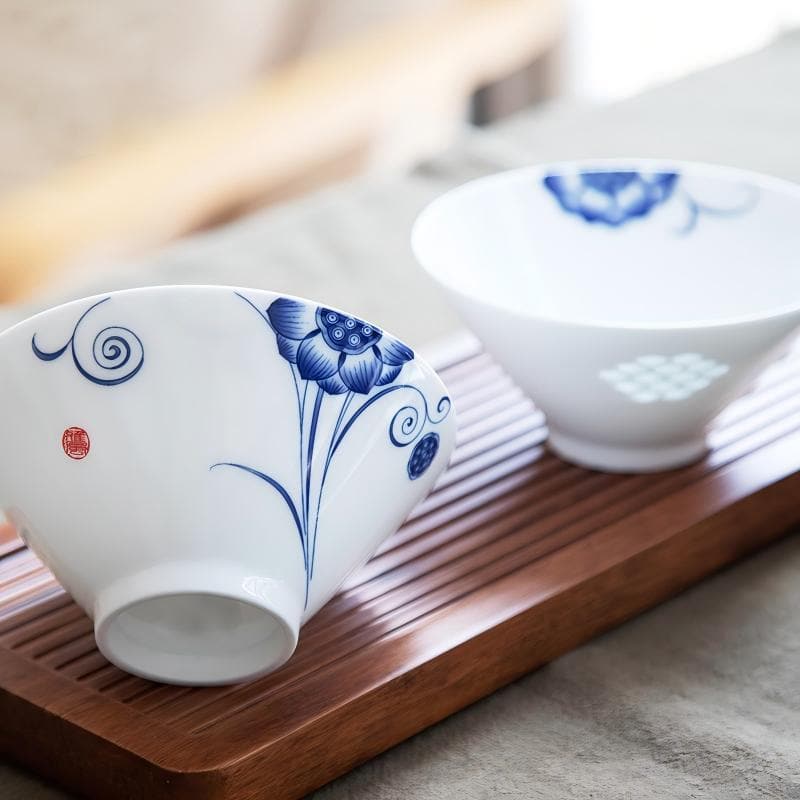
This method often works particularly well for simple logos, Chinese calligraphy, geometric marks, line drawings, and blue-and-white designs.
Underglaze cobalt decoration has a strong connection to traditional Jingdezhen ceramics. Blue-and-white porcelain demonstrates how underglaze color can remain clear and visually distinctive after high-temperature firing. Modern Jingdezhen ceramic manufacturers can adapt this principle to contemporary hotel logos, restaurant branding, and private-label Ceramic Mugs.
Limitations of Underglaze Logos
Underglaze decoration does not reproduce every color in the same way as conventional printing. Some pigments change during high-temperature firing, while others may become softer, darker, or less saturated.
Possible limitations include:
- A more restricted color range
- Difficulty reproducing photographic images
- Changes in brand colors after firing
- Less precise gradients
- Additional sampling for color matching
- Higher setup requirements for some production methods
Buyers with strict corporate color requirements should approve a fired physical sample rather than relying only on a digital color reference or Pantone number.
High-temperature firing can change the final appearance of ceramic pigments. A color that matches the artwork before firing may look different after it passes through the kiln.
What Is a Decal Logo?
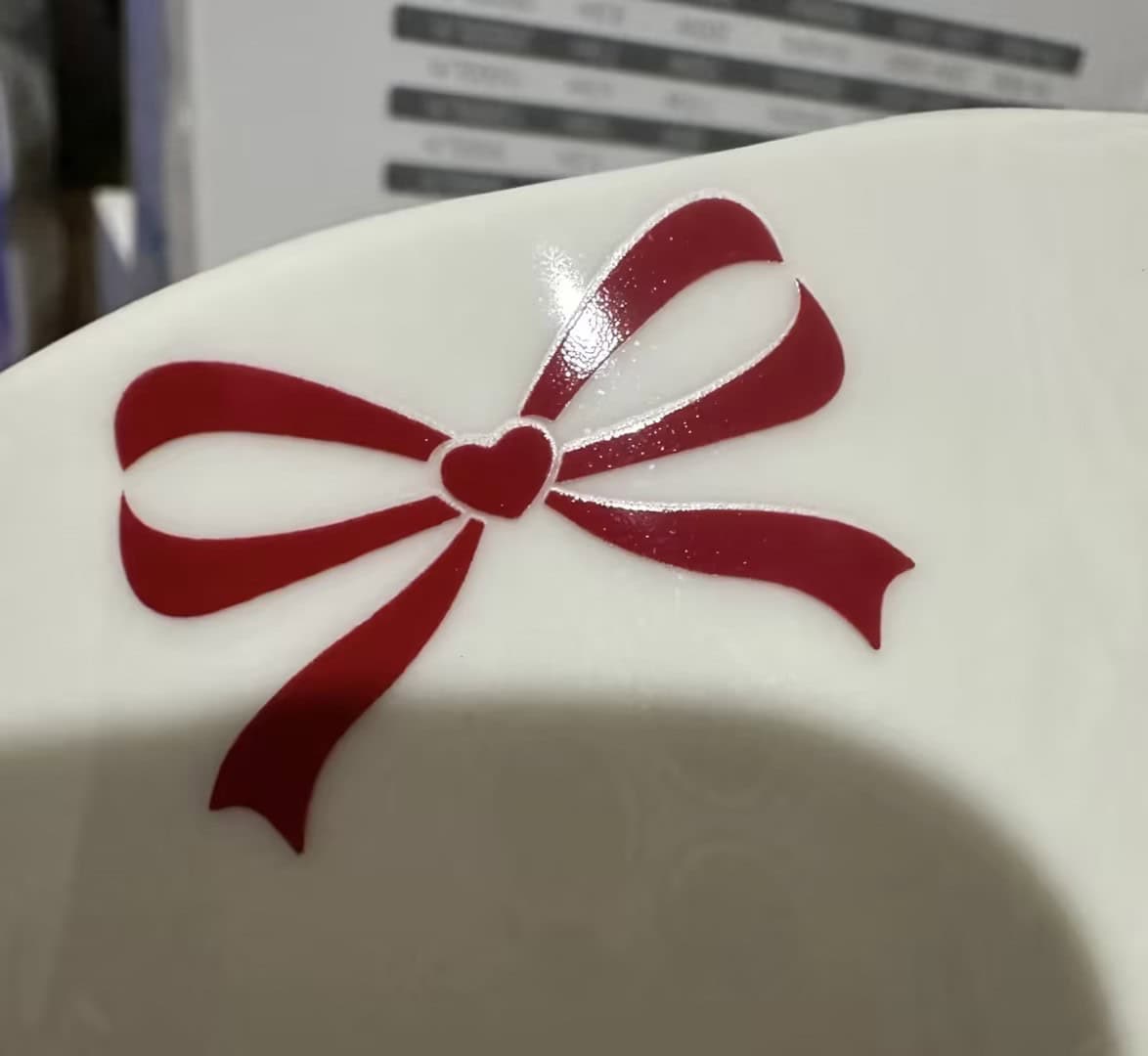
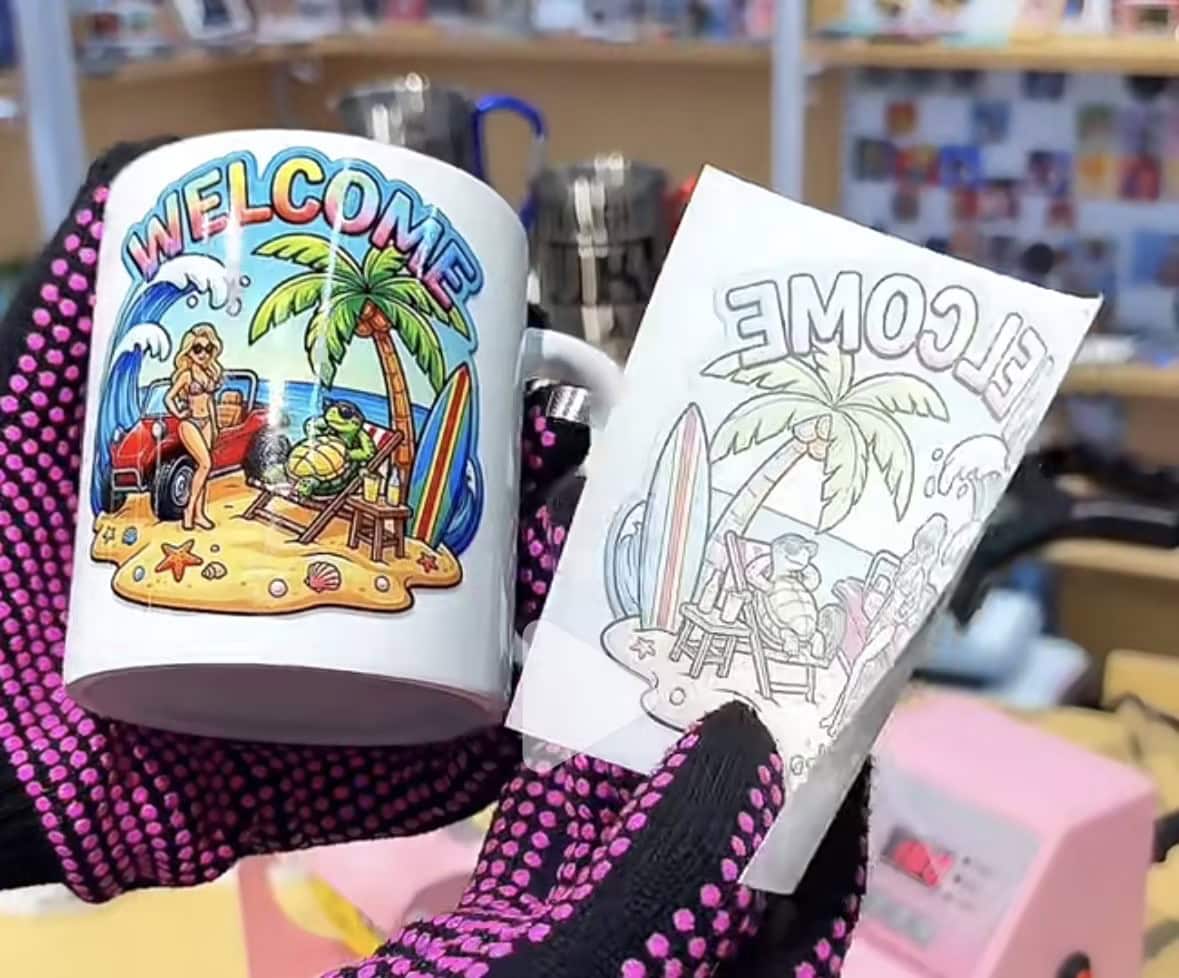
A ceramic decal is a printed transfer carrying the complete logo or decorative design. It is applied to the surface of a glazed mug and then fired again so that the ceramic pigments bond with the glaze.
Decals can reproduce fine text, multicolored artwork, repeated logos, detailed illustrations, and complex decorative layouts. They are widely used for promotional Ceramic Mugs, gift sets, retail collections, branded coffee cups, and customized hotel products.
During production, the decal must be positioned carefully. Wrinkles, trapped air, water marks, or incorrect alignment can affect the final appearance after firing.
Advantages of Decal Logos
The greatest advantage of decal decoration is design flexibility. It can reproduce artwork that would be difficult to achieve through hand painting or basic underglaze printing.
Decal logos are suitable for:
- Multicolored brand identities
- Detailed corporate logos
- Small lettering
- Illustrations and characters
- Repeating wraparound patterns
- Gold, silver, or metallic details
- Seasonal gift collections
- Promotional Ceramic Mugs
Decals can also help maintain consistent logo placement across a large production batch when proper positioning standards are used.
For giftware and retail collections, overglaze decals offer a broad range of colors and decorative effects. They are also frequently used in art porcelain, where detailed flowers, figures, landscapes, and ornamental patterns require more color variation than many high-temperature underglaze pigments can provide.
Limitations of Decal Logos
Because most conventional decal logos are applied over the glaze, their durability depends on the quality of the decal, firing temperature, pigment composition, washing method, and intended use.
Potential concerns include:
- Lower scratch resistance than underglaze decoration
- Gradual fading after repeated aggressive washing
- Possible wear around frequently handled areas
- Different dishwasher performance between decal types
- Additional care requirements for metallic decoration
- A slightly raised edge on some finished designs
Not every decal mug is unsuitable for a dishwasher, but dishwasher resistance should never be assumed. If Ceramic Mugs are intended for hotels, restaurants, cafés, or other high-frequency commercial environments, buyers should request appropriate testing and approve the decoration method before mass production.
Gold and silver decals generally require special care and are usually unsuitable for microwave use.
Underglaze vs Decal: A Practical Comparison
| Factor | Underglaze Logo | Decal Logo |
|---|---|---|
| Durability | Generally higher because the logo is protected by glaze | Depends on decal quality and firing |
| Color range | More limited at high temperatures | Broader and more vivid |
| Fine details | Suitable for simple to moderately detailed designs | Better for detailed logos and small text |
| Surface feel | Usually smooth | May have a slightly noticeable edge |
| Metallic colors | Usually unavailable | Gold and silver options are available |
| Commercial washing | Often more suitable | Must be confirmed through testing |
| Photographic artwork | Difficult | More achievable |
| Traditional appearance | Strong connection to underglaze ceramic decoration | More suitable for modern printed graphics |
| Sampling | Required for fired color confirmation | Required for color, placement, and durability |
Which Method Is Better for Hotel and Restaurant Ceramic Mugs?
For hotel and restaurant Ceramic Mugs that will be washed frequently, a simple underglaze logo is often the more practical choice. The decoration is protected beneath the glaze and generally offers better resistance to repeated commercial use.
Underglaze logos are particularly suitable when:
- The logo uses one or two colors
- Durability is more important than color complexity
- The mugs will be washed frequently
- The buyer needs long-term replenishment
- A smooth surface is preferred
Decal logos may be more suitable when:
- The logo contains several colors
- Small text must remain legible
- The design includes detailed illustrations
- Metallic decoration is required
- The mugs are primarily intended for gifts, retail, or promotional use
The decision should not be based only on appearance. Buyers should consider the complete service environment, expected washing frequency, target price, branding requirements, and replacement schedule.
Food-Contact Safety and Logo Placement
Logo placement is an important part of mug development. For overglaze decoration, many buyers prefer to keep the logo away from the drinking rim and interior food-contact surface.
Common logo positions include:
- One side of the mug
- Both sides of the mug
- Opposite the handle
- Below the rim
- Near the base
- Around the full body
- Inside the mug, if an appropriate process is approved
Food-contact requirements differ between markets. Importers should tell the manufacturer where the products will be sold and request appropriate testing for ceramic bodies, glazes, and decoration materials.
A professional Jingdezhen ceramic manufacturer should review the artwork and recommend a suitable position before sampling.
MOQ, Cost, and Sampling
The cost of Ceramic Mugs depends on more than the decoration method. Important factors include:
- Mug shape and capacity
- Existing or newly developed molds
- Number of logo colors
- Logo size and position
- Custom glaze requirements
- Metallic details
- Order quantity
- Retail packaging
- Testing requirements
Simple underglaze logos may be cost-effective for large, repeat orders, while multicolored decals can reduce the difficulty of reproducing complex artwork. However, decal printing may include plate-making, screen, or setup costs.
MOQ should be confirmed per shape, color, and design. If several designs are included in one order, each may have its own minimum quantity.
Before mass production, buyers should approve a fired sample. The sample should be checked for:
- Logo color
- Logo size
- Position and alignment
- Surface finish
- Glaze consistency
- Dishwasher performance, if required
- Packaging presentation
Digital renderings are useful during design development, but only a fired sample can accurately show the final ceramic colors and surface.
Beyond Mugs: Decoration in Art Porcelain and Ceramic Installations
Underglaze and decal techniques are not limited to Ceramic Mugs. They are also used in plates, bowls, tea sets, decorative vases, art porcelain, ceramic murals, and architectural ceramic products.
Underglaze decoration can provide durable visual elements for large ceramic panels, while decals can reproduce detailed images, text, and repeated graphics. Depending on the project, these methods may also be incorporated into ceramic installations for hotels, restaurants, museums, cultural spaces, and commercial interiors.
The experience gained from producing decorative Jingdezhen ceramics can therefore support both functional drinkware and larger customized ceramic projects.
Conclusion: Which Logo Method Should Buyers Choose?
Neither method is automatically better for every project. Underglaze logos generally offer greater durability and a smooth, integrated appearance, making them a strong choice for frequently used hotel, restaurant, and café Ceramic Mugs.
Decal logos offer more colors, finer detail, and greater design flexibility. They are often better suited to multicolored branding, promotional mugs, gift collections, detailed illustrations, and metallic decoration.
The best choice depends on the logo design, intended use, washing conditions, order quantity, target price, and market requirements. Buyers should confirm the production method, approve a fired sample, and establish inspection standards before placing a bulk order.
Based in Jingdezhen, China, Magic Cube combines local ceramic craftsmanship with product development, customization, production coordination, quality inspection, and export packaging. We support international buyers seeking underglaze and decal-logo Ceramic Mugs, custom dinnerware, art porcelain, and ceramic installations for hospitality, retail, gifting, and private-label markets.