What Is Linglong Porcelain? A Buyer’s Introduction
News 2026-08-24 142
Among the many styles of traditional Chinese ceramics, Linglong Porcelain is immediately recognizable for its delicate translucent patterns. When held up to the light, small sections of the porcelain body appear to glow, creating an effect that resembles tiny windows set into the surface.
This combination of porcelain, light, pattern, and craftsmanship gives Linglong Porcelain a distinctive visual identity. It is used for bowls, plates, cups, tea sets, dinnerware, decorative objects, and contemporary ceramic designs.
For importers, distributors, hospitality suppliers, retailers, and private-label brands, understanding how Linglong Porcelain is made can help them evaluate product quality, select suitable designs, and communicate more effectively with a supplier.
What Does “Linglong” Mean?
The Chinese word “Linglong” describes something delicate, refined, intricate, and beautifully made. In porcelain, it refers to decorative areas that allow light to pass through the body.
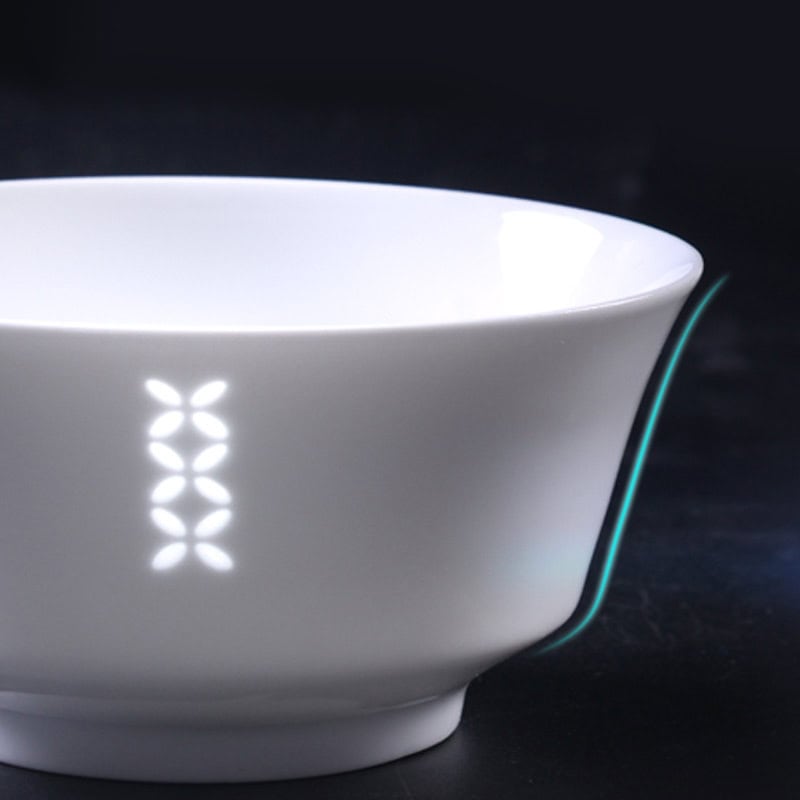
Linglong Porcelain is sometimes called “rice-grain porcelain” in international markets because its translucent openings often resemble grains of rice. However, real rice is not inserted into the porcelain. The effect is created through a specialized ceramic process.
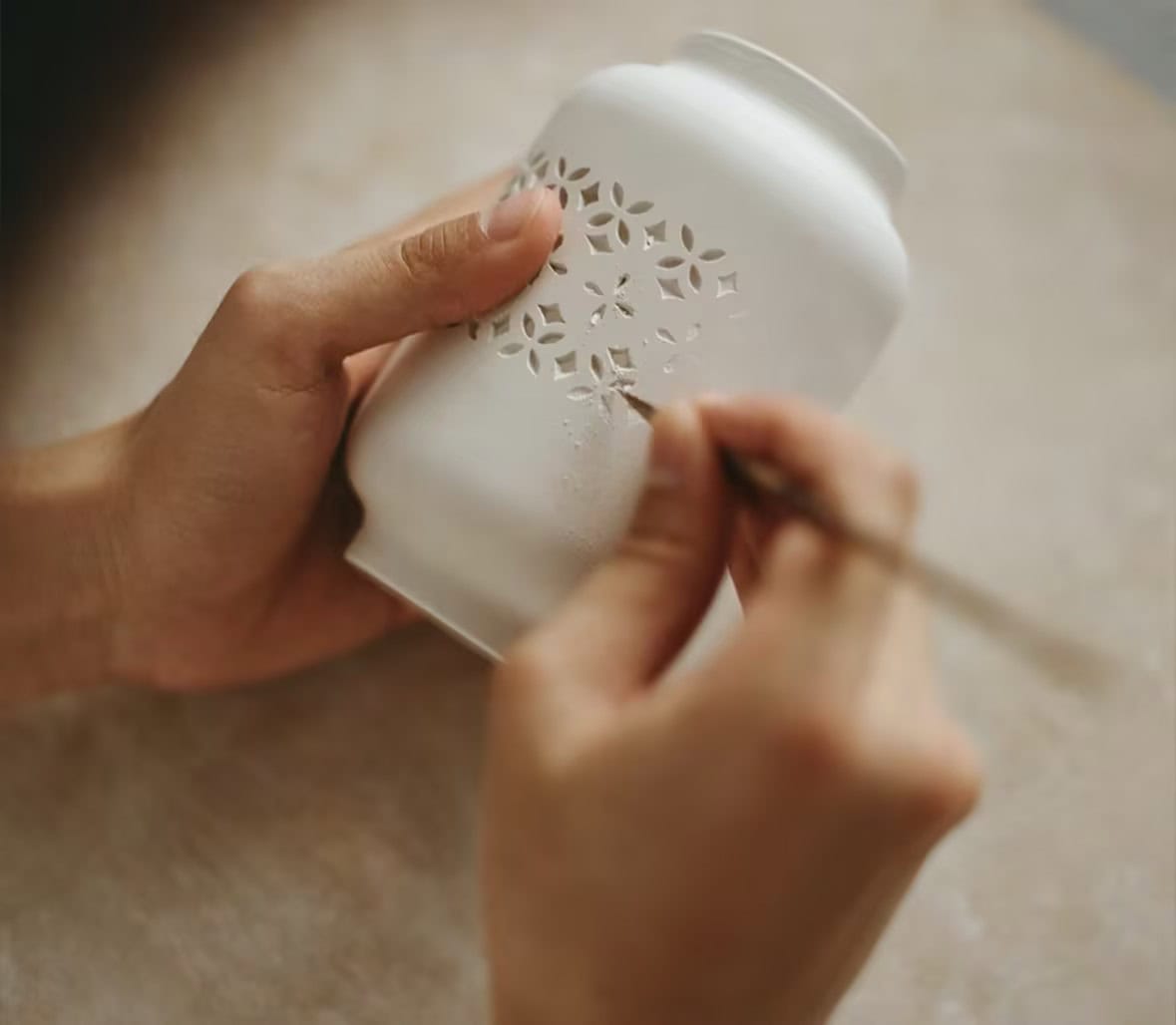
Craftspeople form small openings or recessed patterns in the unfired porcelain body. These areas are then filled and sealed with translucent glaze. After firing, the openings become smooth, glass-like windows that transmit light while remaining part of the finished vessel.
The result is a porcelain product that looks elegant under normal lighting and becomes even more attractive when placed near a window, lamp, candle, or other light source.
How Is Linglong Porcelain Made?
Producing Linglong Porcelain requires greater precision than manufacturing ordinary glazed tableware. The porcelain body must be suitable for detailed cutting, glazing, and high-temperature firing.
The main production stages generally include:
- Preparing the porcelain body
- Forming the plate, bowl, cup, or other vessel
- Allowing the body to dry to the correct stage
- Cutting or carving the Linglong openings
- Applying blue-and-white or colored decoration
- Filling the openings with translucent glaze
- Glazing the complete piece
- Firing it at high temperature
- Inspecting the translucent areas and finished surface
The timing of the cutting process is important. If the porcelain body is too soft, the openings may lose their shape. If it is too dry, the body may crack during carving.
The translucent glaze must also fill the openings evenly. Insufficient filling can leave pinholes or weak areas, while excessive glaze may create uneven surfaces. During firing, the porcelain body and the translucent glaze must shrink and fuse together correctly.
Blue-and-White Linglong Porcelain
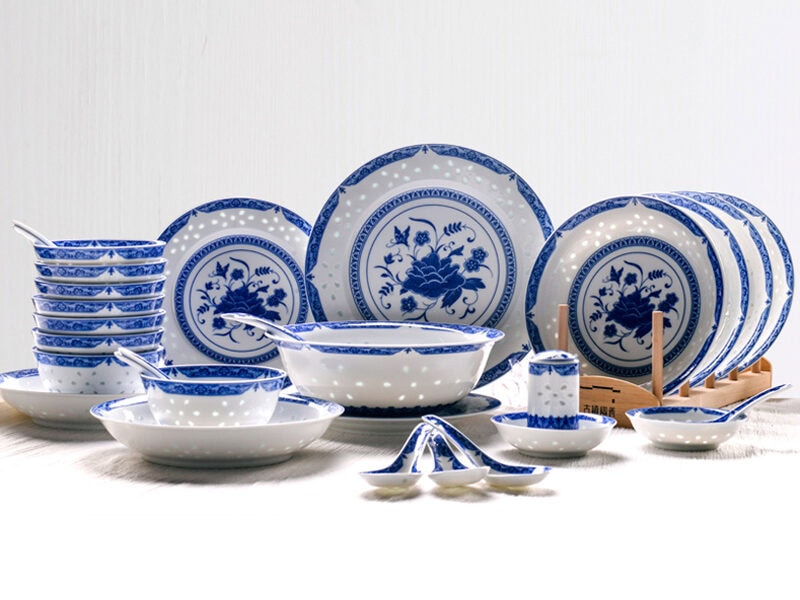
The most familiar form of Linglong Porcelain combines translucent openings with blue-and-white decoration. Cobalt-blue flowers, lotus petals, geometric borders, Chinese characters, and scrolling patterns are painted around the Linglong areas.
This combination creates two different visual effects. The blue-and-white decoration provides contrast and cultural character, while the translucent openings add lightness and depth.
Blue-and-white Linglong Porcelain is commonly used for:
- Rice bowls
- Dinner plates
- Soup bowls
- Tea cups
- Tea sets
- Lidded dishes
- Serving bowls
- Complete dinnerware sets
For buyers interested in traditional Jingdezhen ceramics, blue-and-white Linglong dinnerware offers a clear connection to the city’s porcelain heritage while remaining practical for contemporary dining.
Colorful Linglong Porcelain
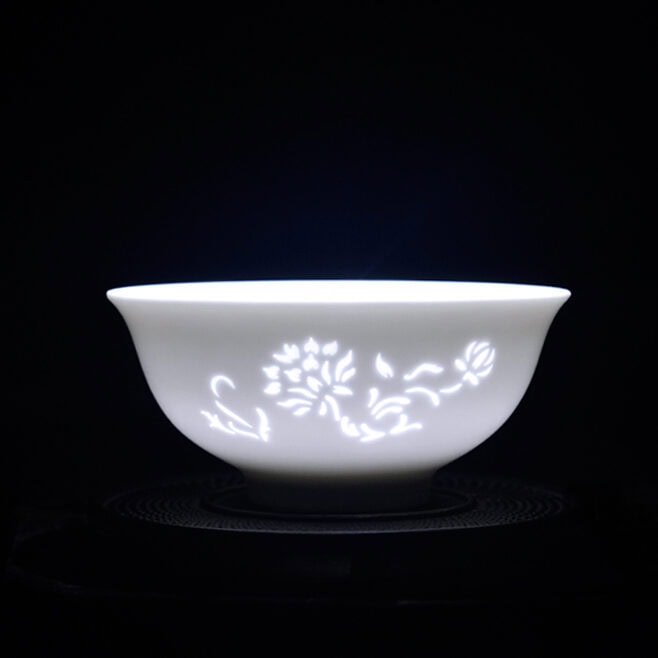
Modern Linglong Porcelain is not limited to blue-and-white designs. Colored glazes and multicolored decoration can be combined with translucent patterns to create a more contemporary appearance.
Popular color options include green, yellow, red, pink, turquoise, and combinations of several colors. The translucent sections can be arranged as flowers, leaves, geometric shapes, Chinese characters, or repeating borders.
Colorful Linglong Porcelain is suitable for lifestyle brands, gift collections, restaurants, boutique hotels, and retailers seeking products that feel traditional but visually distinctive.
Buyers should confirm whether the colors are created through underglaze, in-glaze, overglaze, or colored-glaze techniques. Different methods can affect appearance, production cost, firing requirements, and suitability for commercial washing.
How Buyers Can Evaluate Linglong Porcelain
When inspecting Linglong Porcelain, buyers should look beyond the overall pattern. The quality of the translucent sections is especially important.
Key inspection points include:
- Whether the Linglong openings are evenly arranged
- Whether the translucent glaze completely fills each opening
- Whether there are cracks, pinholes, or missing glaze
- Whether the surface feels smooth
- Whether the vessel is symmetrical
- Whether the foot ring is stable
- Whether the blue-and-white or colored decoration is clear
- Whether the pieces stack properly
- Whether the glaze color is reasonably consistent
- Whether the product meets the agreed dimensions and weight
Minor variations can occur because Linglong Porcelain involves cutting, glazing, and high-temperature firing. Slight differences in color, pattern position, dimensions, and translucent areas may be normal if they remain within the agreed production tolerance.
A professional Jingdezhen porcelain manufacturer should establish inspection standards before mass production and explain which variations are acceptable.
What Should Buyers Confirm Before Ordering?
Before placing a wholesale order, buyers should provide clear product requirements. These may include:
- Product type
- Diameter, height, and capacity
- Quantity per item
- Number of pieces per set
- Blue-and-white or colored design
- Logo requirements
- Packaging method
- Target market
- Food-contact testing requirements
- Dishwasher or microwave requirements
- Target delivery date
If a buyer needs a complete dinnerware set, every component should be listed separately. For example, the order may include dinner plates, side plates, rice bowls, soup bowls, serving dishes, cups, and lidded bowls.
Buyers should also ask whether existing molds and patterns are available. Using existing products can simplify development, while customized shapes and newly designed Linglong patterns may require sampling, mold development, and a higher MOQ.
Is Linglong Porcelain Suitable for Hotels and Restaurants?
Linglong Porcelain can be used in hotels and restaurants, particularly in Chinese restaurants, fine dining venues, tea rooms, cultural restaurants, and hospitality spaces that want a strong visual connection to Chinese ceramic culture.
However, commercial buyers should evaluate the product according to its actual use. Important considerations include rim strength, stacking stability, washing frequency, decoration method, replacement availability, and the delicacy of the Linglong pattern.
A heavily decorated or highly intricate product may be more suitable for private dining rooms, tea service, VIP areas, or presentation dishes. Simpler Linglong dinnerware may be better for frequent daily service.
Commercial buyers should request appropriate testing if they require dishwasher resistance, microwave suitability, or compliance with food-contact regulations in the destination market.
From Tableware to Art Porcelain
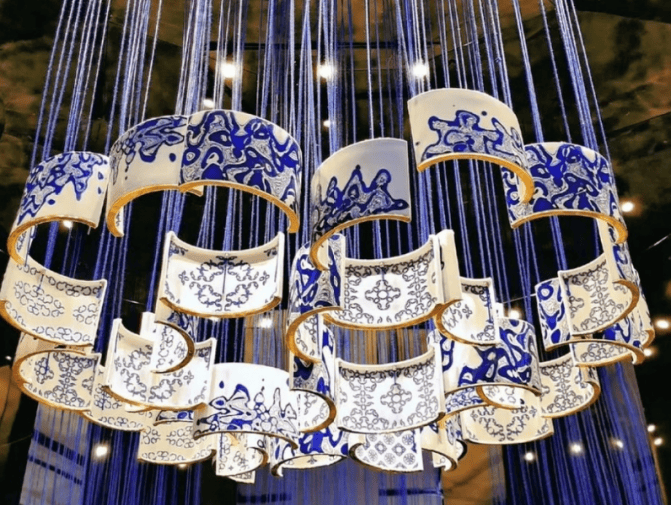
The visual language of Linglong Porcelain can extend beyond functional dinnerware. Its relationship with light makes it suitable for art porcelain, decorative lamps, sculptural objects, screens, and contemporary interior pieces.
Designers can enlarge, repeat, or reinterpret the translucent patterns to create surfaces that change under different lighting conditions. This provides opportunities to combine traditional Jingdezhen craftsmanship with modern architectural and interior design.
The same principle can also inspire ceramic installations for hotels, restaurants, galleries, cultural spaces, and commercial interiors. A suspended installation made from multiple translucent porcelain components, for example, can create changing patterns of light and shadow throughout a space.
Why Source Linglong Porcelain from Jingdezhen?
Jingdezhen has a well-established ceramic production system that includes raw materials, forming, hand decoration, glazing, firing, design, quality inspection, and export services.
Experienced Jingdezhen ceramic manufacturers understand that Linglong Porcelain requires coordination between the shape, cutout pattern, translucent glaze, surface decoration, and firing process. A successful product must be attractive, functional, and suitable for repeated production.
For overseas buyers, working with an experienced supplier can make it easier to develop coordinated dinnerware sets, customized decorations, private-label packaging, and products adapted to different markets.
Conclusion
Linglong Porcelain is more than porcelain with decorative openings. It represents a careful balance of material, craftsmanship, pattern, and light. Its translucent details give ordinary tableware a distinctive character and also provide inspiration for art porcelain and ceramic installations.
For buyers, quality depends on the precision of the openings, the clarity of the translucent glaze, the stability of the porcelain body, the decoration method, and consistency across the production batch. Clear specifications, sample approval, inspection standards, and appropriate packaging are therefore essential.
Based in Jingdezhen, China, Magic Cube works with local ceramic craftsmanship and manufacturing resources to supply Linglong Porcelain, blue-and-white dinnerware, colorful Linglong products, and customized porcelain solutions. By connecting traditional Jingdezhen ceramics with contemporary design and international purchasing needs, Magic Cube helps overseas buyers develop distinctive porcelain collections for retail, hospitality, gifting, and private-label markets.