What should be noted when ordering custom hotel tableware in bulk?
News 2026-08-21 56
Choosing a custom hotel tableware manufacturer involves much more than comparing product photos and unit prices. Hotel and restaurant tableware must perform reliably during daily service, frequent washing, repeated stacking, and long-term replenishment. An attractive plate may look suitable in a catalog but still fail if it chips easily, does not fit commercial dish racks, or varies too much between production batches.
Before placing a bulk order, hotel groups, restaurant chains, importers, distributors, and hospitality suppliers should confirm the product specifications, customization method, quality standards, packaging, and production schedule with their hotel dinnerware supplier.
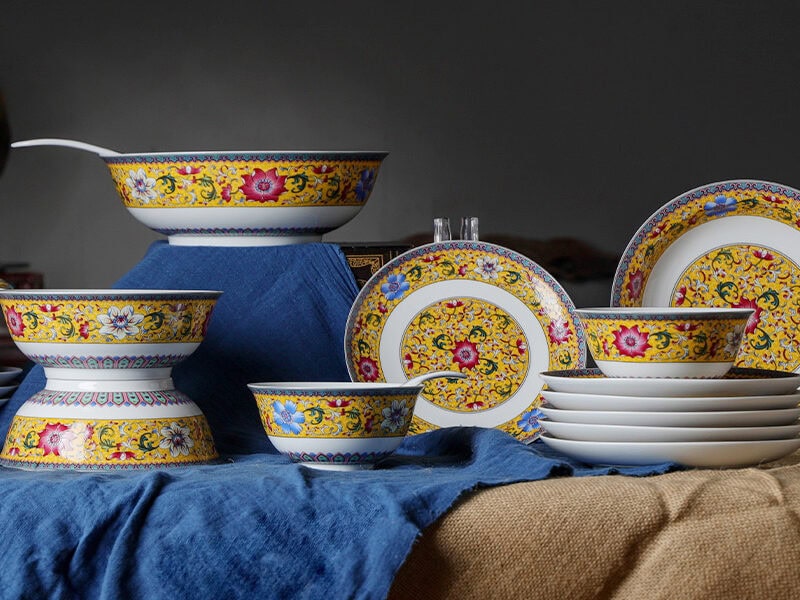
1. Custom Hotel Tableware vs Household Tableware
Household tableware is usually designed for lighter daily use. Commercial dinnerware, however, may be used several times a day and exposed to commercial dishwashers, frequent stacking, fast table turnover, and constant handling by service staff.
Hotel and restaurant dinnerware therefore needs:
- Stronger bodies and reinforced rims
- Stable bases that sit securely on tables
- Consistent sizes for stacking and storage
- Smooth glazed surfaces for easier cleaning
- Shapes that work with commercial dish racks
- Reliable replacement availability
- Controlled weight for efficient handling
Fine dining restaurants may prioritize elegant shapes and detailed presentation, while buffets, cafés, banquet halls, and casual dining restaurants often need heavier, more durable products. A qualified custom hotel dinnerware manufacturer should recommend different body structures according to the intended use rather than offering the same dinnerware to every buyer.
2. Common Sizes for Plates, Bowls, and Cups
Product dimensions should be confirmed in both inches and centimeters. Product names such as “dinner plate” or “small bowl” can mean different sizes in different markets.
Common plate sizes include:
- 6–7 inches: bread, dessert, or side plate
- 8–9 inches: salad, breakfast, or appetizer plate
- 10–11 inches: main dinner plate
- 12 inches and above: charger, buffet, or presentation plate
Common bowl types include:
- Rice bowls
- Cereal bowls
- Soup bowls
- Pasta bowls
- Salad bowls
- Serving bowls
For cups and mugs, buyers should confirm the volume in milliliters or ounces. Espresso cups, cappuccino cups, tea cups, coffee mugs, and breakfast cups serve different purposes and require different capacities.
When purchasing through a restaurant tableware wholesale program, buyers should also confirm rim diameter, product height, foot-ring diameter, usable food area, and stacking height. These details affect food presentation, storage space, dishwashing, and daily restaurant operations.
3. Logo, Color, and Shape Customization
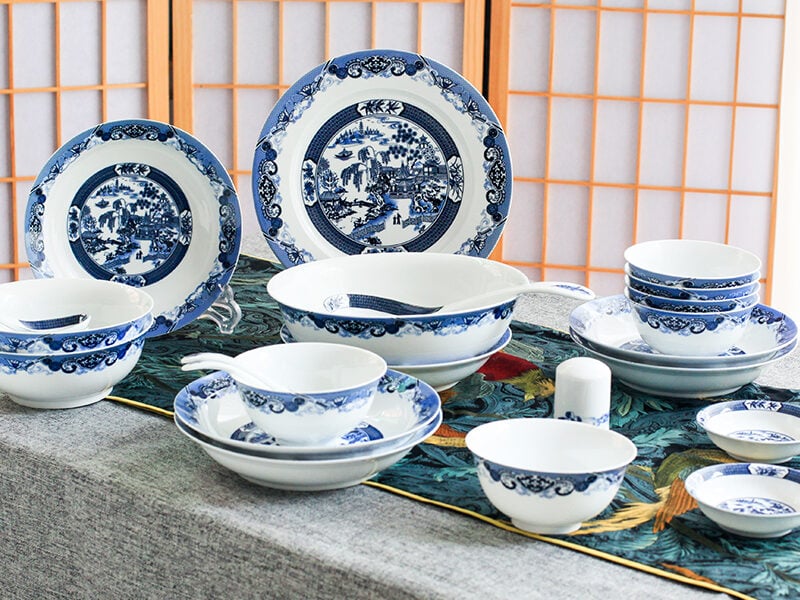
Custom porcelain tableware can be developed around a hotel’s brand identity, restaurant concept, interior color scheme, or menu presentation.
Common customization options include:
- Hotel or restaurant logos
- Custom glaze colors
- Underglaze or overglaze decoration
- Decal printing
- Hand-painted details
- Gold or platinum rims
- Embossed logos
- Relief patterns
- Custom rims and edges
- New shapes and molds
- Branded gift or retail packaging
Decoration should be selected according to how the dinnerware will be used. A logo placed in the center of a plate may be covered by food, while a rim logo remains more visible during service. Metallic decoration can create a premium appearance but may require different care from standard glazed porcelain.
Custom colors also need careful confirmation. Colors shown on a computer screen cannot perfectly represent the final fired glaze. Physical color samples are more reliable, especially when the tableware must match an existing hotel or restaurant design system.
4. Confirm the MOQ Before Starting
MOQ is one of the first details buyers should discuss with a supplier. The minimum quantity can vary according to the product shape, decoration, glaze color, packaging, and whether a new mold is required.
For many custom dinnerware projects, the MOQ starts at approximately 100 sets, but the exact requirement depends on the product and production batch. A completely new shape may require a higher quantity because mold development, kiln loading, glaze preparation, and production setup create additional costs.
Buyers should ask whether the MOQ is calculated:
- Per item
- Per design
- Per color
- Per set
- Per production batch
This is especially important for mixed sets. Ordering 100 dinnerware sets does not always mean that every item can use a different decoration. A professional hotel dinnerware supplier should explain the MOQ structure before sampling begins.
5. Sample Confirmation Process
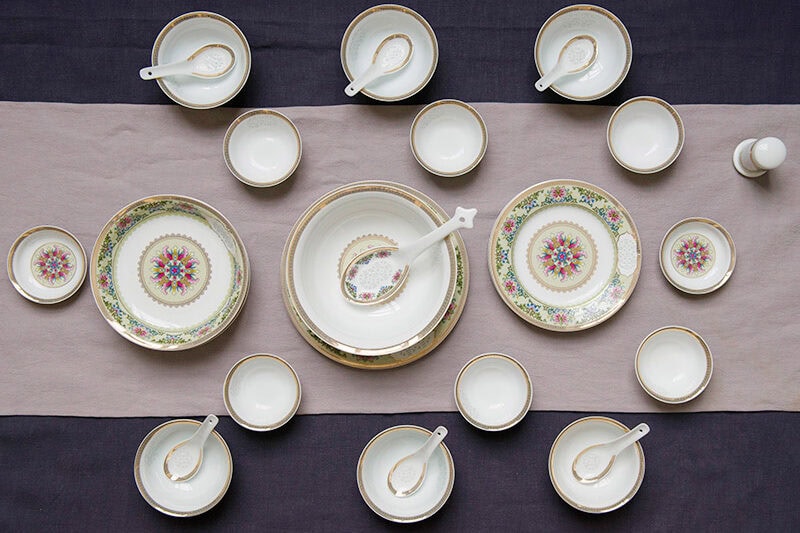
A physical sample is an important step before mass production. Drawings and digital renderings can confirm the general concept, but they cannot fully show the finished weight, glaze texture, rim thickness, color, or handle comfort.
The sample confirmation process normally includes:
- Confirming product dimensions and capacity
- Reviewing artwork and logo placement
- Selecting the body, glaze, and decoration method
- Producing the first sample
- Checking appearance and function
- Revising details if necessary
- Approving a final production sample
If a special white porcelain body or unusual size is required, sample production may take approximately 15–20 days. New molds and complex decorations may require additional time.
The approved sample should become the reference standard for mass production. Buyers should keep a signed or photographed record of the final sample, including its dimensions, color, decoration, and packaging.
6. Color Variation, Glaze Differences, and Size Tolerances
Ceramic products are shaped, glazed, and fired at high temperatures. Small variations may occur because of kiln position, glaze thickness, raw material behavior, and temperature changes.
Possible variations include:
- Slight differences in glaze color
- Small changes in dimensions
- Minor differences in weight
- Natural glaze movement
- Small variations in handmade decoration
- Minor differences in pattern position
These characteristics are not automatically quality defects if they remain within the agreed production tolerance.
Before ordering, buyers should define acceptable standards with the custom hotel dinnerware manufacturer. The agreement should cover dimensions, weight, color range, glaze quality, flatness, logo position, and acceptable visual differences.
Clear tolerance standards help prevent disputes and allow the inspection team to evaluate the order consistently.
7. Commercial Dishwashing and Durability
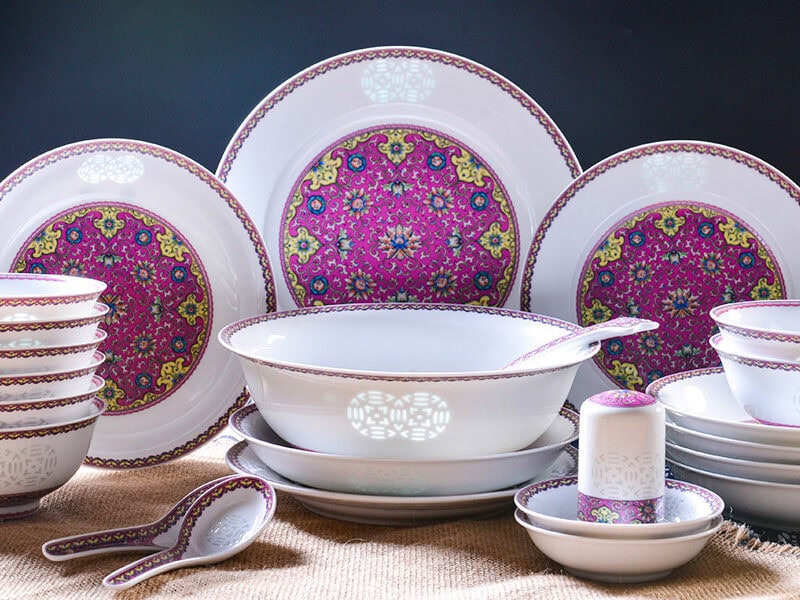
Hotel dinnerware should be evaluated according to its actual service environment. A product used in a fine dining restaurant may have different performance requirements from one used in a large buffet or banquet facility.
Buyers should discuss:
- Resistance to commercial dishwashing
- Rim and edge strength
- Stacking performance
- Thermal shock requirements
- Scratch and cutlery-mark resistance
- Glaze durability
- Food-contact requirements
- Microwave suitability
- Oven suitability, if required
Not every decorative method is suitable for every type of use. Metallic rims, hand-painted finishes, and special-effect glazes may need different care. If dishwasher, microwave, or food-contact compliance is required, the buyer should specify the destination market and request appropriate testing or documentation.
A reliable Jingdezhen porcelain manufacturer should not simply describe every product as durable. The supplier should explain which body, glaze, and decoration method is suitable for the buyer’s operating conditions.
8. Export Packaging and Breakage Control
Ceramic tableware needs protective packaging for international transportation. Packaging designed for local delivery may not be sufficient for sea freight, air freight, warehouse handling, and final distribution.
Common export packaging includes:
- Protective paper or foam between pieces
- Individual sleeves
- Cardboard dividers
- Inner boxes
- Reinforced export cartons
- Molded pulp or foam inserts
- Pallets for large shipments
- Clear carton marks and item numbers
Packaging should prevent direct contact between ceramic surfaces and limit movement inside the carton. Heavy products should not be packed in cartons that are too large for safe handling.
Buyers should confirm the number of pieces per carton, carton dimensions, gross weight, net weight, pallet requirements, and replacement policy for transportation damage. Drop testing or trial packing may be useful for fragile shapes and e-commerce orders.
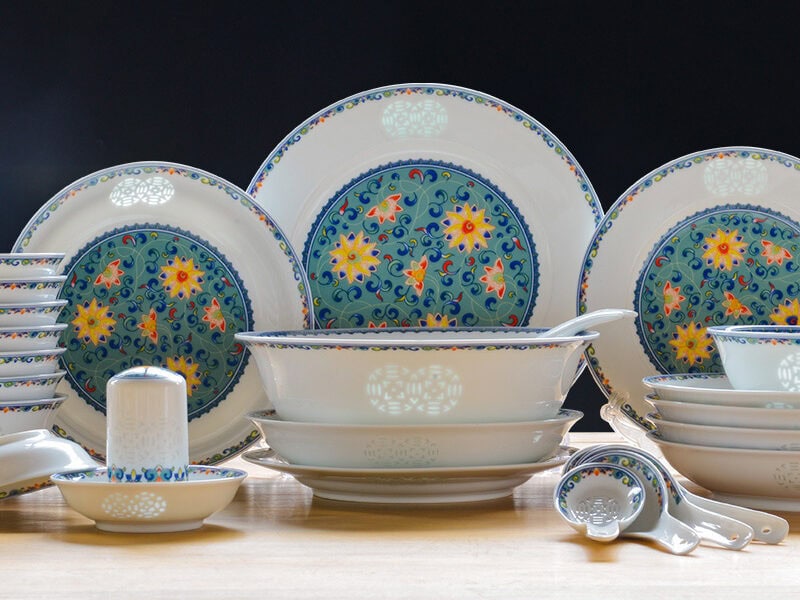
9. Bulk Production Schedule
Mass production should begin only after the final sample, artwork, packaging, price, and order details have been approved.
The production schedule can be affected by:
- Quantity and number of items
- Existing or newly developed molds
- Custom glaze preparation
- Decoration complexity
- Multiple firing processes
- Gift-box production
- Seasonal factory capacity
- Quality inspection requirements
Buyers should ask the supplier to separate the schedule into key stages, including material preparation, forming, firing, decoration, inspection, packaging, and shipment.
Production time should be calculated from final confirmation and deposit rather than from the date of the first inquiry. Buyers should also leave additional time for export booking, customs clearance, and international transportation.
For hotel openings and restaurant launches, the purchasing schedule should include enough time for sample revisions and unexpected production delays.
10. How to Submit a Clear Purchasing Request
A detailed inquiry allows the supplier to prepare a more accurate quotation. Instead of asking only for “the price of hotel plates,” buyers should provide:
- Company name and business type
- Destination country and port
- Hotel, restaurant, wholesale, or retail use
- Product photos or reference designs
- Required plate, bowl, cup, and saucer sizes
- Quantity per item or number of sets
- Logo and decoration requirements
- Preferred colors
- Packaging requirements
- Food-contact or performance standards
- Target delivery date
- Preferred trade terms
If the buyer does not yet have complete specifications, the supplier can recommend suitable options. However, quantity, destination, intended use, and customization requirements should be confirmed as early as possible.
Conclusion
Selecting a custom hotel dinnerware manufacturer is a long-term supply decision, not simply a one-time product purchase. Commercial buyers need consistent products, dependable production, clear quality standards, safe export packaging, and the ability to reorder matching items in the future.
A professional hotel dinnerware supplier should help buyers evaluate practical performance as well as appearance. By confirming dimensions, customization, MOQ, samples, tolerances, durability, packaging, and production schedules before ordering, importers and hospitality buyers can reduce risk and build a more reliable restaurant tableware wholesale program.
As a Jingdezhen porcelain manufacturer, Magic Cube combines local ceramic craftsmanship with product development, production coordination, quality control, and export packaging. We support international buyers seeking custom porcelain tableware for hotels, restaurants, catering projects, distributors, and private-label collections.