Pasta Tableware Wholesale: How to Choose Restaurant-Ready Dinnerware and Avoid Costly Sourcing Mistakes
News 2026-08-19 72
Pasta tableware does more than hold food. It directly affects plating, sauce control, the guest experience, and a restaurant’s overall presentation. For restaurant-supply importers, hospitality suppliers, food-service groups, distributors, and private-label brands, pasta tableware wholesale purchasing should involve more than comparing product photos and unit prices.
A plate’s depth, diameter, rim width, porcelain strength, glaze durability, stackability, and batch consistency can all influence its performance. Dinnerware that works beautifully at home may not withstand the demands of a busy commercial restaurant. Buyers should therefore select products based on their target market and real-world use.
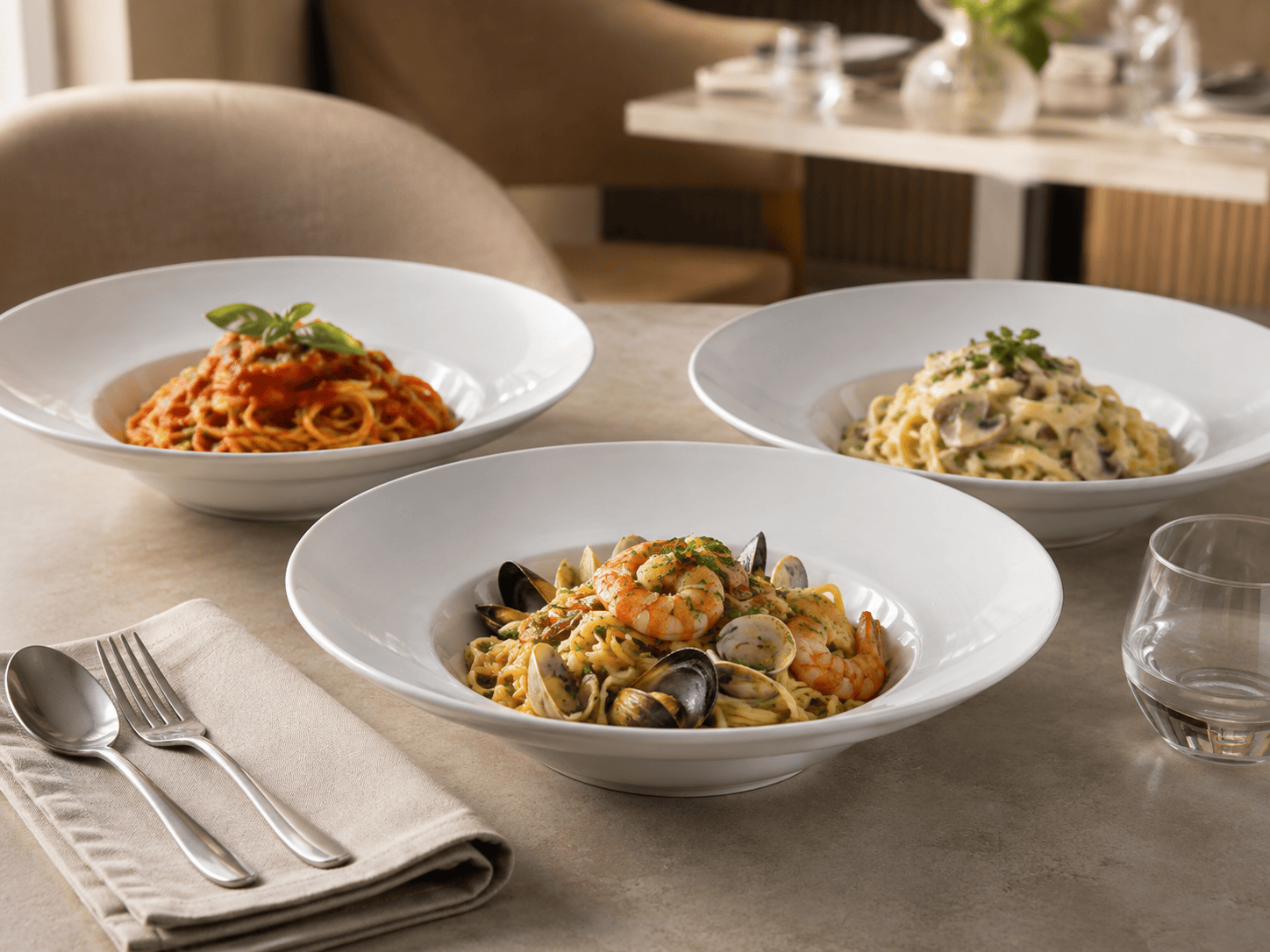
Which Products Belong in a Pasta Tableware Wholesale Collection?
Pasta tableware does not come in one standard shape. Different dishes, restaurant concepts, and plating styles require different plates and bowls.
Common options include:
- Wide-rim pasta bowls
- Shallow pasta bowls
- Deep soup plates
- Flat plates with broad rims
- Oval pasta platters
- Large seafood pasta plates
- Risotto bowls
- Salad bowls
- Bread and side plates
- Sauce dishes and condiment bowls
The wide-rim pasta bowl is one of the most common choices in restaurants. Its recessed center keeps the pasta and sauce contained, while the broad rim gives chefs enough room for refined presentation.
For seafood pasta, large portions, and family-style dishes, oval platters and generously sized shallow bowls may be more practical.
Before requesting a quote, buyers should specify whether the tableware is intended for fine dining, casual restaurants, hotel buffets, home retail, or food-service distribution. Each market has different expectations regarding size, weight, decoration, and durability.
How Should Buyers Choose the Right Size and Shape?
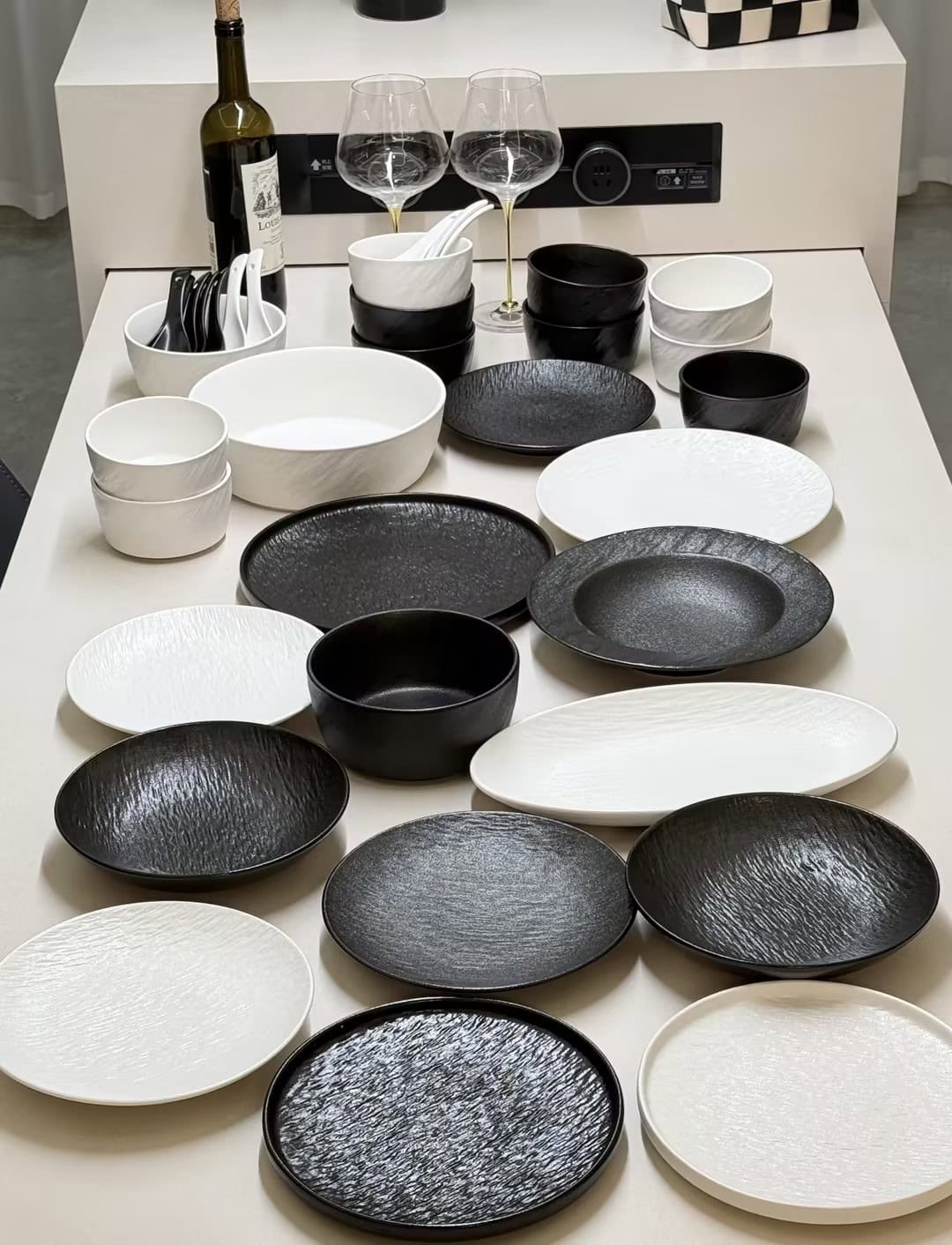
In a pasta tableware wholesale project, plate dimensions should not be selected for appearance alone. Buyers should also consider standard portion sizes, table space, dishwasher dimensions, and storage capacity.
Restaurant pasta plates often combine a broad rim with a deeper center. The rim frames the food and gives the dish a more polished appearance, while the recessed center helps contain sauces and keeps the pasta neatly arranged.
Important specifications include:
- Overall diameter
- Diameter of the food well
- Plate depth
- Rim width
- Unit weight
- Total and recommended serving capacity
- Foot-ring diameter
- Stacking height
Two plates with the same outside diameter may offer very different usable serving areas. An extra-wide rim may look elegant but leave too little room for food. A plate that is too deep may resemble a soup bowl and may not suit refined pasta presentations.
What Performance Features Matter in Commercial Pasta Tableware?
Restaurant dinnerware goes through repeated use, stacking, handling, and high-temperature washing every day. Its working conditions are much more demanding than those of ordinary household tableware. Commercial pasta tableware wholesale purchasing should therefore prioritize durability and consistency.
Buyers should first examine the density of the porcelain body, the smoothness of the rim, and the stability of the foot. A plate should sit securely on a level surface without noticeable rocking. Stacks should also remain stable and should not lean excessively.
Glaze quality is equally important. Restaurant tableware frequently comes into contact with forks and knives. If the glaze has poor wear resistance, the surface may quickly develop gray metal marks, scratches, or a dull appearance.
Buyers should also confirm whether the specific product is suitable for commercial dishwashers, sanitizing equipment, and microwave use. These properties should be verified for each material and decoration method rather than assumed.
Weight requires balance as well. Plates that are too light may lack stability or durability, while excessively heavy plates increase the physical burden on servers and kitchen staff. Commercial dinnerware should balance strength, weight, and ease of handling.
White Porcelain, Colored Glazes, or Custom Designs?
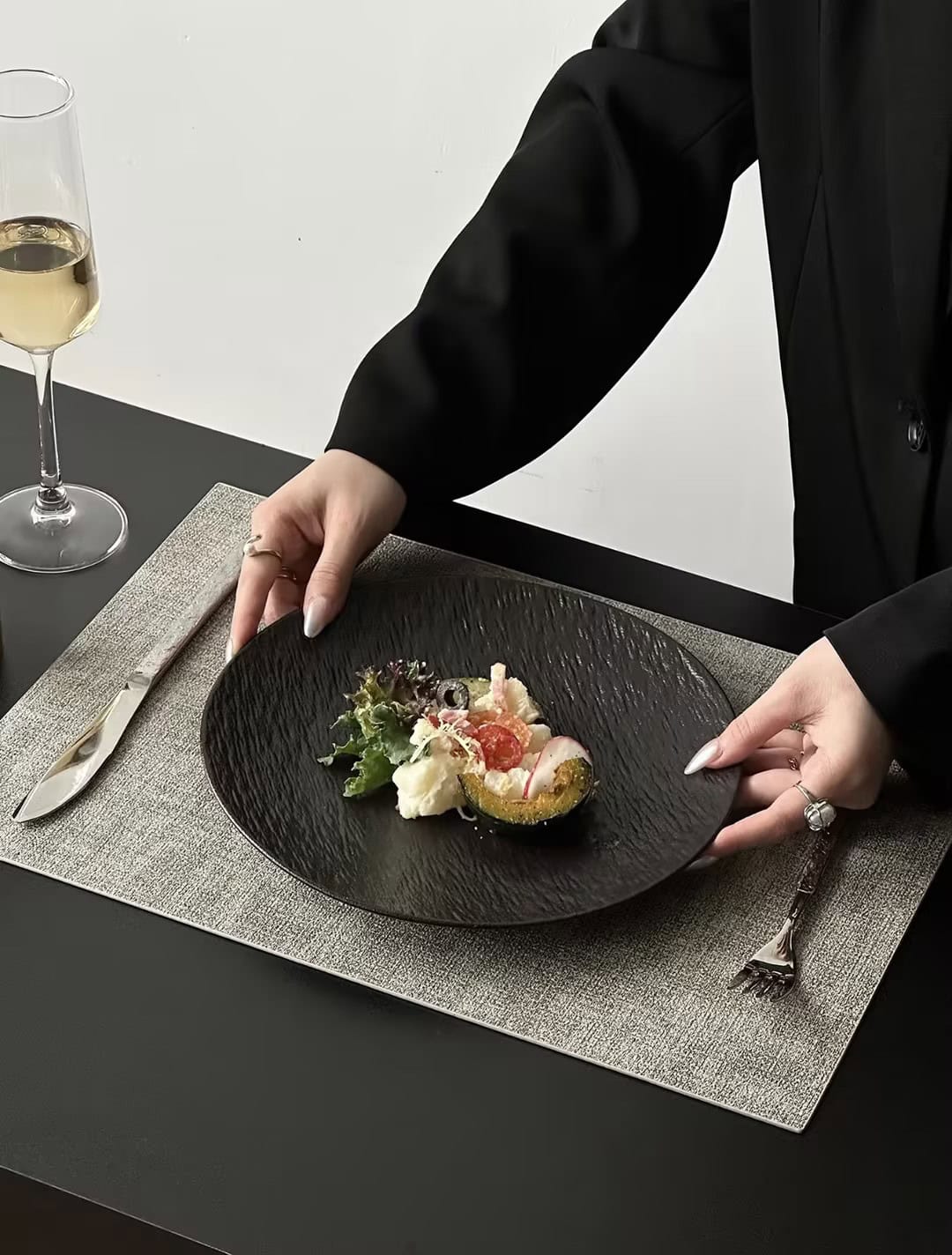
White porcelain highlights the colors of food and remains one of the most popular choices for restaurants and hotels. A white wide-rim pasta bowl works well with tomato sauce, pesto, cream sauce, seafood, and many other dishes. It can also be coordinated easily with an existing dinnerware collection.
Colored glazes can help a restaurant create a more distinctive visual identity. Beige, forest green, deep blue, and matte black are popular in modern restaurants, boutique hotels, and concept-driven dining spaces. Before ordering, buyers should inspect glaze consistency, wear resistance, and acceptable batch-to-batch color variation.
Customization may include:
- Restaurant logos
- Branded patterns
- Exclusive glaze colors
- Coordinated cup-and-plate collections
- Embossed or debossed branding
- Back stamps
- Custom retail packaging
- Custom shipping cartons and labels
Adding a logo or simple decoration can often be completed using an existing plate shape. Changing the diameter, depth, rim, or foot may require a new mold, increasing the development time and minimum order quantity.
How Can Buyers Control Batch Consistency?
Pasta plates usually have a relatively large surface area, making them more susceptible to slight warping during high-temperature firing. When approving samples, buyers should define acceptable standards for flatness, dimensions, color variation, and appearance.
A bulk inspection should check:
- Plate flatness
- Rim shape and deformation
- Foot stability
- Glaze consistency
- Unacceptable pinholes, crawling, or contamination
- Logo placement and color
- Stackability
- Inner packaging and carton strength
Ceramic products naturally have reasonable production tolerances, especially after firing. However, suppliers should not use “normal ceramic variation” to excuse obvious quality problems.
A reliable pasta tableware wholesale supplier should establish clear acceptance standards before production and conduct appropriate inspections before packing.
Why Do Packaging and Transportation Matter?
Wide-rim pasta plates have larger exposed edges and may be more vulnerable to impact during transportation. Without sufficient separation and cushioning, the plates may develop chipped rims, hidden cracks, or surface abrasion.
Export packaging may require:
- Cushioning between individual plates
- Corrugated cardboard dividers
- Reinforced inner boxes
- Heavy-duty export cartons
- Carefully controlled carton quantities
- Pallets or other reinforcement methods
For e-commerce retail, packaging must withstand individual parcel delivery and repeated sorting. For hotel projects, distributors, and container orders, the packaging should balance carton strength, loading efficiency, weight, and ease of unloading.

How Should Buyers Evaluate a Supplier?
When choosing a pasta tableware wholesale partner, buyers should ask more than, “How much is each plate?”
A low unit price can become expensive if it comes with high breakage rates, inconsistent batches, delayed delivery, or difficulty obtaining matching replacements.
Buyers should evaluate:
- Availability of standard and customized products
- Ability to recommend suitable sizes and shapes
- Logo, glaze, and packaging customization
- Sample availability
- Minimum order quantity
- Control of differences between samples and bulk production
- Production and inspection management
- Export-packaging experience
- Consistency of future replenishment orders
Reliable long-term supply is particularly important for restaurant groups and distributors. An acceptable first shipment does not automatically guarantee that future orders will match. Buyers and suppliers should retain approved samples, color standards, production specifications, and packaging requirements.
Conclusion: The Right Pasta Plate Improves the Entire Dining Experience
Quality pasta tableware should support presentation, durability, cleaning efficiency, and reliable bulk supply. For buyers, successful pasta tableware wholesale sourcing is not about choosing the most decorative or least expensive plate. It is about finding dinnerware that matches the restaurant concept, distribution channel, and expected frequency of use.
Based in Jingdezhen, China, MC Ceramic supplies pasta plates, Western-style dinner plates, soup plates, salad bowls, coffee cups, and coordinated tableware collections. By combining our in-house handcrafting capabilities with long-term manufacturing resources, we support restaurant-supply importers, hospitality suppliers, distributors, and food-service brands with product selection, sampling, custom development, production follow-up, quality inspection, and export packaging.
If you are sourcing pasta tableware, send us your reference images, target dimensions, estimated quantity, color or logo requirements, and destination country. MC Ceramic can help match your project with tableware suitable for bulk purchasing and reliable long-term replenishment.