Supplies for Ceramics: A Buyer’s Guide to White Porcelain Blanks
News 2026-08-18 64
In ceramic decorating, private-label production, and artistic creation, finished porcelain is not the only sourcing option. Many decorating studios, ceramic finishing companies, gift suppliers, creative brands, and artists prefer to purchase pre-formed white porcelain blanks and apply their own painting, decals, gilding, enamels, or other surface treatments.
As an important category of supplies for ceramics, white porcelain blanks allow buyers to avoid clay preparation, forming, drying, and initial firing. This gives them more time to focus on decoration, product development, and branding.
However, a white porcelain blank is not simply an undecorated white ceramic product. Before purchasing, buyers should confirm the firing stage, porcelain composition, dimensions, surface condition, and compatibility with any planned finishing process.
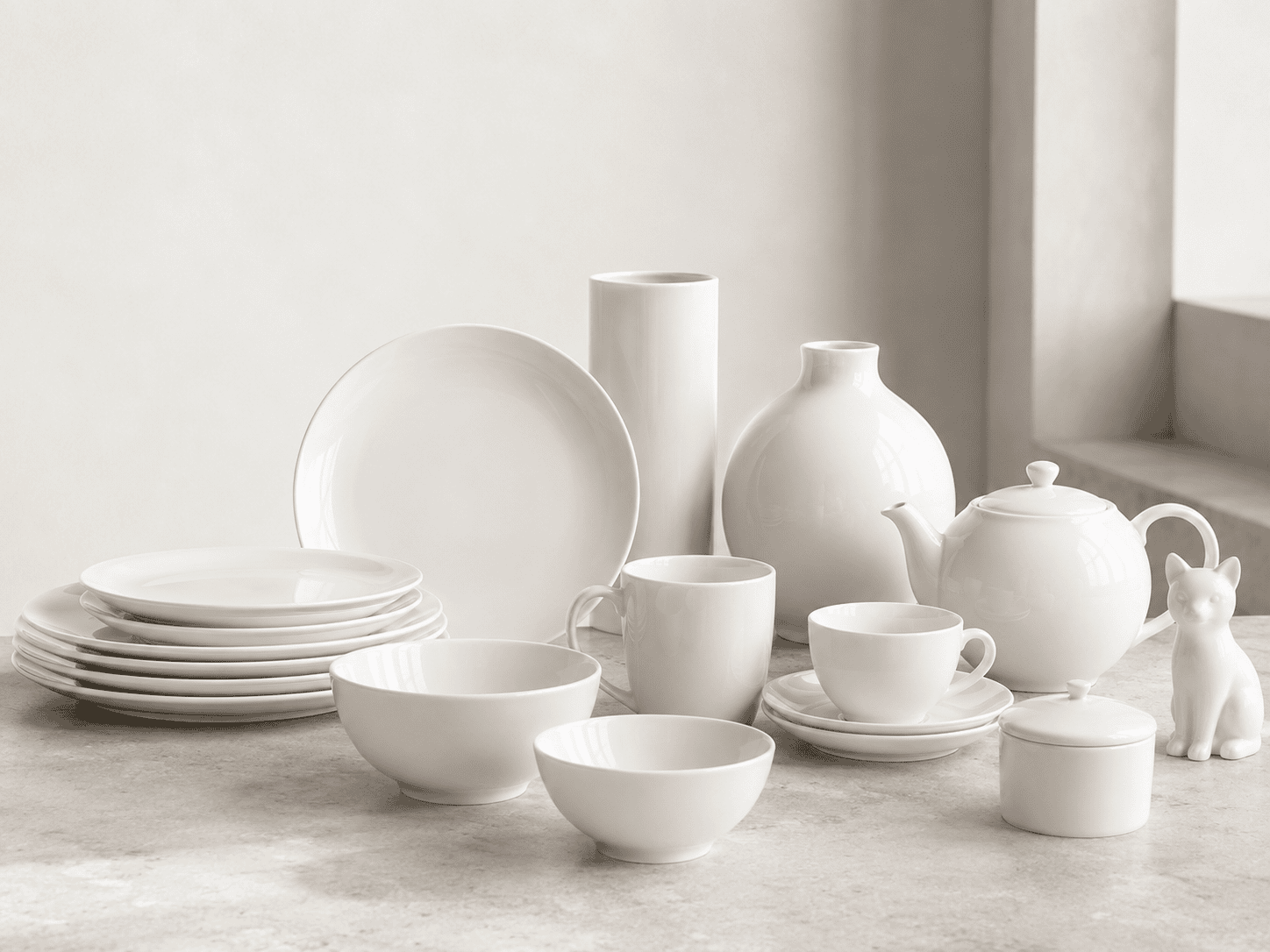
What Are White Porcelain Blanks?
Depending on the product’s condition, “白瓷胎” may be described in English as:
- White Porcelain Blanks
- Blank Porcelain
- Porcelain Bisque
- White Porcelain Bisque
- Undecorated Porcelain
Porcelain bisque usually refers to a formed porcelain body that has been fired but has not yet been glazed or decorated. Glazed porcelain blanks have already been glaze-fired and feature a smooth white or transparent-glazed surface. They can usually be decorated with overglaze painting, ceramic decals, gilding, or similar low-temperature finishing techniques.
When requesting a quotation, buyers should not simply ask for “white porcelain.” They should specify whether they need unglazed bisque, fully glazed white porcelain, or blanks that can withstand an additional decorating firing.
What Types of White Porcelain Blanks Are Available?
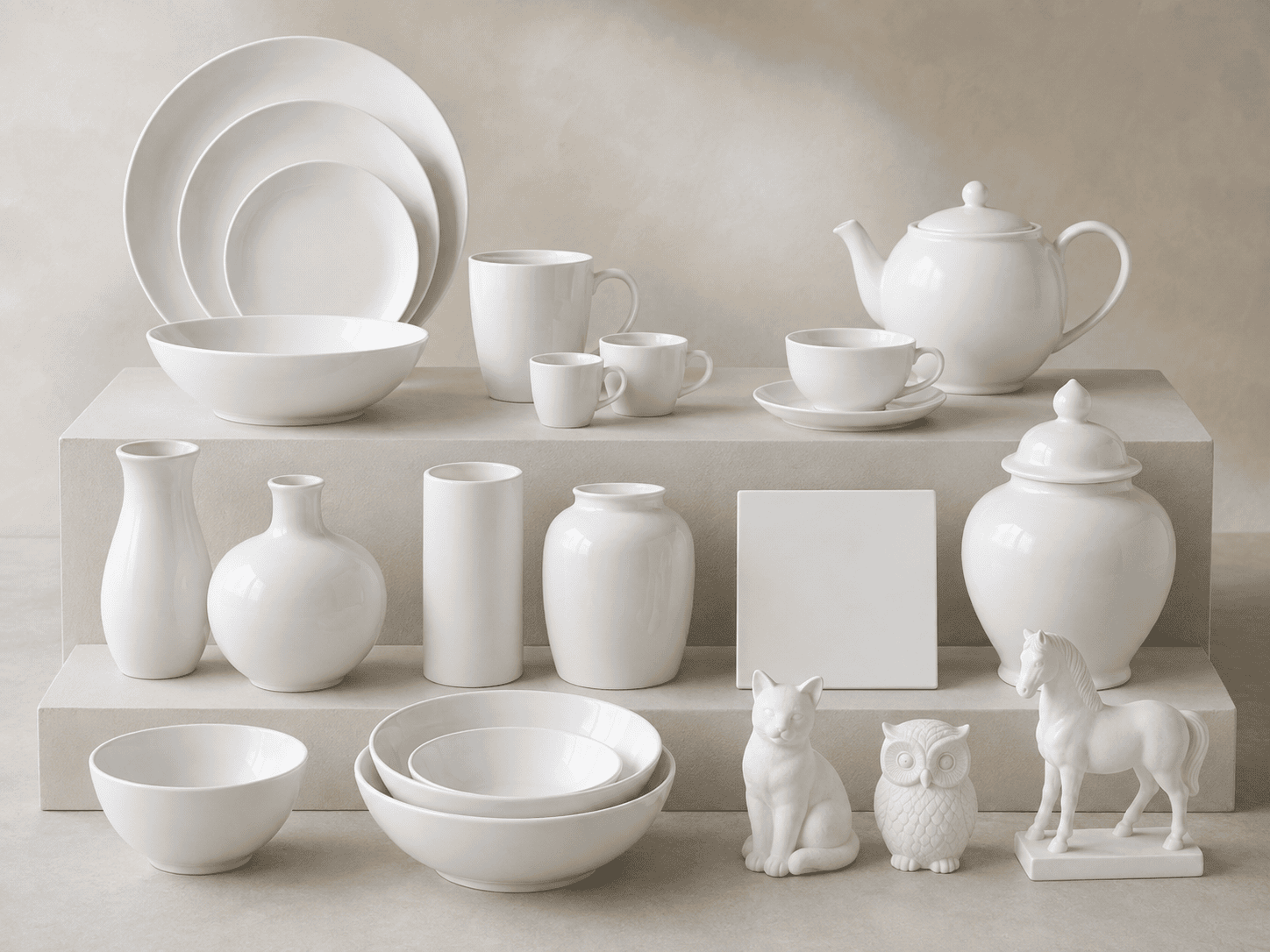
White porcelain blanks cover a wide range of functional and decorative products.
| Category | Common Products | Typical Finishing Applications |
|---|---|---|
| Dinnerware blanks | Dinner plates, bowls, saucers, and soup plates | Decals, hand painting, and custom logos |
| Drinkware blanks | Coffee cups, mugs, teacups, and cup-and-saucer sets | Branded gifts and custom café collections |
| Teaware blanks | Teapots, gaiwans, teacups, and tea canisters | Blue-and-white painting, famille rose, and gilding |
| Vase and jar blanks | Meiping vases, appreciation vases, ginger jars, and double-gourd vases | Hand painting, enameling, and antique-style decoration |
| Porcelain plaques | Round, square, and mural plaques | Ceramic painting and decorative wall art |
| Sculptures and figurines | Human figures, animals, and abstract forms | Artistic painting, carving, and mixed-media decoration |
| Lighting and installation components | Ceramic shades, hanging components, and specialty modules | Lighting assembly and ceramic art installations |
Each product category has different requirements for the porcelain body, forming method, and firing control. Plates require good flatness and stackability, while cups must be checked for rim quality, handle strength, and capacity. Large vases require more careful control of shrinkage, warping, and cracking.
What Is the Difference Between Unglazed Bisque and Glazed Porcelain Blanks?
Unglazed Porcelain Bisque
Unglazed bisque has a slightly absorbent surface. It is suitable for glazing, underglaze painting, or other processes that require another high-temperature firing.
Before placing an order, buyers should confirm:
- Bisque-firing temperature
- Water absorption
- Recommended final firing temperature
- Compatibility with the buyer’s glaze
- Expected shrinkage and deformation during firing
Different porcelain bodies and glazes may have different thermal-expansion characteristics. Applying an untested glaze can result in crazing, crawling, peeling, or unexpected color changes. A trial firing should therefore be completed before placing a large order.
Glazed White Porcelain Blanks
Glazed white porcelain blanks have smooth surfaces suitable for overglaze painting, ceramic decals, gilding, enameling, electroplating, and other low-temperature decorative processes.
These products are commonly purchased by painting studios, gift brands, and ceramic decorating companies. Buyers should still confirm whether the glaze can withstand the planned refiring temperature and whether the selected decals, pigments, or liquid gold will bond properly with the glaze.
What Technical Information Should Buyers Confirm?
1. Porcelain Composition
White porcelain blanks can be produced using different porcelain formulations. These formulas may vary in whiteness, translucency, mechanical strength, weight, and firing temperature.
Buyers should select the porcelain body according to the finished product’s intended use instead of focusing only on maximum whiteness.
2. Dimensions and Tolerances
Ceramics shrink during drying and firing. Handmade pieces, large vessels, and irregular forms normally have greater dimensional variation than standardized products.
When porcelain blanks must fit metal bases, lighting hardware, wooden frames, molded packaging, or other components, buyers should specify all critical connection dimensions and acceptable tolerances in advance.
3. Surface Quality
Depending on the planned decoration method, white porcelain blanks should be checked for:
- Cracks or hidden fractures
- Noticeable warping
- Pinholes, dark specks, or contaminants
- Bare spots, glaze crawling, or raised glaze defects
- Uneven rims
- Incomplete foot polishing
- Surface irregularities that may affect painting
Acceptable handmade characteristics should be established using an approved sample or limit sample before production.
4. Refiring Compatibility
If the buyer plans to apply decals, gilding, or overglaze colors, the supplier should be informed of the decorative materials and intended firing temperature.
Not every white porcelain blank is suitable for repeated firing. Excessive temperatures or rapid heating and cooling can cause cracking, deformation, or glaze defects.
5. Food-Contact Applications
If the finished blanks will be used as plates, bowls, cups, or teaware, the materials and decorative techniques should comply with the food-contact requirements of the destination market.
A compliant porcelain blank does not automatically mean that the finished decorated product will also comply. Pigments, decals, glazes, metallic decoration, and refiring conditions may all affect the final result. When required, testing should be performed on the completed product.

How Can White Porcelain Blanks Support Custom Ceramic Production?
For businesses without a complete ceramic production line, purchasing standard white porcelain blanks can significantly reduce the cost and complexity of product development.
Buyers can select established shapes and then add their own artwork, branding, colors, and packaging. Common development options include:
- Adding a restaurant logo or custom decal to white porcelain plates
- Applying custom colors, text, and gift packaging to coffee cups
- Decorating vases with blue-and-white painting, famille rose, enamel, or gilding
- Using porcelain plaques for hand-painted artwork and interior wall décor
- Developing sculptural blanks for lighting, decorative objects, and ceramic installations
- Creating custom molds and exclusive shapes based on the buyer’s design
For repeat bulk purchases, buyers should retain an approved sample. This sample can serve as the reference standard for dimensions, surface quality, and overall proportions on future orders.
Why Is Packaging So Important for White Porcelain Blanks?
Although white porcelain blanks have already been fired, cup handles, vase rims, specialty edges, and large ceramic forms remain vulnerable during transportation.
Export packaging may include:
- Individual protective bags or wrapping
- Inner boxes and dividers
- Molded pulp, foam, or custom-fitted inserts
- Reinforced export cartons
- Drop and stacking-risk assessment
- Extra protection around vulnerable areas
- Clear item numbers and shipping marks
Large vases, sculptures, and ceramic installation components may require custom wooden cases or support frames. When comparing suppliers, buyers should consider packaging and expected breakage as part of the total landed cost.
How Should Buyers Select a White Porcelain Blank Supplier?
A reliable supplier should offer more than a wide selection of shapes. The supplier should also understand ceramic decoration, glaze compatibility, and refiring requirements.
Buyers should ask:
- What types and sizes of white porcelain blanks are available?
- Are the products unglazed bisque or glazed white porcelain?
- Can the supplier provide information about firing temperature and materials?
- Are trial firing and decoration testing available?
- Can the supplier develop custom sizes, shapes, and molds?
- How are dimensional and whiteness variations controlled between batches?
- Does the supplier provide export packaging and quality inspection?
- What are the production lead time and replenishment capacity for bulk orders?
When sourcing supplies for ceramics, the lowest unit price does not always produce the lowest total cost. Incorrect dimensions, incompatible glazes, and shipping damage can make downstream processing far more expensive than the blanks themselves.
Conclusion: Build Your Ceramic Collection from White Porcelain Blanks
White porcelain blanks give decorating studios, ceramic finishing companies, gift brands, hospitality suppliers, and artists a flexible foundation for product development.
Buyers can choose existing shapes or develop exclusive molds, then create a distinctive collection through hand painting, decals, gilding, enameling, and other decorative techniques.
Based in Jingdezhen, China, MC Ceramic combines its own production capabilities with a reliable network of long-term partner factories. We can supply a wide range of white porcelain blanks, including plates, bowls, drinkware, teaware, vases, porcelain plaques, sculptures, and specialty ceramic components.
Based on the buyer’s finishing process, dimensional requirements, order quantity, and destination market, we can also help identify a suitable firing stage, product shape, and packaging solution.
If you are sourcing white porcelain blanks, porcelain bisque, or other supplies for ceramics, please provide product images, dimensions, quantities, glazing requirements, planned decorative process, and destination country. This information will help us recommend the most appropriate porcelain blanks for your project.