Antique Porcelain in Imperial Purple: The History and Beauty of 6 Chinese Porcelain Treasures
News 2026-08-15 68
Purple holds a distinctive place in the traditional Chinese color palette. It combines some of the richness of red with the calmness of blue, displaying subtle shades ranging from lavender and lilac to deep imperial purple under different lighting conditions. Because purple glazes and enamels can be difficult to formulate, apply, and fire successfully, well-preserved purple antique porcelain has considerable artistic and historical significance.
The six pieces featured in this article are genuine antique porcelain. They include a General Jar, a double-gourd vase, a lantern vase, a meiping vase, a beast-handled display vase, and a scholar’s brush washer. Each object uses purple as its primary visual theme, combined with famille rose enamels, sgraffito decoration, lotus scrolls, butterflies, gilding, and traditional auspicious motifs.
Unlike modern reproductions, genuine antique porcelain carries visible evidence of age. Variations in the glaze, painted decoration, porcelain body, wear, and firing characteristics can all provide important clues about a piece’s period, craftsmanship, and condition. For collectors, art buyers, and ceramic researchers, appreciating antique porcelain is not simply about admiring a beautiful object. It is also a way to understand the aesthetics, lifestyles, and craftsmanship of an earlier era.
Antique Porcelain No. 1: Qianlong Purple-Ground Famille Rose “Continuous Fortune” General Jar
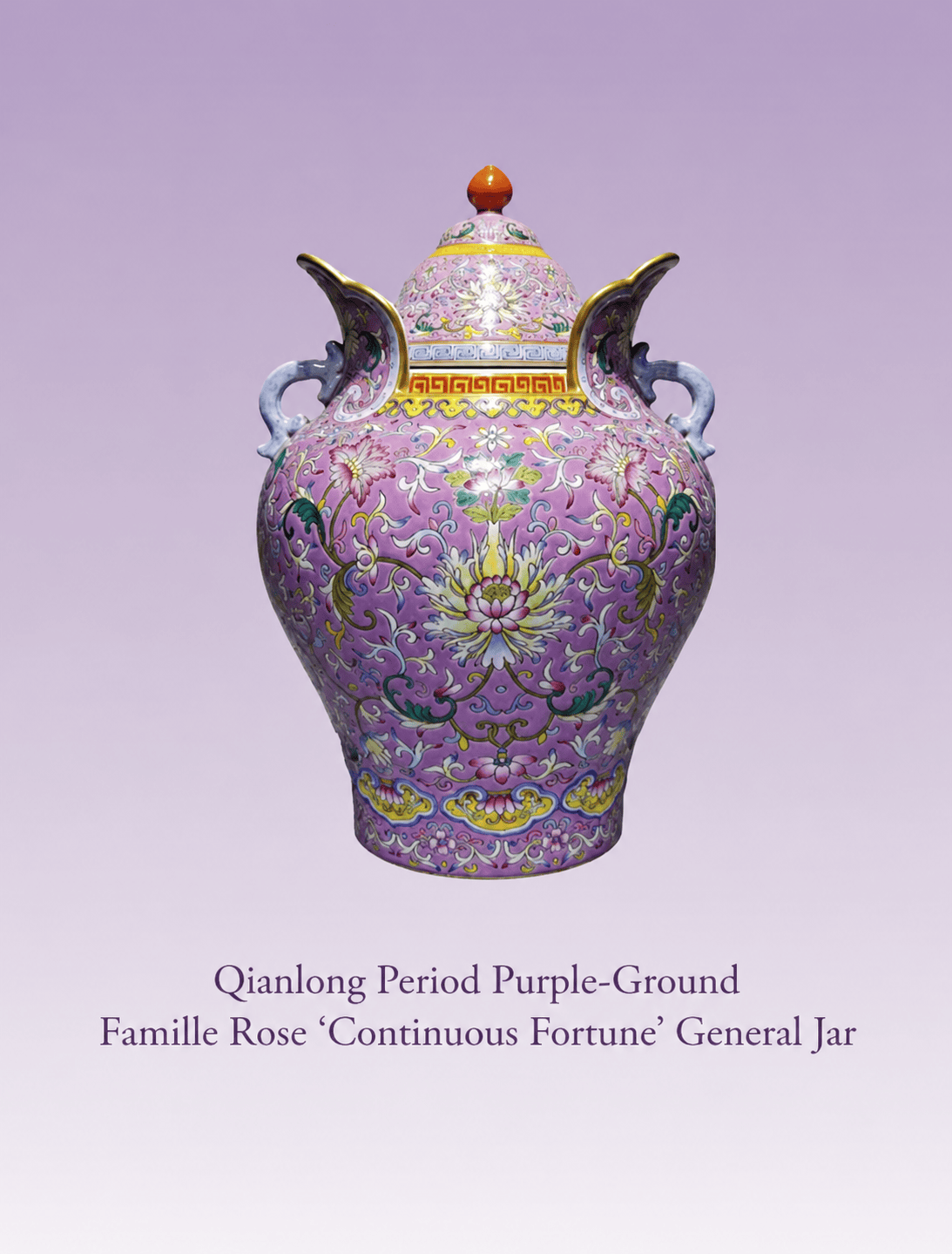
The first piece is a Qianlong-period purple-ground famille rose General Jar decorated with symbols of continuous good fortune. It features a full, dignified body, a fitted lid with a rounded finial, and symmetrical ornamental handles. Its upright silhouette feels substantial and commanding while retaining carefully controlled curves.
The body has a purple ground covered with lotus blossoms, scrolling foliage, ruyi motifs, and multiple decorative borders. Yellow, green, pink, white, and gold details create a richly layered composition. The continuous lotus scrolls represent blessings, prosperity, and vitality that continue without end, giving the jar its “Continuous Fortune” theme.
One of the most striking qualities of this antique porcelain is the balance between its substantial form and elaborate decoration. The broad purple ground allows the famille rose enamels and gilded details to stand out, reflecting the Qianlong era’s preference for technical refinement, abundant ornament, and complex color combinations.
Antique Porcelain No. 2: Early Qing Purple-Glazed Sgraffito Famille Rose Double-Gourd Vase
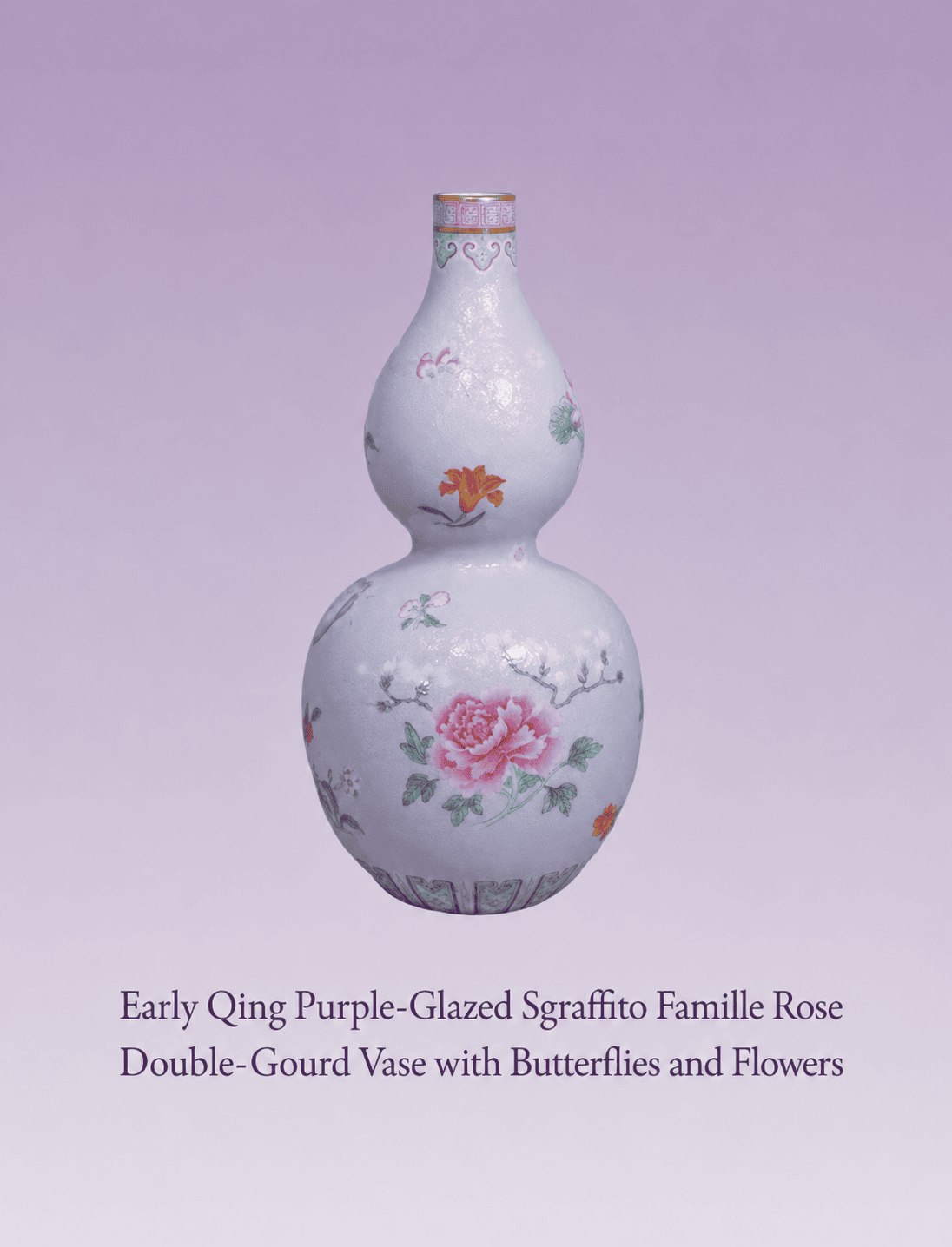
The second piece is an early Qing purple-glazed sgraffito famille rose double-gourd vase. Its two rounded sections flow smoothly into one another, creating a balanced and rhythmic silhouette. In traditional Chinese culture, the gourd symbolizes good fortune, health, longevity, and protection, making it a popular form in antique porcelain.
The vase is covered in a soft lavender-purple glaze with a finely incised sgraffito texture. Butterflies and colorful flowers are scattered across both sections of the vessel, creating a lively “butterflies among flowers” composition. Compared with heavily decorated imperial antique porcelain, this vase preserves more open purple space, allowing the individual flowers and butterflies to appear light and animated.
The two-part gourd form also provides separate areas for decoration. The upper section has a more open arrangement, while a large peony dominates the lower body. Together, the graceful shape, soft purple ground, and famille rose decoration create a refined atmosphere filled with natural vitality.
Antique Porcelain No. 3: Purple-Ground Sgraffito Famille Rose Lantern Vase
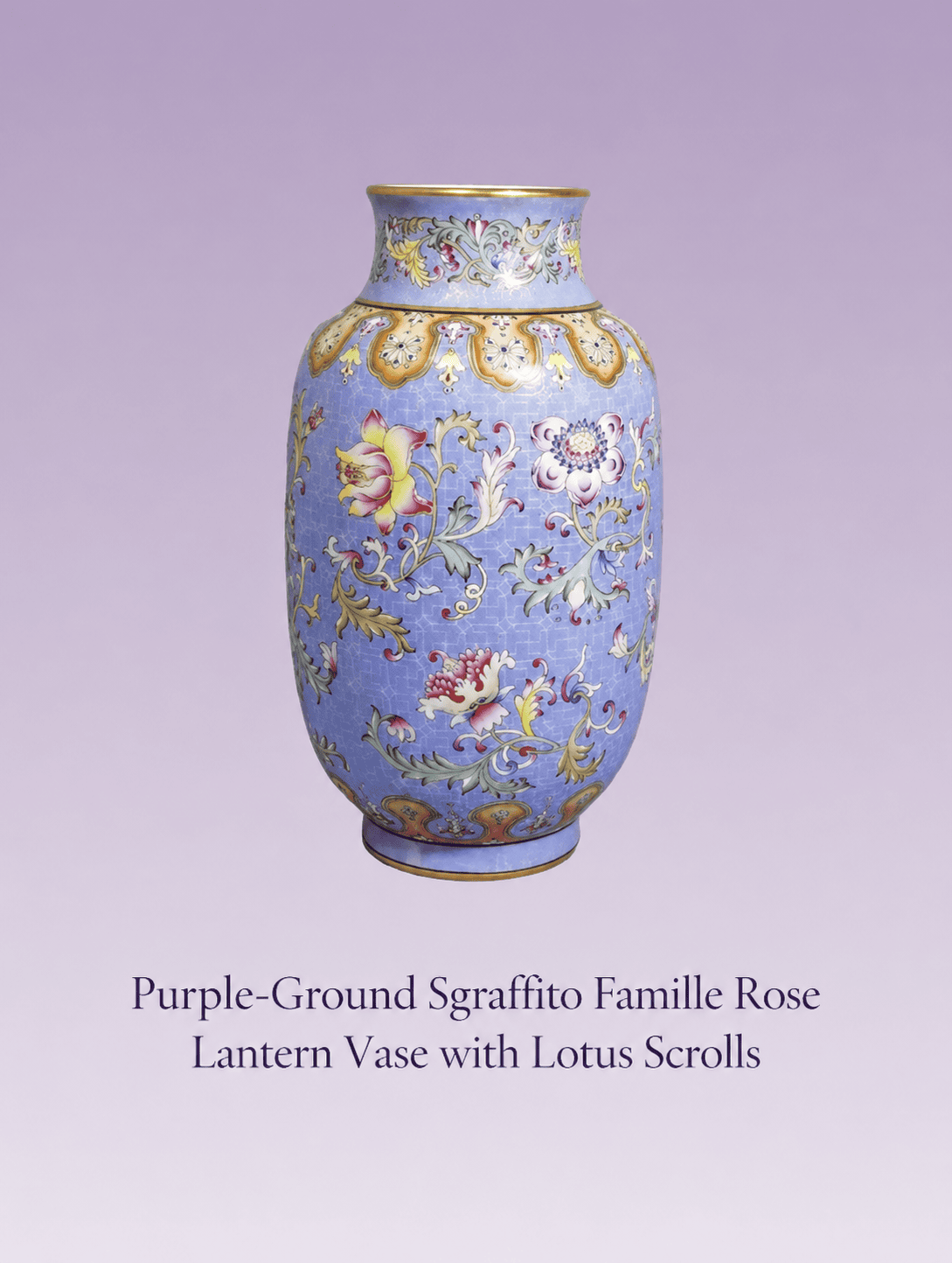
The third piece is a purple-ground sgraffito famille rose lantern vase. Lantern vases typically have a short neck, rounded shoulders, and relatively straight sides, giving them a shape reminiscent of a traditional Chinese lantern. Their stable, balanced form provides an excellent surface for large continuous patterns.
This vase has a blue-purple ground filled with finely incised sgraffito decoration. Famille rose lotus scrolls extend from the shoulders across the body, with flowers, leaves, and curling vines arranged in a continuous composition. Accents of yellow, pink, green, white, and gold enrich the design.
Lotus scrolls are among the most important decorative motifs found on Chinese antique porcelain. The continuously growing vines symbolize vitality and continuity, while the blooming lotus represents purity, harmony, and prosperity. Although the composition is elaborate, its individual elements remain carefully organized, demonstrating the ceramic artist’s control of proportion, color, and visual rhythm.
When evaluating antique porcelain of this type, collectors should examine the symmetry of the form, the condition of the rim and foot, the natural appearance of the sgraffito texture, and any visible enamel loss or later restoration.
Antique Porcelain No. 4: Qing Dynasty Purple-Ground Famille Rose Meiping Vase with Butterflies
The fourth piece is a Qing dynasty purple-ground famille rose meiping vase decorated with butterflies. The meiping is one of the most recognizable forms in Chinese ceramic history, traditionally featuring a small opening, short neck, broad shoulders, tapering body, and narrow lower section.
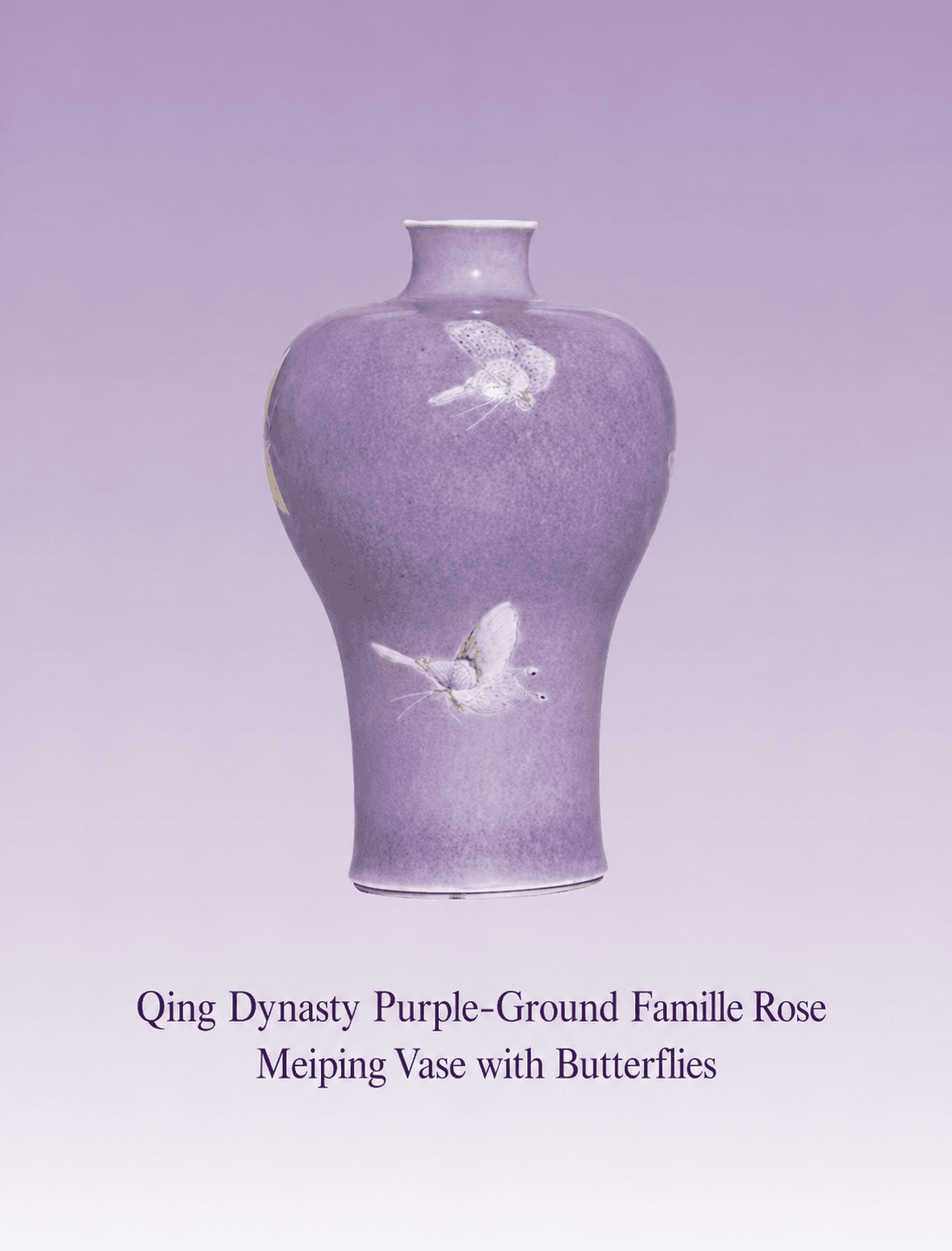
Compared with the first three pieces, this antique porcelain vase has a noticeably simpler composition. Its body is covered in a soft purple glaze and decorated with only a few butterflies. These butterflies appear to move freely across the open purple surface, adding a light sense of motion to an otherwise calm vessel.
Much of the vase’s beauty comes from its elegant silhouette. The broad shoulders gradually narrow toward the base, making the form feel stable without appearing heavy. Subtle variations and traces of age across the purple glaze give the piece a character that modern reproductions cannot completely recreate.
Blue-and-white porcelain is known for its strong cobalt-and-white contrast, while Linglong porcelain is admired for its translucent pierced decoration. This purple meiping vase takes a different approach, expressing understated elegance through glaze, open space, and restrained painted details.
Antique Porcelain No. 5: Purple-Ground Famille Rose Beast-Handled Display Vase
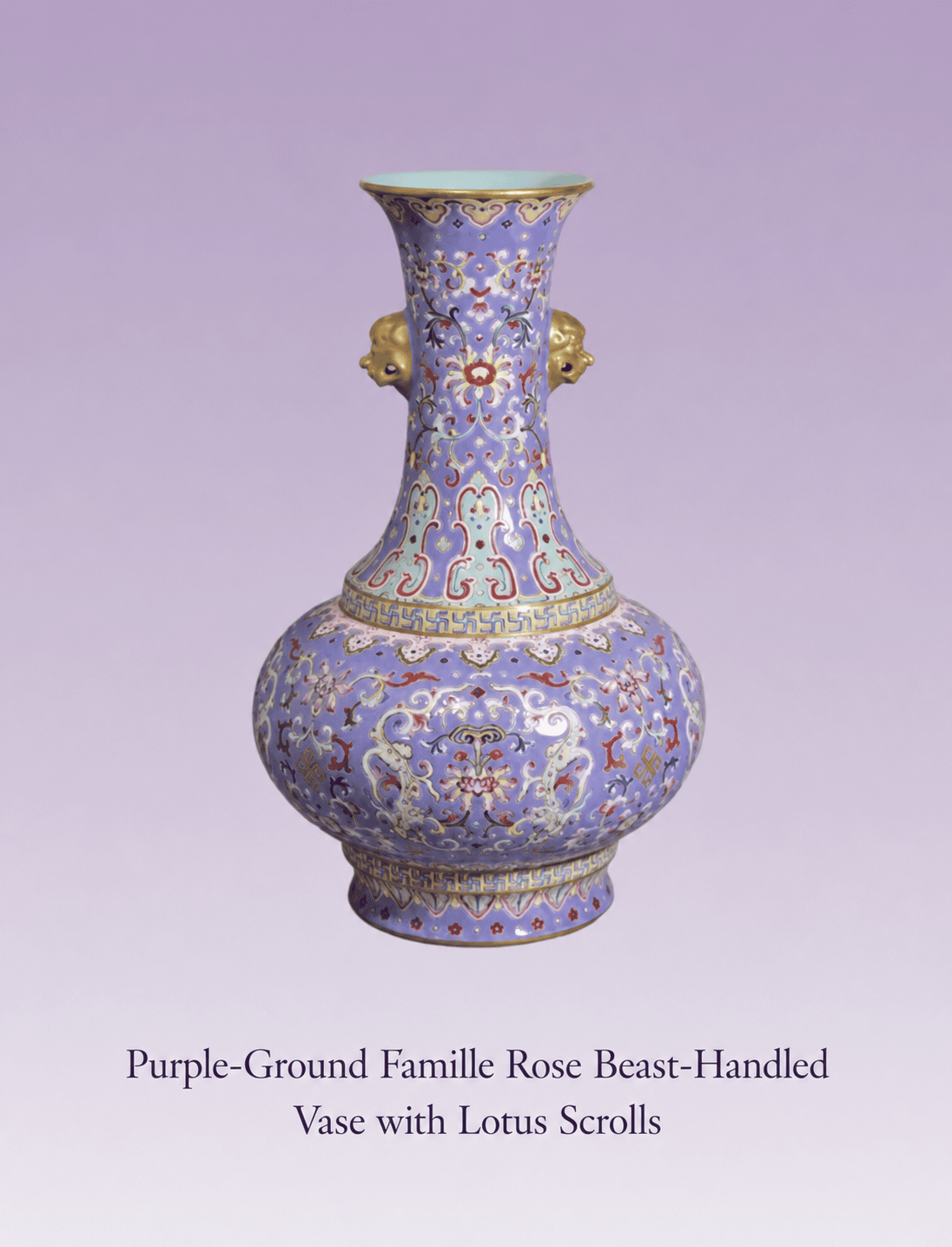
The fifth piece is a purple-ground famille rose display vase with sculpted beast-head handles. It has a flared mouth, elongated neck, rounded body, and ring foot. The raised handles on both sides of the neck give the vase a dignified and sculptural presence.
The purple ground is decorated with famille rose flowers, lotus scrolls, ruyi motifs, and geometric borders extending from the rim to the base. The gold-colored beast-head handles contrast sharply with the purple surface, strengthening the ceremonial character of this antique porcelain.
The beast-head handles are more than decorative details. They demonstrate how ancient Chinese porcelain makers adapted forms and motifs originally associated with bronze vessels. By combining powerful animal imagery with delicate floral designs, the craftspeople created an object that feels both commanding and refined.
The handles are also important areas to examine when assessing antique porcelain. Because they were made separately and attached to the body, they are more vulnerable to damage. Collectors should check whether the handles are symmetrical and whether there are signs of repair, reattachment, or later replacement.
Antique Porcelain No. 6: Purple-Ground Famille Rose Scholar’s Brush Washer
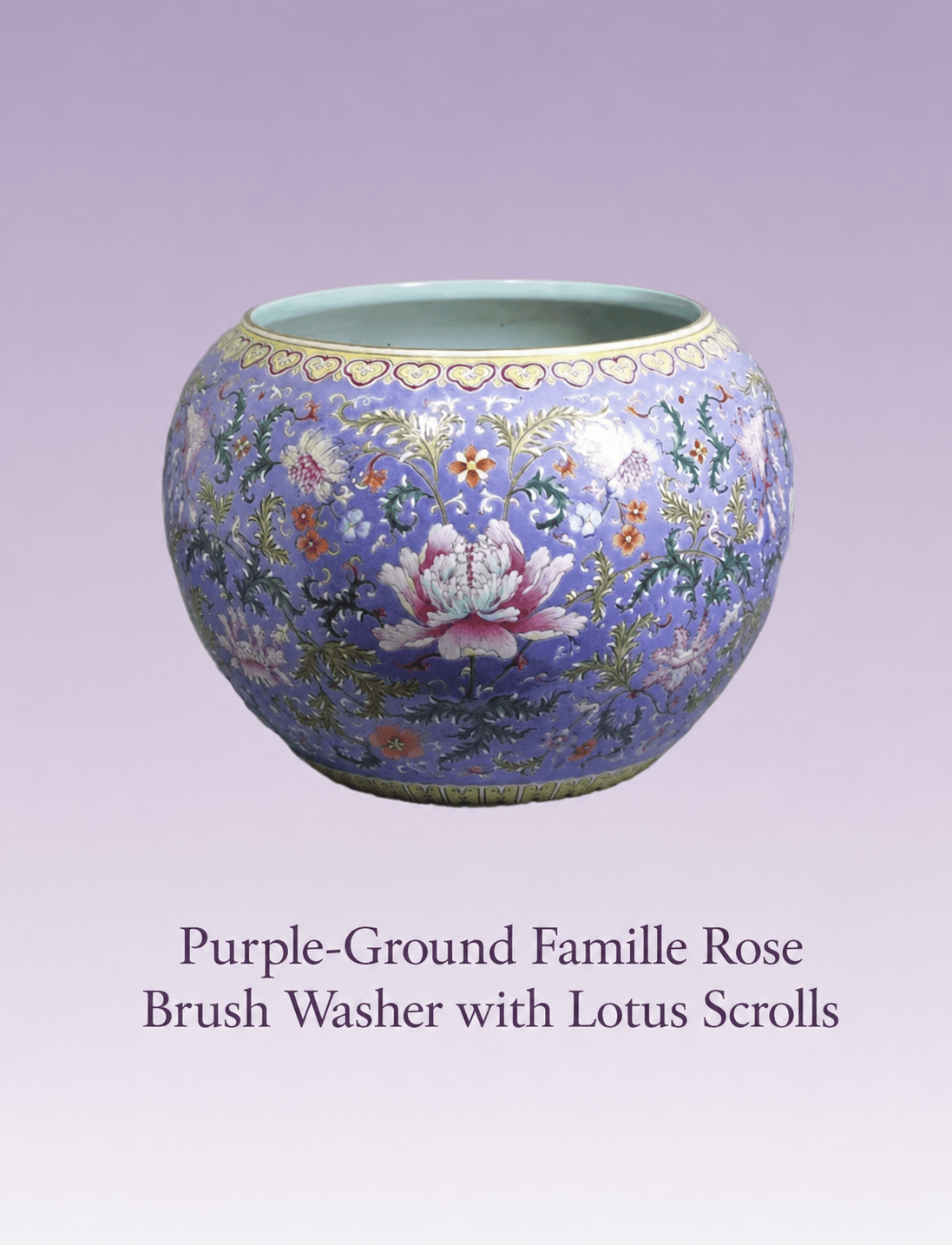
The sixth piece is a purple-ground famille rose scholar’s brush washer decorated with lotus scrolls. Brush washers were originally practical objects used to rinse calligraphy brushes. As scholar’s studio culture developed, these objects gradually became collectible art porcelain valued for their design, decoration, and cultural meaning.
This brush washer has a low, rounded body and a wide opening. Its interior is finished in a refreshing turquoise glaze, while the exterior features blooming peonies, lotus flowers, and scrolling foliage against a purple ground. The contrast between the interior and exterior colors creates a strong sense of visual depth.
A large flower forms the central focus, while smaller blossoms and vines extend outward to create a balanced, continuous composition. Blooming flowers symbolize prosperity and abundance, while the endless scrolls represent vitality and lasting good fortune.
Although smaller than the display vases featured above, this antique porcelain brush washer provides a more intimate view of traditional scholarly life. It helps modern audiences understand how calligraphy tools, inkstones, incense accessories, and decorative objects were arranged within a Chinese scholar’s studio.
A Shared Aesthetic Across Six Pieces of Purple Antique Porcelain
Although these six pieces have different forms and functions, they share a consistent visual language. Purple establishes a unified foundation, while famille rose flowers, lotus scrolls, butterflies, gilded details, and sgraffito textures give each object an individual character.
The General Jar feels formal and magnificent. The double-gourd vase is rounded and auspicious. The lantern vase is structured and richly decorated. The meiping vase is restrained and elegant. The beast-handled vase has a ceremonial presence, while the brush washer reflects the refined pleasures of traditional scholarly life.
Viewed together, these six examples demonstrate the diversity of purple antique porcelain in terms of shape, function, and decoration. They also reflect the deep technical heritage of Jingdezhen ceramics.
Across generations, Jingdezhen ceramic manufacturers and craftspeople continued to improve porcelain bodies, glazes, enamel colors, and firing techniques. These developments made increasingly complex colors and decorations possible. Today, historical antique porcelain continues to inspire contemporary art ceramics and large-scale ceramic installations.
It is important, however, to distinguish genuine antique porcelain from modern reproductions. When purchasing or collecting antiques, buyers should evaluate provenance records, vessel forms, body and glaze characteristics, craftsmanship, condition, and professional authentication. Color, decoration, or a seller’s description alone is not sufficient to establish a piece’s period or value.
Conclusion: Discovering the Passage of Time in Purple Antique Porcelain
These six pieces of purple antique porcelain preserve far more than beautiful forms and decoration. They also carry evidence of historical aesthetics, ceramic techniques, and the passage of time. Purple glazes, famille rose enamels, sgraffito patterns, lotus scrolls, butterflies, and sculpted beast-head handles combine to give every piece its own distinctive character.
Blue-and-white porcelain is celebrated for its crisp cobalt decoration, while Linglong porcelain is recognized for its pierced, light-transmitting design. Purple antique porcelain offers another side of Chinese ceramic art through its refined colors, intricate patterns, and naturally aged surfaces.
Based in Jingdezhen, China, Magic Cube has a long-standing interest in Jingdezhen ceramics, traditional craftsmanship, art porcelain, and ceramic installations. By documenting and sharing genuine antique porcelain, we hope to help international buyers, collectors, designers, and ceramic enthusiasts better understand the forms, patterns, techniques, and cultural meaning of Chinese porcelain—and discover the history preserved within every authentic ceramic object.