Antique-Style Porcelain: The Qianlong Court’s Pretty-in-Pink Aesthetic ,8 pieces
News 2026-08-14 70
When people think of porcelain from the Qianlong period, they often picture elaborate patterns, imperial grandeur, and magnificent craftsmanship. Beyond that formal image, however, Qianlong porcelain also had a softer, more romantic side—a clear love of pink.
Blush, rose, and raspberry tones were paired with turquoise, bright yellow, cobalt blue, and gold. Lotus scrolls, Buddhist emblems, flowers, and figural scenes added even more richness. In today’s language, these pieces reveal the Qianlong court’s unmistakable “pretty-in-pink” personality.
In Western art history and museum collections, porcelain distinguished by this pink enamel palette is commonly described as famille rose. The Metropolitan Museum of Art explains that the name came into use because shades of pink dominate the decoration on many pieces in this group. The Metropolitan Museum of Art
Today, Qianlong-style famille rose decoration remains an important source of inspiration for Jingdezhen antique-style porcelain. High-quality antique-style porcelain is not made by mechanically copying a photograph of an old object. It requires careful study of vessel proportions, enamel colors, sgraffito grounds, medallion layouts, decorative patterns, and firing effects. The goal is to bring historical imperial aesthetics into contemporary collections and interiors.
Why Does Qianlong Pink Look So Distinctive on Antique-Style Porcelain?
Qianlong-period famille rose porcelain is known for its layered colors, detailed decoration, and visually rich compositions. Pink rarely appears alone. It is usually combined with yellow, blue, green, white, and gold to create the sophisticated palette associated with imperial porcelain.
Some pieces also feature a technique known in Chinese as zhadao, commonly described in English as an incised or sgraffito ground. Fine, continuous patterns are carefully incised into a colored background. According to the Palace Museum, this method was used to create scrolling plants and other repeating designs on grounds such as ruby red, yellow, and blue. It became especially popular on Qianlong-period famille rose and enameled porcelain. The Palace Museum
From a distance, the surface may look like a soft field of pink. Up close, it reveals delicate background textures, lotus scrolls, geometric borders, and framed painted scenes. This contrast—sweet and graceful in appearance, yet technically difficult to produce—is one of the most captivating qualities of Qianlong-inspired antique-style porcelain.
Eight Romantic Examples of Qianlong-Style Famille Rose Porcelain
1. Pink-Ground Famille Rose Covered Bowl with Lotus Scrolls and Geometric Motifs
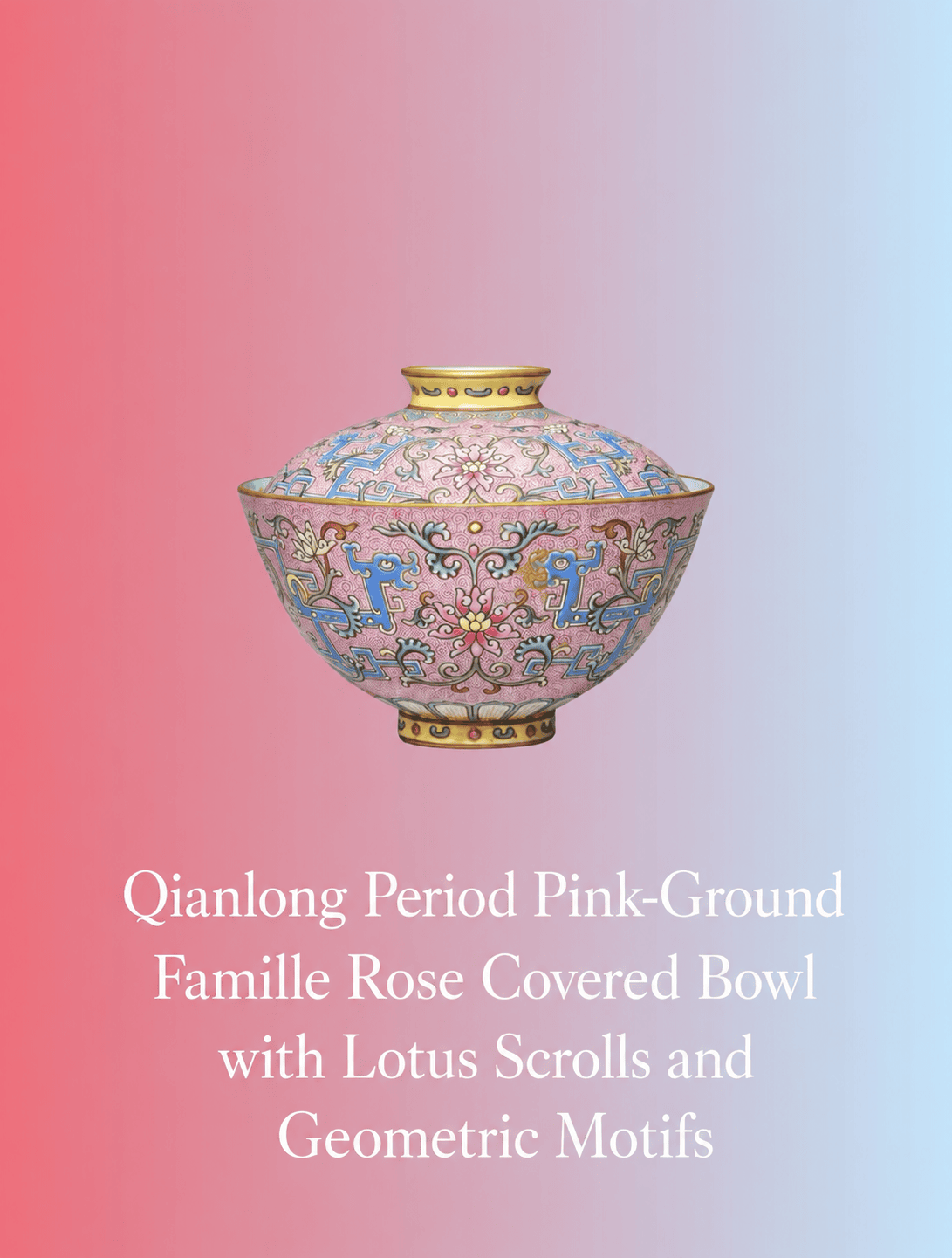
This covered bowl features a soft pink ground filled with fine incised patterns. Lotus scrolls and geometric motifs are painted in blue, green, yellow, and pink, creating a composition that feels both structured and lively.
The decoration on the lid and bowl is carefully coordinated. When closed, the piece appears as a complete work of art; when opened, it reveals another layer of form and color. The Palace Museum documents a covered bowl of this name and type from the Qianlong period. The Palace Museum
For a modern antique-style porcelain manufacturer, reproducing this type of covered bowl involves more than copying its painted patterns. The lid must fit correctly, the pink ground must remain even, the fine lines must stay clear, and the different enamel colors must develop harmoniously during firing.
2. Pink-Ground Famille Rose Five-Piece Altar Set
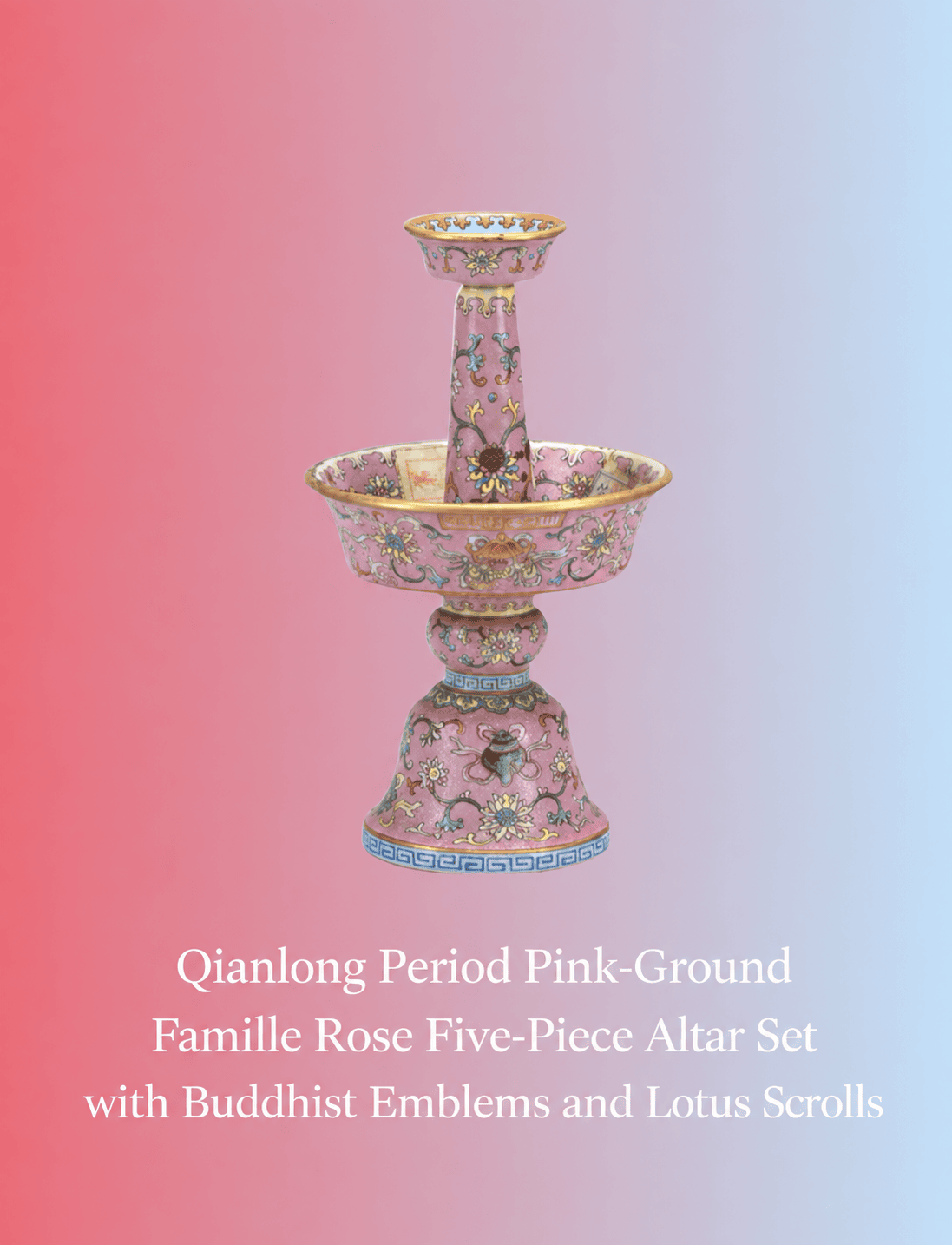
A traditional five-piece altar set usually consists of one incense burner, two vases, and two candleholders. The object shown here is one component of such a set. It features a pink ground decorated with Buddhist emblems, lotus scrolls, and geometric borders.
Its tiered structure originally gave it a formal, ceremonial presence. The pink ground and floral motifs soften that visual weight, making it feel like an elegant piece of imperial art porcelain.
Contemporary antique-style porcelain can preserve this traditional form while adapting it to modern interiors. A single component may be displayed as a decorative object, while a complete set can be used in a hotel lobby, tea room, cultural venue, or private club.
3. Pink-Ground Famille Rose Wall Vase with Floral Medallions
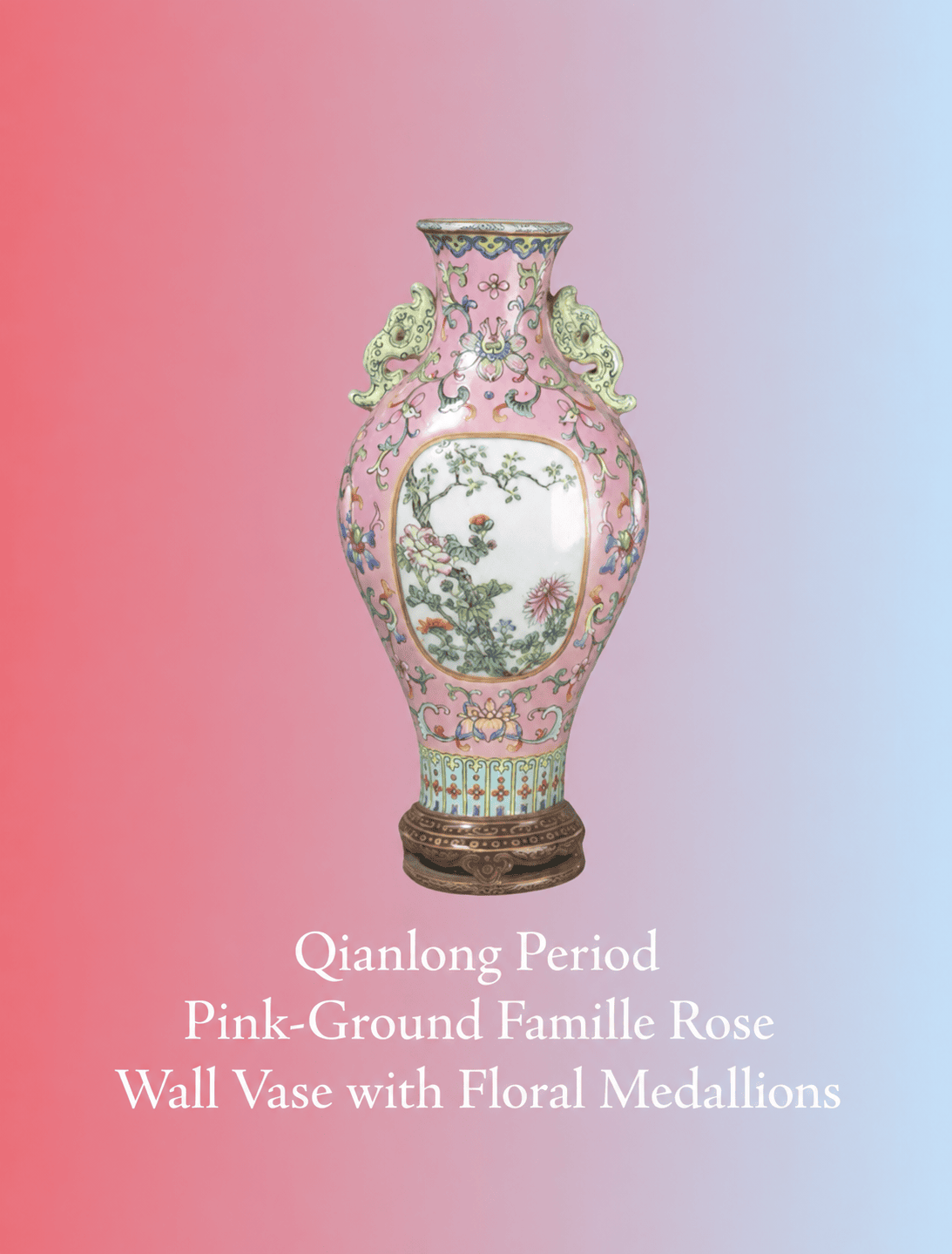
A wall vase has a relatively flat back, allowing it to be mounted directly on a wall. It sits somewhere between a flower vase, a porcelain plaque, and an architectural decoration, making it one of the most inventive forms in traditional Chinese interior design.
This example features a pink ground, sculpted side handles, and a white central medallion painted with flowers and natural scenery. The richly decorated outer area contrasts with the open white space inside the medallion, giving the composition detail without making it feel crowded.
From a contemporary design perspective, wall vases also create a natural connection between antique-style porcelain and ceramic installations. A group of wall vases in different sizes and shapes can be arranged along a hotel corridor, restaurant wall, or private dining room to create a coordinated ceramic display.
4. Ruby-Red Famille Rose Five-Piece Altar Set
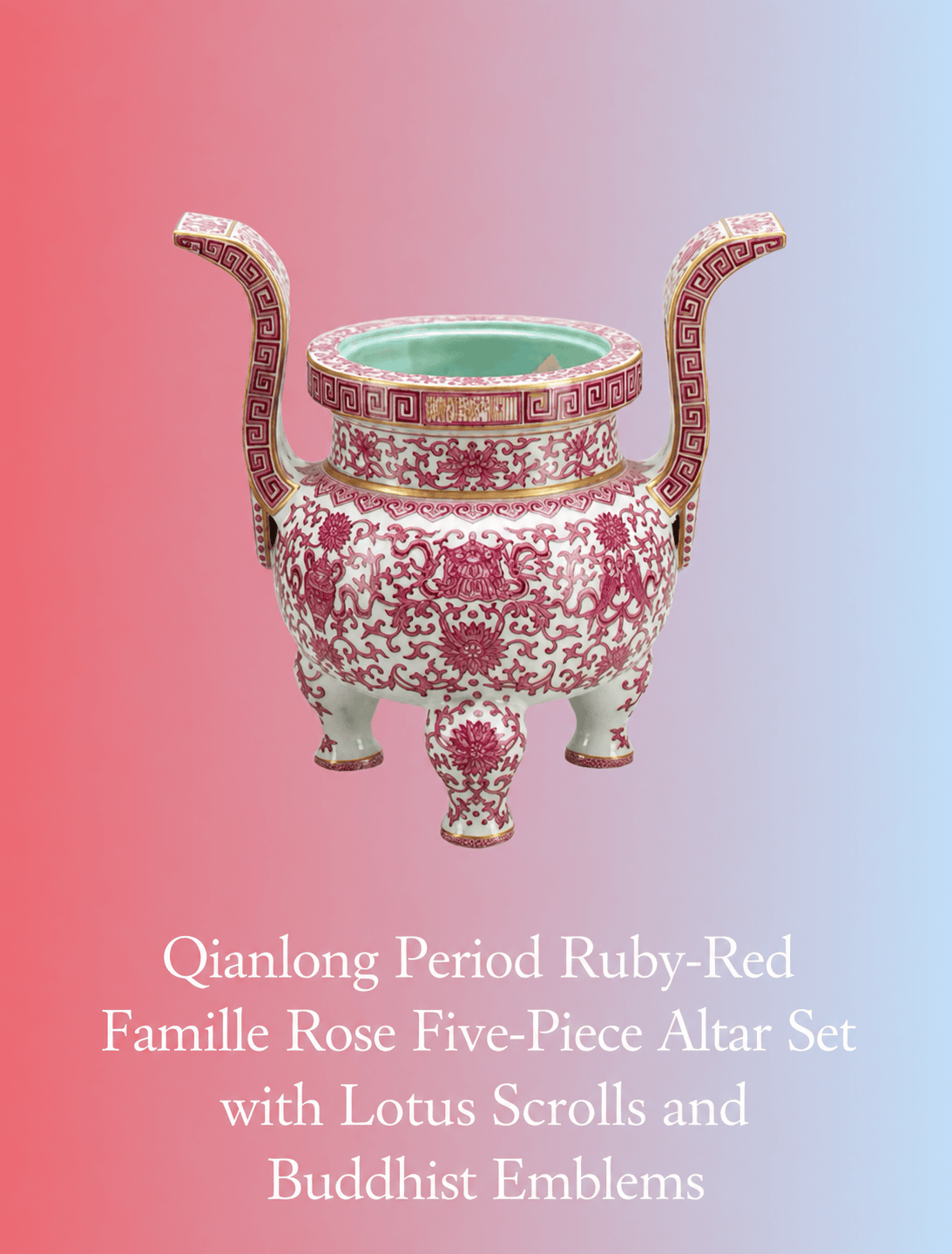
This three-legged, twin-handled altar vessel has a white porcelain body decorated with rich ruby-red lotus scrolls and Buddhist emblems. Although it does not have a pale pink ground, ruby red was an important color within the broader Qianlong famille rose palette, giving the piece a strong pink-toned character.
The tall handles contrast with the stable tripod base, while the decoration remains dense and symmetrical. Compared with the softer pink pieces, it feels more formal and mature, yet it still reflects the Qianlong court’s enthusiasm for bright colors and elaborate ornamentation.
This type of antique-style porcelain can be displayed as part of a complete altar set or used as an individual art ceramic piece in an entrance hall, formal reception area, or large display cabinet.
5. Pink-Ground Famille Rose Globular Vase with Lotus Scrolls
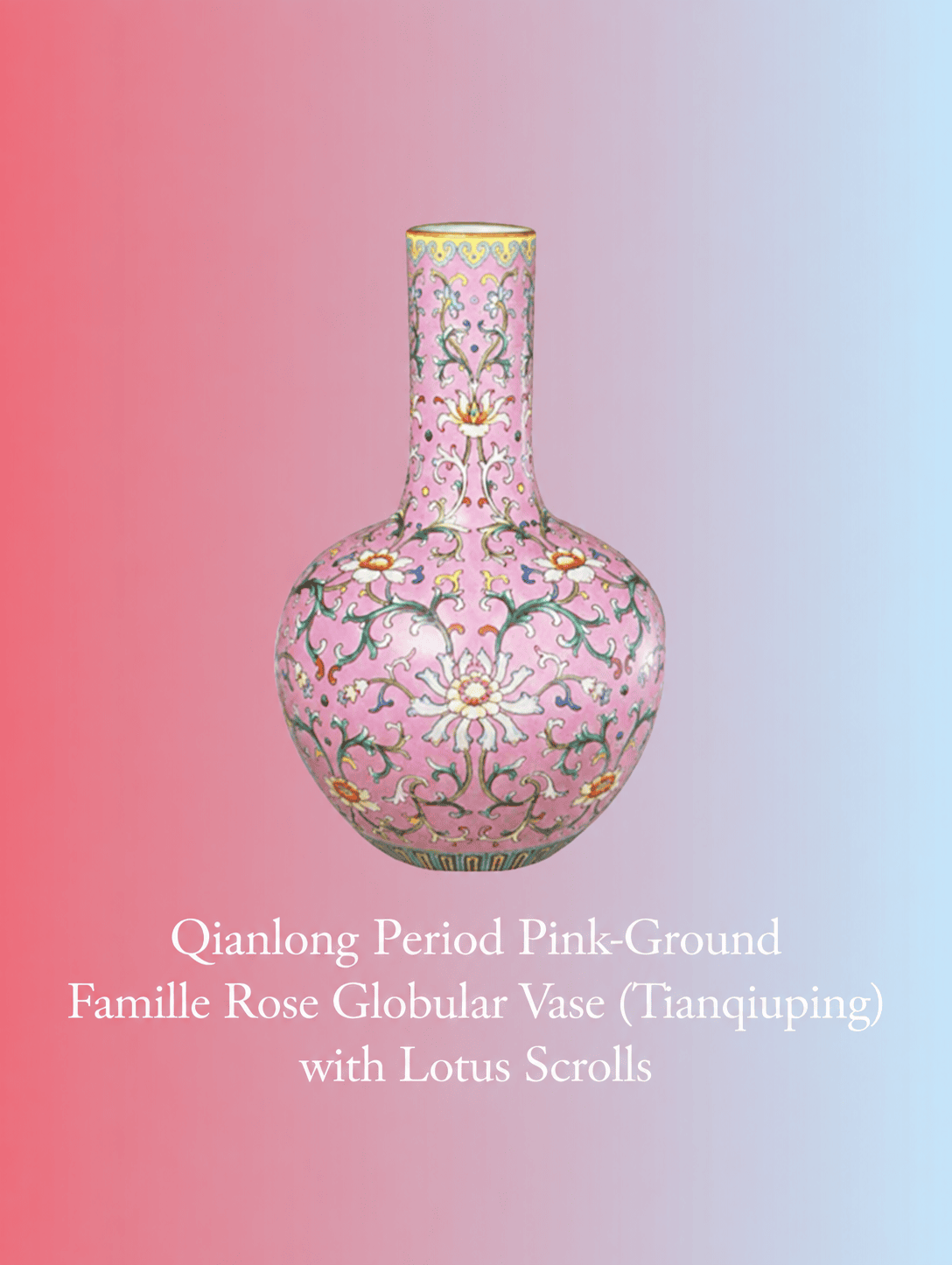
The tianqiuping, or globular vase, is recognized by its long straight neck, rounded body, and well-balanced proportions. On this piece, lotus scrolls extend naturally from the neck across the body, creating a continuous and full floral composition.
The rounded shape makes the pink ground appear especially soft. Green stems, white petals, and yellow borders balance the larger areas of pink and keep the design from feeling overly sweet.
Large globular vases work well in hotel lobbies, private clubs, luxury residences, and commercial display spaces. When purchasing this type of large antique-style porcelain, buyers should pay close attention to symmetry, base stability, firing deformation, and protective packaging for international transportation.
6. Famille Rose Hibiscus-Shaped Snuff Bottle
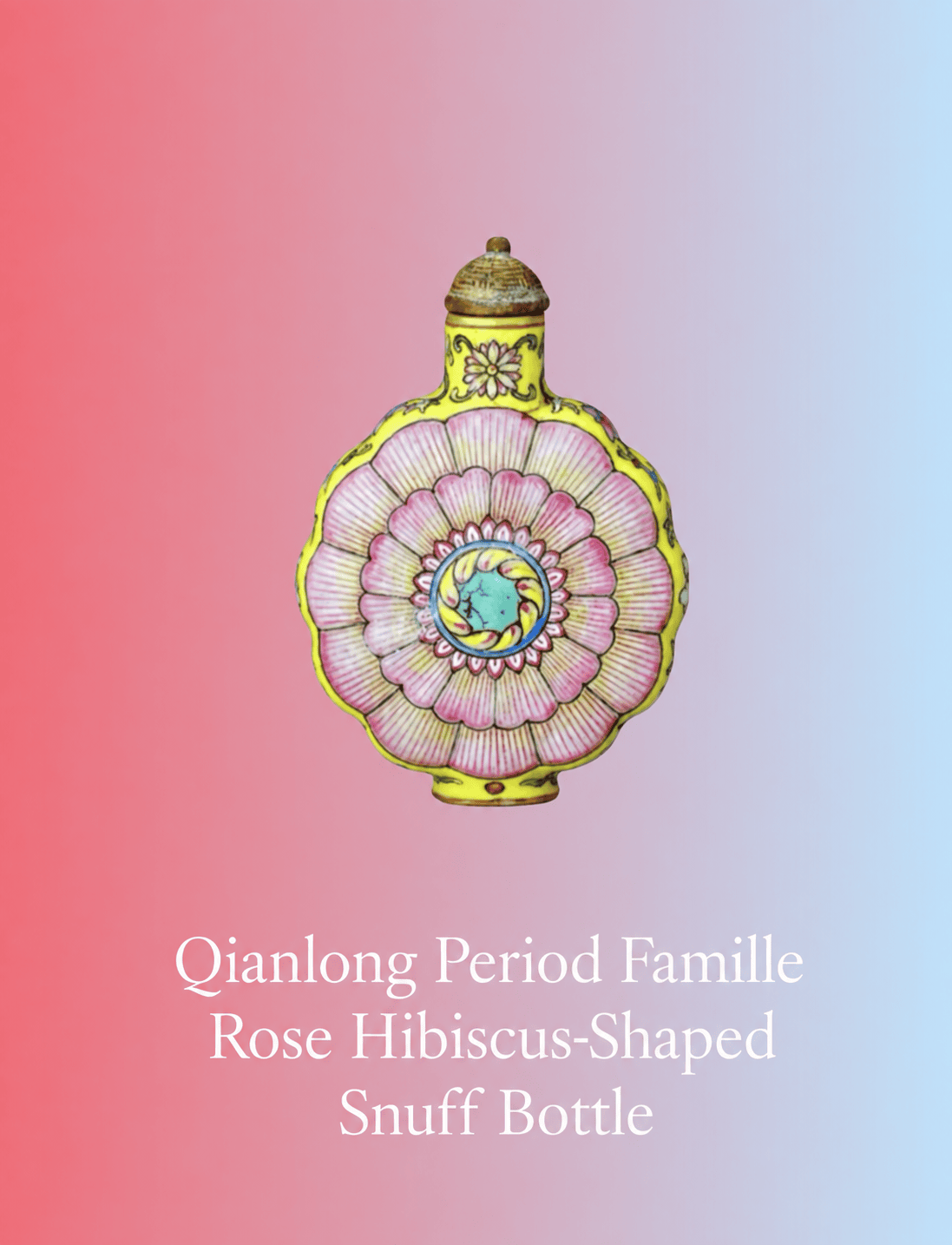
If the larger pieces represent the grandeur of the Qianlong court, this snuff bottle feels more like a small jewel that can be held in the hand.
The body itself is shaped like a blooming hibiscus flower. Layers of petals are shaded in pink, while the yellow border and blue-green center create vivid contrast. Rather than simply painting a flower on porcelain, the maker transformed the entire vessel into a flower.
For modern Jingdezhen ceramic manufacturers, this type of naturalistic form can inspire perfume bottles, jewelry boxes, fragrance containers, and collectible decorative objects. Antique-style porcelain does not have to remain limited to historical reproductions; it can also serve as a starting point for contemporary cultural and lifestyle products.
7. Green-Ground Famille Rose “Wrapped Sash” Vase with Lotus Scrolls
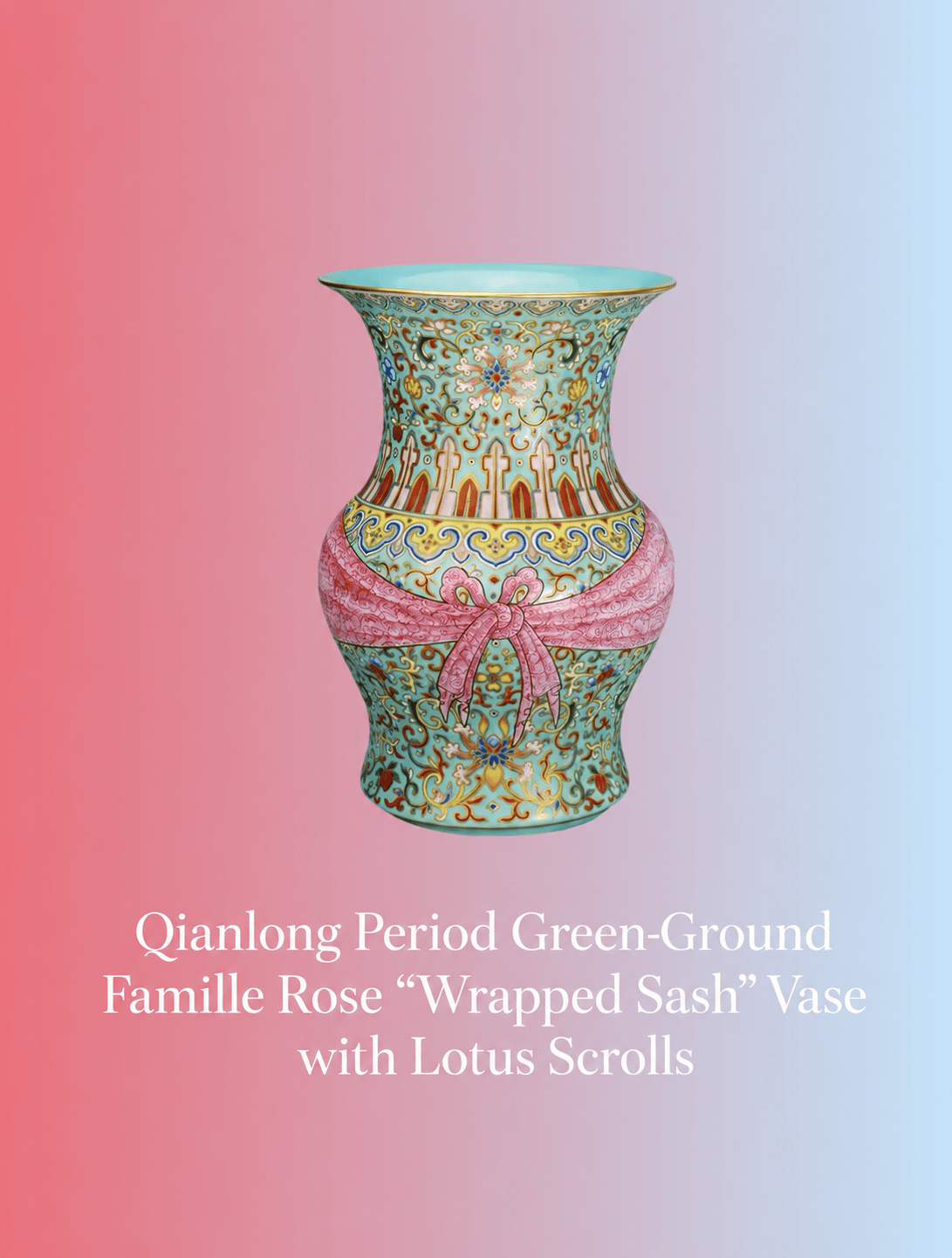
This vase uses turquoise green as its main background color, while a pink fabric-like sash appears to wrap around the body and tie into a bow at the front. Although green dominates the surface, the pink sash becomes the visual focal point, continuing the romantic quality of the Qianlong famille rose palette.
Lotus scrolls, geometric borders, and textile-inspired details create multiple decorative layers. The hard porcelain surface is painted to resemble soft fabric, reflecting the Qianlong period’s fascination with imitation materials and playful visual effects.
Modern antique-style porcelain manufacturers can adapt this wrapped design to vases, ceramic jars, and large art ceramics. Several related pieces can also be arranged as a ceramic installation built around themes of gifts, celebration, and abundance.
8. Pink-Ground Famille Rose Bowl with Figural Medallions
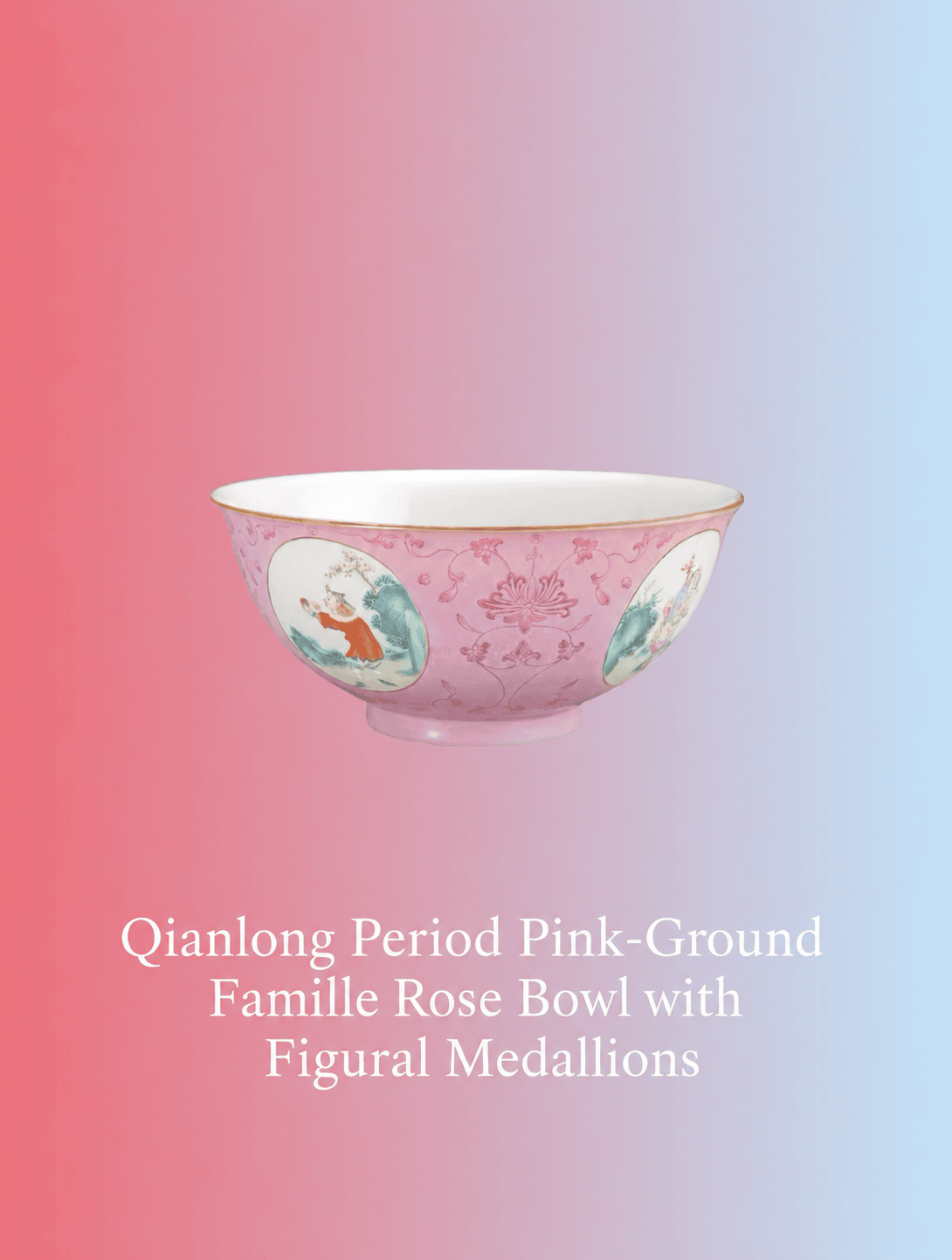
This bowl features a pink ground with multiple white medallions containing figures and landscape scenes. A fine gold rim adds an elegant finishing detail, while the surrounding pink floral decoration connects the separate paintings into one complete composition.
Its most appealing quality is the combination of an everyday vessel form with imperial-style painting. A familiar bowl becomes a miniature visual narrative that can be appreciated from several directions.
In contemporary antique-style porcelain production, this type of bowl can be developed as collectible art porcelain, branded giftware, or decorative tableware. If it is intended for food contact, the buyer should also confirm the decoration process, placement of the painted areas, materials used, and finished-product testing required by the target market.
Antique-Style Porcelain Is About Understanding Tradition, Not Simply Making Ceramics Look Old
Professional antique-style porcelain is not created by deliberately adding cracks or making new porcelain appear worn. It should never be presented as a genuine antique. Its real value comes from studying historical forms, decorative techniques, glaze colors, and design principles, then reproducing or reinterpreting them through modern production.
Jingdezhen ceramics benefit from a well-developed network of specialists in clay preparation, forming, painting, glazing, and firing. Experienced Jingdezhen ceramic manufacturers must use historical references, product photographs, drawings, and approved samples to establish vessel proportions, porcelain and glaze formulas, enamel colors, pattern placement, and acceptable handmade variation.
Blue-and-white porcelain and Linglong porcelain can also be combined with Qianlong-inspired famille rose decoration. Blue-and-white porcelain introduces crisp cobalt-and-white contrast, Linglong porcelain provides translucent light effects, and famille rose enamels add color and detail. With thoughtful design, these techniques can be used together in vases, lighting, ceramic murals, art ceramics, and large ceramic installations.
Conclusion: Bringing the Qianlong Court’s Pink Romance into Modern Interiors
The pretty-in-pink appeal of Qianlong famille rose porcelain is about much more than the color itself. Its distinctive character comes from the combination of intricate patterns, unusual vessel forms, layered enamels, and highly demanding craftsmanship.
These pieces are colorful yet carefully organized, historically rich yet surprisingly compatible with contemporary design.
Based in Jingdezhen, Magic Cube works with its own production team and long-term specialized partner workshops. We provide design development and customization services for antique-style porcelain, art ceramics, and ceramic installations for hotels, restaurants, design firms, collectible brands, and project buyers.
If you are developing Qianlong-inspired covered bowls, altar sets, wall vases, globular vases, snuff bottles, wrapped-sash vases, decorative bowls, or coordinated ceramic installations, you can send Magic Cube your reference images, dimensions, quantities, intended application, and budget range. Our team can help evaluate the form, decoration process, sampling requirements, and production plan—bringing the Qianlong court’s pink romance into contemporary spaces in a clearly identified, compliant, and commercially practical way.