Ceramic Murals: Bringing Jingdezhen Ceramic Art into Modern Spaces
News 2026-08-12 75
A ceramic mural is a large-scale artwork created with ceramic panels, porcelain tiles, or three-dimensional ceramic components. Through painting, carving, relief work, glazing, and high-temperature firing, it combines visual storytelling with the durability, rich texture, and lasting color of ceramic materials.
Ceramic murals are widely used in hotel lobbies, restaurants, shopping centers, cultural venues, public buildings, and luxury residences. Unlike conventional framed artwork, a custom ceramic mural is developed for a specific space. Its composition should reflect the wall dimensions, viewing distance, lighting, interior style, and project theme.
Supported by Jingdezhen’s established ceramic supply chain, experienced Jingdezhen ceramic manufacturers can manage artwork development, material selection, panel production, firing, numbering, packaging, and installation guidance.
What Are the Main Types of Ceramic Murals?
Ceramic murals can generally be divided into flat painted murals, relief murals, modular panel murals, and three-dimensional installation murals.
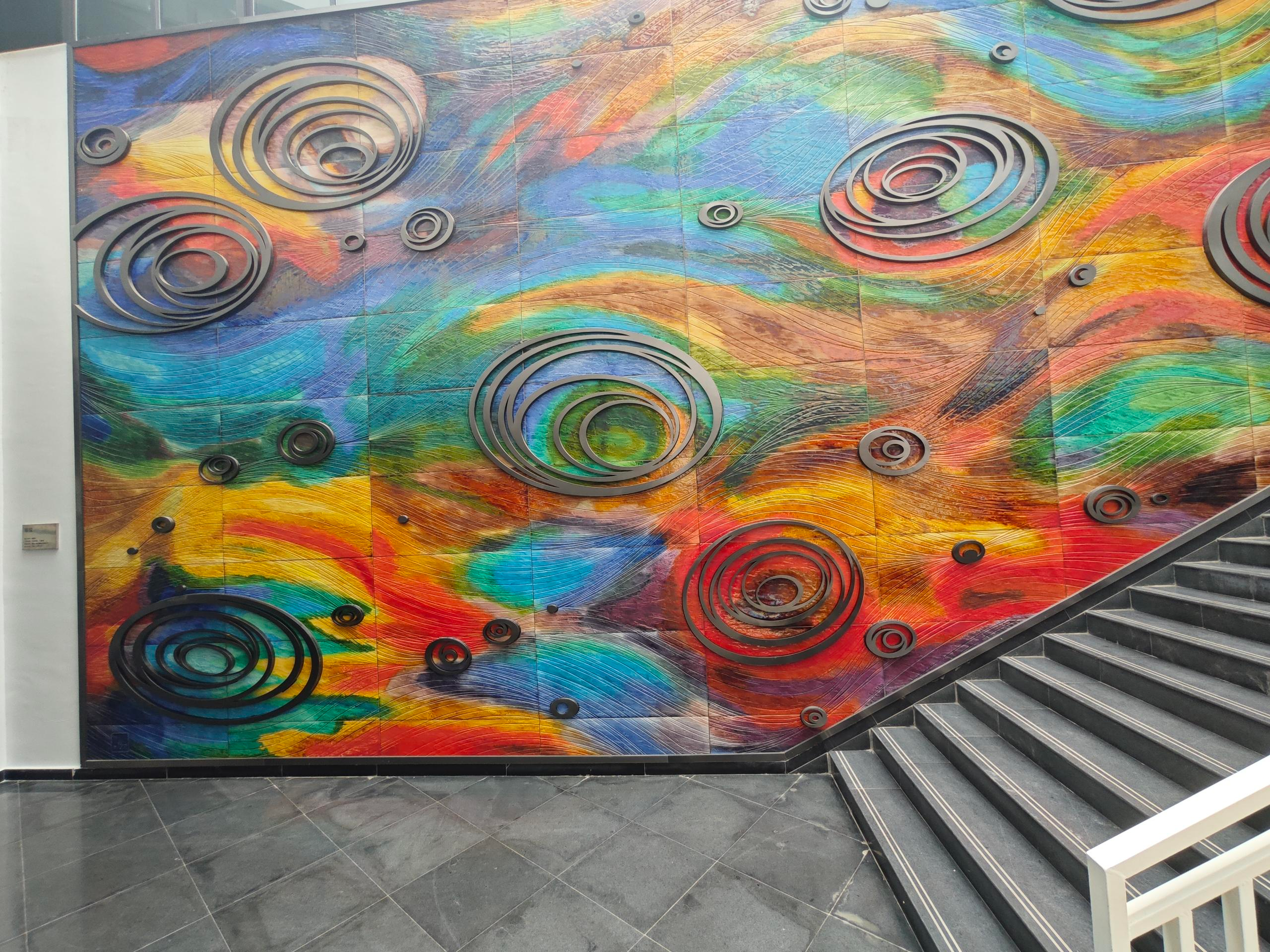
Flat ceramic murals have smooth surfaces suitable for landscapes, figures, flowers, birds, abstract designs, and branded artwork. Relief ceramic murals use carving, molding, or applied clay to create raised and recessed areas. Under lighting, these surfaces produce changing highlights and shadows.
Modular ceramic murals are assembled from multiple panels, making large artworks easier to manufacture, transport, and install. Each panel can be numbered and matched to an installation drawing.
Three-dimensional ceramic murals extend outward from the wall through flowers, leaves, figures, or geometric forms. These works combine the visual character of a mural with the spatial presence of a ceramic installation.
Buyers should select the appropriate structure based on the space. Corridors and dining rooms may use thinner painted panels, while hotel lobbies and cultural venues can accommodate large relief murals or three-dimensional ceramic installations.
How Do Ceramic Murals Use Jingdezhen Ceramic Techniques?
Jingdezhen ceramics offer a wide range of decorative techniques for ceramic mural design.
Blue-and-white ceramic murals are painted with cobalt pigment before a transparent glaze is applied and fired at high temperature. Their clean blue-and-white palette is suitable for Chinese restaurants, cultural spaces, boutique hotels, and contemporary Asian interiors.
Colored-glaze murals use layered or kiln-transformed glazes to create mountains, clouds, water, and abstract color fields. Each panel may show subtle variations caused by kiln position and firing conditions.
Blue-and-white porcelain and Linglong porcelain can also be combined in one ceramic mural. Blue-and-white decoration provides the main imagery, while the translucent openings of Linglong porcelain can be paired with backlighting to create soft patterns of light and shadow.
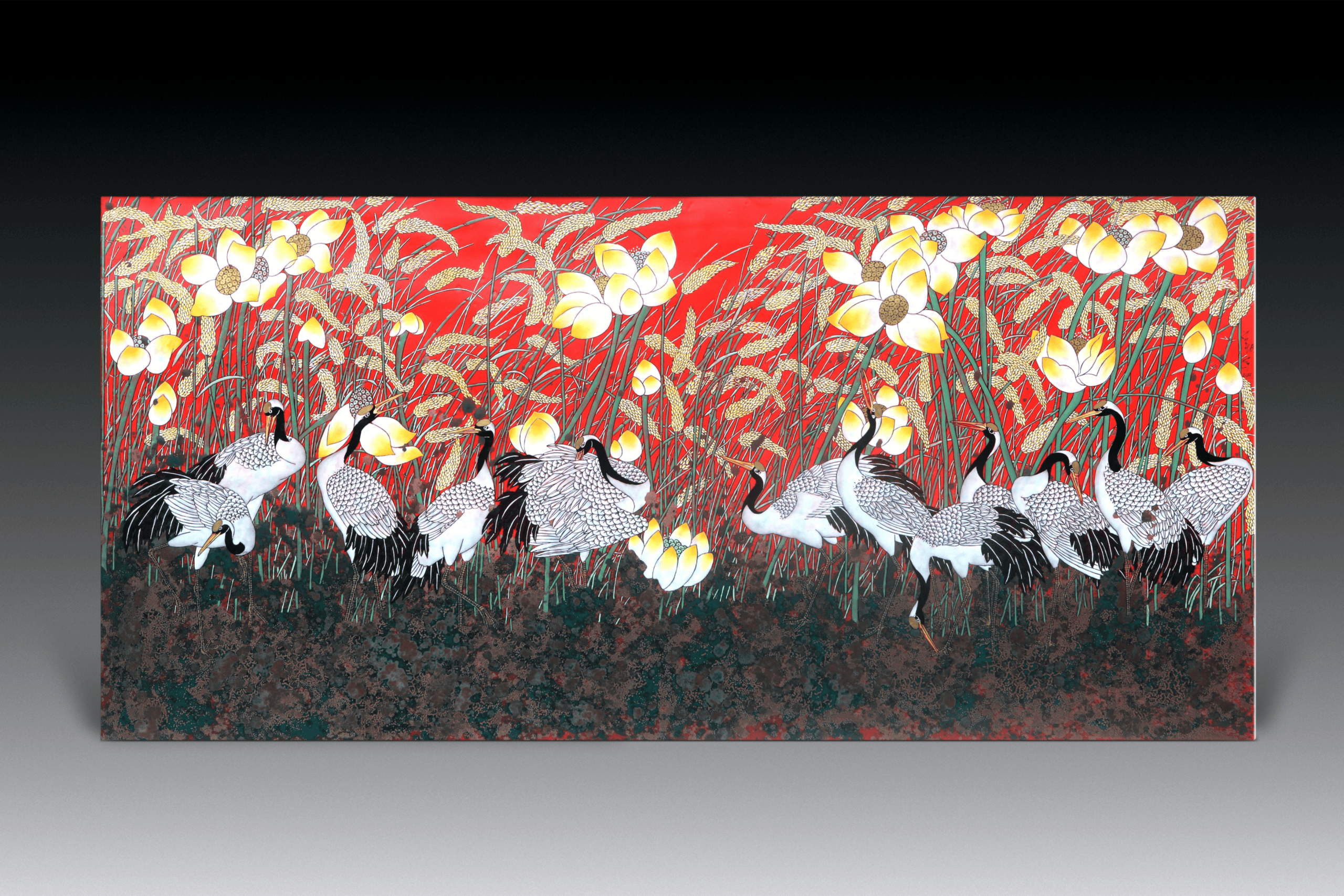
Jingdezhen ceramic manufacturers may also combine relief carving, hand painting, gilding, and contrasting matte and glossy glazes. These techniques allow the mural to reveal different details when viewed from different distances.
Why Are Ceramic Murals Suitable for Hotels and Restaurants?
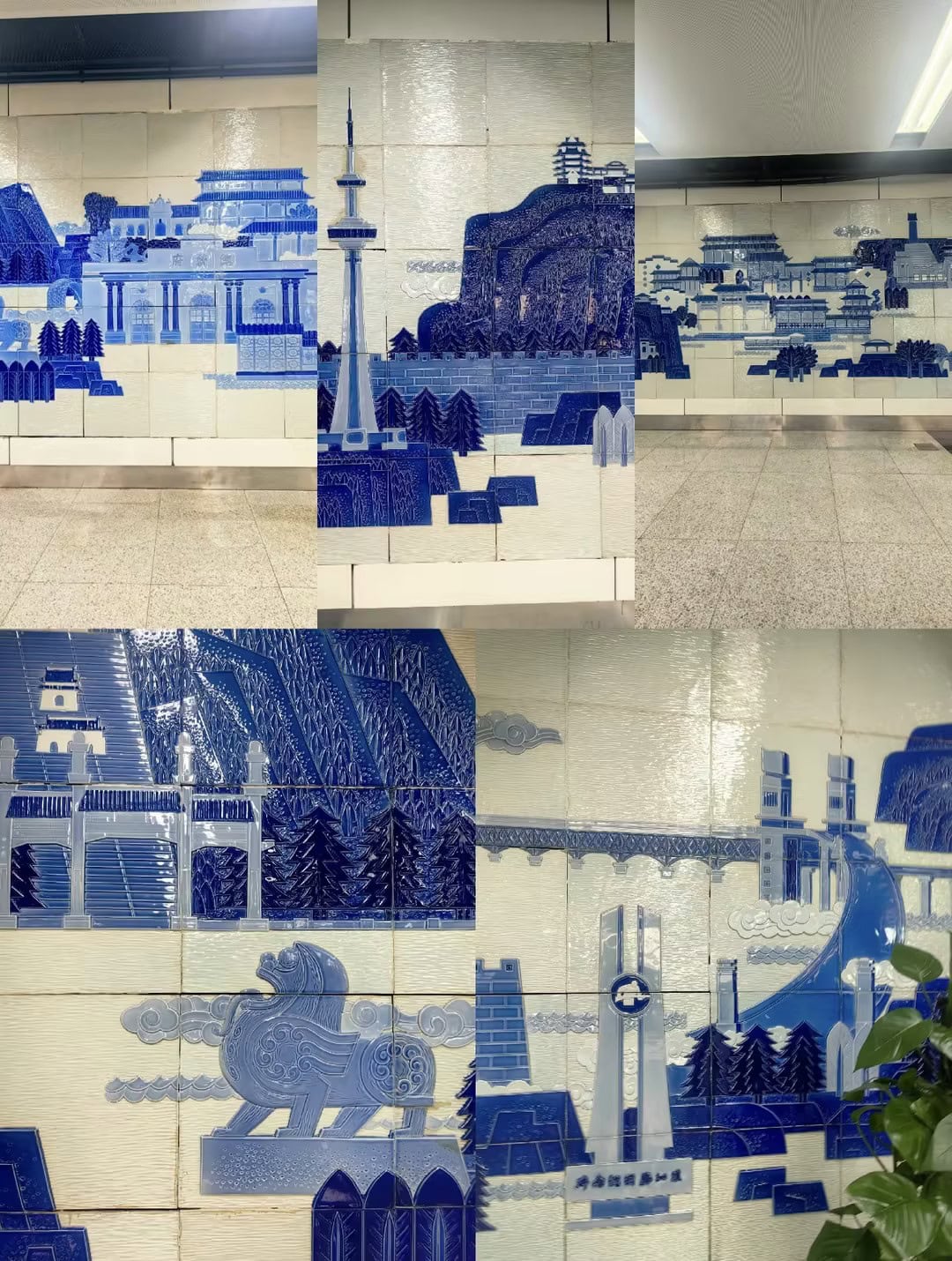
Hotels and restaurants need visual elements that communicate their identity and create memorable guest experiences. A custom ceramic mural can incorporate local culture, architectural details, brand symbols, or stories related to a restaurant’s cuisine.
A hotel lobby may use a large landscape or abstract ceramic mural as its main focal point. A restaurant can develop exclusive imagery based on its location or brand concept. Smaller ceramic panels may also be installed in private dining rooms, corridors, reception areas, and elevator lobbies to maintain a consistent visual style.
Properly fired ceramic murals offer lasting color and relatively easy maintenance. However, murals installed near kitchens, outdoors, or in humid areas require appropriate ceramic bodies, glazes, adhesives, mounting hardware, and installation systems.
For B2B buyers, the mural must not only look attractive. It must also suit the building, remain safe after installation, and be practical to clean and maintain.
How Can Antique-Style Porcelain Manufacturers Develop Ceramic Murals?
Antique-style porcelain manufacturers understand historical patterns, glaze colors, classical painting, and traditional ceramic forms. This knowledge can be applied to ceramic murals inspired by Song- and Yuan-dynasty landscapes, Ming- and Qing-dynasty floral paintings, traditional architecture, or historical stories.
An antique-style ceramic mural should not simply enlarge an old painting. Its composition must be adapted to the wall proportions, viewing route, lighting, and surrounding interior.
Antiqued glazes, crackle effects, hand-painted details, and irregular edges can create a sense of history. Before production, buyers should define acceptable color variations, crackle patterns, handmade marks, and aged effects.
By combining traditional techniques with modern composition, antique-style ceramic murals can serve boutique hotels, Chinese restaurants, private clubs, and cultural venues.
How Do Ceramic Murals Become Ceramic Installations?
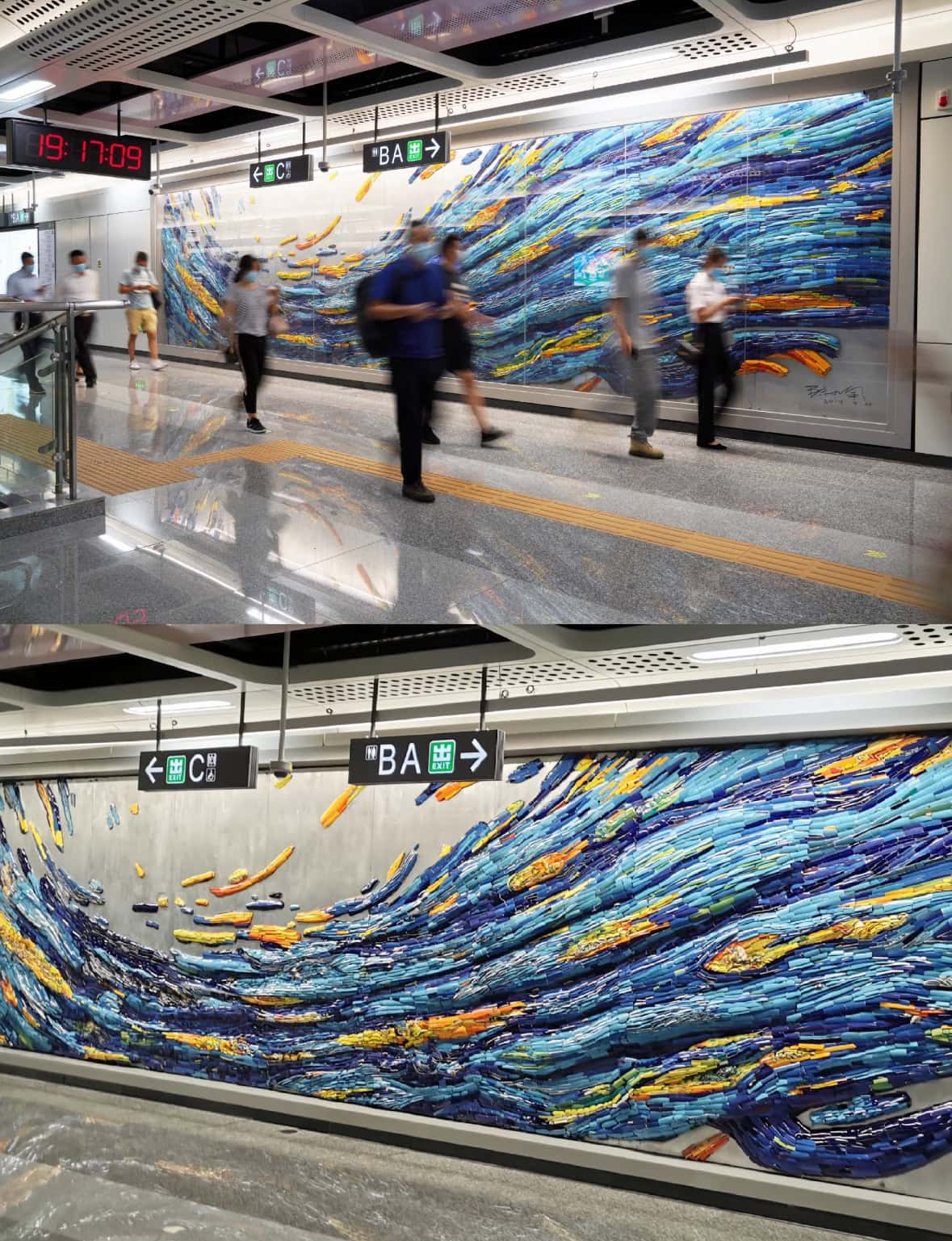
When ceramic components extend beyond a flat wall, a ceramic mural can become a spatial artwork. Designers may use modules of different shapes, thicknesses, and angles to create depth, movement, and changing shadows.
Hundreds of ceramic petals can form a flower wall, while blue-and-white porcelain pieces can create an abstract landscape. Ceramic fish, birds, leaves, or clouds may extend from the wall toward the ceiling, connecting the mural with the surrounding architecture.
These projects combine art ceramics with ceramic installation design. They are particularly suitable for hotel atriums, restaurant entrances, galleries, and premium commercial interiors.
Large installations require careful planning for wall load capacity, metal frames, brackets, mounting systems, panel numbering, packaging, transportation, and on-site assembly.
What Should Buyers Confirm Before Ordering Ceramic Murals?
Before requesting a quotation, buyers should provide wall dimensions, site photographs, design references, budget range, and required delivery date. Architectural drawings and renderings should also be shared when available.
Important details include:
- Indoor or outdoor use
- Total dimensions, thickness, and estimated weight
- Panel sizes, joints, and numbering system
- Colors, glaze effects, and acceptable variations
- Flat, relief, or three-dimensional construction
- Wall condition and load-bearing capacity
- Required brackets, frames, or adhesives
- Packaging and transportation method
- Spare panels or replacement components
- Responsibility for on-site installation
Ceramic materials naturally shrink during high-temperature firing, and slight differences in color or dimensions may occur. Buyers should approve a material sample, partial panel, or scaled prototype before full production.
Complex projects should also include written acceptance criteria, panel-numbering diagrams, positioning drawings, and installation instructions.
How Does Magic Cube Support Custom Ceramic Mural Projects?
Magic Cube is based in Jingdezhen, China. Working with our own production team and long-term specialized partner workshops, we provide custom ceramic mural, art ceramic, and ceramic installation services for hotels, restaurants, design firms, procurement companies, and commercial brands.
We can assist with material selection, artwork development, sampling, production coordination, quality inspection, export packaging, and installation guidance.
For large ceramic murals, we pay particular attention to panel division, firing shrinkage, deformation control, structural load, numbering, and transportation safety. Our goal is to identify potential production and installation risks before bulk manufacturing begins.
Conclusion: Ceramic Murals Connect Craftsmanship and Architecture
A ceramic mural is more than wall decoration. It allows Jingdezhen ceramic craftsmanship to become part of modern architectural spaces.
From blue-and-white porcelain and Linglong porcelain to colored glazes, relief carving, art ceramics, and three-dimensional ceramic installations, these techniques can support a wide range of hospitality and commercial projects.
For buyers, a successful ceramic mural must balance artistic impact, material performance, structural safety, transportation, and installation. Magic Cube combines Jingdezhen craftsmanship with project-based development services, helping clients turn creative concepts into custom ceramic artworks that can be produced, delivered, installed, and displayed for years.