Jiaotai Porcelain: Shaping Rhythm from Clay
News 2026-08-11 73
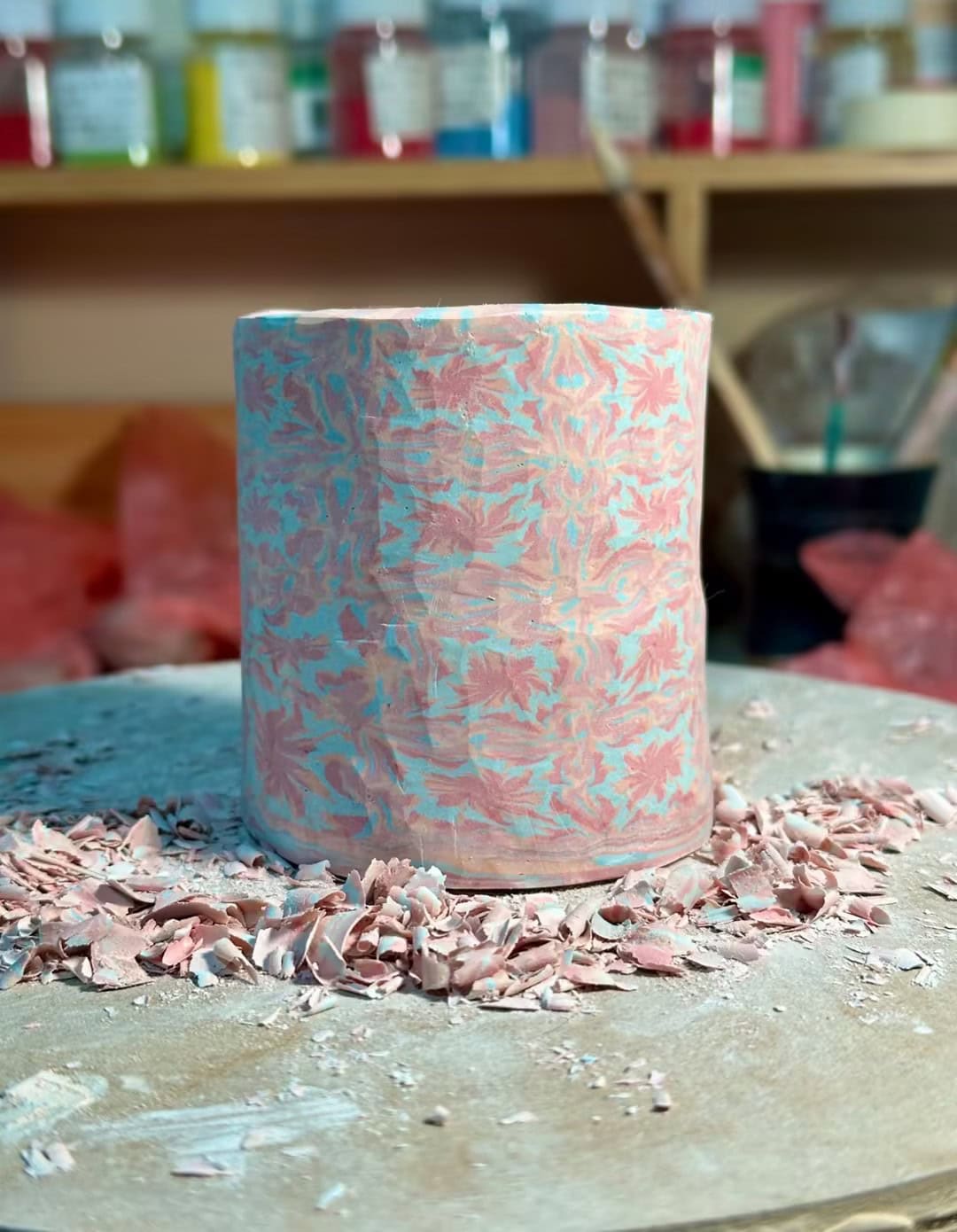
Ceramic decoration is commonly created through painting, decals, carving, or colored glazes. Jiaotai Porcelain, also known as Chinese Marbled Porcelain, follows a very different approach. Its patterns do not simply sit on the surface. Instead, they are formed directly within the clay body.
Ceramic artists layer, twist, press, cut, and recombine clays of different colors. As the clay is shaped, natural patterns resembling wood grain, flowing water, feathers, clouds, or layered stone gradually emerge. No two pieces of Jiaotai Porcelain are exactly alike.
Unlike blue-and-white porcelain, Linglong porcelain, or colored-glaze ware, Jiaotai Porcelain treats the clay itself as the primary decorative material. Its beauty comes from the natural interaction between different clay colors, the maker’s control of the pattern, and the transformation that occurs during firing.
What Is Jiaotai Porcelain?
Jiaotai Porcelain is made by combining two or more clays with different natural or added colors. These clays are layered, rolled, twisted, compressed, sliced, and joined together to create patterns inside the porcelain body.
Traditional color combinations often include white, brown, black, gray, and reddish clay. Contemporary artists and Jingdezhen ceramic manufacturers may also add ceramic stains or mineral pigments to produce softer, brighter, or more modern color palettes.
The defining feature of Jiaotai Porcelain is that the pattern exists within the clay body. When the clay is cut, polished, or shaped, the internal pattern becomes visible. This gives the finished piece greater visual depth than a surface-painted decoration.
Jiaotai Porcelain should not be confused with marbled-glaze ware. Marbled-glaze patterns are created when different glazes flow and blend on the surface during firing. In Jiaotai Porcelain, the pattern is created by the colored clay itself before glazing and firing.
The History of Jiaotai Porcelain
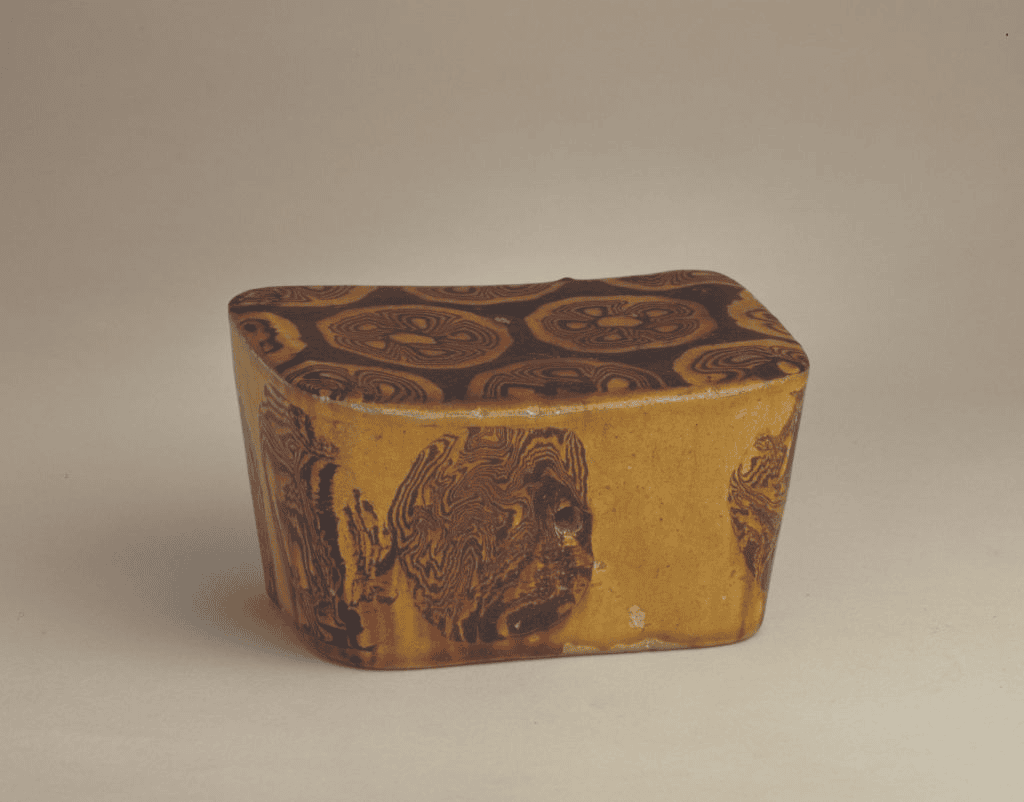
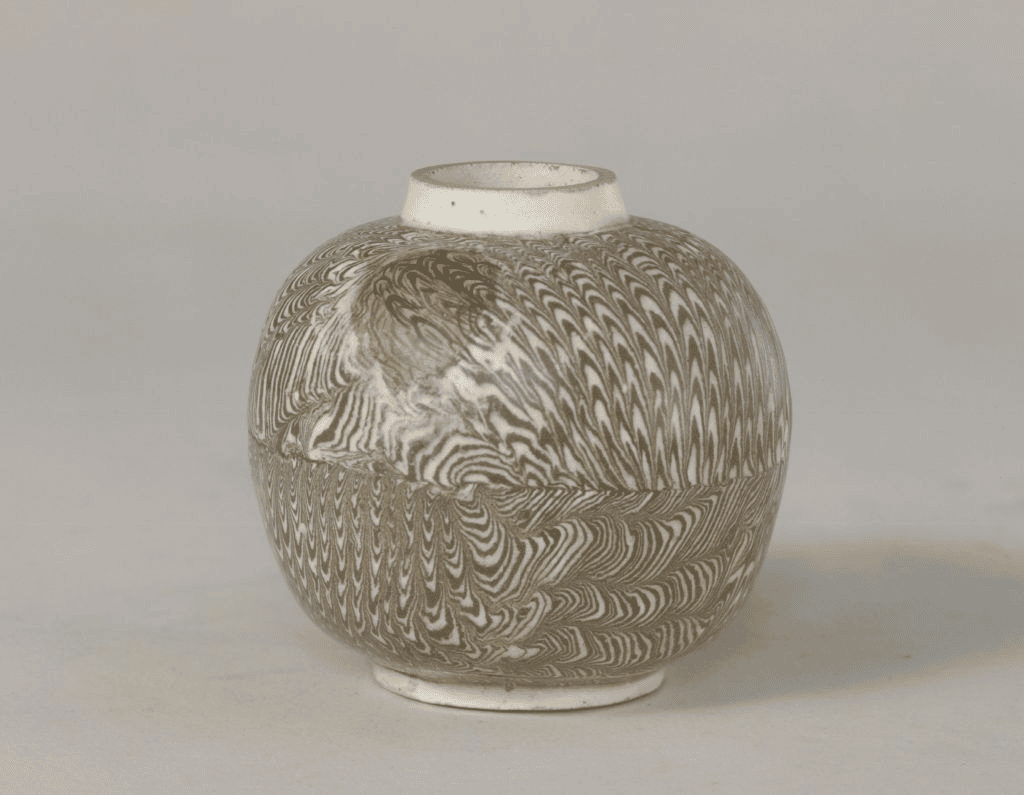
According to the Palace Museum, Jiaotai ware appeared during the Tang Dynasty and became especially popular during the Tang and Song dynasties. The Gongyi kilns in Henan Province were among the best-known production centers.
Historical Jiaotai Porcelain included bottles, jars, plates, bowls, and ceramic pillows. Common patterns resembled wood grain, feathers, flowers, waves, and clouds. These designs reflected both the technical skill of ancient potters and their close observation of nature.
Two major production methods developed over time. The first was the full-body method, in which the entire vessel was formed from patterned clay. The second was a veneer method, in which thin slices of patterned clay were applied to the surface of a plain ceramic body.
Examples such as the Gongyi kiln Jiaotai pillow and the Xiuwu kiln Jiaotai jar demonstrate the variety of patterns and forms created by early ceramic artisans.
Today, Jiaotai Porcelain has moved beyond the reproduction of historical forms. Contemporary artists use improved clay formulas, molds, sculptural techniques, and firing systems to create art ceramics, tableware, decorative objects, and large ceramic installations.
How Jiaotai Porcelain Is Made
The process begins with selecting compatible clays. Different clays must have similar plasticity, drying shrinkage, firing shrinkage, and maturation temperatures. If the materials are incompatible, the finished Jiaotai Porcelain may crack, separate, warp, or deform during drying and firing.
After preparation, the colored clays are arranged in layers. The maker may roll, twist, fold, press, or cut the clay repeatedly, depending on the desired pattern. Feather-like patterns require repeated layering and slicing, while wood-grain, cloud, and landscape effects depend on the thickness, direction, and cutting angle of the clay layers.
The patterned clay can then be shaped by wheel throwing, press molding, hand building, or slab forming. Thin slices may also be applied to bowls, plates, cups, vases, jars, sculptures, or decorative panels.
After forming, each piece must be carefully dried and trimmed. It may then undergo bisque firing, glazing, and high-temperature firing. A transparent glaze is commonly used because it protects the surface while allowing the natural clay pattern to remain visible.
The flowing appearance of Jiaotai Porcelain may seem spontaneous, but successful production requires precise material control. Its beauty is created through a balance of planning, skilled handwork, and natural kiln variation.

How Jiaotai Porcelain Differs from Blue-and-White and Linglong Porcelain
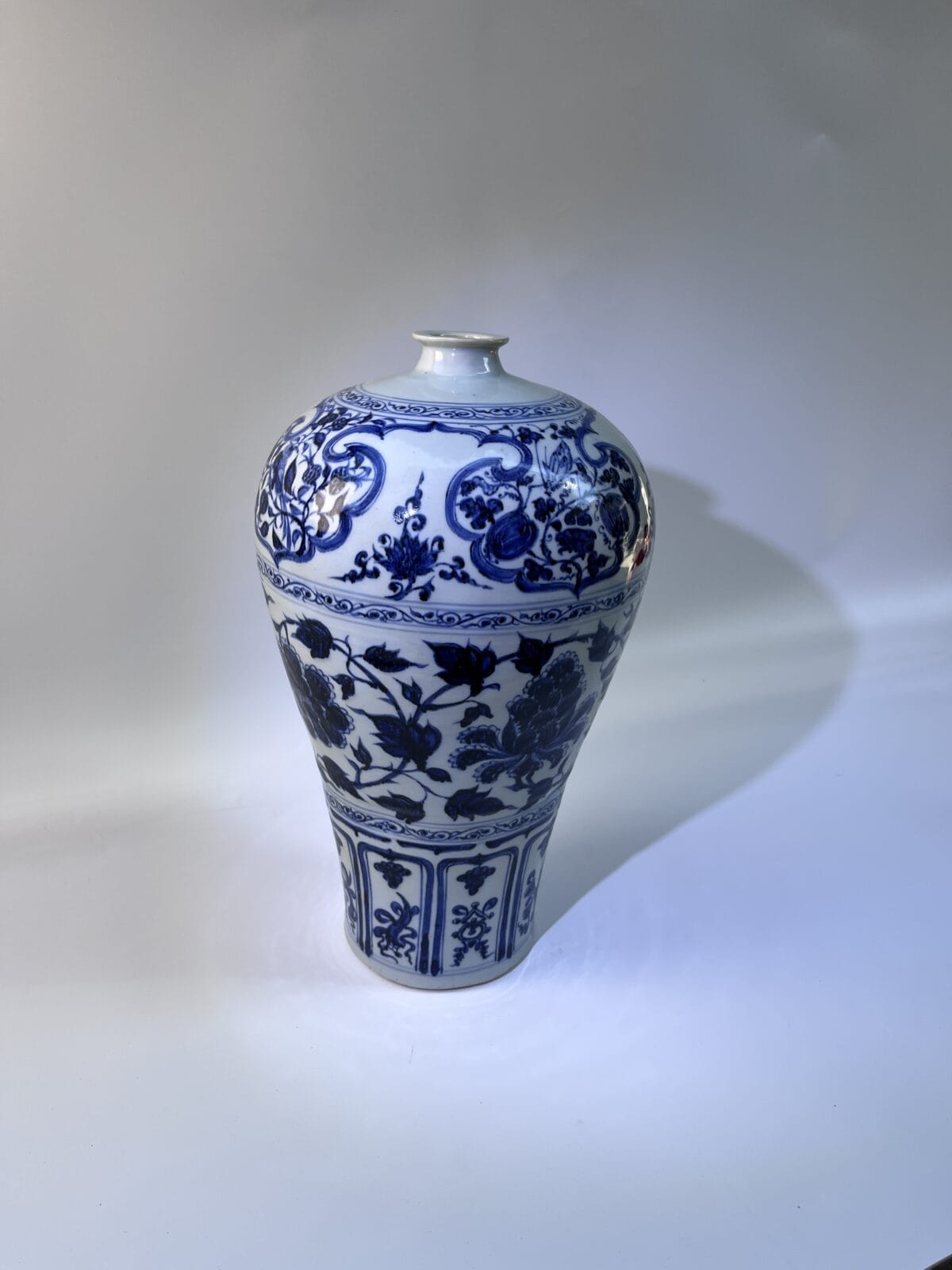
Jingdezhen Ceramics includes many distinctive decorative traditions. Blue-and-white porcelain, Linglong porcelain, and Jiaotai Porcelain each use a different visual language.
Blue-and-white porcelain is typically decorated by painting cobalt pigment onto the porcelain body before applying a transparent glaze. Its beauty comes from brushwork, composition, and variations in cobalt blue.
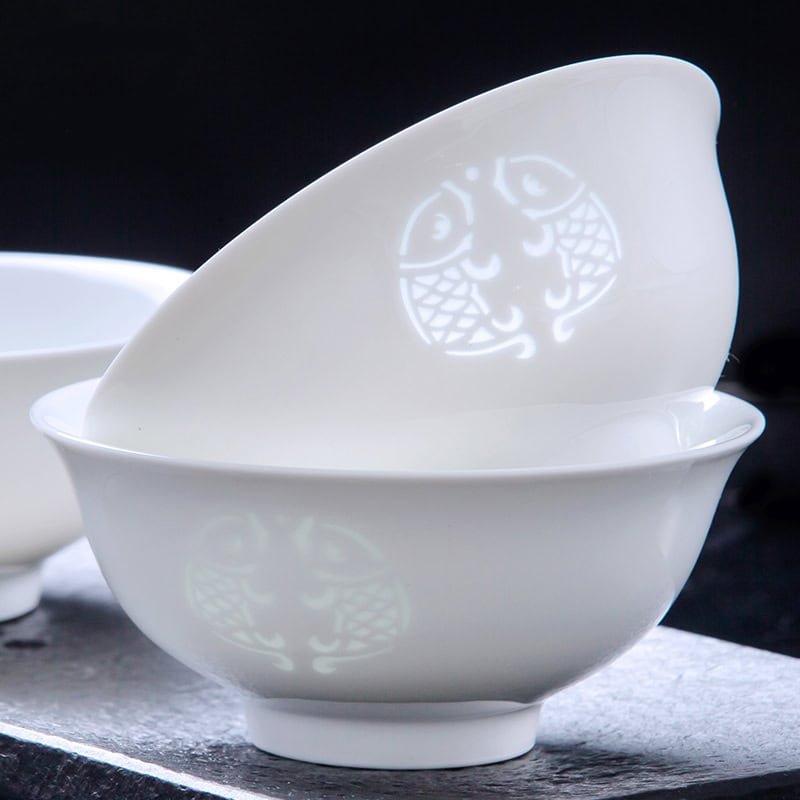
Linglong porcelain is known for its delicate translucent openings. Artisans carve small holes into the body, fill them with glaze, and fire the piece to create a luminous, jewel-like effect.
Jiaotai Porcelain focuses on the clay itself. Its patterns are not painted or carved after forming. They are created while the clay body is being assembled.
In simple terms, blue-and-white porcelain is like a painting on porcelain, Linglong porcelain is like light captured within porcelain, and Jiaotai Porcelain is like a naturally patterned stone designed by human hands.
Modern Jingdezhen ceramic manufacturers may also combine Jiaotai Porcelain with blue-and-white painting, carving, transparent glazing, or localized colored glazes. These combinations create new decorative possibilities while preserving the natural character of the marbled clay.
Jiaotai Porcelain and Modern Jingdezhen Ceramics
Jingdezhen has a mature ceramic supply chain covering clay preparation, product design, mold development, glazing, decorating, firing, finishing, and packaging. This provides a strong foundation for the contemporary development of Jiaotai Porcelain.
Antique-style porcelain manufacturers can study Tang- and Song-dynasty forms, patterns, and glaze effects to reproduce historical tea ware, incense burners, ceramic pillows, jars, and display pieces. These products connect traditional craftsmanship with today’s antique-style porcelain market.
Contemporary art ceramic studios can enlarge and reorganize Jiaotai patterns for ceramic sculptures, wall panels, large vases, and ceramic installations. When used at a larger scale, the flowing layers of colored clay can resemble geological formations, mountains, rivers, or abstract landscapes.
Jiaotai Porcelain can also be adapted for coffee cups, teacups, dinner plates, flower vessels, lamps, and tabletop decorations. By adjusting the color palette and pattern density, Jingdezhen ceramic manufacturers can develop products for modern minimalist, contemporary Asian, wabi-sabi, or light-luxury interiors.
Traditional craftsmanship does not limit innovation. Instead, Jiaotai Porcelain gives designers a material language that can move naturally between historical references and contemporary lifestyles.
What Buyers Should Check When Sourcing Jiaotai Porcelain
A visually attractive sample does not automatically guarantee stable mass production. Buyers should evaluate the manufacturer’s material control, production method, quality standards, and ability to maintain reasonable consistency across a batch.
Before confirming an order, buyers should ask whether the product uses a full Jiaotai body or a patterned clay veneer. They should also confirm the compatibility of the clays, the stability of the transparent glaze, and the manufacturer’s methods for controlling cracking, separation, and deformation.
Because Jiaotai Porcelain includes handmade processes, slight differences in pattern direction, line thickness, and color distribution are normal. These variations are part of its artistic character. However, suppliers and buyers should use approved samples, tolerance samples, or documented color ranges to distinguish acceptable handmade variation from actual defects.
For cups, bowls, plates, and other food-contact products, buyers should confirm whether the finished items meet the regulations of their target market. Claims such as “high-fired” or “made with safe materials” cannot replace appropriate finished-product testing.
Large art ceramics and ceramic installations require additional attention. Buyers should evaluate structural strength, mounting systems, weight distribution, protective packaging, and transportation conditions before production begins.
Conclusion: Jiaotai Porcelain Lets Clay Become the Artistic Language
The beauty of Jiaotai Porcelain comes from the relationship between natural clay layers and carefully controlled design. Every stage—layering, twisting, cutting, shaping, and firing—leaves a visible trace in the finished piece. The result combines natural variation with deliberate structure.
From Tang- and Song-inspired antique reproductions to contemporary Jingdezhen Ceramics, Jiaotai Porcelain continues to evolve. It can be used in everyday tableware, collectible art ceramics, modern sculptures, and large ceramic installations. Together with blue-and-white porcelain and Linglong porcelain, it demonstrates the remarkable range of Jingdezhen’s ceramic traditions.
Based in Jingdezhen, Magic Cube works with its own production team and a network of long-term partner workshops. We help buyers and brands develop Jiaotai Porcelain, tableware, decorative ceramics, art ceramics, and custom ceramic installations. For each project, we can assist with clay selection, pattern development, sampling, production planning, quality control, and export packaging.
For buyers, Jiaotai Porcelain is more than a historical ceramic technique. It is a flexible contemporary material language that allows the clay itself to tell the story.