Chinese Porcelain Spreading to the World A Millennium-long Civilization Epic
News 2022-06-14 125
Chinese Porcelain Spreading to the World
In English, the word “China” refers to both the country and porcelain. A piece of smooth and gentle porcelain connects the thousand-year-old trade across land and sea, witnessing the initial in-depth integration of Eastern and Western civilizations. As a great invention unique to China, porcelain was sporadically spread abroad during the Six Dynasties, began to be exported on a large scale in the Tang Dynasty, formed the exclusive “Porcelain Road” in the Song and Yuan Dynasties, and became popular worldwide during the great navigation era in the Ming and Qing Dynasties. After more than a thousand years of traveling across the oceans, it has changed the tableware, aesthetic trends, handicraft development and even the global trade pattern of countries around the world. Porcelain is not just a commodity, but a cultural messenger for the spread of Chinese civilization. This porcelain road stretching for thousands of miles has written a brilliant chapter of ancient China’s openness, inclusiveness and leading craftsmanship.
Initial Spread: From the Six Dynasties to the Tang Dynasty, the Starting Point of Large-scale Export of Porcelain
As early as the Wei, Jin, and Southern and Northern Dynasties, mature celadon had been sporadically introduced to the Korean Peninsula and Japan, which was the prelude to porcelain spreading to the world. At that time, the land Silk Road mainly dealt in silk and jewelry. Porcelain was heavy and fragile, and the loss during long-distance land transportation was huge. It could only be given as diplomatic gifts to the Western Regions in small quantities, and no large-scale trade was formed.
The Tang Dynasty was the era when the export of porcelain truly began to prosper
After the An Lushan Rebellion, the land Silk Road was blocked, while shipbuilding and navigation technologies made great progress, and maritime trade took its place. Guangzhou, Yangzhou, and Mingzhou became world-class trade ports, where Arab and Persian merchant ships docked all year round. A maritime route with porcelain as the core cargo quietly took shape, which later generations called the “Porcelain Road”. The sunken ship “Black Stone” unearthed in the Indonesian waters in 1998 is the most direct physical evidence of Tang Dynasty export porcelain: the whole ship carried more than 60,000 pieces of porcelain, mainly painted porcelain from Changsha Kiln in Hunan, white porcelain from Gongxian Kiln in the north, and celadon from Yue Kiln, which were sold to the coasts of West Asia and North Africa.
The export porcelain of the Tang Dynasty had learned to adapt to the needs of overseas markets
Changsha Kiln broke through the simple and elegant style of traditional celadon, firing vessels with exotic patterns such as Arabic characters, dates, and coconut trees, while retaining Chinese-style landscape and poem decorations, taking into account both Chinese and foreign aesthetics. In terms of shapes, it produced flat pots and long cups loved by the Hu people, which were completely different from domestic daily-use bowls and plates. Tang porcelain can be seen everywhere in ancient sites in the Middle East, Egypt, and Sri Lanka. Arab merchants called the white and hard porcelain “white gold”. Its dense glaze is resistant to acids and alkalis, clean and easy to clean, which quickly replaced the local rough pottery and became an exclusive luxury for nobles. At this time, the export of porcelain covered nearly 30 countries in East Asia, Southeast Asia, West Asia, and North Africa, laying the foundation for the golden age of porcelain export in the Song and Yuan Dynasties.
Golden Age: Maritime Trade in the Song and Yuan Dynasties, the Porcelain Road Connecting Hundreds of Countries in Asia and Africa
The commodity economy in the Northern and Southern Song Dynasties was unprecedentedly prosperous
The court officially established the Maritime Trade Supervisorate to manage overseas trade, and the four major ports of Guangzhou, Quanzhou, Mingzhou, and Hangzhou operated in a standardized manner, ushering in the first peak period of porcelain export. The land Silk Road was blocked by long-term wars, and the production capacity of kilns across the country all turned to the sea route. Longquan celadon, Jingdezhen blue-and-white porcelain, and rough porcelain from kilns along the coast of Fujian had clear divisions of labor, covering different overseas consumption levels. As the world’s largest port, the sunken ship “Nanhai No. 1” of the Southern Song Dynasty unearthed more than 20,000 pieces of Longquan celadon, which confirmed the huge scale of export at that time.
During the Song Dynasty, there were complete oceanic trade routes for porcelain, with 58 countries importing Chinese porcelain on a regular basis
The export routes of Song Dynasty porcelain formed a complete network: the eastern route reached Korea and Japan via Mingzhou. The Goryeo Dynasty comprehensively learned the firing techniques of Yue Kiln celadon, and the Goryeo secret-color porcelain as smooth and gentle as jade was born; the southern route set off from Quanzhou and Guangzhou, crossed the South China Sea and the Strait of Malacca, passed through Southeast Asian countries, went west directly to India and the Persian Gulf, and reached as far as Somalia and Tanzania on the east coast of Africa. Now, a large number of Song Dynasty porcelain shards can still be excavated in local archaeological sites. “Zhu Fan Zhi” (Records of Foreign Countries) records in detail that at that time, 58 countries imported Chinese porcelain all year round, and the demand was continuous, from royal ritual vessels to civilian tableware.
Blue and white porcelain was invented during the Yuan dynasty, it became popular in West Asia, sparking a wave of imitations around the world
The unification of the Yuan Dynasty opened up land and sea routes, and blue-and-white porcelain emerged out of nowhere, completely changing the global aesthetic pattern of porcelain. The Mongol Empire spanned Eurasia, land trade recovered briefly, and maritime trade became more free. Relying on high-quality kaolin, Jingdezhen fused cobalt materials from West Asia to fire Yuan Dynasty blue-and-white porcelain. The intricate patterns of interlocking lotus, dragon and phoenix perfectly fit the aesthetic of Islamic culture, and were sold in large quantities to Persia and Turkey. The Topkapi Palace in Turkey still collects hundreds of complete pieces of Yuan Dynasty blue-and-white porcelain, which is the world’s top collection of Yuan Dynasty blue-and-white porcelain. During this period, Chinese porcelain was sold to nearly 100 countries. Longquan celadon monopolized the entire Indian Ocean market, Fujian porcelain was exclusively supplied to Japan and Southeast Asia, and Jingdezhen blue-and-white porcelain and blue-and-white porcelain were exclusively supplied to nobles in the Middle East, forming a global hierarchical trade system. Craftsmen from various countries overseas rushed to imitate it. Pottery kilns in Persia and Egypt imitated the glaze color of celadon, and Vietnam and Thailand replicated the shapes of Jingdezhen porcelain. A wave of imitating Chinese porcelain gradually rose in East Asia and West Asia.
Sweeping across Europe and America: The Great Navigation Era of the Ming and Qing Dynasties, Porcelain Swept the World
With the opening of new sea routes, Clark porcelain sparked a craze for Chinese style in Europe.
In the 15th century, with the opening of new sea routes, merchant ships from Portugal, the Netherlands, and Britain arrived in China. Chinese porcelain officially entered Europe, ushering in a 300-year-long “Chinese style” craze in Europe, which was also the peak stage of porcelain export. Although the Ming Dynasty implemented a short-term sea ban in its early years, Zheng He carried a large amount of porcelain as diplomatic gifts during his seven voyages to the Western Seas, spreading porcelain culture to countries in Southeast Asia and the Indian Ocean. After the Longqing Emperor lifted the sea ban in the mid-Ming Dynasty, private porcelain trade was completely liberalized, and Western East India Companies monopolized the porcelain trade with China, with annual exports often reaching hundreds of thousands of pieces.
The representative export porcelain of the Ming Dynasty, Kraak porcelain, got its name from being transshipped through the Dutch port of Kraak. It mainly consists of large plates and bowls, with the plate surface divided into multiple layers of patterns, painted with flowers, birds, landscapes, and figures, adapting to the custom of separate dining at European banquets. In 1639, Dutch merchant ships alone transported 366,000 pieces of porcelain from China, which were auctioned in Amsterdam. Nobles scrambled to buy them, and the price of an exquisite blue-and-white plate was equivalent to that of a cow. Porcelain became a symbol of wealth and status in Europe. Royal families of various European countries spared no expense to collect it. The Palace of Versailles in France and Buckingham Palace in Britain specially set up porcelain display rooms, and nobles had to use sets of Chinese porcelain plates and bowls at banquets, while wooden and tin tableware were gradually eliminated.
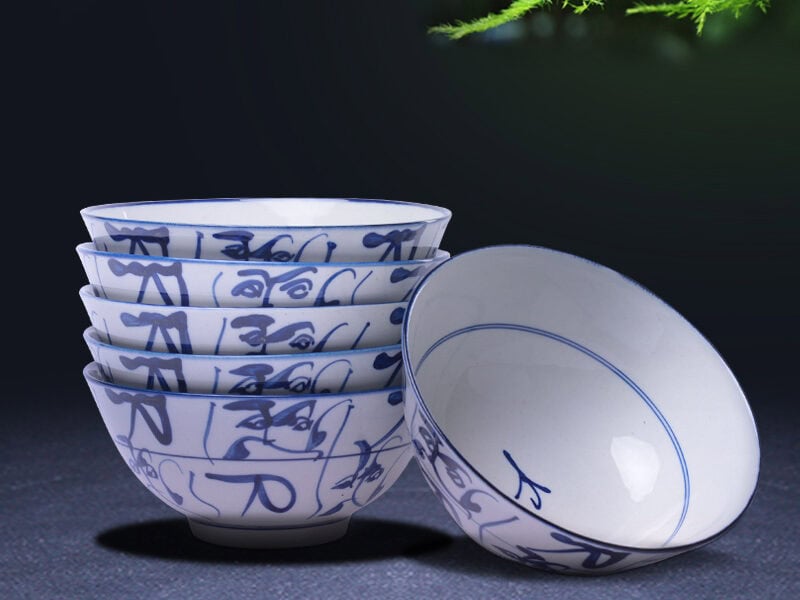
Peak Exports via Qing Thirteen Hongs: Armorial & Guangcai Porcelain for Europe and America
In the Qing Dynasty, the porcelain-making technology in Jingdezhen reached its peak. Famille rose, wucai (five-color porcelain), and color glaze porcelain flourished, and custom-made armorial porcelain exclusive to European nobles appeared. European merchants provided family crests, mythological patterns, and city landscape drawings, and Jingdezhen craftsmen fired them exactly as provided. Cantonese enamel porcelain was specially made for the European and American markets, with strong and complex colors, and was sold to Europe, America, and American colonies. The 18th century was the peak of export porcelain production, with more than one million pieces of porcelain shipped out from the Thirteen Hongs in Guangzhou every year, covering all emerging markets in Europe, America, and Australia. The porcelain trade brought huge amounts of silver to the Qing Dynasty, and a large amount of global silver flowed into China, which profoundly changed the world economic pattern in the early modern period.
Europe’s Century-long Quest for Hard Porcelain Spawns Modern Ceramic Industry
At the same time, European countries spent a hundred years trying to crack the secret formula of porcelain making. For a long time, the firing technology of high-temperature hard porcelain was a unique technical barrier of China, and Europe could only fire low-temperature soft pottery. It was not until 1709 that the Meissen workshop in Germany successfully imitated hard white porcelain. Subsequently, porcelain factories such as Sèvres in France and Wedgwood in Britain were established one after another. Over a hundred years, they continuously learned from Chinese blue-and-white and famille rose techniques, combined with local aesthetic improvements, and the modern world ceramic industry was born.
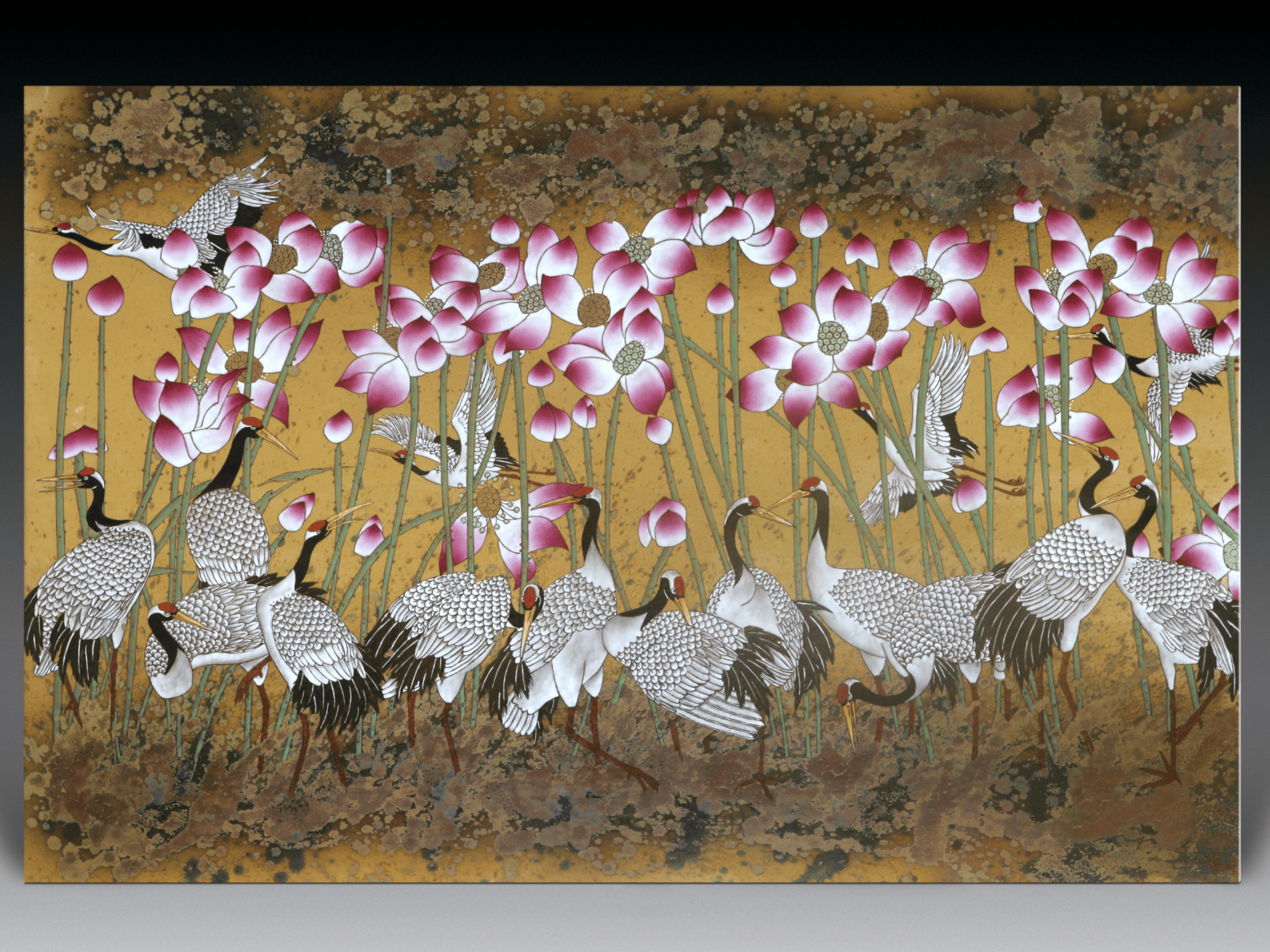
Two-way Integration: How Porcelain Reshaped the World and Fed Back to Chinese Civilization
For more than a thousand years, the exchanges along the porcelain road have never been a one-way cultural output, but a two-way mutual learning and mutual achievement.
Porcelain Restructured Global Lifestyle, Aesthetic Taste & Craft Industry
For overseas countries, porcelain has completely reshaped their lifestyles. Before that, most regions in the world used wooden, rough pottery, and metal tableware, which were prone to mold, oxidation, and dirt accumulation. Chinese porcelain is high-temperature resistant, corrosion-resistant, and easy to clean, which greatly improved the level of dietary hygiene. At the aesthetic level, Chinese-style landscape, flower and bird, and pavilion patterns swept the world. European Rococo art borrowed a lot from the painting style of porcelain, architectural tiles in West Asia replicated the interlocking branch patterns of blue-and-white porcelain, and the tableware and tea sets systems in Japan and South Korea in East Asia were completely developed based on Chinese porcelain. At the handicraft level, Korean celadon, Japanese Imari porcelain, Persian cobalt pottery, and European hard porcelain all originated from the imitation of Chinese porcelain, and porcelain promoted the overall upgrading of the world’s handicraft industry.
Overseas Demand Drives Innovation in Chinese Ceramics
The demand from overseas markets has also continuously promoted the innovation of China’s porcelain industry. In the Tang Dynasty, exotic shapes were fired to adapt to the Hu people. In the Yuan Dynasty, cobalt materials from West Asia were absorbed to create blue-and-white porcelain. In the Ming and Qing Dynasties, armorial porcelain and Cantonese enamel porcelain were developed according to European orders. Overseas aesthetics have continuously enriched the decorative language of Chinese ceramics. The silver, spices, and mineral pigments brought by trade, in turn, supported the continuous technological iteration of the kiln industry in Jingdezhen. Chinese and foreign cultures met and merged on the porcelain surface, giving birth to countless unique export porcelain masterpieces.
After the modern industrial revolution, the mass production of mechanized porcelain in Europe rose. In the late Qing Dynasty, the national power declined, the kiln industry declined, and the trade of hand-made export porcelain gradually declined. However, the value of porcelain as a symbol of Chinese civilization has never faded. To this day, major museums around the world have special exhibition halls for Chinese export porcelain, and ancient trade shipwreck porcelain is constantly being salvaged from the seabed. These porcelain pieces that have crossed the ocean are the most solid physical evidence of peaceful exchanges between ancient China and foreign countries.
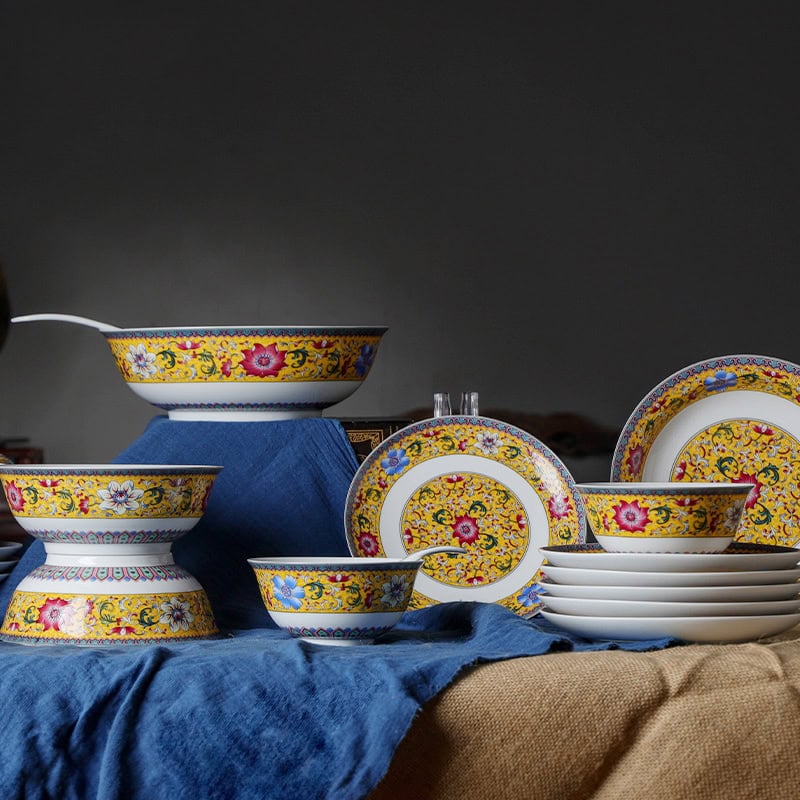
Looking Back on a Millennium: Porcelain, an Ever-lasting Bridge of Civilization
From the “Black Stone” ship of the Tang Dynasty to the ocean-going merchant ships of the Qing Dynasty, millions of pieces of porcelain have ridden the wind and waves, using the smooth and gentle porcelain clay as a medium to let distant countries understand Eastern aesthetics. The reason why porcelain can travel all over the world lies in ancient China’s world-leading handicraft technology, inclusive and open trade policies, and the unique value of the utensils themselves that combine practicality and aesthetics. Unlike silk and jewelry that are only for nobles to play with, it is a daily utensil that can enter thousands of households. On the dining table and in the hall, it silently conveys the Chinese people’s life philosophy of being gentle, introverted, and harmonious between man and nature.
Today, the Belt and Road Initiative carries on the cultural legacy of the ancient porcelain routes, allowing contemporary Chinese ceramics to reach markets around the world once again. Handcrafted pottery tableware, culturally inspired ceramic products, and artistic ceramics are being sold in various parts of the globe, and the thousand-year-old tradition of ceramic production continues to foster dialogue among civilizations. A small porcelain plate embodies the legends of trade that span thousands of years, witnesses the enduring power of cultural exchange, and tells an epic story that belongs to China as well as to the whole world, both in terms of material culture and art.