Jingdezhen’s Binary Formula of Kaolin & Porcelain Stone: A Milestone in Global Ceramics
News 2026-08-03 50
Why can Jingdezhen porcelain be white, hard, refined, and capable of withstanding high-temperature firing? In addition to advanced forming, glazing, and firing techniques, one important reason is the development of Jingdezhen’s ceramic raw materials—particularly its “binary formula,” which combines kaolin with porcelain stone.
The binary formula is not simply a random mixture of two types of clay. Kaolin and porcelain stone are blended in carefully selected proportions based on the product’s shape, firing temperature, and performance requirements. This formulation improves the refractoriness and firing stability of the porcelain body, providing an essential foundation for producing large, complex, and high-quality porcelain in Jingdezhen.
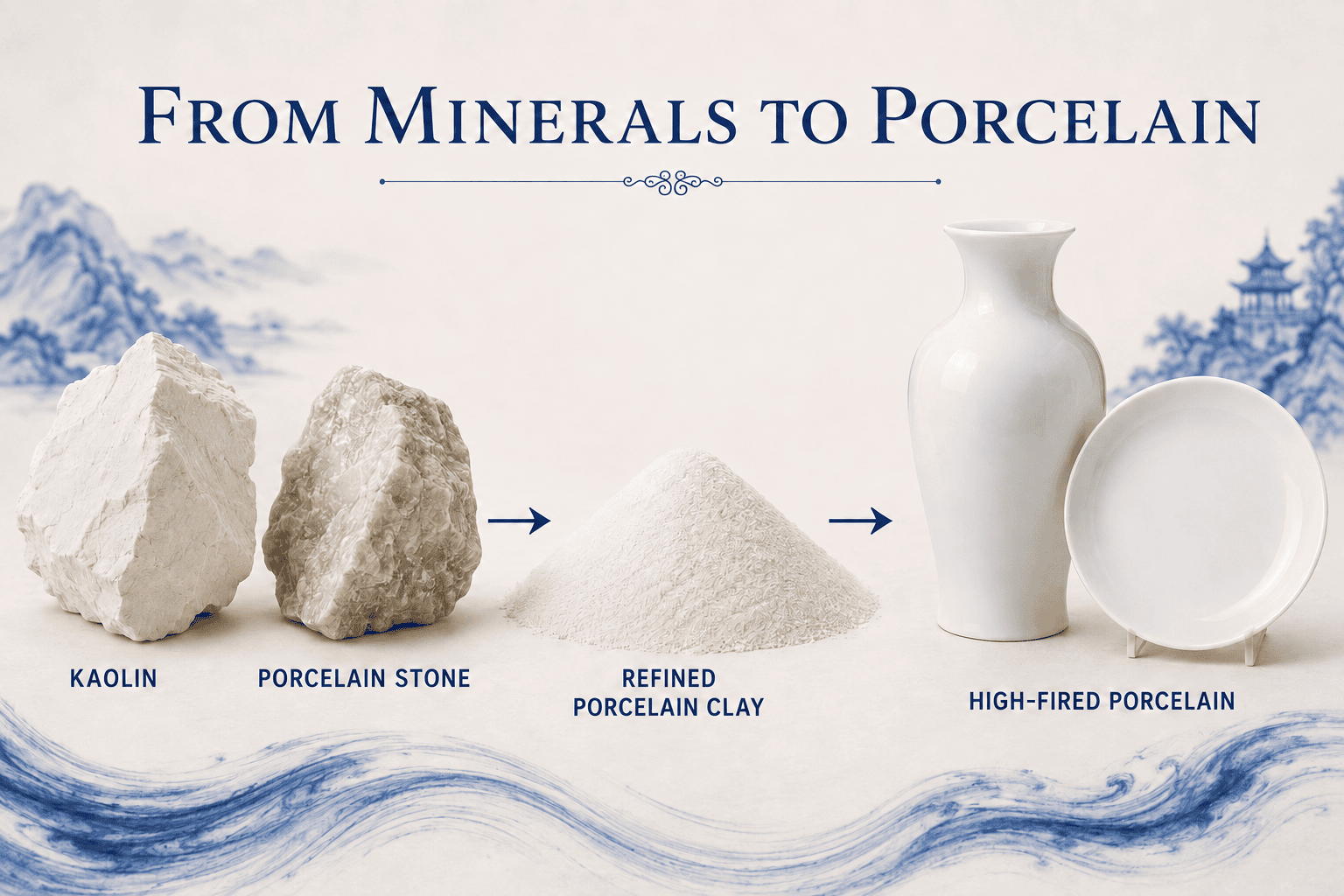
1. What Is Jingdezhen Porcelain Stone?
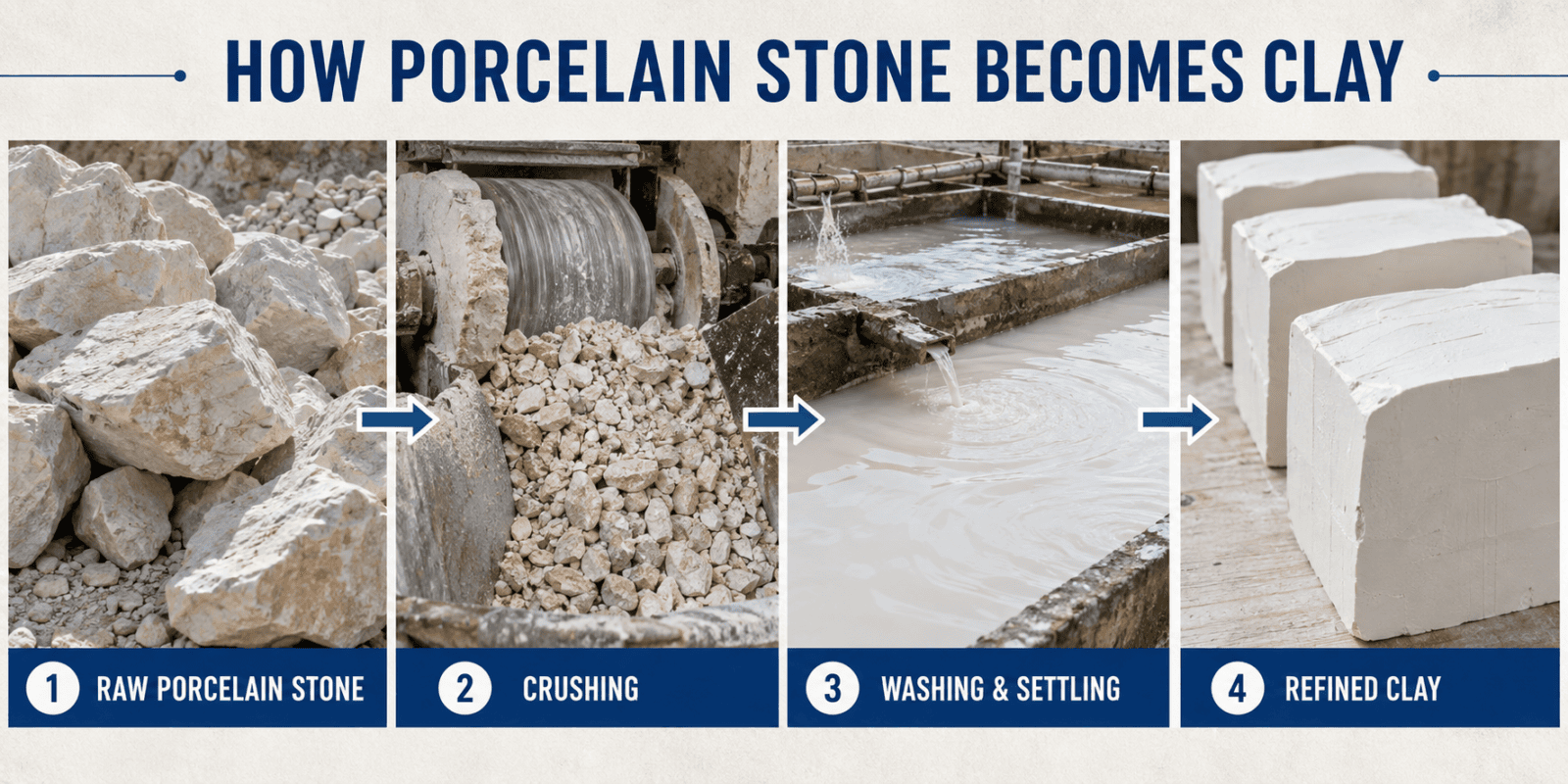
Porcelain stone is an important traditional raw material used in Jingdezhen porcelain production. After it is mined, crushed, washed, settled, and aged, it can be processed into refined porcelain clay for forming.
Porcelain stone generally contains quartz, feldspar-group minerals, and clay minerals. During firing, some of these components act as fluxes, helping the body gradually vitrify and form hard, dense porcelain.
Early Jingdezhen porcelain bodies were made primarily from porcelain stone. Although this material offered suitable forming and sintering properties, producing larger pieces, thicker walls, or more complex structures required more precise formulation and firing control.
2. What Role Does Kaolin Play in the Binary Formula?
The English word “kaolin” comes from Gaoling, an area near Jingdezhen. Kaolin has high refractoriness, and adding it to a porcelain body increases its alumina content and improves its stability during high-temperature firing.
Simply put, porcelain stone promotes sintering and vitrification, while kaolin acts as the structural framework of the porcelain body. When properly combined, these materials reduce the risk of excessive softening, warping, or deformation during firing.
The use of kaolin enabled Jingdezhen artisans to produce large vessels and complex forms more consistently. It also provided an important material foundation for the development of blue-and-white porcelain, underglaze copper-red porcelain, and other high-fired wares.
According to information published by the Jingdezhen Municipal Government, combining porcelain stone with kaolin during the Yuan dynasty increased the alumina content and firing temperature of porcelain bodies while reducing deformation.
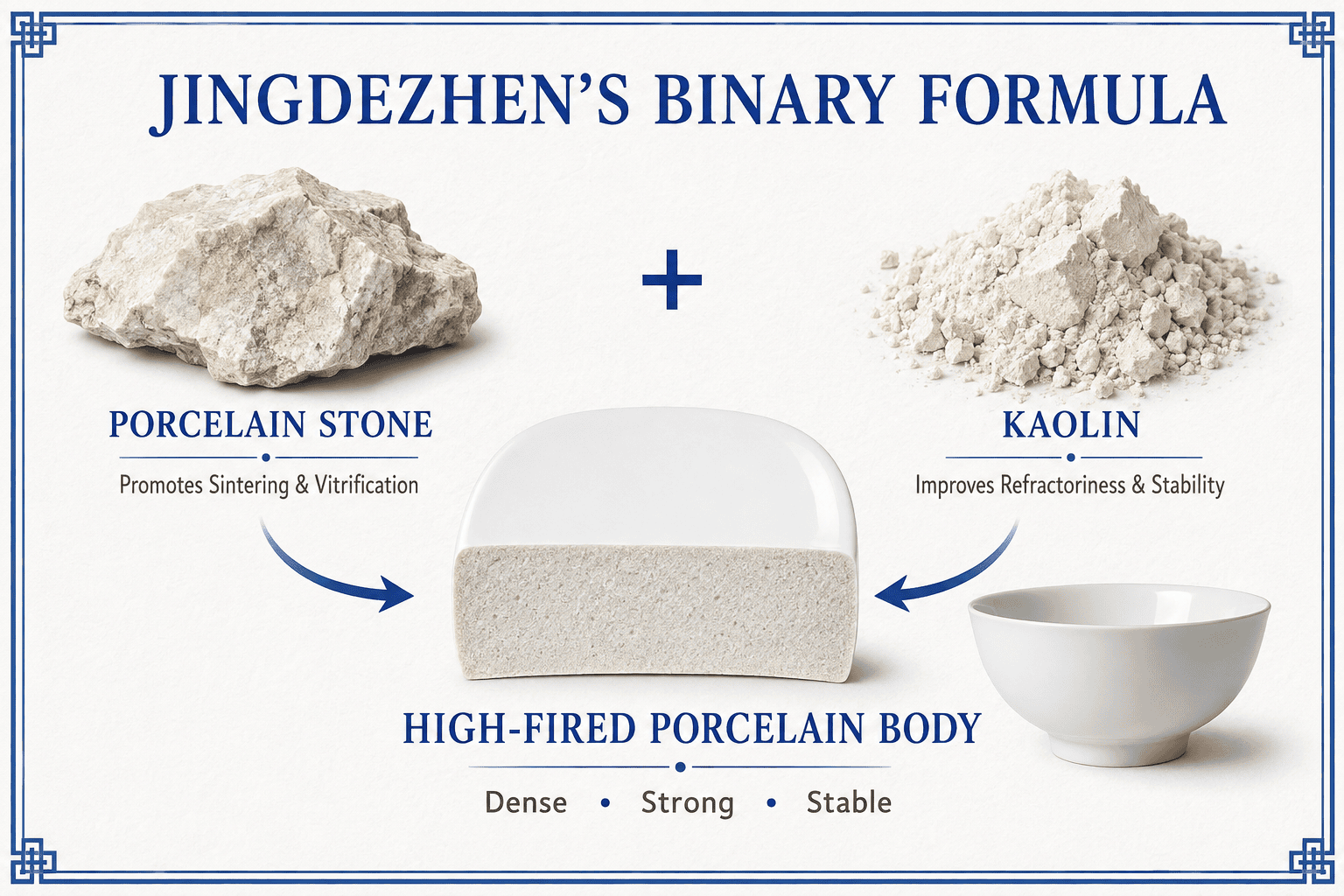
3. Why Is It Called a “Binary Formula”?
The term “binary” refers to the two primary raw-material systems used in the porcelain body: porcelain stone and kaolin. It does not mean that the two materials are always mixed at a fixed 1:1 ratio.
In actual production, formulations vary from one product to another. Manufacturers adjust the proportions based on the size and shape of the piece, body thickness, whiteness requirements, forming method, glaze, and kiln conditions.
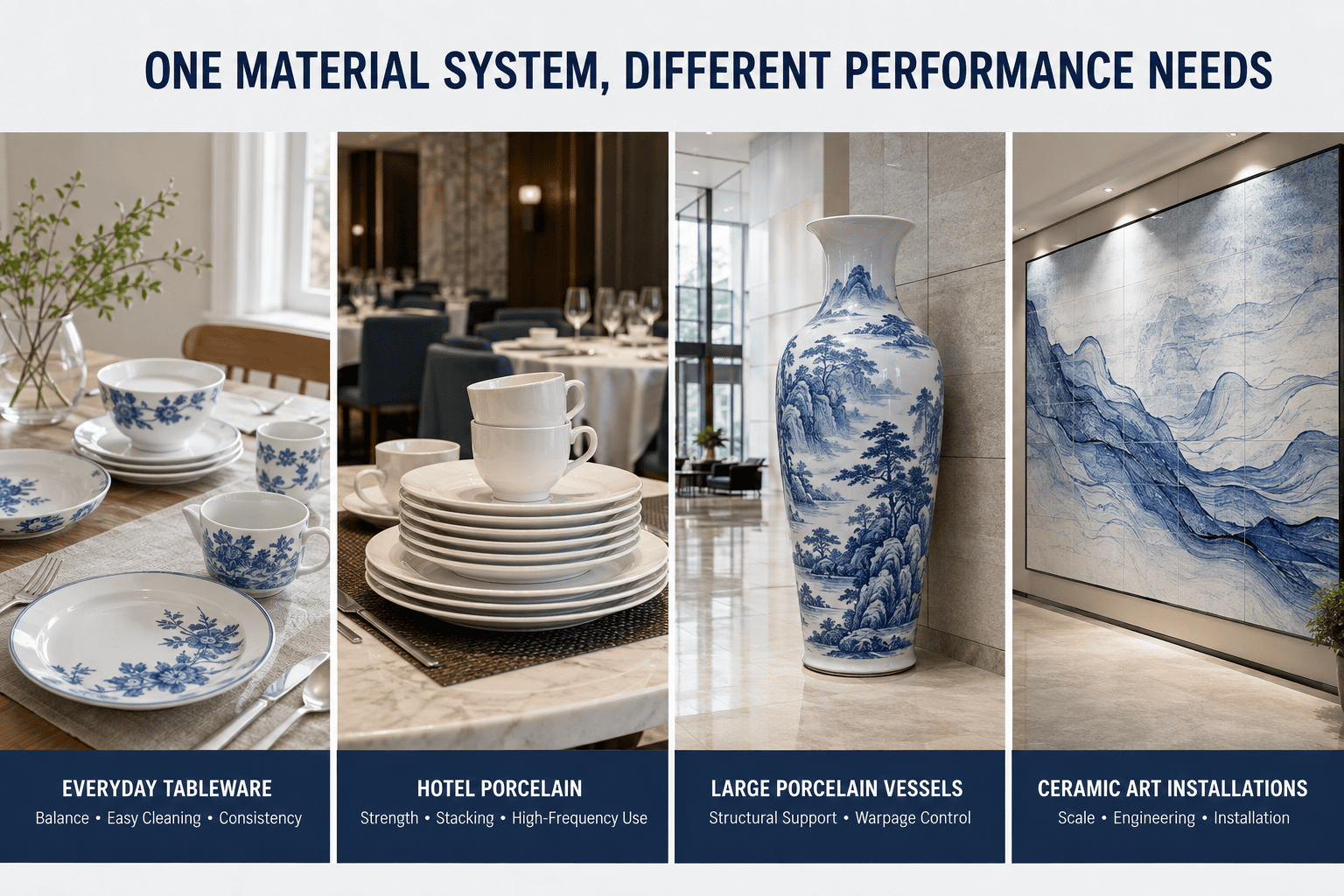
Large vases, ceramic sculptures, and complex art porcelain require greater structural support during high-temperature firing. Everyday tableware, by contrast, requires a balance of whiteness, strength, weight, forming efficiency, and production cost.
For this reason, buyers should not simply ask whether a product contains kaolin. They should also determine whether the body formulation is appropriate for the specific product they intend to purchase.
4. Why Is the Binary Formula a Milestone in Ceramic History?
Between the 13th and 15th centuries, Jingdezhen introduced several major ceramic innovations, including the binary formula, new kiln designs, and blue-and-white decoration. UNESCO identifies the combination of kaolin and porcelain stone as an important technological innovation in Jingdezhen porcelain production.
Its significance can be understood in three main areas:
1. Improved High-Temperature Firing Stability
Kaolin increases the refractoriness of the porcelain body, helping it resist excessive softening at high temperatures and reducing the risk of slumping and warping.
2. Enabled the Production of Larger and More Complex Pieces
A more stable body formulation allowed artisans to produce larger vessels and more complex forms, significantly expanding the range of porcelain products that could be made in Jingdezhen.
3. Influenced the Development of Hard-Paste Porcelain Worldwide
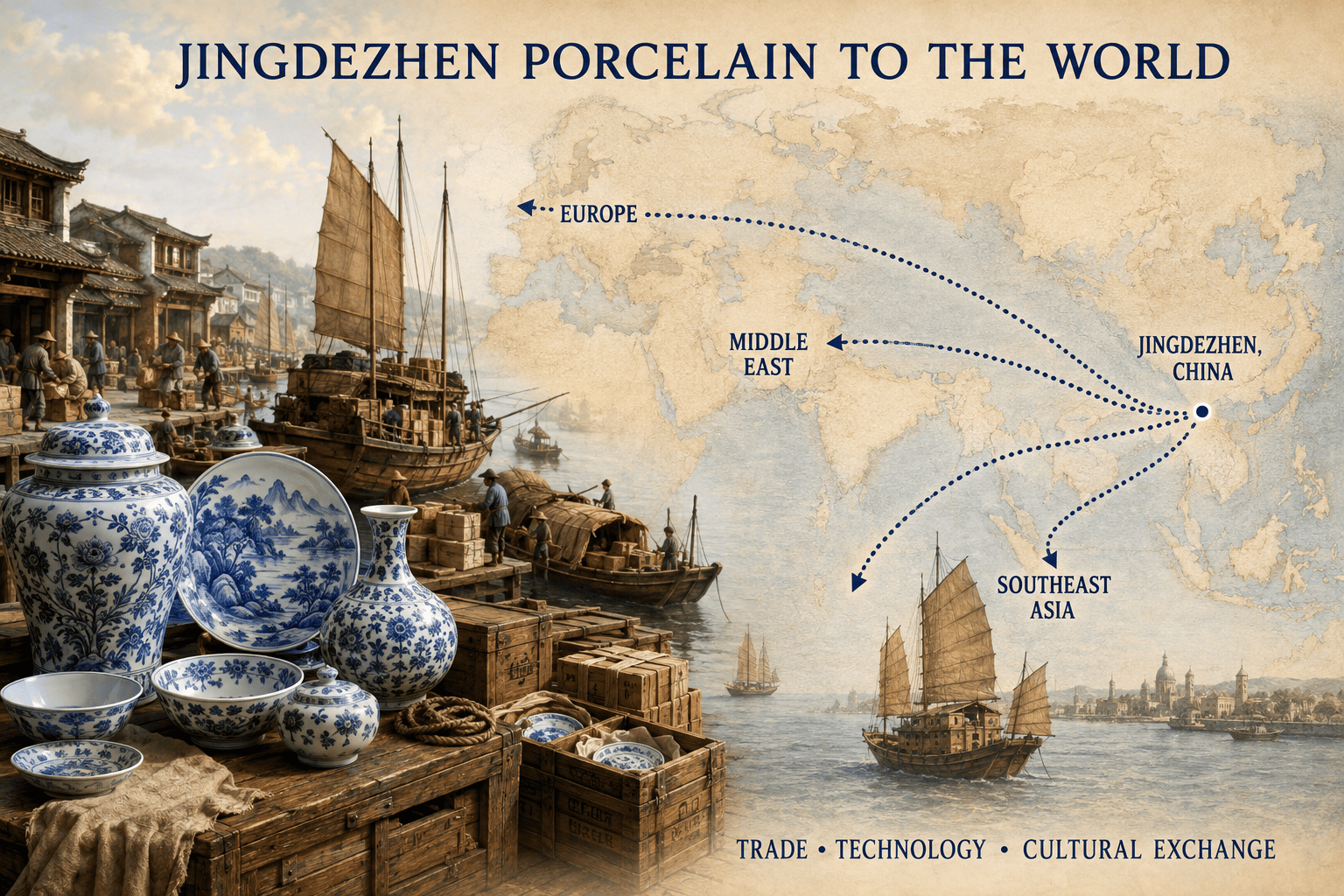
Jingdezhen porcelain and related technologies spread around the world through international trade. UNESCO materials state that the binary formula inspired and influenced the development of high-fired hard-paste porcelain in Europe, making it an important milestone in the global exchange of ceramic technology.
5. What Does the Binary Formula Mean for Today’s Ceramic Buyers?
For ceramic buyers, understanding the binary formula does not require studying complex mineralogy. Its practical value lies in helping buyers evaluate product performance and a supplier’s technical capabilities more accurately.
When sourcing Jingdezhen porcelain, buyers should focus on confirming the following:
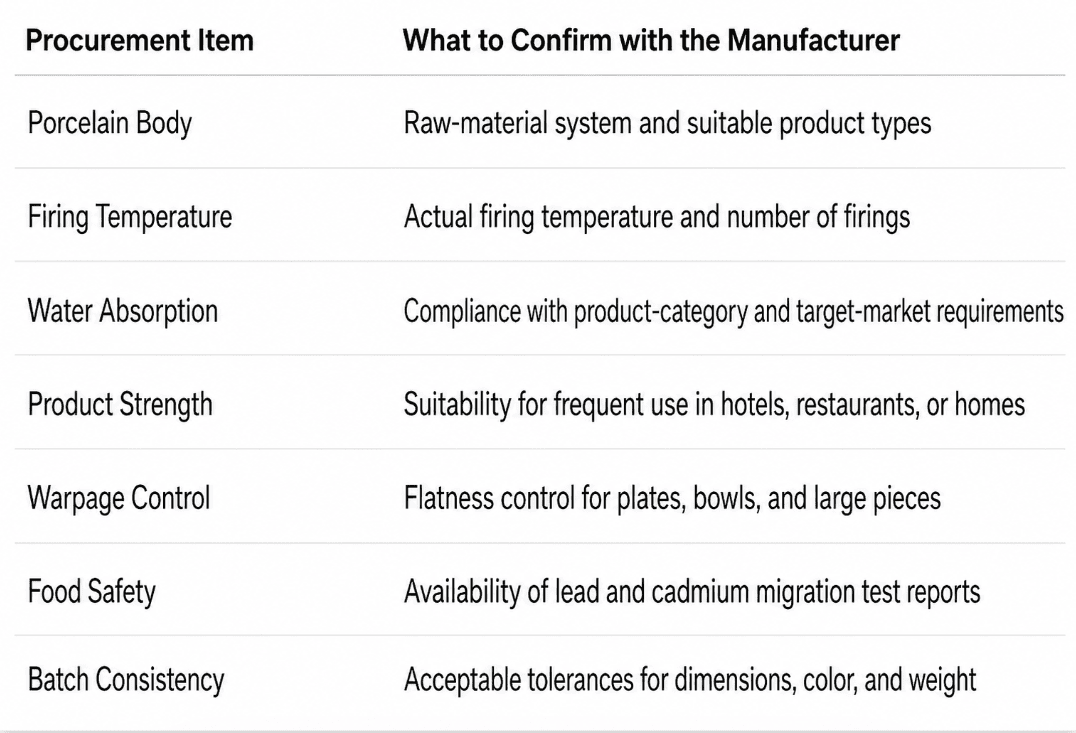
It is important to understand that using Jingdezhen kaolin or a binary formula does not automatically guarantee the same level of quality across all products. Raw-material processing, formulation ratios, forming methods, glazing techniques, firing schedules, and quality-control procedures all affect the finished product.
6. Different Products Require Different Porcelain Body Formulations
Everyday tableware generally emphasizes strength, flatness, ease of cleaning, and batch consistency. Hotel porcelain must also support stacking, commercial dishwasher cleaning, and frequent use. Art porcelain places greater emphasis on form, glaze effects, and stability during high-temperature firing.
Large vases, ceramic murals, and site-specific art installations require greater control over body structure, shrinkage, and warpage. Even when kaolin and porcelain stone are used, their proportions and the production process must be redesigned for the specific product.
A professional Jingdezhen porcelain manufacturer should not rely on a single, all-purpose clay body. Instead, it should recommend a suitable body formulation based on the product’s intended use, dimensions, order quantity, destination market, and budget.
Final Thoughts
The binary formula of kaolin and porcelain stone was a major breakthrough in the development of Jingdezhen porcelain technology. It improved the refractoriness and high-temperature stability of porcelain bodies, supported the production of larger pieces, and had a far-reaching influence on the development of hard-paste porcelain worldwide.
For today’s buyers, the binary formula is more than an important part of ceramic history. It demonstrates the close relationship between raw-material selection, process control, and finished-product performance.
Magic Cube is located in Jingdezhen, China. We operate our own factory and maintain long-term strategic partnerships with several specialized ceramic manufacturers. Based on product dimensions, intended use, destination market, and customization requirements, we provide porcelain body selection, product development, sample production, and custom manufacturing services for tableware wholesalers, hospitality suppliers, foodservice businesses, and brand customers.
If you are sourcing Jingdezhen household porcelain, hotel tableware, large porcelain vases, ceramic art, or site-specific art installations, send us your product images, dimensions, quantities, and application requirements. We will help you select the appropriate raw-material formulation and manufacturing process.