Full Guide to Chinese Tea Sets: Pottery, Porcelain, Lacquer, Glass, Metal & Wooden Tea Ware
News 2026-07-20 59
Full Guide to Chinese Tea Sets: Pottery, Porcelain, Lacquer, Glass, Metal & Wooden Tea Ware
Chinese tea culture boasts a long history. Supporting tea wares come in diverse delicate shapes, combining practical functions with unique artistic beauty, and have been beloved by tea lovers for thousands of years. As tea-drinking customs evolved, specialized tea sets matured gradually. Tea wares made of different materials deliver totally different experiences for brewing and storing tea. This article sorts out six mainstream types of Chinese tea sets, introducing their history, features and advantages.
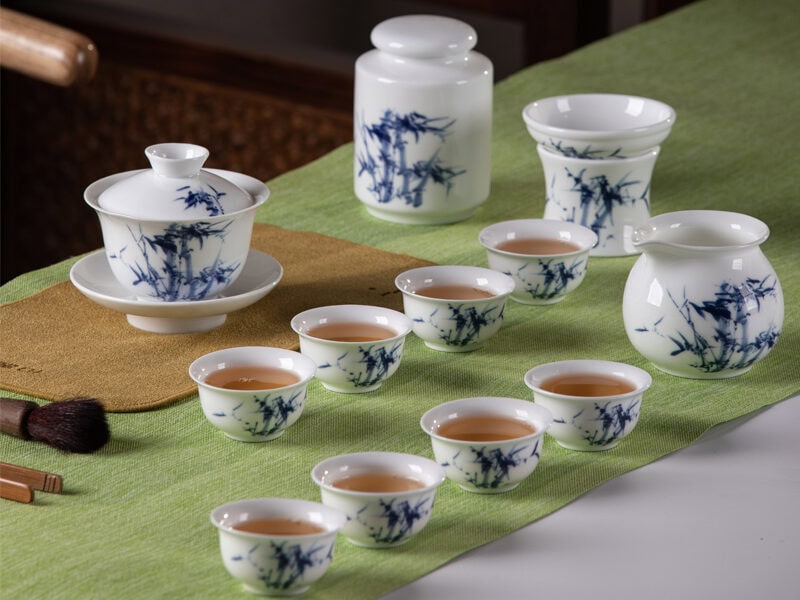
Chinese Tea Sets Pottery Tea Ware
Yixing purple clay tea sets are the most outstanding pottery tea wares. Purple clay ware emerged in the early Northern Song Dynasty and gained nationwide popularity in the Ming Dynasty, forming a unique craft system. Purple clay teapots are unglazed inside and out, hand-shaped from local purple clay, red clay and Tuanshan clay in Yixing, then fired at high temperature.
Fired at high temperature, purple clay bodies are compact and fine-textured. They are leak-proof yet contain invisible tiny pores. With long-term use, the pores absorb tea liquor and build up rich tea aroma. Purple clay conducts heat slowly so it will not scald hands. Tea stored inside stays fresh in summer without souring, and the ware resists cracking under sudden temperature changes. It can even be placed directly on stoves to simmer tea.
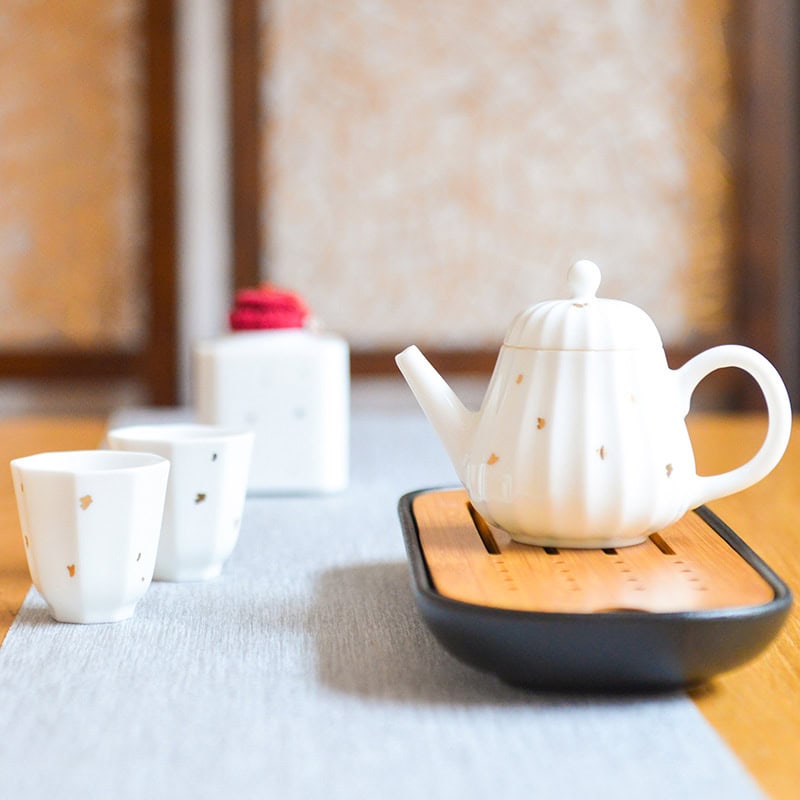
Purple clay wares feature simple, primitive shapes and soft, elegant tones, often modeled after bamboo joints, lotus roots, pine trunks and ancient bronze ritual vessels from Shang and Zhou dynasties. The ancient book Taoxi Keyu records that Yixing clay teapots flourished in the Ming Dynasty, with top-grade pieces valued as highly as gold and jade. Wen Zhenheng’s Records of Superfluous Things also states that clay teapots are optimal for brewing tea, as they preserve original tea fragrance without odd stale water odors.
Chinese Tea Sets Porcelain Tea Ware
Pottery dominated early tea-drinking culture. After porcelain was invented, porcelain tea sets gradually replaced pottery ones. Based on origin and craftsmanship, mainstream porcelain tea wares fall into three categories: white porcelain, celadon and black porcelain.
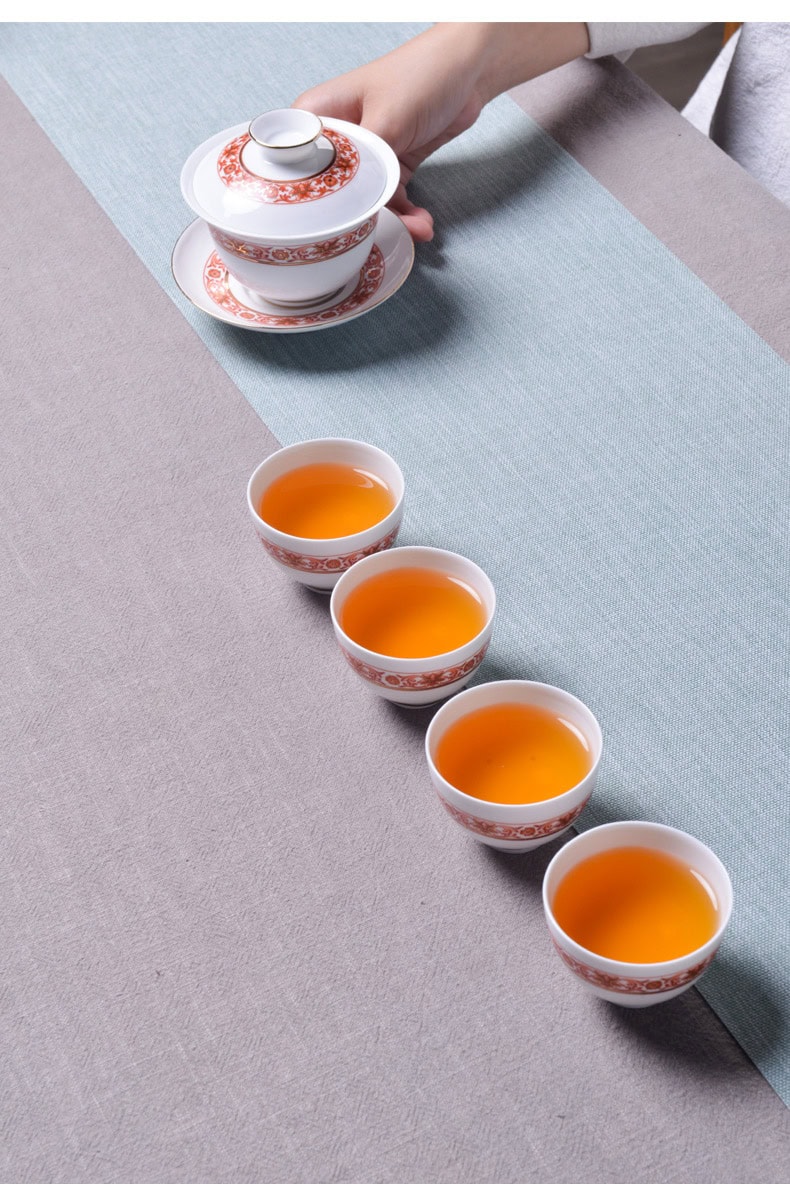
White porcelain tea sets are most famous from Jingdezhen. Liling in Hunan, Tangshan in Hebei and Qimen in Anhui also produce distinctive white porcelain tea wares. Formerly named Changnan Town, Jingdezhen was ordered to build an imperial kiln by Emperor Zhenzong in the third year of Jingde reign in the Northern Song Dynasty, and the town was renamed Jingdezhen. In the Yuan Dynasty, Jingdezhen blue and white porcelain gained global fame and was exported widely.
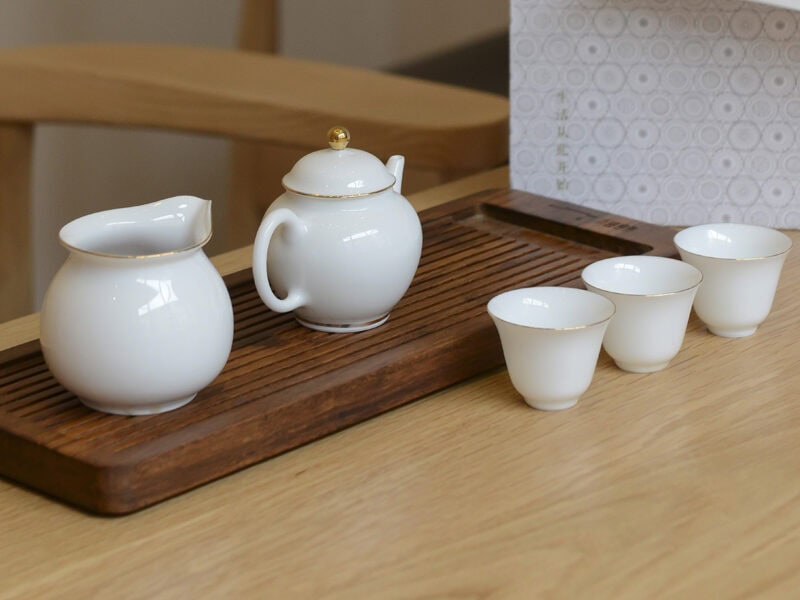
Celadon tea wares rose to popularity in the Jin Dynasty, mainly produced in Zhejiang. Chicken-spout teapots were widely used at that time. Longquan Ge Kiln, one of the Five Great Song Kilns, reached its golden age, producing celadon teapots, tea bowls, cups and trays. Kilns lined both banks of the Ou River with constant kiln flames and busy cargo ships, marking a prosperous industry.
Tea competition culture thrived in Fujian during the Song Dynasty. Tea competitors agreed that black porcelain tea bowls from Jian’an were perfect for contests, making Jian Zhan world-famous. Cai Xiang’s Record of Tea from the Song Dynasty wrote: White tea liquor pairs best with black bowls. Jian’an black bowls are deep dark with hare-fur veins, thick-walled to retain heat for a long time, essential for tea contests. Black bowls from other regions are thin or purplish, inferior to Jian Zhan; white and celadon bowls are never used for competitions. Thick, primitive hare-fur Jian Zhan retain heat well and are cherished by tea competitors.
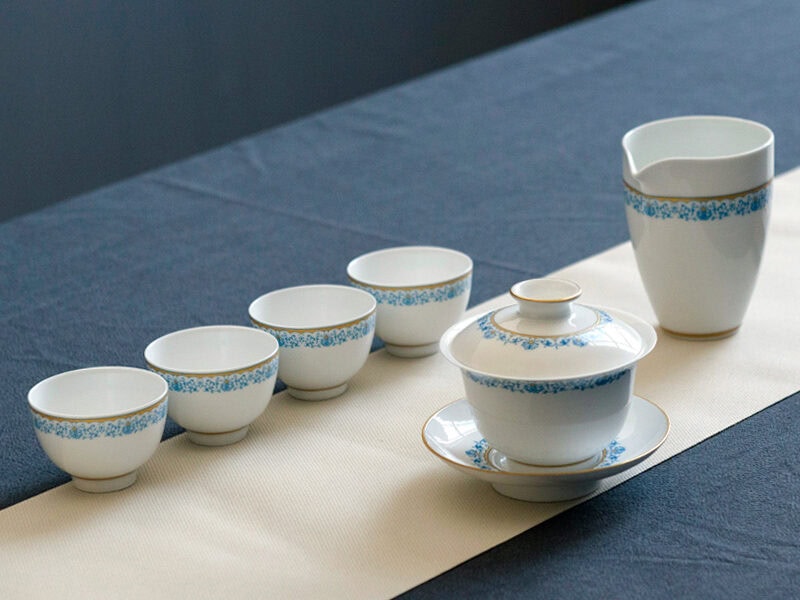
Chinese Tea Sets Lacquer Tea Ware
Lacquer tea wares originated in the Qing Dynasty, mainly produced in Fuzhou, Fujian. Fuzhou lacquer tea sets boast rich varieties crafted with techniques such as glittering sand inlay, golden agate grain, glaze-changing golden thread, antique porcelain imitation, carved filling, high relief carving and silver inlay. Especially after the creation of ruby-red red gold sand and hidden pattern craft, lacquer wares become bright, eye-catching and highly ornamental.
Chinese Tea Sets Glass Tea Ware
Glass tea wares have achieved great development in modern times. Transparent, glossy glass can be shaped into countless styles for versatile use. Brewing tea in glass cups lets viewers fully appreciate liquor color and tea leaves—watching leaves float, sink and unfurl like a living artwork. When brewing premium tea, mist floats inside the cup over clear green liquor with upright tender buds, creating a wonderful visual experience. Affordable glass tea sets are popular among consumers, yet they have drawbacks: fragile and heat-conductive, easy to scald hands.
Chinese Tea Sets Metal Tea Ware
Metal tea wares are made of gold, silver, copper and tin. Tin storage cans stand out for tea preservation. Most tin cans feature narrow necks and cylindrical sealed lids, effectively blocking moisture, light, oxidation and strange odors to well preserve tea. In the Tang Dynasty, the imperial court used silver bottles to carry spring water for Guzhu tea transported to Chang’an. Silver wares are shatter-resistant yet extremely costly, unaffordable for common people.
Chinese Tea Sets Wood & Bamboo Tea Ware
In ancient rural and tea-growing areas, bamboo and wooden bowls were widely used for tea brewing due to low cost and practicality, though they are rarely used for brewing today. Wooden and bamboo cans are still common for tea storage. Boxwood tea cans and two-reed bamboo tea tins combine practicality and collectible value, ideal gifts for relatives and friends.
Bonus: Jade, Crystal & Agate Tea Ware
Tea wares made of jade, crystal and agate existed in history yet remained marginal. These materials are hard to process and extremely expensive with limited practical use, mostly displayed as decorations to show the owner’s wealth.
The six main types of Chinese tea sets each carry unique merits. Purple clay absorbs tea aroma, white porcelain clearly presents liquor color, celadon delivers mild elegance, black porcelain retains heat for tea contests, lacquer boasts gorgeous craftsmanship, glass enables full visual appreciation of tea, tin excels at tea storage, while wood and bamboo feature simple rustic charm. Matching tea ware material to your brewing needs lets you fully embrace the aesthetic of traditional Chinese tea culture.