Imitation Yuan Dynasty Blue-and-White Meiping Vase , Handmade Antique-Style Porcelain
chinese antique-style porcelain, Imperial jingdezhen porcelain, reproduction porcelain, jingdezhen ceramic reproduction manufacturer china, chinese porcelain replica, jingdezhen antique porcelain replica, jingdezhen porcelain, jingdezhen ceramics, blue and white porcelain, magic cube ceramics,
Introduction
1. Name & Category
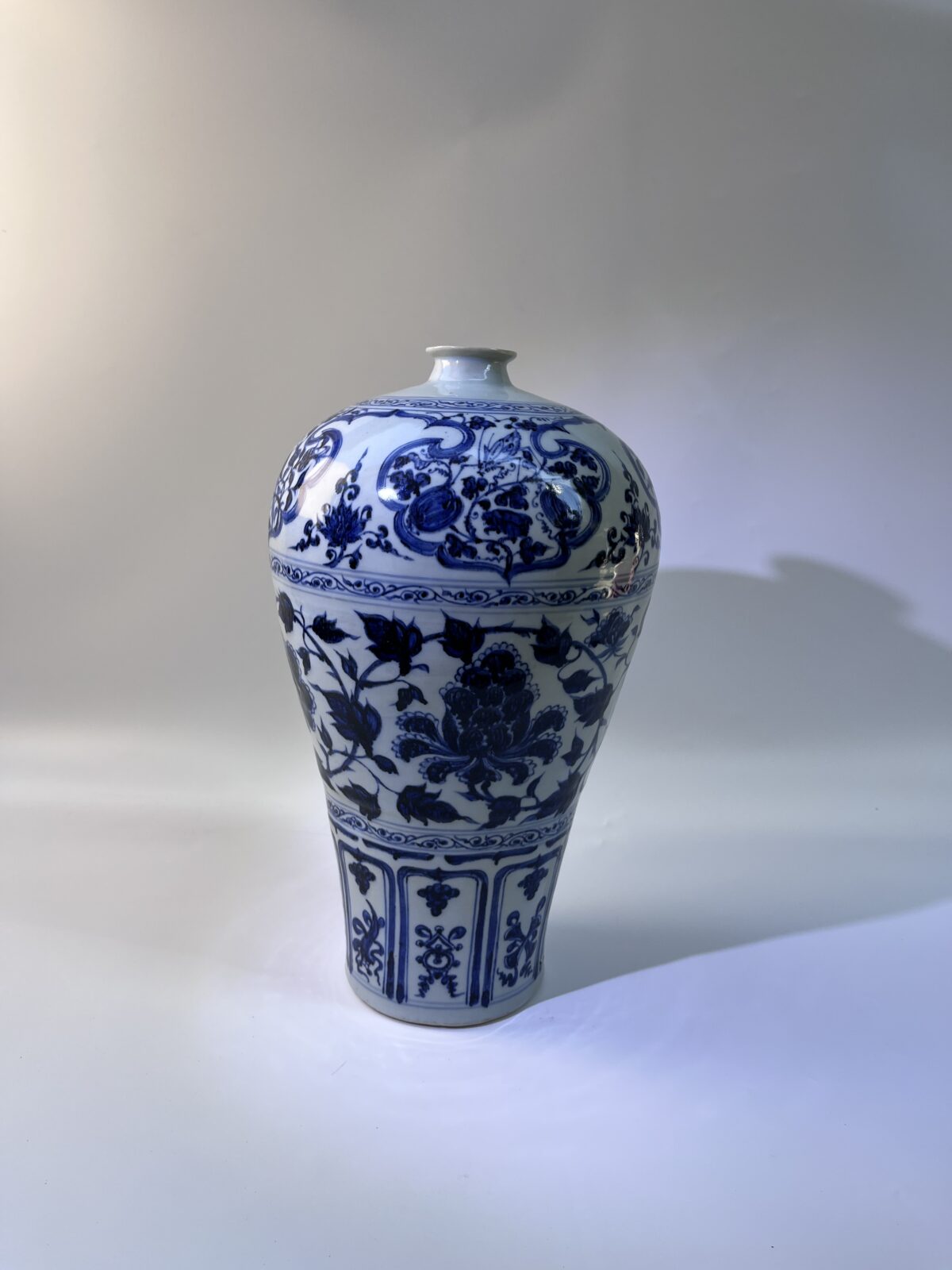
Name: Imitation Yuan Blue and White Plum Vase with Interlocking Peony Patterns and Panel Openings,Antique-Style Porcelain
Category: Handmade antique blue and white porcelain made in Jingdezhen. Its prototype is a monumental classic ware from Jingdezhen kilns of the Yuan Dynasty, ranking as the most representative large-scale ornamental collectible shape within the Yuan blue-and-white porcelain system.
2. Antique-Style Porcelain Core Craftsmanship
The porcelain body adopts a dual formula of porcelain stone and kaolin clay and is fired at a high temperature above 1300°C. The entire surface is hand-painted with blue and white decorations. The cobalt pigment reproduces the color effect of imported Yuan-dynasty Suma Li Qing ore, forming natural rust spots and ink diffusion on thick pigment accumulations to restore the powerful, vigorous artistic style of Yuan blue and white porcelain.
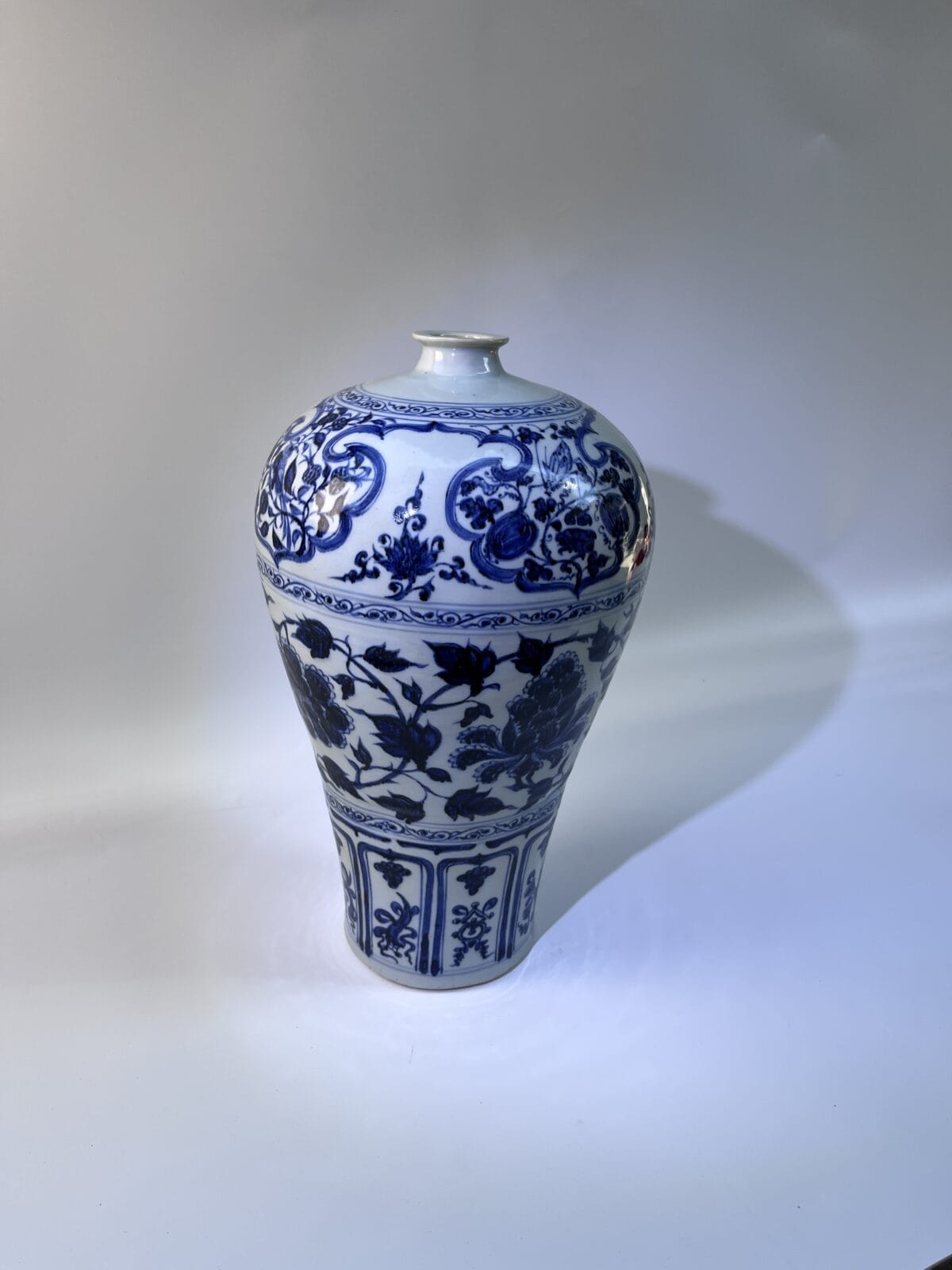
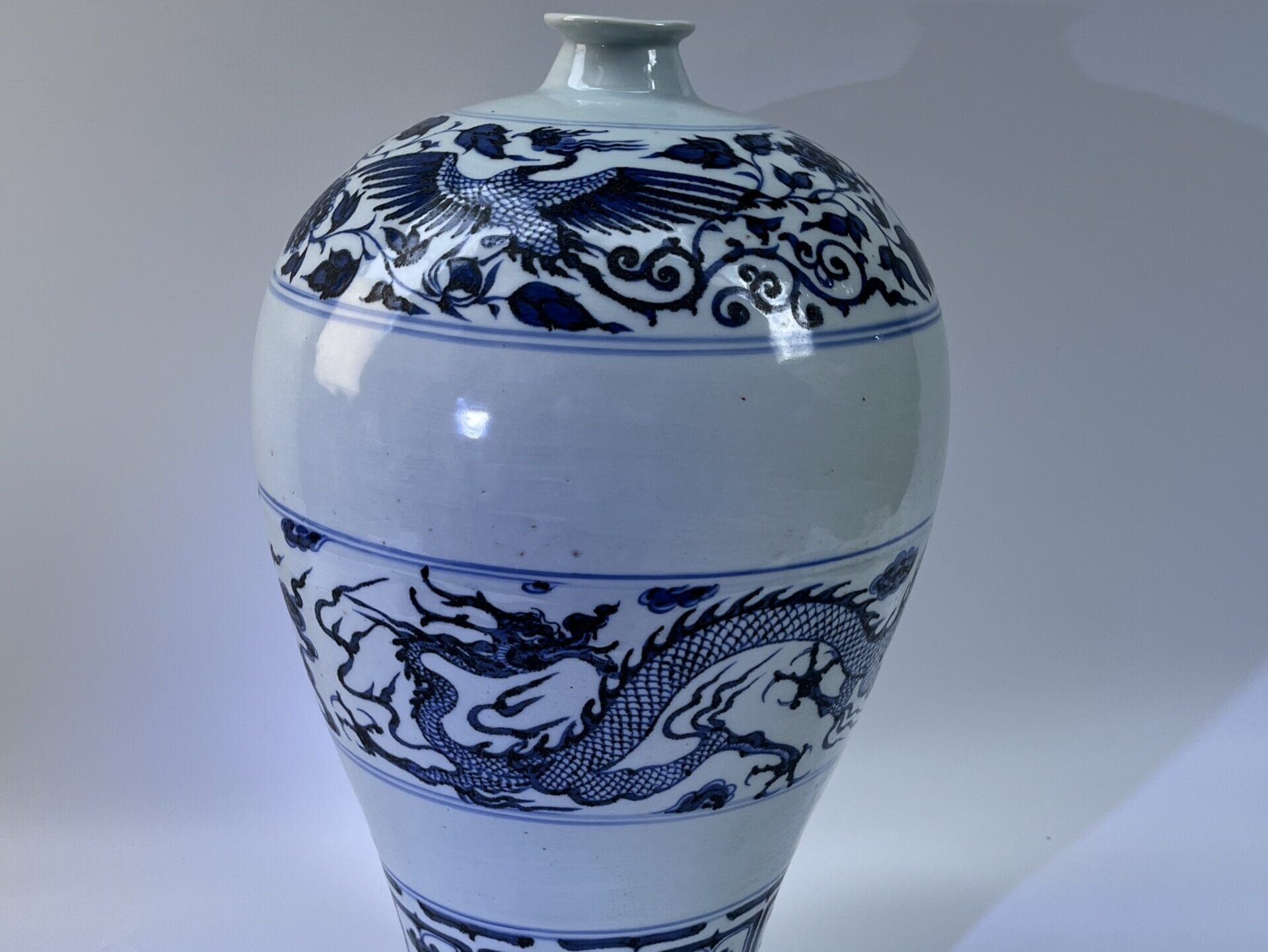
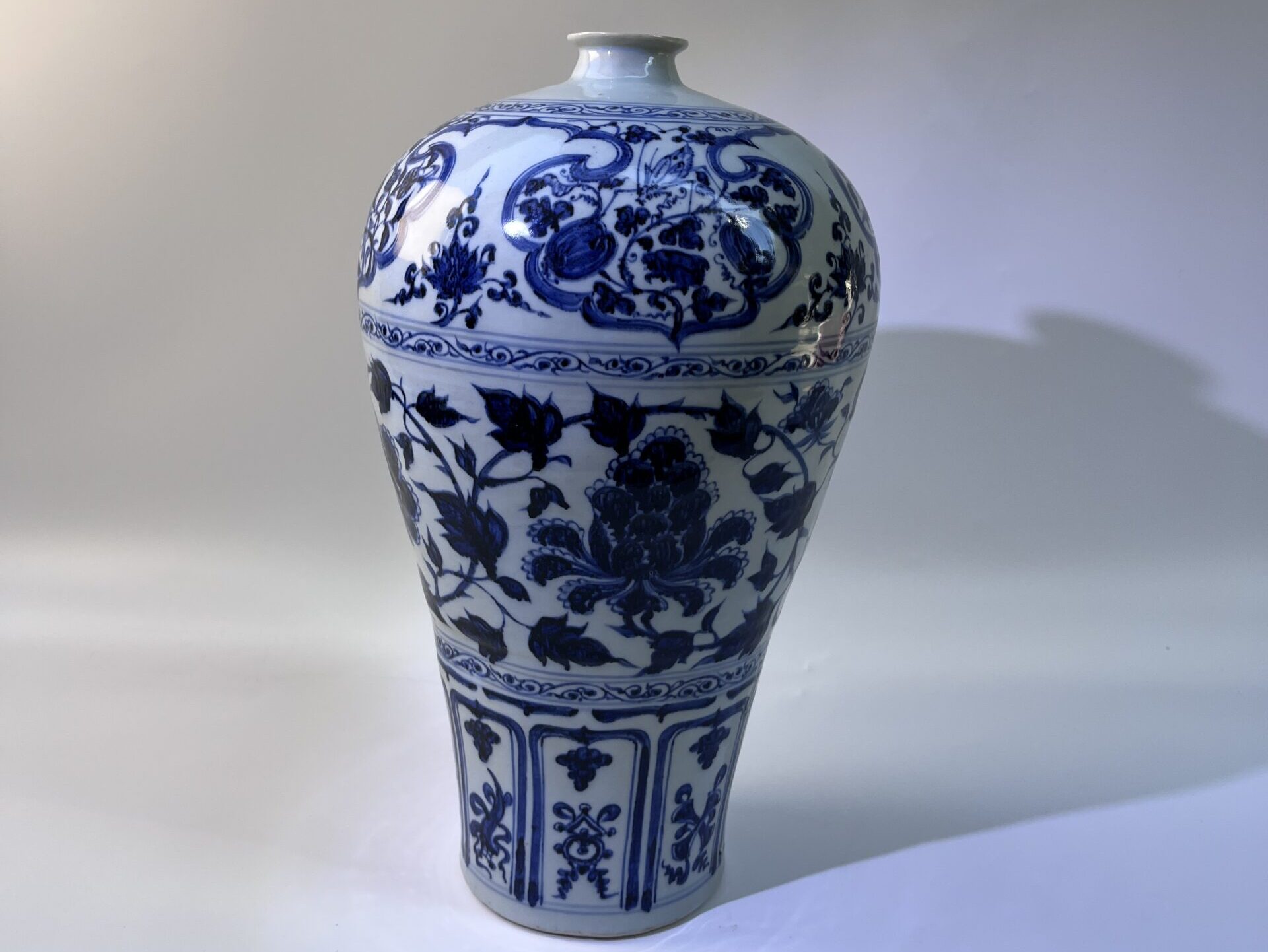
The decorations adopt the iconic multi-layer layout typical of the Yuan period, arranged in clear order from top to bottom:
The shoulder is decorated with Ruyi cloud-shaped panels painted with scattered flower and fruit patterns for a lively, exquisite effect.
The main belly surface is fully covered with elaborate interlocking peony patterns featuring full, huge blossoms and stretchy, forceful leaves, the most classic primary motif of Yuan blue and white porcelain.
The lower leg is adorned with stylized upward lotus petal patterns filled with assorted treasure motifs, commonly known as the “Eight Treasures Mark” among craftsmen — a distinctive feature used to date Yuan porcelain.
It follows the classic Yuan plum vase silhouette: tiny mouth, short neck, full broad shoulders, tapering belly and narrow base. The overall shape is full and imposing with powerful, rhythmic lines, embodying the solid, weighty aura characteristic of Yuan porcelain.
3.Antique-Style Porcelain Functions
The original Yuan prototype served as wine storage vessels for noble classes, anciently named “classic wine bottles”, while also functioning as hall display ornaments. In modern times, they are used as core decorative centerpieces for Chinese halls, clubs and antique shelves, standing as benchmark wares in antique porcelain collections.
4. Standard Dimensions
Below are mainstream universal specifications for high-fidelity reproduced antique Yuan blue and white plum vases of equivalent grade in Jingdezhen:
- Overall Height: 38–42 cm
- Mouth Diameter: 4.5–5.5 cm
- Maximum Belly Diameter: 22–25 cm
- Ring Foot Base Diameter: 13–15 cm
This classic large ornamental plum vase carries a strong visual presence, meeting display and collection demands for medium and large-sized Chinese-style spaces.
5. Logic of Market Value Composition
The value of such reproduced Yuan blue and white plum vases complies with the universal pricing system of the antique porcelain industry, supported by three core dimensions.
Value Anchor of Cultural Relic Prototypes
Yuan blue and white plum vases represent top-tier treasures in ancient Chinese ceramic collecting. Fewer than one hundred intact authentic specimens survive worldwide, most preserved in leading museums at home and abroad. Figure-themed Yuan blue and white plum vases qualify as national treasure-class cultural relics valued at hundreds of millions RMB; even ordinary flower-patterned authentic pieces fetch tens of millions RMB on the circulation market. The scarcity, historical status and supreme artistic attainment of genuine antiques form the core cultural value foundation for modern reproductions.
Cost Support for Production
- Extremely high forming difficulty: Hand throwing and trimming of large plum vases are far more challenging than small wares. Craftsmen must precisely control the curved transition from full shoulders to tapering bellies and consistent body thickness. Deformation, base collapse and cracking frequently occur during firing, yielding a finished product rate of only 20%–30% and incurring massive wastage costs.
- Prominent technical barriers: The multi-layered intricate decorations demand strict alignment with ancient porcelain shards for panel composition, peony brushwork and tiny treasure details, requiring consummate painter skill. Countless trials adjusting cobalt ratios and firing procedures are needed to recreate natural rust spotting and pigment diffusion, leading to much higher labor and trial-error costs than ordinary Ming and Qing antique reproductions.
6. Historical & Craft Stories Behind the Ware
6.1 From Wine Vessel to National Treasure: The Thousand-Year Evolution of the Plum Vase
The prototype of this plum vase records the aesthetic evolution of Chinese porcelain.
First known as “classic wine bottles” originating in the Song Dynasty, plum vases were practical drinking vessels for literati. Their narrow mouth only accommodated single plum sprigs, giving rise to the popular name “plum vase”. During the Yuan Dynasty, the empire spanned Eurasia, bringing unprecedented prosperity to both maritime and overland Silk Roads. Persian Suma Li Qing cobalt pigment was introduced to Jingdezhen, paired with mature dual-formula body clay, creating the legendary Yuan blue and white porcelain. The plum vase was elevated from an everyday wine jar to a grand hall ornament for nobles and lords.
Yuan plum vases differ drastically from the delicate, elegant styles of later Ming and Qing works. Their full shoulders and bold lines reflect the open, unrestrained spirit of nomadic peoples, serving as a miniature of the era’s aesthetic temperament. The interlocking peonies symbolize enduring wealth and nobility; shoulder panel fruits add liveliness; assorted leg treasures convey auspicious blessings. Each vessel integrates practical wine storage with dual symbols of social status and refined taste.
Due to limited production time and extreme rarity of surviving pieces, Yuan blue and white plum vases rank among the most sought-after collectibles in the ceramic market. The discovery of any intact authentic piece stirs the entire cultural relic circle.
6.2 Modern Reproduction: Mastery Forged from Dozens of Kilograms of Clay
Recreating Yuan blue and white plum vases in contemporary Jingdezhen prioritizes solid hand craftsmanship and patient dedication over rapid production.
Craftsmen specializing in premium Yuan-style reproductions use dozens of kilograms of clay for a single vase. They rely solely on tactile perception of clay softness and wheel rotation to shape the shoulder curve and tapering waist — the slightest misalignment dissipates the ware’s grand, powerful aura. Trimming demands extreme meticulousness to achieve uniform wall thickness; uneven clay causes cracking and deformation in the kiln. Only two or three intact vases survive out of ten blanks, marking outstanding kiln mastery and good fortune.
Decorative painting equally tests skill. Yuan peony brushwork is bold and unrestrained, a stark contrast to the fine, precise styles of the Qing Dynasty. Painters repeatedly copy museum shards to grasp the strength and vitality of ancient brushstrokes, recreating vigorous yet natural patterns free of rigid mechanical stiffness. Endless firing trials adjust cobalt density and rust spot distribution to achieve organic, unforced pigment effects.
A well-crafted antique Yuan blue and white plum vase commands attention as soon as it is displayed. More than replicating a shape and decorative scheme, it revives the grandeur of the seven-hundred-year-old Silk Road and the broad, unrestrained spirit of the Yuan Dynasty, embodying the timeless aesthetics and ingenuity embedded within Chinese porcelain.