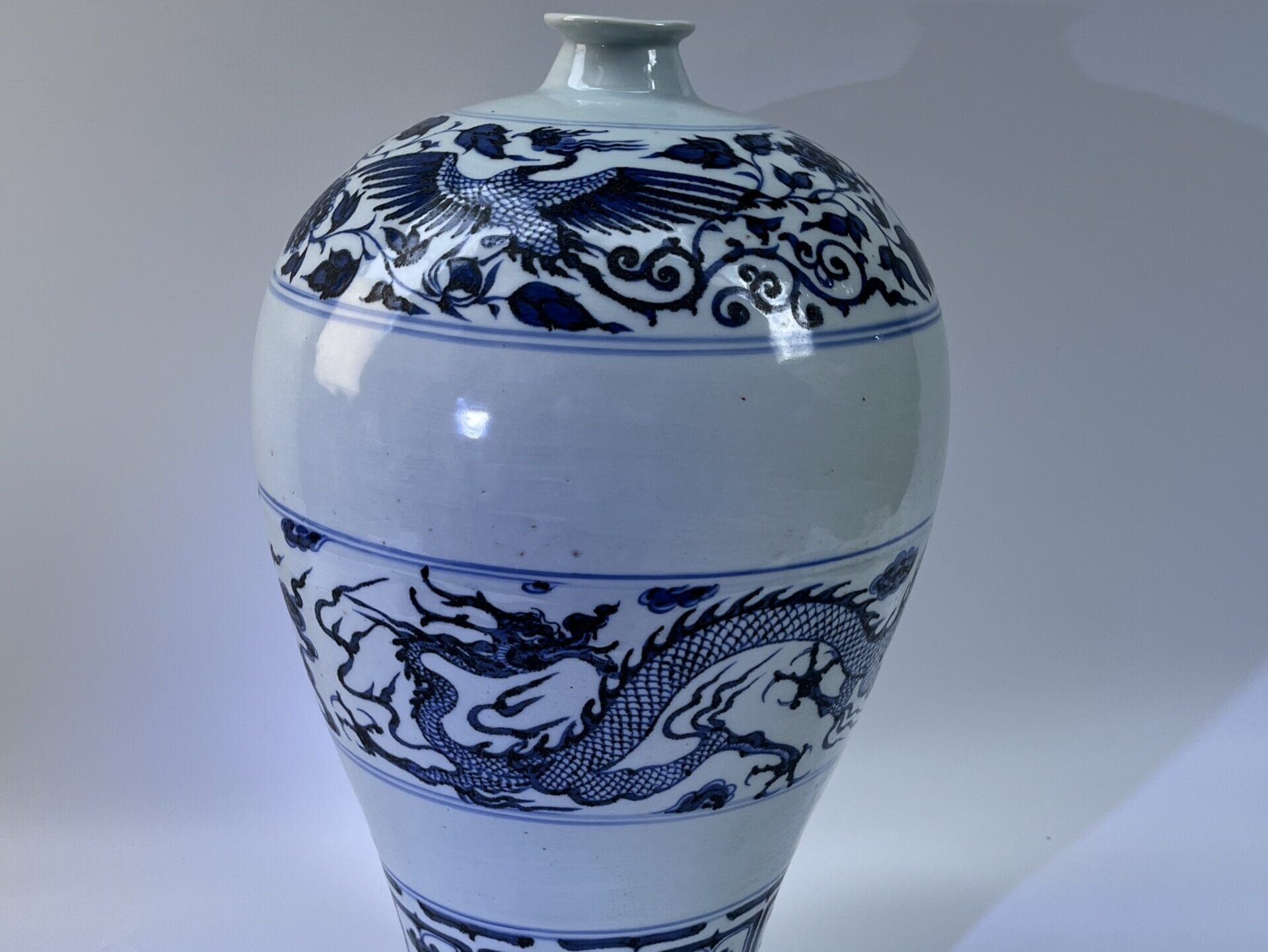
Yuan-Style Blue-and-White Dragon Phoenix Meiping Vase, Handmade Antique Style Porcelain, Large Chinese Collectible Decor
chinese antique-style porcelain, Imperial jingdezhen porcelain, reproduction porcelain, jingdezhen ceramic reproduction manufacturer china, chinese porcelain replica, jingdezhen antique porcelain replica, jingdezhen porcelain, jingdezhen ceramics, blue and white porcelain, magic cube ceramics,
Introduction
Antique Style Porcelain
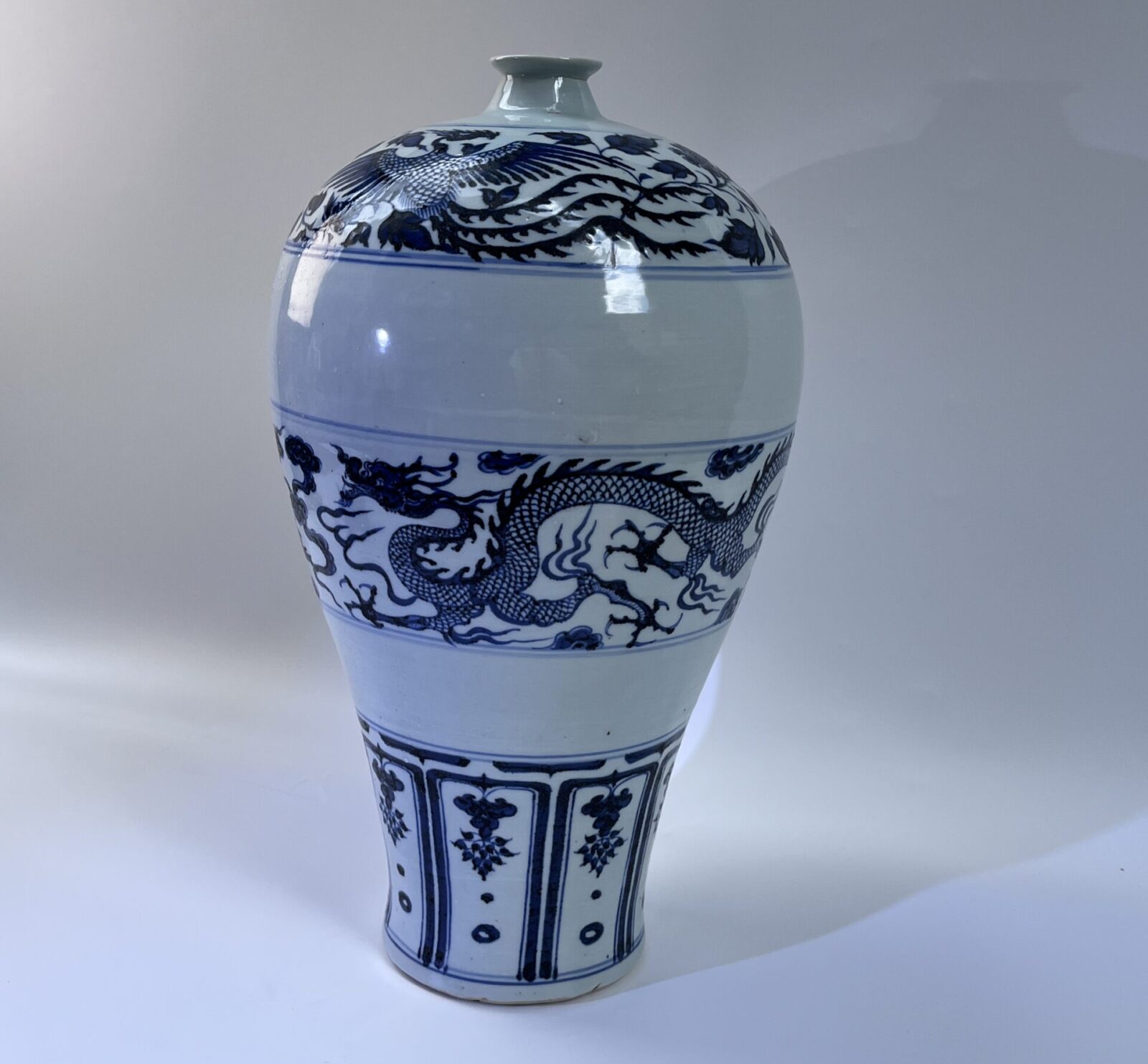
Title: Imitation Yuan Dynasty Blue-and-White Dragon and Phoenix Meiping Vase
Category: Jingdezhen handcrafted antique-style blue-and-white porcelain, modeled after a high-grade Yuan Dynasty Jingdezhen kiln furnishing vessel of significant importance. It belongs to a collectible vase form of the highest tier within the Yuan blue-and-white repertoire.
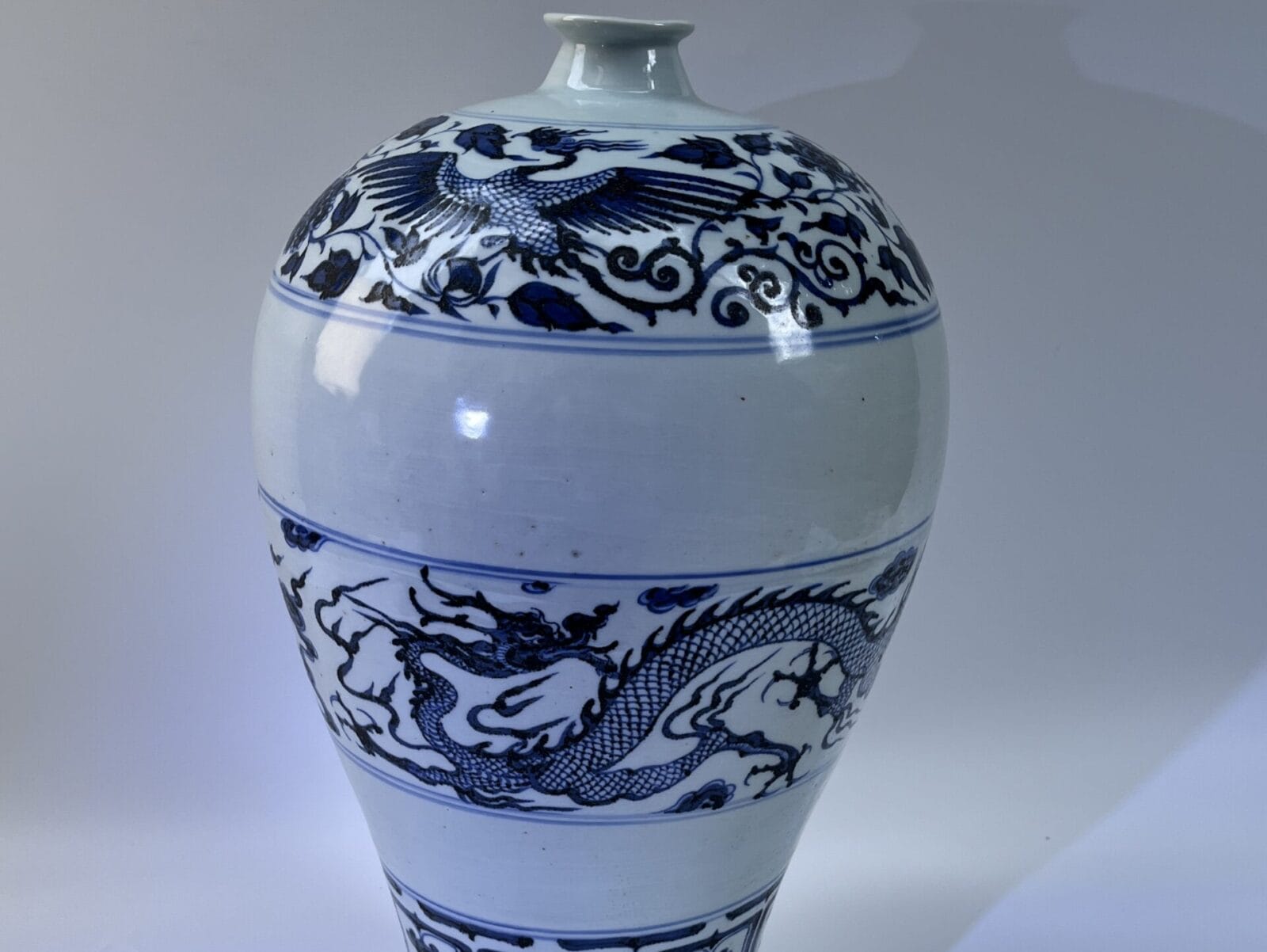
Craftsmanship Core: The body is made using a binary paste formula of porcelain stone + kaolin, fired at temperatures exceeding 1300°C. The blue-and-white decoration is entirely hand-painted. The cobalt pigment replicates the effect of the imported Yuan Dynasty “Su-mali-qing” material, with natural iron-spot crystallization and a haloed, blurred quality visible in the denser areas, faithfully restoring the bold, vigorous artistic style of Yuan blue-and-white ware. The ornamentation follows the iconic Yuan layered composition, with a clear, ordered arrangement from top to bottom. It integrates two principal motifs—dragon and phoenix: the shoulder is encircled by a phoenix-among-peonies design, where soaring phoenixes move gracefully through entwining peony scrolls, exuding elegance and nobility; the main belly features a cloud dragon, with a powerful, galloping dragon complemented by cloud and fire motifs, conveying immense grandeur; the lower section is decorated with a band of transformed elongated lotus petals, each containing precious object emblems (commonly known in the trade as the “Eight Treasures” or “Bā Dà Mǎ”), which are typical markers for dating Yuan blue-and-white. The combined dragon and phoenix motifs symbolize “dragon and phoenix bringing prosperity,” representing honor and good fortune—a high-ranking decorative theme reserved for the nobility during the Yuan Dynasty. The form is the classic Yuan meiping: small mouth, short neck, broad shoulders, narrowing to a tapered base. The overall silhouette is full and robust, with powerful, controlled lines, embodying the substantial, weighty presence of Yuan ceramics.
Function: In the Yuan Dynasty, the original served as a wine storage vessel for the elite (historically known as a “jingping”), while also functioning as a hall display piece and a symbol of status. In contemporary times, it is primarily used as a centerpiece for Chinese-style halls, clubs, and curio shelves, making it a highly recognizable benchmark piece in the antique porcelain collection field.
II. Standard Dimensions
The common commercial specifications for Jingdezhen antique Yuan blue-and-white dragon and phoenix meiping vases of comparable quality. Most fine contemporary replicas fall within this range:
- Overall height: 38–42 cm
- Mouth diameter: 4.5–5.5 cm
- Maximum belly diameter: 22–25 cm
- Base/foot diameter: 13–15 cm
This represents the classic size for large display meiping vases. The form has a commanding presence, suitable for display and collection in medium-to-large Chinese-style interiors.
III. Antique Style Porcelain Structure of Market Value
These antique-style Yuan blue-and-white dragon and phoenix meiping vases command higher value than ordinary floral-decorated pieces of the same form, due to their more prestigious motifs and higher craftsmanship threshold. Their value is underpinned by three core dimensions:
1. Value Anchored by the Archaeological Prototype
Yuan blue-and-white dragon and phoenix meiping vases rank among the premier treasures in Chinese ceramic collecting. Dragon and phoenix themes were exclusive to the nobility during the Yuan Dynasty, and complete authentic examples are extremely rare worldwide, with fewer than a few dozen surviving, most housed in major museums globally. Comparable Yuan blue-and-white dragon meiping vases have achieved auction prices in the tens of millions to hundreds of millions of RMB. The rarity, prestigious status, and artistic height of the originals form the most fundamental cultural value foundation for antique-style replicas.
2. Cost Support from Manufacturing
- Extremely high forming difficulty: Hand-throwing and trimming large meiping vases is far more challenging than for smaller pieces. Achieving the smooth transition from broad shoulders to a tapered waist and ensuring uniform wall thickness require strict control. During firing, these large pieces are highly prone to deformation, collapsed bases, and cracking, resulting in a success rate of only 20–30%, with very high loss costs.
- Doubled decorative craftsmanship threshold: The dragon and phoenix combination is one of the most demanding themes in porcelain painting. Depicting the dragon’s powerful dynamism and the phoenix’s elegant grace demands exceptional skill and mastery of brushwork from the painter. There is a saying among artisans: “Paint a dragon or a phoenix, and nine out of ten attempts fall short.” Labor costs for such work are significantly higher than for ordinary floral-patterned antique-style wares.
IV. Historical and Craftsmanship Background
1. Status Symbol of the Yuan Elite
The dragon and phoenix motifs on this meiping were not mere decoration in ancient times—they were a direct visual representation of a rigid hierarchical system. During the Yuan Dynasty, the use of such motifs was strictly regulated; dragon and phoenix designs were reserved exclusively for the nobility, and commoners were absolutely forbidden from using them. Therefore, from its veryinception, the dragon and phoenix meiping was not an ordinary wine vessel—it was a symbol of identity and rank. Its owner would have been no less than a prince, high official, or member of a prominent family. Placed in the hall, it served both as a functional storage jar for wine and as a magnificent furnishing piece that proclaimed the owner’s status.
The “dragon and phoenix bringing prosperity” theme also carried the most auspicious meanings: the dragon, king of beasts, represented authority and good fortune; the phoenix, king of birds, represented nobility and peace. Together, they embodied prayers for national prosperity and family flourishing. Paired with the imported Su-mali-qing cobalt pigment brought along the Silk Road, the resulting blue-and-white was intensely vibrant and powerfully bold—combining the broad vision of the steppe dynasty with the auspicious symbolism of Central Plains culture.
Yuan blue-and-white wares are rare to begin with, and complete meiping vases bearing dragon and phoenix motifs are exceptionally scarce. Today, most of them reside quietly in the display cases of the world’s top museums, serving as the ultimate testament to the status and prestige of that legendary era.
2. Contemporary Replication: Mastering Dual Spirits on a Single Vase
Today, when Jingdezhen artisans recreate this dragon and phoenix meiping, the greatest challenge is never simply painting the correct number of dragon scales or phoenix feathers—it is simultaneously embodying the dragon’s majestic power and the phoenix’s ethereal grace on the same piece.
True fine antique-style artisans use several tens of kilograms of clay for a single large meiping, relying entirely on tactile feel to gauge the clay’s softness and the wheel’s speed. The curve of the broad shoulders, the rhythm of the waist’s taper—if even slightly off, the entire vase loses its commanding presence. Trimming is a painstaking, slow process; uneven wall thickness will cause warping or cracking during firing. If two or three out of ten thrown pieces survive the kiln, the kiln is already considered highly skilled.
The decoration presents a dual challenge. Painting the dragon requires capturing a surging, dynamic tension—with powerful claws and flowing mane, conveying a raw, wild strength. Painting the phoenix requires depicting an expansive elegance—with flowing feathers and graceful curves, radiating a refined, lively charm. These two contrasting spirits must be harmoniously integrated on the same vase, with a natural transition and no sense of discord—a feat that severely tests the painter’s skill and aesthetic sensibility. Many seasoned painters who have worked on blue-and-white for over a decade still hesitate to take on such dragon-and-phoenix large-piece commissions.
A fine antique-style dragon and phoenix meiping, when placed on display, naturally commands the space around it. It recreates not just the form and patterns, but also the hierarchical grandeur and the Silk Road splendor of seven centuries ago—a tangible embodiment of the Chinese people’s enduring aspirations for honor and good fortune, woven into their decorative arts for millennia.