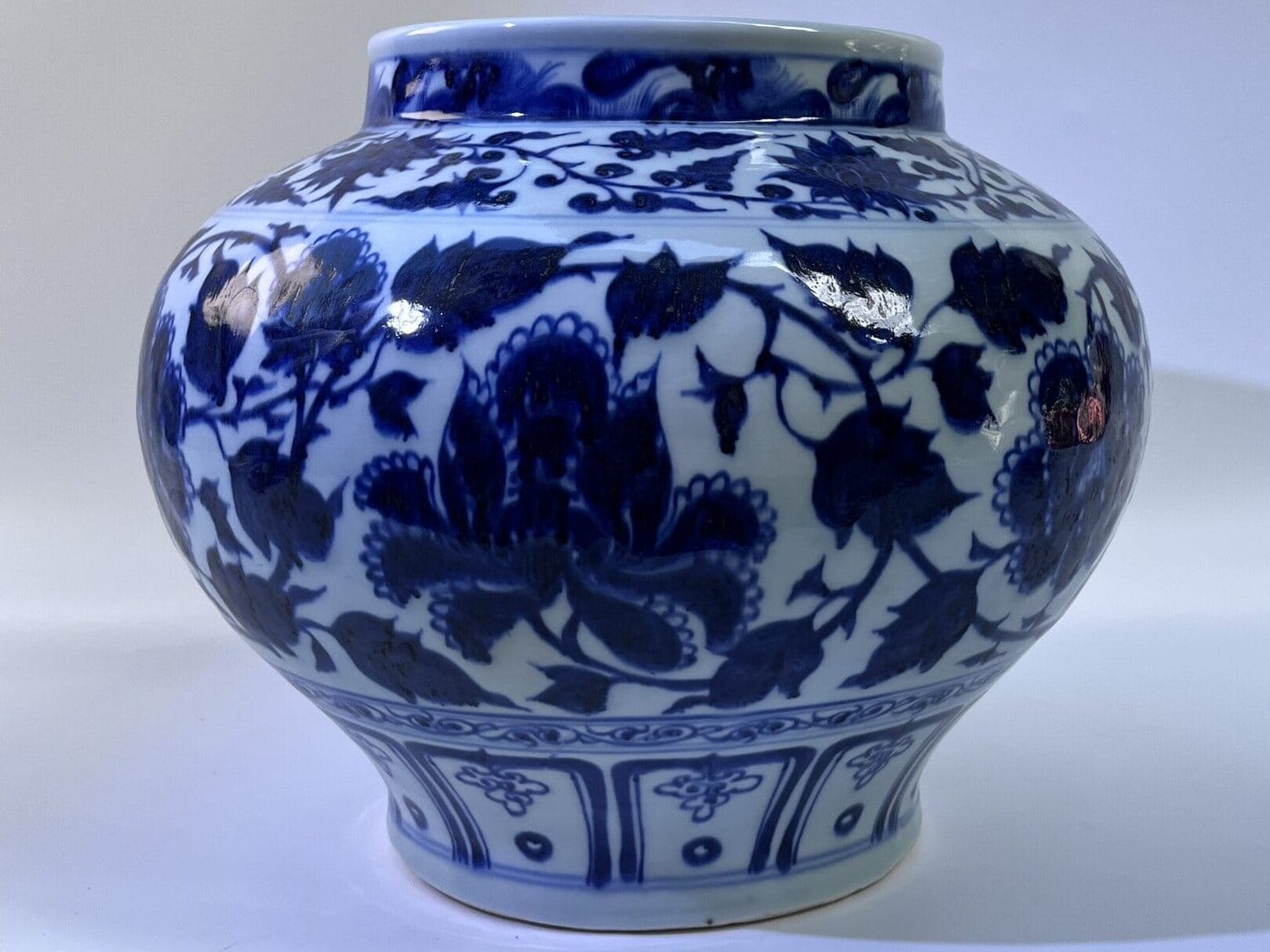
Large Antique-style Chinese Porcelain Jar, Yuan Blue-and-White Replica with Peony Flower Motif
chinese antique-style porcelain, Imperial jingdezhen porcelain, reproduction porcelain, jingdezhen ceramic reproduction manufacturer china, chinese porcelain replica, jingdezhen antique porcelain replica, jingdezhen porcelain, jingdezhen ceramics, blue and white porcelain, magic cube ceramics,
Introduction
Antique-style Chinese Porcelain
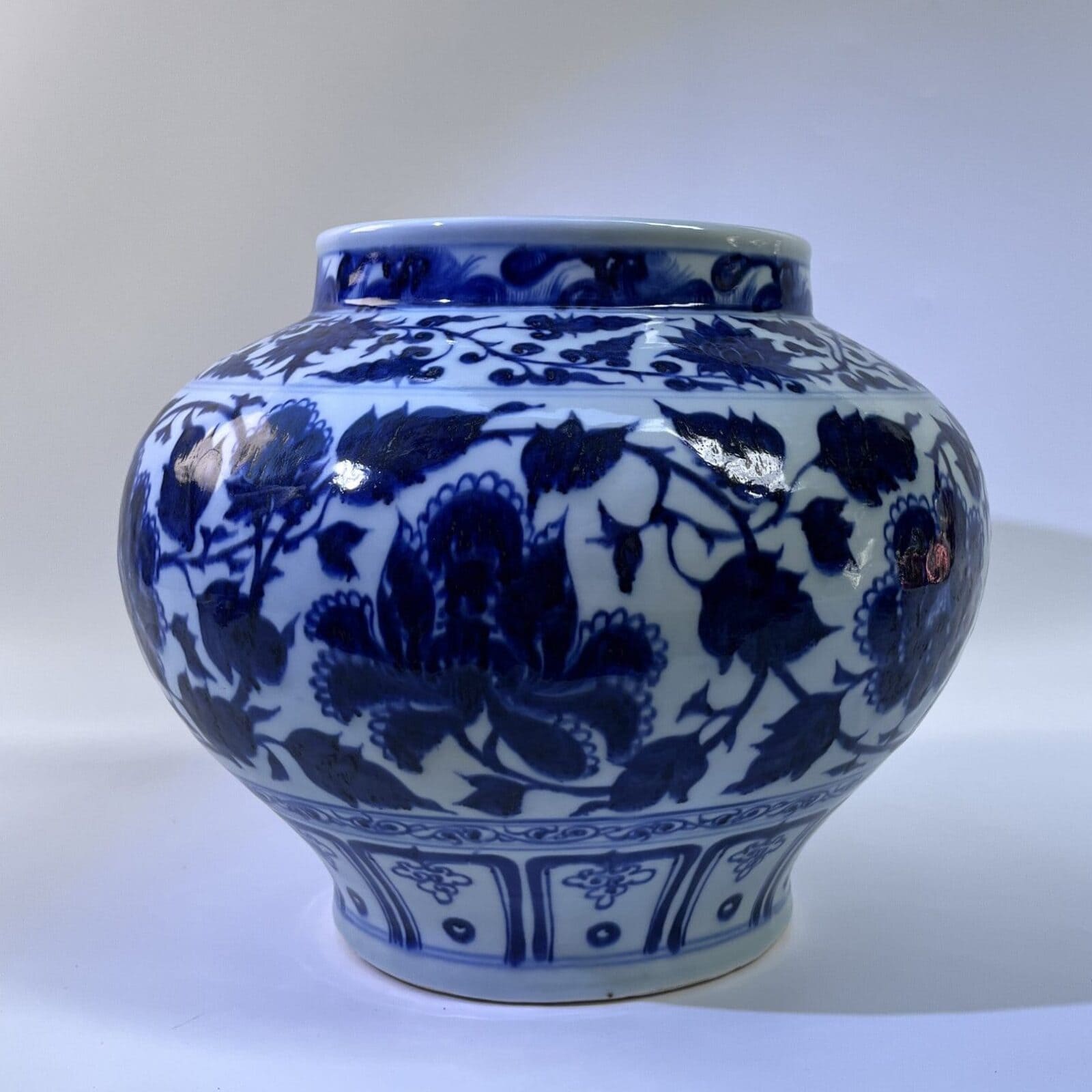
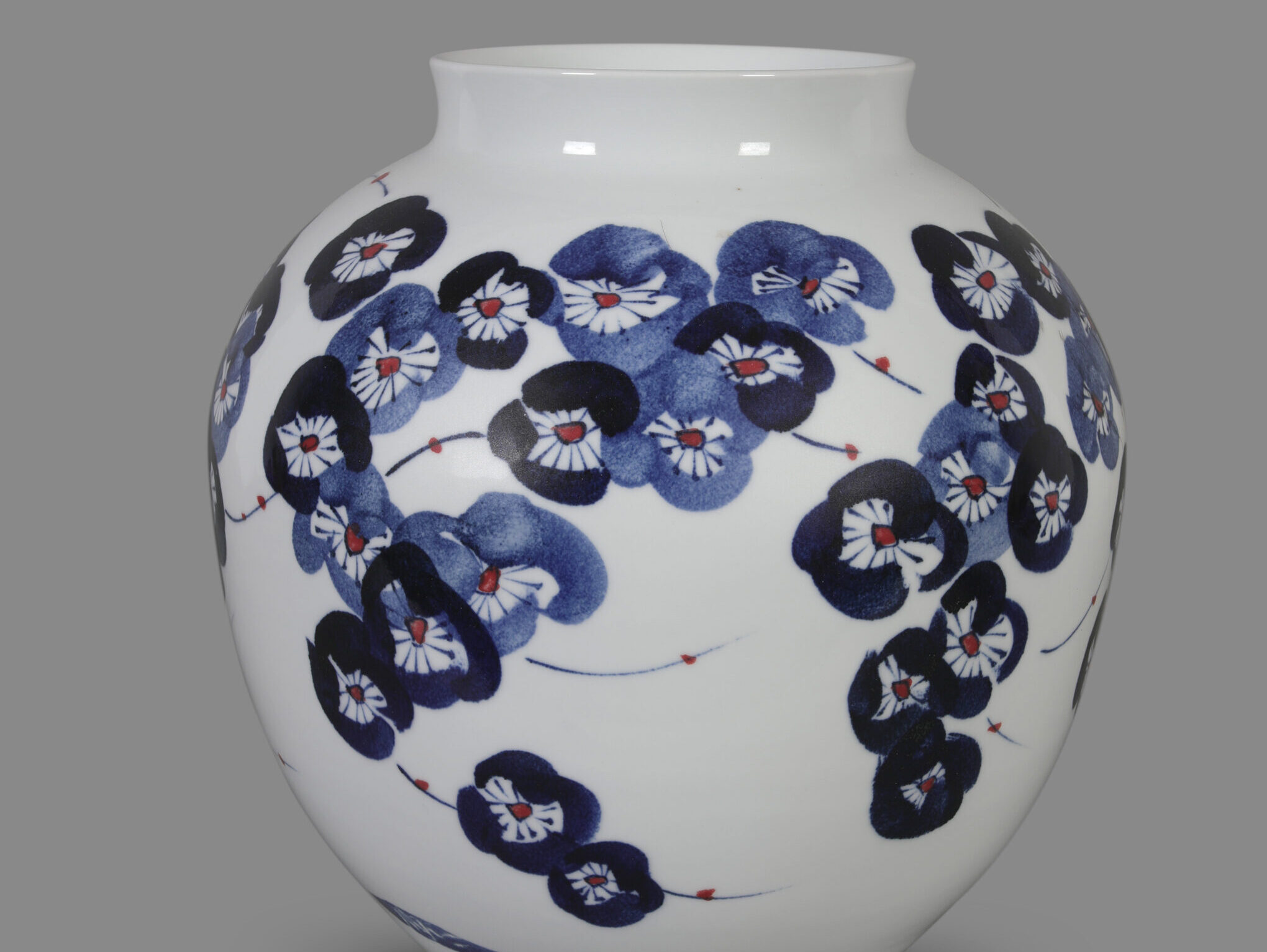
Name: Large Antique-style Chinese Porcelain Jar, Yuan Blue-and-White Replica with Peony Flower Motif.
Category: Handcrafted Jingdezhen antique-style blue-and-white porcelain, modeled after classic Yuan-dynasty Jingdezhen kiln artifacts, representing a collector-grade piece in Yuan blue-and-white style craftsmanship.
Key Features: Body crafted from a dual-component formula of porcelain stone and kaolin, fired at temperatures exceeding 1300°C; entirely hand-painted with blue-and-white decorations that replicate the color effect of imported “Sumali blue” from the Yuan period using cobalt pigments, featuring natural rust stains and diffused textures in concentrated areas to authentically convey the robust artistic character of Yuan blue-and-white ware. The decorative patterns employ the signature multi-layered composition of the Yuan era, with clear hierarchical layers from top to bottom: floral motifs along the neck, entwined branches around the shoulders, and full-scale peony patterns on the body with plump petals and expansive leaves; the base features the characteristic stylized upward-facing lotus petal motif (commonly known as the “Eight Major Patterns”) – a hallmark design for Yuan blue-and-white jars.
Function: The original Yuan-era version served both storage and ceremonial display purposes, making it a prized item among nobility; today it is widely used as a central decoration in Chinese halls, private clubs, and antique displays, standing as a representative model for antique porcelain collections.
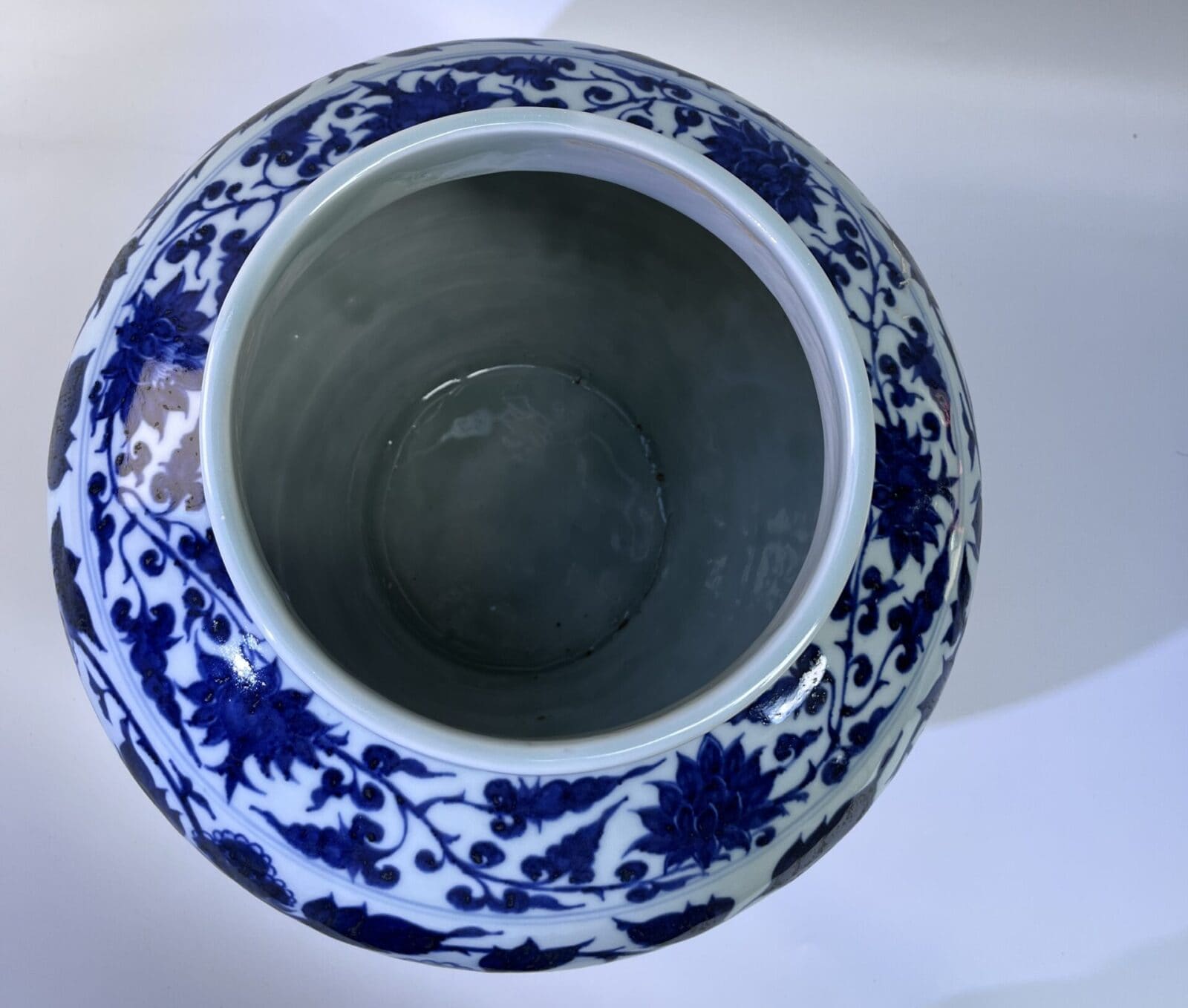
Standard Dimension Specifications
This is the standard size for high-quality antique-style Yuan dynasty blue-and-white porcelain jars of comparable quality in Jingdezhen; most meticulously reproduced versions available on the market fall within this range.
- Total height: 28–32 cm
- Diameter: 15–18 cm
- Maximum abdominal diameter: 28–32 cm
- Diameter: 16–19 cm
– a classic size for Yuan dynasty blue-and-white porcelain jars. With its full-bodied, sturdy form and imposing presence, it perfectly suits decorative needs in most medium-to-large Chinese spaces.
The Logic Behind the Composition of Market Value
The valuation of these large antique-style Yuan blue-and-white porcelain jars follows the industry-standard pricing framework for antique ceramics, supported by three core dimensions:
The value anchor of cultural relics prototypes: The Yuan blue-and-white large jar is a top-tier masterpiece in the field of ancient Chinese ceramic collections, with fewer than a hundred complete authentic pieces worldwide. The vast majority are housed in leading museums domestically and internationally, making them extremely rare in the market. Classic Yuan blue-and-white figurative jars have been auctioned for hundreds of millions of yuan, while ordinary floral-patterned Yuan blue-and-white large jars also command market valuations in the tens of millions. The scarcity, historical significance, and artistic excellence of genuine specimens form the core cultural foundation of antique-style reproductions.
The cost-based support for manufacturing expenses
The manufacturing difficulty is exceptionally high: hand-building and shaping large pieces involves far greater challenges than small ones, with precise control over the uniformity of body thickness and form precision being particularly demanding. During firing, issues such as deformation, cracking, or bottom collapse are highly likely to occur, resulting in a finished product rate of only about 30%, leading to extremely high production costs.
The technical challenges are significant: Yuan dynasty blue-and-white decorations feature bold and majestic brushwork, demanding exceptional craftsmanship from artists who must precisely replicate the compositional principles and brushstroke dynamics characteristic of that era. To recreate the rust stains and natural diffusion effects of Su Mali blue, meticulous adjustments to cobalt pigment ratios and firing techniques are required—a process involving substantial manual effort and trial-and-error that makes production costs far higher than those of ordinary Ming or Qing dynasty antique-style porcelain.
Market-based price classification (retail prices in Jingdezhen for 2026)
Entry-level hand-painted pieces for amateur workshops: priced between 800–2000 yuan, fired in an air kiln with moderate accuracy in pattern and hair color reproduction, suitable for basic decorative purposes.
High-quality antique-style kiln-marked pieces: priced at 3,000–8,000 yuan, meticulously crafted according to authentic museum fragments. Featuring exceptional accuracy in body and glaze reproduction, decorative patterns, and pigment coloration, these pieces target antique porcelain enthusiasts and mid-range collectors.
Fire-fired in traditional wood-fired kilns / Inscribed by renowned artisans: priced above 10,000 yuan. Crafted with traditional fire-firing techniques, the glaze exhibits a smooth, aged appearance; the decorative patterns adhere precisely to ancient craftsmanship standards, accompanied by the artist’s inscription and a collection certificate, making it highly valuable for both artistic appreciation and collection.
The History and Craft Stories Behind These Artifacts
1. The pinnacle of blue-and-white porcelain craftsmanship nurtured by the Silk Road civilization
The prototype of this large jar emerged during an unprecedented era in the history of China’s ceramics—the Yuan Dynasty. The Yuan Empire spanned Eurasia, and both the Maritime and Overland Silk Roads flourished like never before. The finest cobalt pigment from Persia, known as “Soomali blue,” was transported to Jingdezhen along trade routes, where it combined with local porcelain clay and kaolin, giving birth to the legendary Yuan blue-and-white porcelain. The artisans of the Yuan Dynasty pioneered a unique “dual-formula” technique, raising the firing temperature above 1,300°C, resulting in denser bodies and larger shapes that ultimately produced these grand blue-and-white vessels characterized by their majestic appearance and vibrant colors. The entwined peony flower became the predominant motif on Yuan blue-and-white ware; the peony symbolizes enduring prosperity, while the intertwining branches represent perpetual vitality—a design that aligns with both the auspicious aesthetics of Central China and the Islamic world’s preference for intricate floral patterns. Countless such large blue-and-white jars were shipped from Jingdezhen via the Maritime Silk Road to West Asia, where they commanded prices rivaling gold, making them the most prized commodities in East-West trade. Those retained domestically became sacred treasures among nobility, serving as status symbols far surpassing gold and jade. Due to their short production period and limited availability, Yuan blue-and-white jars have become the “top-tier porcelain” in the hearts of collectors, and the emergence of each authentic piece sends shockwaves through the entire collecting community.
2. The Reproduction Practices of Contemporary Craftsmen
Today, Jingdezhen reproduces large Yuan Dynasty blue-and-white porcelain jars—not merely replicating their forms and patterns, but capturing the grandeur and expansive spirit of that era. True masters of Yuan blue-and-white craftsmanship immerse themselves repeatedly in museums to study authentic pieces and fragments, meticulously analyzing the precise brushwork applied to each leaf or floral arrangement, as well as the texture of Yuan-era clay and the luster of glazes. The shaping of large pieces relies entirely on manual skill: clay masses weighing dozens of kilograms must be molded on spinning wheels; even the slightest deviation can cause deformation or collapse upon firing. The most challenging aspect lies in color reproduction. To recreate the intense vibrancy and natural rust stains characteristic of Sumali blue—those that “penetrate every layer of the vessel” — craftsmen constantly adjust cobalt iron content and experiment with various kiln temperatures, often discarding over a dozen jars per firing session. As the industry adage goes, “Not even one out of ten batches yields a perfect Yuan blue-and-white jar,” highlighting the extreme difficulty and high loss rate involved in replication. A fine replica exudes an imposing presence, bringing the splendor of the Silk Road and the magnificence of the Yuan Dynasty from museum display cases into modern viewers’ living spaces. More than just an ornamental piece, it stands as a tribute to the pinnacle of ceramic artistry from this millennium-old porcelain capital and a testament to the enduring legacy of Chinese aesthetic traditions across time.